Souks of Marrakesh
Market in Marrakesh
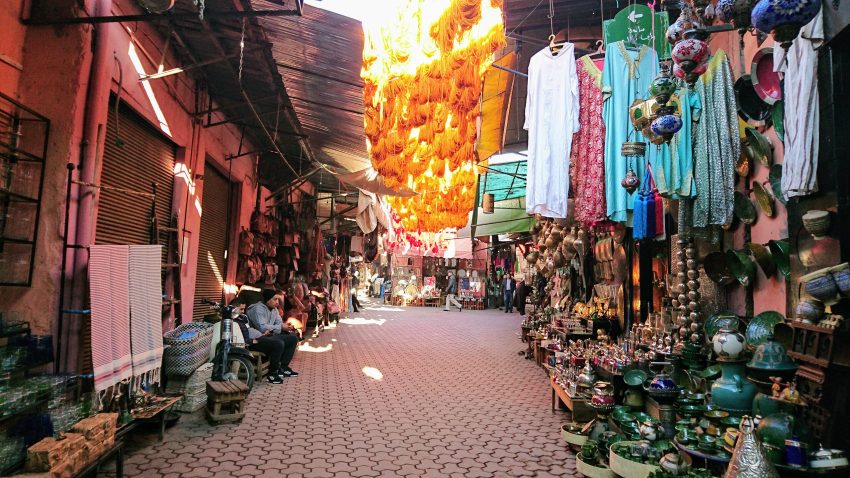
The souks of Marrakesh are the city's living bloodstream: a tangled network of covered alleys and busy squares where metalworkers hammer, dyers stir steaming vats, and shopkeepers call out over pyramids of spices and fabrics. Historically organised by trade, each section still has its own speciality, from shimmering textiles in Souk Semmarine to intricate jewellery in the Souk des Bijoutiers or handwoven rugs in the Souk des Tisserands. Exploring this maze is one of the things to do in Marrakech that truly connects you with the city's craft traditions and daily life.
Beyond shopping, the souks are all about atmosphere. You might watch wool being dyed vivid reds and indigos in the Souk des Teinturiers, trace the scent of cedar and leather, or pause to sip mint tea while scooters weave past and locals haggle over everyday purchases. The lanes are often visited on walking tours of Marrakesh’s Medina, but wandering on your own-getting lost, retracing your steps, and slowly recognising landmarks-is part of the experience and half the fun.
Table of Contents
- History and Significance of the Souks of Marrakech
- Things to See and Do in the Souks of Marrakech
- How to Get to the Souks of Marrakech
- Practical Tips on Visiting the Souks of Marrakech
- Where to Stay close to the Souks of Marrakech
- Is the Souks of Marrakech Worth Visiting?
- FAQs for Visiting Souks of Marrakech
- Nearby Attractions to the Souks of Marrakech
History and Significance of the Souks of Marrakech
Marrakech’s souks grew up around practical needs: artisans needed places to work, merchants needed places to sell, and people needed places to buy everything from food to shoes. Over time, these markets settled into a clear structure based on trade. Blacksmiths clustered together so the noise and sparks stayed in one area, dyers shared access to water and drying lines, and weavers grouped where they could stretch their looms. This organisation created a kind of living map of the city’s economy that you can still read today.
Under successive dynasties, from the Almoravids and Almohads to the Saadians and Alaouites, the souks were both tightly regulated and heavily taxed, providing income for rulers and stability for the city. Certain guilds held privileges, and rules about quality, pricing, and opening hours were enforced to keep both locals and visitors supplied. The big caravan routes that once linked Marrakech to the Sahara and the Atlantic brought in wool, leather, metals, sugar, and dyes, which were then transformed in the souks into carpets, saddles, jewellery, and textiles.
In the modern era, the souks have adapted to tourism while still serving local needs. Alongside stalls selling slippers, lamps, and ceramics for visitors, you will find hardware shops, tailors, grocers, and barber stalls used daily by Marrakchis. This blend is part of what makes the markets so compelling: they are not just a backdrop for photos, but a working commercial district that has evolved over centuries while keeping its core structure and energy.
Things to See and Do in the Souks of Marrakech
One of the best ways to experience the souks is simply to walk in from Jemaa el-Fnaa and let the alleys pull you along. Souk Semmarine, with its high wooden roof and busy textile stalls, is often the first section you encounter. Here you will see bolts of fabric, scarves, and clothing stacked floor to ceiling, with glimpses of side alleys leading deeper into the market. Duck into these side lanes and you'll discover specialist souks devoted to metalwork, leather, baskets, or spices, each with its own mood and soundtrack.
For a more focused exploration, seek out specific trades. In the Souk des Bijoutiers, gold and silver jewellers display filigree bracelets, rings, and traditional Berber pieces. In the Souk des Teinturiers you might find skeins of wool hanging in bright strands over alleys or courtyards, dyed in colours that will later become carpets and textiles. The Souk des Tisserands brings you closer to finished products: handwoven rugs, blankets, and cushions in a spectrum of designs, from bold geometric Beni Ourain patterns to finer, more intricate weaves.
Even if you do not plan to buy much, the souks offer endless small moments: a woodworker carving a new door, a copper smith polishing a tray, or a baker sliding flatbreads into a communal oven. Take pauses in rooftop cafés to look down on the chaos from above, then dive back in with renewed energy. If you’re keen to learn more about the crafts themselves, consider visiting artisan cooperatives or workshops where you can see stages of production away from the busiest thoroughfares.
How to Get to the Souks of Marrakech
The souks sit in and around the medina at the heart of Marrakech, so reaching them starts with getting to the city itself. Most international visitors arrive at Marrakech Menara Airport, located just a short drive from the old town and connected to numerous European and Moroccan destinations. For the best deals and a seamless booking experience, check out these flights to Marrakesh on Booking.com. From the airport, taxis and pre-booked transfers can drop you near Jemaa el-Fnaa or one of the medina gates, from where you walk into the souk area.
If you are travelling within Morocco, trains link Marrakech with cities such as Casablanca, Rabat, and Tangier, with services arriving at the main railway station in the new town.Train schedules and bookings can be found on Omio. From the station, petit taxis can take you towards Jemaa el-Fnaa, Bab Doukkala, or other medina access points, and from there you proceed on foot. Long-distance buses from other regions also serve Marrakech; from the bus stations, taxis again bring you to the edges of the old city.
Driving directly into the souks is not possible because the medina's lanes are mostly pedestrian and too narrow for cars. Instead, use guarded car parks around the city walls-near Bab Doukkala, Bab el-Khemis, or Koutoubia, for example-and then walk into the market area. Once inside, rely on landmarks like Jemaa el-Fnaa, the Koutoubia minaret, or specific gates to keep your bearings, and consider dropping pins on a digital map so you can find your way back.
Practical Tips on Visiting the Souks of Marrakech
- Suggested tips: Start with smaller purchases to get a feel for prices and bargaining, and keep valuables secure and out of sight as you move through the crowds.
- Best time to visit: Early morning offers quieter lanes and better light for photography; late afternoon into early evening brings the most atmosphere but also the biggest crowds.
- Entrance fee: Free - the souks are public market streets.
- Opening hours: Around 9am to 9pm, the best time to visit is in the cool of the morning, or in the evening
- How long to spend: Allow at least 2-3 hours for a first exploration; you could easily return on several days to focus on different sections.
- Accessibility: Lanes are narrow, busy, and often uneven, with occasional steps and scooters weaving through; this can be challenging for visitors with limited mobility or sensory sensitivities.
- Facilities: Public toilets are limited; cafés, restaurants, and some modern shops around the souks offer restrooms, Wi-Fi, and places to sit.
- Photography tip: Always ask before photographing people or their stalls; a friendly greeting and small tip are often appreciated, and rooftop terraces offer less intrusive overview shots.
- Guided tours: A local guide can help you navigate, explain the different souks and crafts, and negotiate on your behalf, especially on your first visit.
- Nearby food options: Snack on fresh orange juice, pastries, and street food in and around the alleys, or head to rooftop restaurants near Jemaa el-Fnaa and the main souks for a meal with a view.
Where to Stay close to the Souks of Marrakech
Staying near the souks puts you right in the heart of the medina, with textiles, spices, and everyday life just steps from your door. A characterful option is Riad Ilayka, a traditional riad tucked in the Mouassine quarter, ideal if you want to step straight from your front door into the nearby markets and main square. For a slightly more serene base that is still within easy walking distance, Riad Adika & Spa offers a calm courtyard, small pool, and spa that feel wonderfully removed from the bustle outside. Travellers seeking a photogenic, design-focused stay might consider Riad Yasmine, which combines a stylish courtyard pool with convenient access to the northern souks and Ben Youssef area.
Is the Souks of Marrakech Worth Visiting?
The souks of Marrakech are absolutely worth visiting and, for many travellers, they are the defining experience of the city. Nowhere else combines colour, noise, scent, and human interaction quite like these markets, where centuries of trade and craftsmanship are still very much alive. They can feel chaotic and overwhelming at first, but with a bit of patience-and a willingness to haggle-they offer a deeper, more authentic connection to Marrakech than any single monument, firmly securing their place as one of the best places to visit in Marrakech.
What Other Travellers Say...

Souk Semmarine in Marrakesh is a bustling, colorful market where narrow, maze-like alleys are lined with shops selling textiles, spices, jewelry, antiques and local food; visitors praise its lively, authentic atmosphere, the chance to watch craftsmen at work, and the bargains to be had if you enjoy haggling, while noting crowds, scooters and persistent sellers that call for a friendly but firm approach.


FAQs for Visiting Souks of Marrakech
Nearby Attractions to the Souks of Marrakech
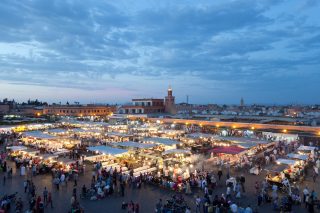
- Jemaa el-Fnaa: The city's legendary main square, filled with food stalls, performers, and evening crowds, sitting at the edge of the main souk area.
- Ben Youssef Madrasa: A beautifully restored historic Islamic college with a stunning courtyard and intricate decoration, just a short walk from the northern souks.
- Le Jardin Secret: A tranquil historic garden and riad complex offering calm, greenery, and rooftop views just off the busy market lanes.
- Marrakech Museum (Dar Mnebhi): A former palace turned museum showcasing Moroccan art and artefacts in a grand courtyard setting near the souks.
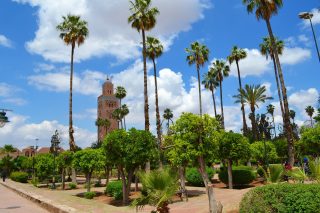
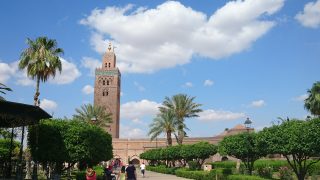
- Koutoubia Mosque: Marrakech's iconic mosque with its famous minaret, a key landmark and easy reference point as you navigate to and from the markets.
The Souks of Marrakesh appears in our Complete Guide to Visiting Marrakesh!

Moira & Andy
Hey! We're Moira & Andy. From hiking the Camino to trips around Europe in Bert our campervan — we've been traveling together since retirement in 2020!
This website uses affiliate links which may earn a commission at no additional cost to you!
Planning Your Visit
Around 9am to 9pm, the best time to visit is in the cool of the morning, or in the evening
Free – the souks are public market streets.
Nearby Attractions
- Jemaa el-Fnaa (0.1) km
Market and Square - Le Jardin Secret (0.5) km
Gardens and Historic Building - Almoravid Koubba (0.5) km
Historic Building - Dar Si Said (0.5) km
Historic Building and Museum - Marrakech Museum (0.6) km
Museum - Ben Youssef Madrasa (0.6) km
Madrasa - Tiskiwin Museum (0.6) km
Museum - Dar el Bacha (0.7) km
Historic Building and Museum - Kasbah Mosque (0.7) km
Mosque - Koutoubia Mosque (0.7) km
Mosque