Slot Loevestein
Castle near Tilburg
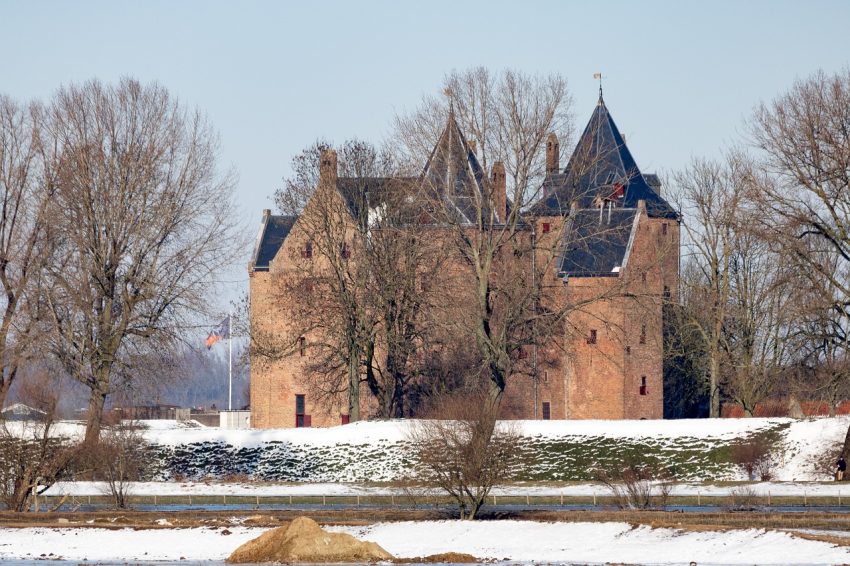
Slot Loevestein stands at the meeting of the Maas and Waal rivers, its brick towers and walls guarding a narrow strip of land that has been strategically important for over six centuries. Built in 1358 by knight Dirc Loef van Horne as a toll station on busy trade routes, it grew into a serious stronghold during the Eighty Years' War, surrounded by moats, bastions and barracks and later integrated into the Dutch Waterline defensive system. Today, the mix of medieval keep, fortress works and exhibitions makes it one of the must-see places in the Netherlands if you are interested in the country's military and legal history.
Inside, the castle leans into its most famous story: the imprisonment and escape of Hugo Grotius, the 17th-century jurist whose ideas underpin modern international law. You learn how he slipped out in a book chest in 1621, then step into rooms where interactive exhibits and manuscripts (including De Jure Belli ac Pacis) bring his life and work to life. With a symbolic key in hand, you are free to explore towers, guardrooms and displays at your own pace, before wandering out into the surrounding wetlands for riverside air, birdwatching and long views over the Dutch delta landscape. It is a great place to visit on a walking tour of Gorinchem and the river towns, especially if you add in a ferry crossing for the full waterline experience.
Table of Contents
- History and Significance of Slot Loevestein
- Things to See and Do in Slot Loevestein
- How to Get to Slot Loevestein
- Practical Tips on Visiting Slot Loevestein
- Where to Stay close to Slot Loevestein
- Is the Slot Loevestein Worth Visiting?
- FAQs for Visiting Slot Loevestein
- Nearby Attractions to the Slot Loevestein
History and Significance of Slot Loevestein
Slot Loevestein began in 1358 as a relatively modest brick stronghold built by Dirc Loef van Horne at a narrow neck of land between the Maas and Waal. Its purpose was highly practical: to control river traffic and levy tolls on passing ships, taking advantage of a bottleneck in the trade routes between the interior and the North Sea. The location, surrounded by water and marsh, also made the site easy to defend, and over time the simple castle grew into a more formidable complex of walls, towers and outworks.
During the Eighty Years’ War between the Dutch Republic and Spain, Loevestein’s role shifted from toll station to front-line fortress. The castle was reinforced with earthen bastions, ramparts and a wider ring of defences, turning it into part of a chain of strongpoints along the rivers. Later, it was absorbed into the Dutch Waterline, a sophisticated defensive system that used controlled flooding to protect the core western provinces. In times of threat, sluices and dikes could be adjusted to create shallow lakes that were too deep for troops and artillery but too shallow for boats, leaving castles like Loevestein as islands in a deliberately flooded landscape.
The 17th century brought the episode that made Loevestein truly famous: the imprisonment of Hugo Grotius. Held here for his religious and political views, he engineered a daring escape in 1621 by hiding in a chest normally used to transport books. Smuggled out of the castle and ferried to freedom, Grotius went on to publish works that laid foundations for international law. This blend of romantic escape story and profound legal legacy has since become central to how the castle is remembered, and modern exhibitions use it as a gateway into wider themes of justice, sovereignty and war.
Things to See and Do in Slot Loevestein
A visit to Slot Loevestein usually starts as you cross the outer moat and pass through the fortress gateways into the heart of the complex. The first impression is of a layered site: a stout medieval core castle wrapped in later bastions, earthworks and barracks. Take time to walk around the outer defences before diving into the interiors, noting how the castle sits on a low rise ringed by water and reed beds, with views up and down the rivers that made it so strategically valuable.
Inside the main castle, rooms and towers have been turned into a museum that feels both atmospheric and hands-on. With your symbolic key you can unlock certain doors, climb staircases and explore small chambers at your own pace, discovering exhibitions on Hugo Grotius, the development of the Dutch state and the everyday life of soldiers and prisoners. Displays often combine original objects, models and multimedia, and the Grotius sections in particular do a good job of explaining why his escape and writings still matter today.
Around the core building, you will find barracks, courtyards and the broader fortress terrain to explore. Children can follow themed trails, try simple interactive activities and imagine life as a soldier, guard or prisoner, while adults may prefer to walk the ramparts, watch river traffic and enjoy the quiet of the surrounding wetlands. The setting, with its mix of water, meadows and birdlife, makes this one of the best places to visit in Gelderland if you want to combine history with time outdoors rather than rushing through a purely indoor museum.
How to Get to Slot Loevestein
If you are arriving from abroad, Amsterdam Schiphol Airport is the most convenient major gateway, with frequent international flights and easy onward connections by train and road into the rest of the Netherlands. For the best deals and a seamless booking experience, check out these flights to Nijmegen on Booking.com. From Schiphol or Amsterdam you can travel via Utrecht or Rotterdam towards Gorinchem or Zaltbommel and then continue by local transport or car to the castle.
By train, the usual approach is to travel to Gorinchem, Zaltbommel or Geldermalsen, then connect by bus, taxi or (in season) boat towards Slot Loevestein.Train tickets and schedules are available directly through NS Dutch Railways and NS International for international services. However, for a smoother experience, we recommend using Omio, which simplifies the booking process and lets you compare prices and schedules all in one place. Some visitors combine a train journey with a ferry crossing from nearby river towns, which adds a fittingly watery prelude to a visit to this former waterline fortress.
If you are driving, Slot Loevestein lies near Poederoijen in Gelderland, roughly between the A2 (Amsterdam-Maastricht) and A27 (Utrecht-Breda) motorways. From either route, follow local roads and signposts towards Poederoijen and Slot Loevestein, where you will find parking areas close to the entrance; from there, a short walk over dikes and bridges leads you into the fortress.
Practical Tips on Visiting Slot Loevestein
- Suggested tips: Bring a light jacket even in summer, as the exposed river landscape and old stone interiors can feel cooler than nearby towns, and allow time to walk the surrounding dikes as well as the castle itself.
- Best time to visit: Late spring to early autumn offers the best combination of mild weather, active birdlife and full opening schedules, though quieter winter visits have their own moody charm.
- Entrance fee: Adults: €17.50
- Opening hours: Daily: 10:00 to 17:00
- Official website: https://www.slotloevestein.nl/en/
- How long to spend: Plan for at least half a day; many visitors happily spend a full day exploring the castle, exhibitions, fortress grounds and riverside walking routes.
- Accessibility: Historic stairs and uneven floors mean not all areas are accessible, but the outer grounds and some exhibitions are more manageable; consult access information in advance if you have mobility needs.
- Facilities: Expect ticket office, toilets, a café or restaurant, picnic spots and a shop, along with information panels and maps that help you piece together the site’s military and legal history.
- Photography tip: Capture the castle from outside the main moat or from the dikes with the rivers in the background, then look for atmospheric interior shots in stairwells, vaulted rooms and views through narrow windows.
- Guided tours: Check for scheduled tours or special themed walks focusing on Hugo Grotius, the Dutch Waterline or fortress life; they can add depth beyond what you pick up from panels alone.
- Nearby food options: The on-site café covers snacks and light meals, while nearby villages and river towns such as Woudrichem and Gorinchem offer additional restaurants and waterside terraces.
Where to Stay close to Slot Loevestein
Staying near Slot Loevestein lets you enjoy the fortress and surrounding riverscapes at a relaxed pace, especially if you are travelling by bike or planning walks along the dikes. In nearby Woudrichem, Hotel Woudrichem offers a charming small-town base within easy reach of ferry links and country roads to the castle. Across the river in Gorinchem, Hotel Gorinchem provides a comfortable option with good road access if you are exploring the wider region by car. For something more boutique, you could look at a historic inn or guesthouse in the fortified centre of Gorinchem, such as Boutique Hotel Karel de Stoute, and make the trip to Slot Loevestein part of a wider riverside itinerary.
Is the Slot Loevestein Worth Visiting?
If you are drawn to places where big ideas and dramatic stories are anchored in real stones and landscapes, Slot Loevestein is absolutely worth visiting. It offers a rare combination of medieval castle, early modern fortress and evocative riverside setting, layered with the intellectual legacy of Hugo Grotius and the ingenuity of the Dutch Waterline. The mix of interactive exhibitions, free-roaming exploration with your own key and broad nature views means it appeals to history enthusiasts, families and casual travellers alike. For many visitors, it quickly becomes a highlight of their time in the Dutch riverlands and a highlight of any walking tour of Gorinchem and its surroundings.
What Other Travellers Say...

Loevestein Castle sits on a riverbank surrounded by fields and water, offering wide walking areas, earthen ramparts, a double moat and an 18th‑century soldier’s village to explore; visitors praise the well cared‑for site, friendly staff, family‑focused activities and castle tours, plus a tavern/café and exhibition space, noting that the grounds are pleasant for cycling or walking and can be quiet and relaxing, though interiors involve stairs and are not stroller- or wheelchair‑friendly and some have found café food underwhelming.


FAQs for Visiting Slot Loevestein
Nearby Attractions to the Slot Loevestein
- Woudrichem: A picturesque fortified town with ramparts, harbourside views and historic streets just across the water from the castle.
- Gorinchem: A larger fortified town with well-preserved walls, bastions and a lively centre, ideal for combining with a Loevestein visit by bike or ferry.
- Biesbosch National Park: A maze of rivers, creeks and wetlands a short drive away, perfect for boat trips, kayaking and birdwatching in a unique freshwater delta.
- Fort Vuren: Another historic fort along the river system, offering insight into the wider network of defences that once protected the Dutch heartland.
- Zaltbommel: A riverside town with historic buildings, churches and dikes, giving more opportunities to explore the landscape that made Slot Loevestein so strategic.
The Slot Loevestein appears in our Complete Guide to Visiting Nijmegen!

Moira & Andy
Hey! We're Moira & Andy. From hiking the Camino to trips around Europe in Bert our campervan — we've been traveling together since retirement in 2020!
This website uses affiliate links which may earn a commission at no additional cost to you!
Planning Your Visit
Daily: 10:00 to 17:00
Adults: €17.50
Nearby Attractions
- Efteling Theme Park (18.6) km
Theme Park - Camp Vught National Memorial (23.5) km
Museum - Castle De Haar (34.0) km
Castle - Muiderslot Castle (57.7) km
Castle - Keukenhof Gardens (59.9) km
Gardens - Amsterdam Museum (61.6) km
Museum - Kalmthoutse Heide (61.7) km
National Park - Koepelgevangenis Arnhem (61.8) km
Activity, Historic Building and Historic Site - Tandartsenpraktijk St.Elisabeths Gasthuis (62.2) km
Attraction - Koninklijk Paleis (62.5) km
Historic Building, Historic Site and Palace
