Sedile, Lecce
Palace in Lecce
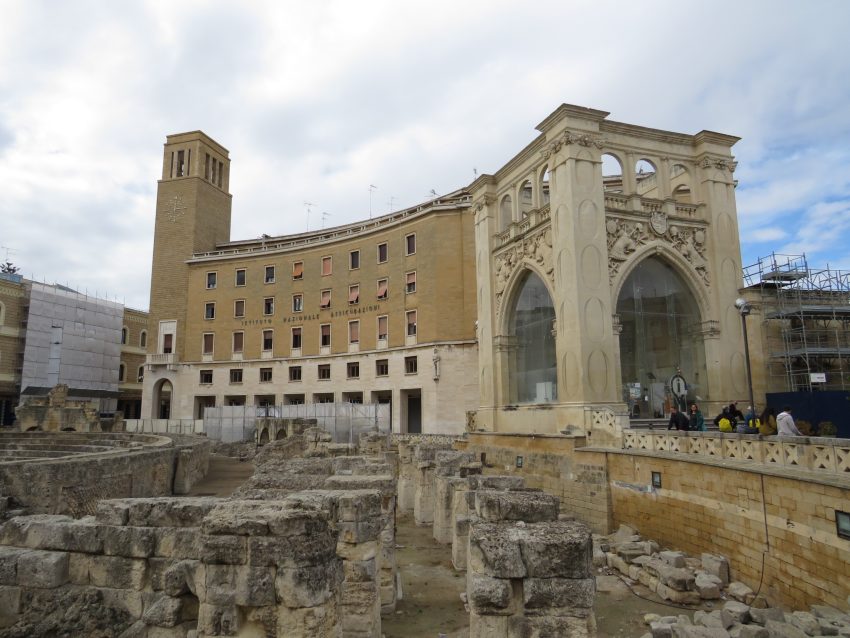
Sedile, also called Palazzo del Seggio, is a compact but striking civic building sitting right on Piazza Sant'Oronzo, the square that anchors most first-time walks through Lecce. It's the kind of landmark you spot almost without trying: pointed arches at street level, a refined loggia above, and a design that stands out against the city's more famously Baroque façades.
What makes Il Sedile genuinely satisfying is how much story is packed into such a small footprint. It sits beside the Roman amphitheatre remains, faces the constant flow of the modern piazza, and still reads as a symbol of civic authority-an architectural “stage” where Lecce once presented itself to merchants, officials, and visitors, and where it now welcomes travellers through exhibitions and tourist information.
History and Significance of the Sedile
Il Sedile dates to the late 1500s and was built in 1592 under Venetian administration, replacing an earlier civic structure that had been demolished a few years before. It was designed as a representative seat of local government and public life, placed deliberately in what was then the city's commercial heart, so power and trade shared the same stage.
Architecturally, it's an intentional blend: the ground-floor pointed arches give it a Gothic verticality, while the upper level reads as a Renaissance loggia, calmer and more classical in rhythm. That mix is part of its appeal in Lecce, where many visitors expect a single dominant style-Il Sedile quietly proves the city is more layered than one label.
Its role has shifted with the city. It housed municipal functions for centuries (including serving as town hall until the 1800s), then took on different institutional uses, and today continues as a cultural and visitor-facing space. It also gained a new “urban backdrop” in the 1900s when excavations revealed more of the Roman amphitheatre, changing the piazza's scenery and making Il Sedile feel like a bridge between Roman Lecce and early modern Lecce in one glance.
Things to See and Do in the Sedile
Start by reading the building from the outside, because the exterior is the main event. Stand at an angle that lets you see both the arches and the upper loggia, then look closer at the decorative language: civic emblems, sculpted flourishes, and the way the building is “framed” by the square around it. It’s a quick stop, but it rewards a slower look.
If the interior is open, step inside to see what's currently being used as an exhibition space or display area. Il Sedile is often most enjoyable when you treat it as a surprise bonus on your route: you're not committing to a long museum visit, but you may catch a small show, local display, or a detail you would never notice from the piazza.
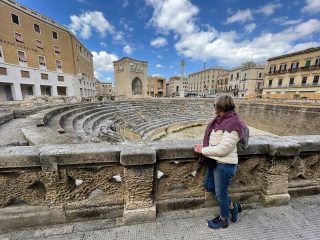
While you're here, make the most of the immediate cluster of sights. Il Sedile sits beside the Roman amphitheatre remains, near the column associated with Sant'Oronzo, and a short walk from major Lecce highlights. In practical terms, it's one of the easiest “connector” stops for building a coherent self-guided circuit through the historic centre.
How to Get to the Sedile
Lecce is typically reached via Brindisi Airport (the closest) or Bari Airport (with a wider range of routes), then onward by train, bus, or private transfer into the city. For the best deals and a seamless booking experience, check out these flights to Lecce on Booking.com. From central Lecce, Il Sedile is in Piazza Sant'Oronzo and is easiest to reach on foot, since much of the historic centre is pedestrian-friendly.
If you arrive by train, Lecce railway station is walkable to Piazza Sant'Oronzo in around 15-20 minutes, or it's a short taxi ride if you prefer to save time in the heat. Use Omnio to easily compare schedules, book train tickets, and find the best prices all in one place for a hassle-free journey across Italy. Local city buses also connect the station area with the centre, but walking is usually the simplest once you’re in town.
Driving into Lecce is straightforward, but parking inside the historic core is limited, so it's usually better to park in a garage or paid lot on the edge of the centre and walk the final stretch. If you are looking to rent a car in Italy I recommend having a look at Discover Cars, first, as they compare prices and review multiple car rental agencies for you.
Practical Tips on Visiting the Sedile
- Entrance fee: Free.
- Opening hours: Daily: 09:00–21:00.
- Official website: https://visitlecce.eu/it/luogo/sedile
- Best time to visit: Late afternoon into early evening is ideal for atmosphere in Piazza Sant'Oronzo and for seeing the building lit up, while mornings are best if you want a quieter look.
- How long to spend: 10-20 minutes for the exterior and piazza context, or 20-40 minutes if you also browse whatever is open inside.
- Accessibility: The piazza itself is easy to reach, but surfaces can be uneven and busy; if you plan to go inside, expect a compact historic layout rather than modern gallery flow.
- Facilities: Treat this as a central-city stop with cafés, gelato, and restrooms nearby rather than “on-site” facilities within the building.
Where to Stay Close to the Sedile
For a culture-heavy Lecce stay, base yourself inside the historic centre so you can walk everywhere and enjoy the evening atmosphere after day-trippers leave; if you prioritise easy parking and quick in-and-out logistics, stay just outside the old town walls and walk in for sights and dinners.
For a refined, truly central base near Piazza Sant'Oronzo, Patria Palace Hotel Lecce puts you close to the main sights with a classic old-town feel. If you want contemporary comfort right in the centre, Risorgimento Resort is well placed for walking routes and evening dining. For a smaller-scale boutique option with strong location value, Palazzo Guido works well if you like the idea of staying in a historic building while keeping everything within easy reach.
Is the Sedile Worth Visiting?
Yes, especially as part of a walking tour of central Lecce. It's one of those stops that takes very little time but gives you a strong sense of the city's civic history, and it sits in a location where you're already likely to be-so the “effort-to-reward” ratio is excellent.
Honest pivot: if you only enjoy sights with a big interior experience, you may find Il Sedile too quick, particularly if the inside is closed or between exhibitions. In that case, treat it as a photo-and-context stop in the piazza and put your deeper time into Lecce's churches, museums, and palace interiors.
What Other Travellers Say...

Palazzo del Seggio o Sedile sits in the center of Piazza Sant'Oronzo in Lecce; visitors note its beautiful architecture and charming façade—visible even during renovations—and that it blends historic styles and local stone. Recent comments mention the building once housed the city's information point (now moved) and currently houses the original statue of Sant'Oronzo; while some visitors praise its appearance, others have found the on-site staff unwelcoming. The palazzo remains a noteworthy stop during a stroll through the historic square.


For Different Travelers
Families with Kids
For families, Il Sedile works best as a short, visual stop rather than a long visit. The pointed arches, the open piazza setting, and the nearby Roman amphitheatre remains make it easy to keep children engaged without requiring museum-style attention.
If you're building a family-friendly route, pair Il Sedile with “movement stops” nearby: a quick look at the amphitheatre, a snack break in the square, then a short walk onward to another landmark. This keeps the pace varied and avoids turning a compact building into an overlong pause.
Couples & Romantic Getaways
For couples, the appeal is timing and atmosphere. Il Sedile is most memorable when the piazza is lively but not overcrowded, and when you can take a slow loop that mixes architecture, people-watching, and an unhurried café stop nearby.
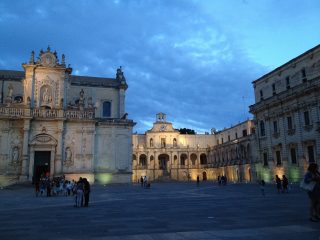
It also pairs well with an evening plan: start in Piazza Sant'Oronzo, drift through the lantern-lit lanes toward Piazza Duomo, and finish with dinner in the historic centre. Il Sedile becomes a natural “opening scene” for a romantic, walk-first Lecce night.
Budget Travelers
Budget travellers should prioritise Il Sedile because it's free, central, and genuinely distinctive. You can get the full value simply by spending a few minutes studying the architecture and using it as a navigation point for the rest of the old town.
To stretch the experience without spending, treat Piazza Sant'Oronzo as a hub: build a loop that includes Il Sedile, the amphitheatre viewpoint, a few key façades, and then a longer wander through backstreets where Lecce's stonework and balconies are the main attraction.
History Buffs
For history-focused visitors, Il Sedile is a small building with a big civic story. It anchors the idea of Lecce as a trading and administrative centre, and its blend of styles signals a city shaped by multiple political eras rather than a single artistic moment.
To go deeper, use Il Sedile as a “layering” exercise: Roman Lecce at the amphitheatre, early modern Lecce at Il Sedile, then Baroque Lecce at Santa Croce and the cathedral complex. That sequence turns a quick stop into a coherent historical narrative.
FAQs for Visiting the Sedile
Getting There
Tickets & Entry
Visiting Experience
Photography
Accessibility & Facilities
Food & Breaks Nearby
Safety & Timing
Nearby Attractions to the Sedile
- Roman Amphitheatre of Lecce: A dramatic slice of Roman Lecce revealed right in the centre of the modern square, ideal for a quick history hit.
- Basilica di Santa Croce: Lecce's most celebrated Baroque façade, packed with sculpture and detail that rewards slow looking.
- Piazza Duomo: A grand, enclosed cathedral square that feels like an open-air “room” and becomes especially atmospheric in the evening.
- Lecce Cathedral (Duomo di Lecce): The main cathedral complex, best appreciated for its layered architecture and the sense of ceremony around the square.
- Porta Napoli: A monumental city gate that makes a strong connective walk and gives you a different perspective on Lecce's historic entrances.
The Sedile appears in our Complete Guide to Visiting Lecce!

Moira & Andy
Hey! We're Moira & Andy. From hiking the Camino to trips around Europe in Bert our campervan — we've been traveling together since retirement in 2020!
This website uses affiliate links which may earn a commission at no additional cost to you!
Planning Your Visit
Daily: 09:00-21:00.
Free.
Nearby Attractions
- Anfiteatro Romano di Lecce (0.0) km
Amphitheatre - Piazza Sant'Oronzo (0.0) km
Square - Chiesa di Santa Chiara (0.1) km
Attraction, Church and Religious Building - Castle of Charles V (0.2) km
Castle - Jewish Museum (0.2) km
Museum - Basilica di Santa Croce (0.2) km
Basilica - Teatro Romano di Lecce (0.2) km
Roman Site - Teatro Apollo (0.2) km
Arts Venue, Historic Building and Theatre - Palazzo dei Celestini (0.2) km
Attraction, Historic Building and Palace - Chiesa di San Matteo (0.3) km
Church