São João Bridge, Porto
Bridge in Porto
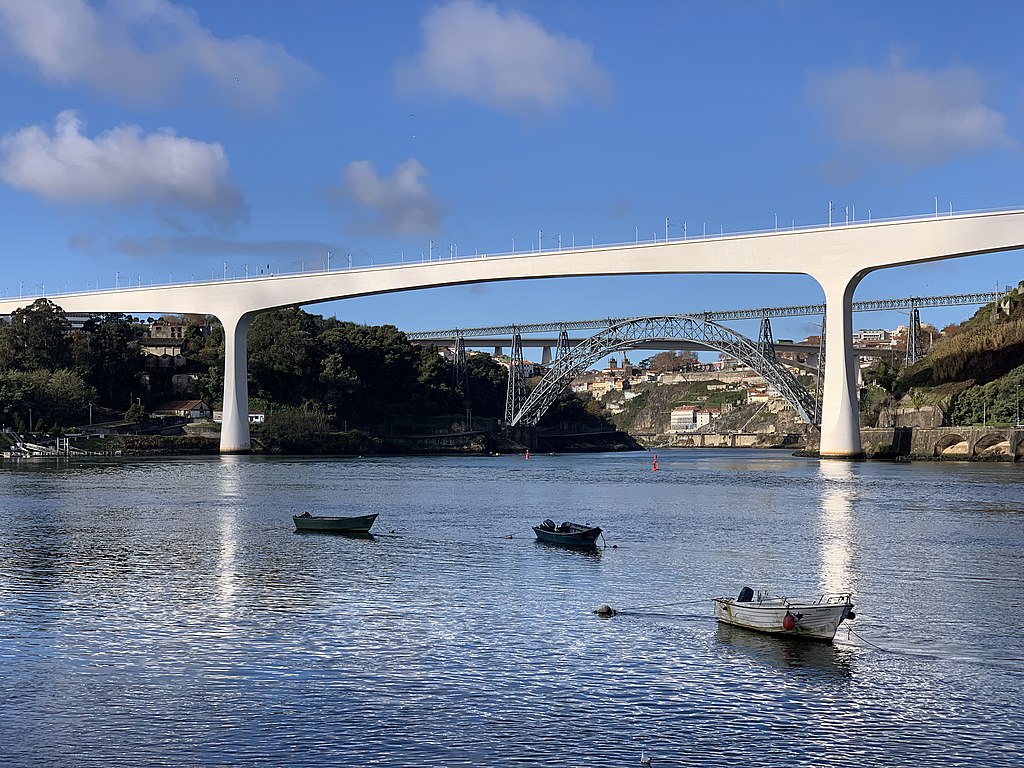
The São João Bridge (Ponte de São João) is one of Porto's most quietly impressive feats of modern engineering. Built for trains rather than tourists, it stretches across the Douro with a powerful concrete arch and a clean, contemporary profile that stands in sharp contrast to the city's older ironwork icons. For anyone interested in architecture that remains part of daily life, it's one of the more distinctive things to see in Porto.
From the river, the bridge is admired on a Six Bridges Cruise, where its modern lines complement the historic silhouettes of Porto's other crossings. On land, you'll usually experience it from viewpoints and riverside walks rather than by crossing the deck itself, making it a rewarding stop on a walking tour of Porto when you want to add a less-obvious landmark to the skyline.
Table of Contents
- History and Significance of the São João Bridge
- Things to See and Do in the São João Bridge
- How to Get to the São João Bridge
- Practical Tips on Visiting the São João Bridge
- Where to Stay close to the São João Bridge
- Is the São João Bridge Worth Visiting?
- FAQs for Visiting São João Bridge
- Nearby Attractions to the São João Bridge
History and Significance of the São João Bridge
The São João Bridge was built to meet modern rail demands, replacing the older Maria Pia Bridge as the main railway crossing between Porto and Vila Nova de Gaia. Construction began in 1988 and the bridge was completed in 1991, reflecting a period when cities across Europe were upgrading infrastructure to handle heavier, faster, more frequent rail traffic.
Designed by the Portuguese engineer Edgar Cardoso, the bridge is defined by its central concrete arch spanning the Douro. Its form is purposeful and restrained, prioritizing structural clarity and durability, while still adding a strong modern signature to Porto’s river corridor.
In the wider story of Porto’s bridges, São João is significant because it represents continuity rather than nostalgia. It kept the river crossing function moving forward while allowing the older railway bridge to remain part of Porto’s heritage landscape, so you can read multiple generations of engineering along the same stretch of river.
Things to See and Do in the São João Bridge
The most enjoyable way to “do” the São João Bridge is to view it from the riverbanks and hillside viewpoints where the arch reads clearly against the Douro. Look for angles where you can see the full curve of the arch and the way the deck sits high above the water, which gives it a dramatic, floating quality.
If you like movement in your photos, wait for a train to cross. The bridge feels most alive when it’s doing its job, and watching trains glide over the river adds scale and context that a static shot can’t.
You can also build it into a bridge-themed river walk. Pair it with a stroll toward Porto's older crossings, then climb to a viewpoint on the Gaia side so you get both the modern arch and the classic skyline in one loop, without repeating the same views twice.
How to Get to the São João Bridge
Porto's Francisco Sá Carneiro Airport (OPO) is the nearest airport for arriving into the city. For the best deals and a seamless booking experience, check out these flights to Porto on Booking.com. The most direct way to experience the bridge up close is by crossing it on a train, using Porto's main stations (such as São Bento or Campanhã) on routes that head across the Douro toward Vila Nova de Gaia and beyond. Train schedules and bookings can be found on Omio.
For viewing on foot, start from the riverside areas in central Porto or the Gaia waterfront and follow the Douro promenades until you reach a clear sightline of the arch. If you're travelling by car, park outside the tightest riverside streets and walk in for the best viewpoints. If you are looking to rent a car in Portugal I recommend having a look at Discover Cars, first, as they compare prices and review multiple car rental agencies for you.
Practical Tips on Visiting the São João Bridge
- Suggested tips: Treat it as a viewpoint-and-photo stop rather than a “visit inside,” and plan at least one riverside stretch where you can wait for a train crossing.
- Best time to visit: Late afternoon for softer light on the concrete arch, or early evening when the river reflections add atmosphere.
- Entrance fee: Free.
- Opening hours: Always visible; train crossings depend on rail schedules.
- How long to spend: 20-45 minutes if you’re viewing and photographing from the riverbanks, longer if you fold it into a broader Douro walk.
- Accessibility: Best viewed from riverside promenades and viewpoints; surfaces can vary from flat paths to steeper hillside routes depending on where you watch from.
- Facilities: No facilities at the bridge itself; rely on cafés and services in nearby riverfront districts.
- Photography tip: Use a wide angle for the full arch, then take a second shot with a passing train to show scale and purpose.
- Guided tours: It’s a strong add-on for architecture-focused routes that contrast Porto’s historic bridges with modern infrastructure.
- Nearby food options: Plan a café stop in Ribeira or on the Gaia waterfront before or after your walk so you can linger without rushing.
Where to Stay close to the São João Bridge
Staying near Porto’s historic center and the Douro makes it easiest to reach multiple viewing angles on foot, including riverside promenades where the bridge reads clearly across the water. A central base also makes it simple to hop on a train if you want to cross the bridge as part of your day’s route.
For a convenient riverside base, consider Eurostars Porto Douro. If you want a central, walkable stay close to São Bento and easy rail access, Pestana Porto - A Brasileira is a strong option. For another reliable city-center base with quick access to stations and the river, Moov Hotel Porto Centro also works well.
Is the São João Bridge Worth Visiting?
Yes, if you enjoy seeing how Porto functions beyond its most famous postcard sights. The São João Bridge is a working landmark that adds a modern layer to the Douro skyline, and it's especially rewarding for travelers who like engineering, design, and infrastructure that's still in everyday use.
It’s also worth it as a route tool. Even if you only stop briefly to admire it from a riverside vantage point or cross it by train once, it gives you a different perspective on Porto’s bridge story and how the city connects across the river.
FAQs for Visiting São João Bridge
Can you walk across the São João Bridge?
No, it’s a railway bridge, so the typical experience is viewing it from the riverbanks or crossing it by train.
What’s the best way to experience it directly?
Take a train that crosses the Douro on the bridge, then view it from the Gaia side afterward for a full perspective.
Is it close to Porto’s main tourist areas?
Yes, it’s within the broader Douro corridor, but it’s best appreciated from specific riverfront viewpoints rather than as a street-level stop.
Is it good for photography?
Yes, especially if you time a shot with a passing train and use the river and hillsides to frame the arch.
How long should I plan for this stop?
A focused viewing and photo stop can be 20-45 minutes, or longer if you combine it with a riverside walking loop.
Nearby Attractions to the São João Bridge
- Maria Pia Bridge: The historic 19th-century railway bridge nearby, preserved as a landmark and ideal for comparing engineering eras.
- Ponte do Infante: A modern road bridge crossing with excellent Douro views and a calmer feel than the busiest crossings.
- Dom Luís I Bridge: Porto's iconic double-deck bridge for panoramic viewpoints and classic skyline photos.
- Funicular dos Guindais: A short ride that links the riverside to the upper city and helps you manage Porto's steep slopes.
- Miradouro do Jardim do Morro: A Gaia-side viewpoint park famous for sunset panoramas over Porto's historic center.
The São João Bridge appears in our Complete Guide to Visiting Porto!

Moira & Andy
Hey! We're Moira & Andy. From hiking the Camino to trips around Europe in Bert our campervan — we've been traveling together since retirement in 2020!
This website uses affiliate links which may earn a commission at no additional cost to you!
Visiting São João Bridge
Always visible; train crossings depend on rail schedules.
Free.
Nearby Attractions
- Maria Pia Bridge (0.2) km
Bridge - Ponte do Infante (0.5) km
Bridge - Serra do Pilar Monastery (1.0) km
Monastery - Dom Luís I Bridge (1.2) km
Bridge - Jardim do Morro (1.2) km
Gardens and Viewing Point - Funicular dos Guindais (1.2) km
Railway - Muralhas de D. Fernando (1.2) km
City Walls - Church of Saint Ildefonso (1.2) km
Church - Freixo Bridge (1.3) km
Bridge - Calém Wine Cellars (1.3) km
Wine Cellar