Cattedrale di Parma
Cathedral in Parma
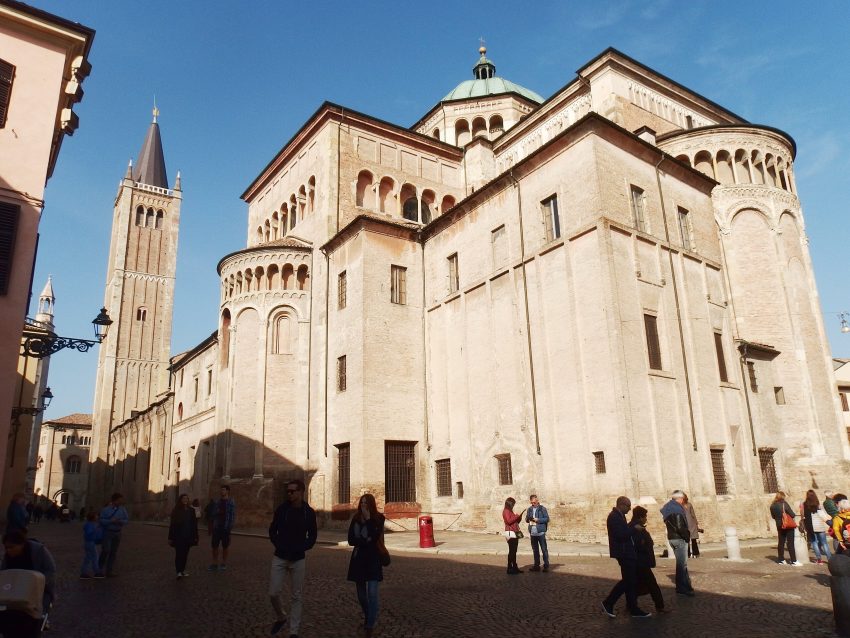
In one of Parma's main squares, the Cattedrale di Parma rises in pale stone, its Romanesque façade and sculpted portal setting the tone for what awaits inside. Construction began in 1059 under Bishop Cadalo and the cathedral was consecrated in 1106, but the building has never stood still; over the centuries, it has been enriched with Romanesque carvings, side chapels and paintings from the Parma School, turning it into a layered handbook of local faith and artistry. At the entrance, two marble lions from the 13th century flank the portal, their weight and watchful stance signalling that you are about to cross into sacred space.
Step inside and the atmosphere shifts to something both grand and intimate. The long nave pulls your gaze forwards until, almost without realising, you are standing under Antonio da Correggio's Assumption of the Virgin, completed in 1530 and swirling across the cathedral's dome. Figures rise in a vortex of cloud and light, the Virgin Mary carried upwards, while Christ descends from the blazing centre of the cupola. The painting's illusionistic foreshortening makes the figures seem to spill out into the space above you, an audacious move that foreshadowed Baroque drama nearly two centuries later. For many visitors, simply standing under this dome is a great place to visit on a walking tour of Parma, and easily the moment that lingers longest in memory.
Table of Contents
- History and Significance of the Cattedrale di Parma
- Things to See and Do in the Cattedrale di Parma
- How to Get to the Cattedrale di Parma
- Practical Tips on Visiting the Cattedrale di Parma
- Where to Stay close to the Cattedrale di Parma
- Is the Cattedrale di Parma Worth Visiting?
- FAQs for Visiting Cattedrale di Parma
- Nearby Attractions to the Cattedrale di Parma
History and Significance of the Cattedrale di Parma
The Cattedrale di Parma was begun in 1059, in an era when the city was asserting its religious and civic importance within northern Italy. Supervised initially by Bishop Cadalo, the cathedral was consecrated in 1106, crowned with a stout Romanesque structure that suited a city on the rise. Over time, sculptors adorned its exterior and interior with capitals, reliefs and portal decoration, embedding biblical scenes and symbolic animals into the stone so that the building itself became a form of visual scripture.
Those two 13th century marble lions at the entrance are among the most striking survivals of that Romanesque phase. Their presence is both decorative and symbolic: guardians of the threshold and, in a way, of the community that gathers within. Inside, chapels and side altars gradually filled with paintings from the Parma School, linking the cathedral ever more strongly to the city's artistic identity. Each new generation added works that reflected its devotional needs and its evolving sense of beauty.
Correggio's Assumption of the Virgin marked a turning point in the cathedral's visual and spiritual impact. When the dome fresco was completed in 1530, it introduced a daring new language of movement, light and illusion, drawing worshippers' eyes upwards and outwards into a visionary sky. The work's use of foreshortening and dynamic composition foreshadowed the Baroque movement, centuries before it fully took hold elsewhere. Today, the Cattedrale di Parma is celebrated not just as a fine Romanesque church, but as a place where medieval architecture and early modern artistic innovation blend into a single, powerful whole.
Things to See and Do in the Cattedrale di Parma
Begin outside, in the square, where you can appreciate how the cathedral anchors the space. Take a moment to walk slowly towards the portal, noticing the Romanesque details and, especially, the two marble lions that flank the entrance. Their worn surfaces speak of centuries of contact, and many visitors like to pause here, imagining the generations who have passed between them for baptisms, weddings and feast days.
Inside, let your eyes adjust and then walk down the nave, paying attention to the rhythm of arches and columns, and the side chapels that open off the main space. Paintings and altarpieces by artists of the Parma School enrich these chapels, reflecting local interpretations of sacred themes. As you approach the crossing, stop and stand directly beneath the dome: this is the best vantage point from which to experience Correggio's Assumption of the Virgin. Tilt your head back and follow the spiral of figures as they rise towards the central light, with Christ descending at the cupola's centre. The illusionistic technique makes the architectural boundary seem to dissolve, turning the dome into a swirling window onto heaven.
Take time to walk around the crossing and main altar area to see how the fresco interacts with the rest of the space. From different angles, new figures and connections emerge; details you barely noticed at first become clearer as your eye grows accustomed to the movement and foreshortening. If possible, step into side aisles or chapels and look back towards the dome; the perspective shifts make the painting feel almost like a living presence above the nave. Before you leave, return briefly to the entrance and look back down the length of the cathedral, appreciating how the solid Romanesque architecture and the dynamic Renaissance fresco work together to create one of the must-see places in Parma for art and faith.
How to Get to the Cattedrale di Parma
The Cattedrale di Parma stands in the historic centre, in one of the main squares of Parma, and is easy to reach once you are in the city. Parma has its own small airport and is also conveniently served by major airports such as Bologna, from which you can travel to Parma by train, coach or car. For the best deals and a seamless booking experience, check out these flights to Parma on Booking.com. From the station or bus stops, it is a straightforward walk or short taxi ride into the old town and the cathedral square.
If you are travelling by train within Italy, Parma sits on key rail lines linking cities like Milan, Bologna and Florence, making it an easy stop on a wider itinerary.Use Omnio to easily compare schedules, book train tickets, and find the best prices all in one place for a hassle-free journey across Italy. From Parma’s railway station, you can walk into the centre in around 15-20 minutes, or take a local bus or taxi towards the historic area; from there, follow signs for the cathedral or Piazza Duomo.
Travelling by car, you will approach Parma via major routes such as the A1 motorway, then follow signs towards the centre and use one of the paid car parks on the outskirts of the historic zone.If you are looking to rent a car in Italy I recommend having a look at Discover Cars, first, as they compare prices and review multiple car rental agencies for you. From your parking spot, it is a short stroll through narrow streets into the cathedral square, where the façade and dome quickly come into view. Walking is the best way to explore this part of the city, so once you have arrived, you can easily combine the cathedral with other nearby sights.
Practical Tips on Visiting the Cattedrale di Parma
- Suggested tips: Plan your visit so you have time to sit or stand quietly under the dome; the longer you look at Correggio’s Assumption, the more details you notice in the swirling figures and light.
- Best time to visit: Late morning or mid-afternoon usually offer a good balance of natural light and manageable visitor numbers; early evenings can be peaceful outside service times.
- Entrance fee: Free
- Opening hours: Baptistery and Diocesan Museum open every day from 10 am to 6 pm
- Official website: https://www.piazzaduomoparma.com/en/cattedrale/
- How long to spend: Allow 45-60 minutes to take in the exterior, explore the interior chapels and fully appreciate the dome fresco; art enthusiasts may want longer.
- Accessibility: The cathedral is in a pedestrian-friendly square with generally level access, though some thresholds or steps may remain; visitors with reduced mobility should check current access arrangements.
- Facilities: Basic facilities such as information points and possibly a small shop are available nearby; cafés and restaurants are located around the square and in adjacent streets.
- Photography tip: Inside, use a steady hand or support to capture the dome without flash, focusing on the central light and radiating figures; outside, frame the façade with the square to show its context.
- Guided tours: Consider joining a guided tour of the cathedral and nearby baptistery to gain deeper insight into the iconography, techniques and restoration of Correggio’s fresco.
- Nearby food options: After your visit, take advantage of the many cafés and trattorias around the cathedral square to sample Parma’s famous cuisine, from cured meats to local cheeses and pasta.
Where to Stay close to the Cattedrale di Parma
Staying in Parma's historic centre lets you visit the Cattedrale di Parma at different times of day and enjoy the quiet charm of the surrounding streets. For an atmospheric stay right on the main square, Palazzo Dalla Rosa Prati offers rooms with immediate access to the cathedral and baptistery. A stylish option within easy walking distance of the historic core is Grand Hotel de la Ville Parma, which combines modern comfort with a pleasant stroll into the old town. For a more intimate, central base tucked into traditional streets, Hotel Button gives you an easy walk to the cathedral, Piazza Garibaldi and many of the city's best dining spots.
Is the Cattedrale di Parma Worth Visiting?
The Cattedrale di Parma is unquestionably worth visiting, even if you are only passing through the city for a few hours. As a Romanesque cathedral enriched with centuries of sculpture and painting, it offers plenty to admire on its own, but Correggio's Assumption of the Virgin in the dome elevates it into the realm of truly memorable European churches. The fresco's daring illusionism, combined with the solid calm of the architecture and the intimate scale of the square outside, makes this a place where art, history and living faith come together in a way that feels both grand and deeply human.
What Other Travellers Say...

Parma Cathedral on Piazza Duomo is a Romanesque landmark whose vast interior is filled with extraordinary paintings and a striking frescoed cupola; visitors praise its breathtaking, perfectly preserved frescoes, the peaceful atmosphere in the heart of Parma, free entry to the cathedral itself, and recommend pairing a visit with the nearby baptistery and museum (tickets for those are available at the museum).


FAQs for Visiting Cattedrale di Parma
Nearby Attractions to the Cattedrale di Parma
- Parma Baptistery: Octagonal pink marble baptistery beside the cathedral, decorated with medieval frescoes and sculpture.
- Palazzo della Pilotta: Vast historic complex housing museums, courtyards and cultural institutions along the river.
- Teatro Farnese: Remarkable early 17th century wooden theatre within Palazzo della Pilotta, reconstructed after wartime damage.
- Piazza Garibaldi: Lively central square framed by historic palaces, cafés and shops, ideal for people-watching.
- National Gallery of Parma: Art museum within the Pilotta complex, showcasing works from the Middle Ages to the 19th century, including pieces by Correggio and Parmigianino.
The Cattedrale di Parma appears in our Complete Guide to Visiting Parma!

Moira & Andy
Hey! We're Moira & Andy. From hiking the Camino to trips around Europe in Bert our campervan — we've been traveling together since retirement in 2020!
This website uses affiliate links which may earn a commission at no additional cost to you!
Planning Your Visit
Baptistery and Diocesan Museum open every day from 10 am to 6 pm
Free
Nearby Attractions
- Baptistery of Parma (0.1) km
Baptistery - Monastic Complex of San Giovanni Evangelista (0.1) km
Monastery - Diocesan Museum (0.1) km
Museum - Chamber of St. Paul and Cell of St. Catherine (0.2) km
Monastery - Basilica Santa Maria della Steccata (0.3) km
Basilica - Regio Theatre (0.3) km
Historic Building and Theatre - Piazza Garibaldi (0.3) km
Square - Pilotta Palace (0.4) km
Museum and Palace - Teatro Farnese (0.4) km
Historic Building and Theatre - Parco Ducale (1.0) km
Park