Royal Palace of Cambodia, Phnom Penh
Palace in Phnom Penh
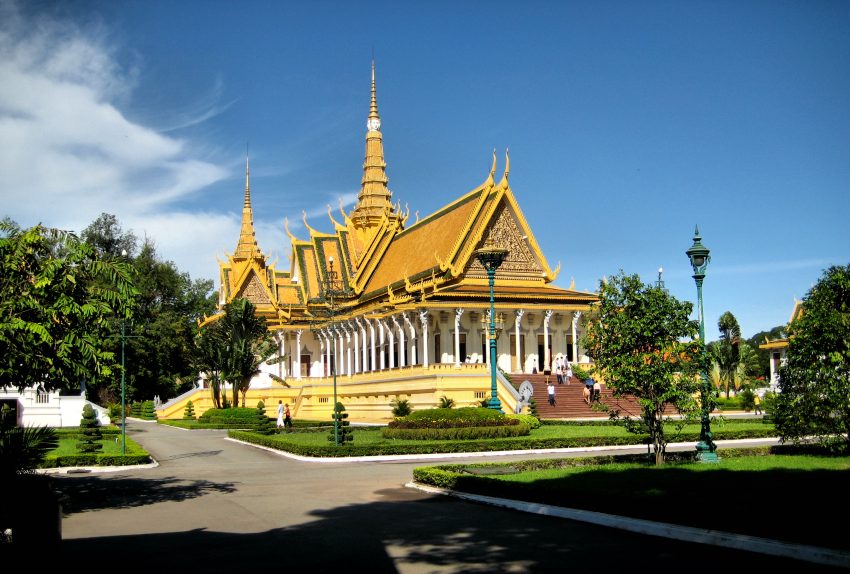
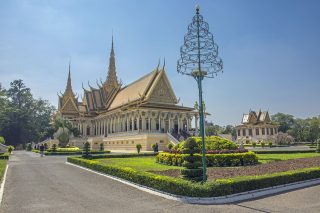
Rising above the riverside with its golden spires and sweeping roofs, the Royal Palace in Phnom Penh is the most recognisable symbol of Cambodia's monarchy and one of the top attractions in Phnom Penh. Built in 1866 during the reign of King Norodom, the palace complex still serves as the official royal residence and a setting for key ceremonies, from coronations and state visits to traditional festivals and religious events.
Inside the walls you find a self-contained royal world: the Throne Hall where formal rituals take place, the shimmering Silver Pagoda filled with sacred Buddha images, elegant open pavilions for dance and ceremony, and manicured gardens that offer pockets of calm away from the city traffic outside. With its blend of Khmer tradition, colonial-era additions and royal symbolism, the Royal Palace is a great place to visit on a walking tour of Phnom Penh, especially if you combine it with the riverside and nearby National Museum.
Table of Contents
- History and Significance of the Royal Palace Phnom Penh
- Things to See and Do in the Royal Palace Phnom Penh
- How to Get to the Royal Palace Phnom Penh
- Practical Tips on Visiting the Royal Palace Phnom Penh
- Where to Stay close to the Royal Palace Phnom Penh
- Is the Royal Palace Phnom Penh Worth Visiting
- FAQs for Visiting Royal Palace Phnom Penh
- Nearby Attractions to the Royal Palace Phnom Penh
History and Significance of the Royal Palace Phnom Penh
Phnom Penh's royal story is older than the current palace but more fragmented. Known historically as Krong Chaktomuk Serei Mongkol, the city became a royal and religious centre around the mid-15th century, but the Khmer court moved repeatedly between Basan, Longvek and Oudong, and there is no clear evidence of a permanent royal palace here before the 19th century. In 1813, King Ang Chan built Banteay Kev, the “Crystal Citadel,” on the site of today's Royal Palace, laying the groundwork for a more settled royal compound.
The decisive moment came in 1866, when King Norodom, Ang Chan's nephew, re-established Phnom Penh as the capital and began constructing the new Royal Palace. While work progressed, he lived in a temporary wooden palace near Wat Ounalom. His completed complex mirrored both Khmer court traditions and French protectorate influence: a central Throne Hall, flanked by two private royal villas, with open pavilions such as the Salle de Danse and Salle des Fêtes in the eastern public courtyard. The western courtyard housed the king's women, referred to as a harem by the French, though only the king himself was allowed inside.
The whole compound was encircled by a wall, once complemented by a moat to the west. The wall's seima, sacred leaf-shaped motifs similar to those used in monastery precincts, signalled the spiritual protection of the grounds. Outside the palace stood the Silver Pagoda to the south and the royal cremation ground to the north, while the park to the east hosted royal celebrations such as the King's Birthday and annual boat races. Between 1912 and 1919, King Sisowath largely demolished and rebuilt Norodom's palace, so that today only the eastern section of the wall and the cast-iron Napoleon Pavilion survive from the original complex. Even so, the site remains the living heart of the monarchy and a potent symbol of national continuity.
Things to See and Do in the Royal Palace Phnom Penh
Most visits start in the main courtyard, from where you can appreciate the palace’s overall layout and the way its gilded roofs rise above the trees. The Throne Hall (Preah Tineang Tevea Vinichhay) is the most commanding structure here, rebuilt in 1917 with a soaring roof and a 59-metre spire shaped like a stupa. It is still used for major royal ceremonies, including coronations, royal weddings and state receptions. Inside, the hall is richly decorated, with ceiling frescoes by French artists that add a subtle European note to the otherwise Khmer interior.
To the south lies the Silver Pagoda (Wat Preah Keo Morokat), the Temple of the Emerald Buddha and arguably the most spiritually important building in the complex. The current structure dates from 1962 and takes its popular name from the more than 5,000 silver tiles covering the floor, now mostly protected by carpets. Here you will find an array of Buddhist treasures: a life-sized gold Buddha encrusted with diamonds, the venerated Emerald Buddha itself and numerous gifts from foreign dignitaries. Photography is not allowed inside, and you must leave your shoes at the entrance, which adds to the sense of entering a sacred space rather than just another museum room.
On the eastern side of the grounds, the Moonlight Pavilion (Preah Thineang Chan Chhaya) opens like a stage facing the palace walls and the riverside beyond. Traditionally used for classical dance performances and court ceremonies, it more recently hosted events such as the coronation banquet of King Norodom Sihamoni in 2004. Nearby stands the cast-iron Napoleon III Pavilion, an architectural curiosity said to have come from the 1878 Paris Exposition Universelle, blending European and Khmer elements but clearly ill-adapted to the local climate. As you wander, take time to enjoy the gardens, courtyards and statues, and look closely at the long Reamker frescoes on the walls around the Silver Pagoda courtyard, where scenes from Cambodia's version of the Ramayana unfold in vivid colour.
The King’s residence, Prasat Khemarin, occupies part of the western courtyard and is off limits to visitors. If you see a blue flag flying above it, that means King Norodom Sihamoni is in residence. Knowing a little of his life story - trained in dance, music and theatre in Prague, surviving house arrest during the Khmer Rouge years, later founding a dance troupe in France and finally becoming king in 2004 after his father’s abdication - adds an extra layer of meaning to the palace, reminding you that this is a living institution, not just a historic shell.
How to Get to the Royal Palace Phnom Penh
Most international visitors arrive in Cambodia via Phnom Penh International Airport or Siem Reap International Airport, with Phnom Penh's airport the most convenient gateway for the Royal Palace. For the best deals and a seamless booking experience, check out these flights to Phnom Penh on Booking.com. From Phnom Penh airport, taxis, tuk-tuks and ride-hailing services can take you directly to the riverside and palace area in 30-45 minutes, depending on traffic.
Within Cambodia, Phnom Penh is linked to other cities such as Sihanoukville and Kampot by a mix of train and bus routes, though buses and minivans remain the most common and flexible option.Train schedules and bookings can be found on Omio. Once in the capital, tuk-tuks are the easiest way to reach the palace from most central neighbourhoods, including the riverside, BKK1 and the central market area; just ask to be dropped at the Royal Palace entrance on Sothearos Boulevard.
If you are travelling by car, either self-drive or with a hired driver, the palace lies in the heart of central Phnom Penh, close to the junction of Norodom Boulevard and the riverfront. Street parking is limited and often informal, so many visitors arrange for their driver or tuk-tuk to wait nearby or return at a fixed time after the visit.
Practical Tips on Visiting the Royal Palace Phnom Penh
- Suggested tips: Treat the Royal Palace as both a cultural monument and an active place of worship and residence; move slowly, observe people as well as buildings and allow time for quiet reflection, not just photos.
- Best time to visit: Aim for early morning soon after opening or late afternoon before the 5 pm closing time to avoid both midday heat and the heaviest crowds.
- Entrance fee: Adults: $10.00
- Opening hours: 8–10:30am & 2–5pm daily
- Official website: Website
- How long to spend: Allow 1.5-2 hours to see the main palace courtyards, Throne Hall exterior, Silver Pagoda compound, gardens and pavilions at a comfortable pace.
- Accessibility: Paths are generally level but can be hot and exposed, with some steps at building entrances; visitors with mobility or heat sensitivity should bring water, hats and take regular rests in shaded areas.
- Facilities: On site you will find ticket counters, basic restrooms and small stalls or vendors nearby; more substantial cafés and restaurants are available along the riverfront just outside the palace.
- Photography tip: Wide shots of the Throne Hall and Moonlight Pavilion work best from the edges of the courtyards; remember that photography is not permitted inside the Silver Pagoda and some interior spaces, so focus on exteriors, rooflines and garden details.
- Guided tours: Hiring an English-speaking guide at the main entrance is worthwhile if you want context on royal ceremonies, symbolism in the architecture and stories about recent kings.
- Nearby food options: After your visit, head to the riverfront or nearby streets for Cambodian and international restaurants, ideal for a relaxed lunch or sunset drink while you process what you have seen.
Where to Stay close to the Royal Palace Phnom Penh
Staying near the Royal Palace puts you within walking distance of many of Phnom Penh’s main sights as well as the riverside. A classic option just a short stroll from the palace is Raffles Hotel Le Royal, a historic grand hotel that pairs colonial charm with modern comfort and easy access by tuk-tuk to the palace gates. For something closer to the river and nightlife, Plantation Urban Resort & Spa offers a tranquil pool courtyard and is only a few minutes’ walk from the Royal Palace and National Museum. If you prefer a more intimate boutique stay, Blue Lime Phnom Penh sits tucked behind the museum area, making it convenient to walk to the palace, riverside promenade and nearby cafés.
Is the Royal Palace Phnom Penh Worth Visiting
The Royal Palace is absolutely worth visiting if you want to understand Cambodia beyond its tragic recent history. Here you see the continuity of the monarchy, the elegance of Khmer royal architecture and the deep religious devotion expressed in the Silver Pagoda and its Buddhas. At the same time, the palace's rebuilding under French influence, the survival of only a few elements from Norodom's original complex and the modern life of King Norodom Sihamoni all speak to the country's resilience and capacity for renewal. This spot is one of the best places to see in Phnom Penh for appreciating both the splendour and the fragility of Cambodia's royal tradition.
What Other Travellers Say...

Royal Palace of Cambodia on Samdach Sothearos Blvd is a richly ornamented Khmer-style palace complex and working royal residence offering ornate buildings and lovely grounds; visitors praise its majestic architecture and the Silver Pagoda's precious-flooring (though much of the silver is often covered), the display of royal dress and silver/gold household items, and frequently note areas under restoration and restrictions on entry and photography. Reviewers advise dressing respectfully, consider a knowledgeable guide to get context and help with bargaining for services, and say free bottled water is sometimes available near the exit.


FAQs for Visiting Royal Palace Phnom Penh
Nearby Attractions to the Royal Palace Phnom Penh
- National Museum of Cambodia: Just a short walk away, housing an outstanding collection of Khmer sculpture and artefacts from Angkor and beyond.
- Riverside promenade and Sisowath Quay: A lively riverfront strip with cafés, bars and street life, perfect for a stroll before or after your palace visit.
- Wat Ounalom: One of Phnom Penh's most important pagodas and a key centre of Cambodian Buddhism, located near the riverside.
- Independence Monument and surrounding parks: A landmark honouring Cambodia's independence from France, with nearby green spaces for a quieter walk.
- Tuol Sleng Genocide Museum: A former Khmer Rouge prison turned memorial and museum, offering essential but difficult context to Cambodia's modern history and complementing the royal narrative you see at the palace.
The Royal Palace of Cambodia appears in our Complete Guide to Visiting Phnom Penh!

Moira & Andy
Hey! We're Moira & Andy. From hiking the Camino to trips around Europe in Bert our campervan — we've been traveling together since retirement in 2020!
This website uses affiliate links which may earn a commission at no additional cost to you!
Planning Your Visit
8-10:30am & 2-5pm daily
Adults: $10.00
Nearby Attractions
- National Museum of Cambodia (0.3) km
Museum - Wat Ounalom (0.5) km
Buddhist Temple - Independence Monument (0.9) km
Monument - Sisowath Quay (1.0) km
Walk - Wat Langka (1.0) km
Buddhist Temple - Phnom Penh Night Market (1.2) km
Market - Central Market (Phsar Thmey) (1.3) km
Market - Wat Phnom (1.6) km
Buddhist Temple - Tuol Sleng Genocide Museum (2.2) km
Museum - Russian Market (Phsar Toul Tum Poung) (3.1) km
Market