Roman Odeon, Catania
Historic Site, Roman Site and Theatre in Catania
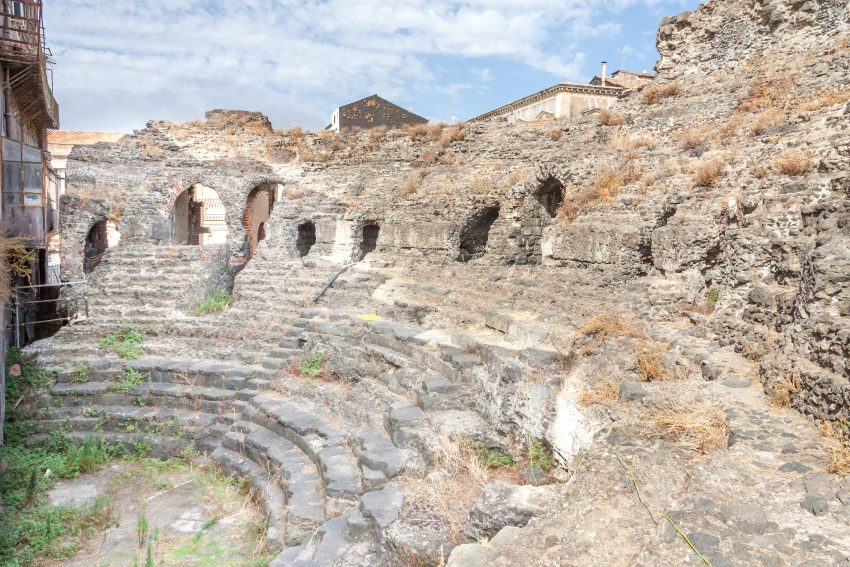
The Roman Odeon in Catania is one of those archaeological surprises that feels almost secret: a small Roman theater embedded in the living fabric of the historic center, with modern streets and buildings pressed right up against ancient stone.
It's easiest to visit as part of a walking tour of central Catania, pairing it with the nearby Roman Amphitheatre and the baroque highlights along Via Etnea. Even if you're short on time, it's worth knowing the best viewpoints and how the site connects to the larger Roman-era footprint of the city.
Table of Contents
- History and Significance of the Roman Odeon
- Things to See and Do in the Roman Odeon
- How to Get to the Roman Odeon
- Practical Tips on Visiting the Roman Odeon
- Where to Stay Close to the Roman Odeon
- Is the Roman Odeon Worth Visiting?
- For Different Travelers
- FAQs for Visiting Roman Odeon
- Nearby Attractions to the Roman Odeon
History and Significance of the Roman Odeon
Catania's Roman Odeon was built as a smaller performance space, traditionally associated with music, recitations, and more intimate events than those staged in larger theaters. Its scale is part of the appeal: you can read the structure quickly and imagine how sound and seating worked without needing a long, museum-style visit.
What makes the Odeon especially compelling in Catania is the way the city grew around it. The site is not isolated in a wide-open archaeological park; instead, it sits within dense urban blocks, giving you a vivid sense of how layers of history stack up in Sicily's cities.
Visiting also helps contextualize Catania's Roman monuments as a network rather than stand-alone stops. The Odeon complements the bigger, more immediately dramatic Roman Amphitheatre by showing a different side of entertainment and civic life.
Things to See and Do in the Roman Odeon
Start by orienting yourself to the seating and the curve of the cavea (the audience area). Because the Odeon is compact, small details stand out: masonry transitions, restored sections, and the way the structure is framed by surrounding buildings.
Look for spots where you can compare original stonework with later restoration. Many visitors enjoy noticing the “archaeology of archaeology” here: evidence of excavation and conservation that reveals how the site was uncovered and stabilized.
If you're visiting with the Roman Amphitheatre ticket, treat the Odeon as the quieter, more contemplative counterpart. It's a good place to slow down, take photos of the geometry of the seating, and appreciate how unexpectedly close ancient ruins can be to everyday city life.
How to Get to the Roman Odeon
The nearest airports are Catania-Fontanarossa Airport (CTA) for the fastest arrival, with additional options via regional Sicilian airports if you're already island-hopping. For the best deals and a seamless booking experience, check out these flights to Catania on Booking.com.
Catania is well connected by rail, and arriving by train is convenient if you're coming from other Sicilian cities or onward connections; from Catania Centrale you can continue by local transport or taxi into the historic center. Use Omnio to easily compare schedules, book train tickets, and find the best prices all in one place for a hassle-free journey across Italy.
If you’re traveling by car, plan to park outside the tight central zone and walk in, as streets can be narrow and parking is limited near the main archaeological sights. If you are looking to rent a car in Italy I recommend having a look at Discover Cars, first, as they compare prices and review multiple car rental agencies for you.
Practical Tips on Visiting the Roman Odeon
- Official website: https://parchiarcheologici.regione.sicilia.it/catania-valle-aci/en/biglietti/teatro-romano-e-odeon-catania/
- Entrance fee: Adults: €8; Reduced: €4.
- Opening hours: Monday – Sunday: 09:00–19:00.
- Best time to visit: Go early in the day for a calmer experience and better light, especially if you want photos without crowds.
- How long to spend: Plan 20-40 minutes for the Odeon itself, or about 60-90 minutes if you're combining it with nearby Roman sites.
- Accessibility: Expect uneven surfaces and steps typical of archaeological ruins; mobility access may be limited in parts of the site.
- Facilities: Facilities can be minimal on-site, so it’s smart to use cafés and restrooms in the surrounding historic center before or after your visit.
Where to Stay Close to the Roman Odeon
Base yourself in central Catania’s historic center for the easiest walkable access to Roman ruins, baroque churches, and evening dining.
Palace Catania | UNA Esperienze A polished, full-service option on Via Etnea that's ideal if you want comfort, a central address, and an easy walk to major sights.
Duomo Suites & Spa A stylish pick near Piazza Duomo, great for travelers who want a spa element and to be steps from the city's most iconic baroque core.
Liberty Hotel A boutique-feeling stay with character, well suited for couples or anyone who prefers a quieter, elegant base while staying central.
NH Catania Centro Reliable and convenient for transport links and a straightforward walk into the historic center, especially if you like predictable amenities.
Habitat Boutique Hotel A design-forward boutique option that fits travelers who prioritize atmosphere and a modern feel while remaining close to the main sights.
Is the Roman Odeon Worth Visiting?
Yes, the Roman Odeon is worth visiting if you enjoy seeing ancient history embedded in a real, working city. It's not the largest ruin in Sicily, but it's memorable for its intimate scale, its central location, and the way it rounds out a Roman-themed walking route through Catania.
Honest Pivot: If you're expecting a big, fully open archaeological complex with extensive signage and pristine presentation, you may find the experience too brief or visually constrained. In that case, prioritize larger headline sites and treat the Odeon as an optional add-on rather than a must.
What Other Travellers Say...

Reviews are largely positive, with travelers praising the Odeon as an authentic slice of Roman Catania tucked into the city center and easy to combine with nearby Roman sites on the same ticket. Common highlights include the atmosphere of ruins surrounded by modern buildings, the sense of history, and the overall value for a short visit. A recurring downside is that the experience can feel limited or hard to access directly, and a few visitors mention maintenance and cleanliness issues that detract from the setting.


For Different Travelers
The Roman Odeon works best as a flexible stop you can tailor to your pace. Whether you're moving quickly between landmarks or building a deeper Roman-history day, it's easy to slot into a central itinerary.
Families with Kids
Kids often enjoy the idea of a “real Roman theater” and the simple, recognizable shape of the seating. Keep expectations realistic: it’s a shorter visit than a big museum, so it works best as a quick, curiosity-driven stop.
Pair it with a snack break nearby and a second, more open-air attraction afterward to keep energy up. A scavenger-hunt approach (spot the curved rows, find the stage area) can make it more engaging.
Couples & Romantic Getaways
For couples, the Odeon is a charming, off-the-main-stage sight that feels a bit more tucked away than Catania's busiest squares. It's ideal for a slow morning walk that mixes archaeology with espresso stops.
If you like photography, the contrast between ancient stone and the surrounding urban texture can be especially striking. Combine it with a sunset stroll on Via Etnea for a full day that balances history and atmosphere.
Budget Travelers
The Odeon is a strong value when visited as part of a combined Roman-sites plan, especially if you're already exploring the historic center on foot. You can build a full day around free or low-cost highlights nearby.
To keep costs down, visit earlier, bring a refillable water bottle, and plan meals around casual bakeries and street-food spots in the center rather than sit-down restaurants.
History Buffs
History lovers will appreciate how the Odeon complements Catania's better-known Roman Amphitheatre by showing a different performance setting and scale. It's a great place to think about how entertainment, acoustics, and civic identity worked in Roman cities.
Spend extra time looking for evidence of restoration and the site’s relationship to later urban growth. The “layers” story is a big part of what makes this stop rewarding.
FAQs for Visiting Roman Odeon
Getting There
Tickets & Entry
Visiting Experience
Tours, Context & Itineraries
Photography
Accessibility & Facilities
Food & Breaks Nearby
Safety & Timing
Nearby Attractions to the Roman Odeon
- Roman Amphitheatre (Anfiteatro Romano): A larger, more dramatic Roman entertainment site nearby that pairs naturally with the Odeon.
- Piazza del Duomo: Catania's iconic baroque square, ideal for architecture, people-watching, and quick photo stops.
- Catania Cathedral (Duomo di Sant'Agata): A major landmark with layered history and a central location in the old town.
- Via Etnea: The city's main promenade for strolling, shopping, and views toward Mount Etna on clear days.
- Teatro Massimo Bellini: A grand opera house that adds a different era of performance culture to your itinerary.
The Roman Odeon appears in our Complete Guide to Visiting Catania!

Moira & Andy
Hey! We're Moira & Andy. From hiking the Camino to trips around Europe in Bert our campervan — we've been traveling together since retirement in 2020!
This website uses affiliate links which may earn a commission at no additional cost to you!
Planning Your Visit
Monday - Sunday: 09:00-19:00.
Adults: €8; Reduced: €4.
Nearby Attractions
- Roman Theater of Catania (0.1) km
Historic Site, Roman Site and Theatre - Terme della Rotonda (0.1) km
- Casa di Giovanni Verga (0.2) km
Historic Building, Library and Museum - Museo Vincenzo Bellini (0.2) km
Historic Building, Historic Site and Museum - Church of Saint Benedict (0.2) km
Church, Historic Building and Religious Building - Museum of Contemporary Art in Sicily (0.2) km
Arts Venue, Gallery and Museum - Chiesa di San Francesco Borgia (0.2) km
Church and Religious Building - Benedictine Monastery of San Nicolò l'Arena (0.2) km
Historic Building, Historic Site and Monastery - Church of Saint Julian (0.2) km
Church, Religious Building and Viewing Point - Church of Santa Maria dell'Aiuto (0.3) km
Church and Religious Building