Roman Amphitheatre of Cagliari
Amphitheatre, Historic Site and Roman Site in Cagliari
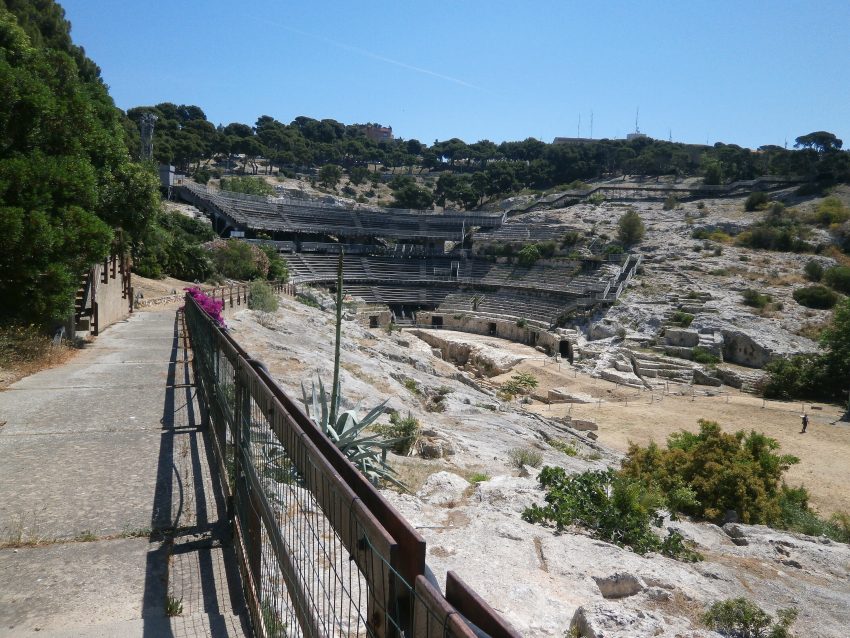
The Roman Amphitheatre of Cagliari is one of the city's most striking ancient sights, carved directly into the limestone slope near the historic center. Even if you only have a short time in Cagliari, it's an easy stop that adds real Roman-era context to your walk through the city.
It works especially well as part of a self-guided walking tour linking the Marina district, the Castello hill, and nearby viewpoints. For the best look, combine the official walkway views with a quick loop around the perimeter streets, where you can catch different angles of the rock-cut seating and the arena's footprint.
Table of Contents
- History and Significance of the Roman Amphitheatre of Cagliari
- Things to See and Do in the Roman Amphitheatre of Cagliari
- How to Get to the Roman Amphitheatre of Cagliari
- Practical Tips on Visiting the Roman Amphitheatre of Cagliari
- Where to Stay Close to the Roman Amphitheatre of Cagliari
- Is the Roman Amphitheatre of Cagliari Worth Visiting?
- For Different Travelers
- FAQs for Visiting Roman Amphitheatre of Cagliari
- Nearby Attractions to the Roman Amphitheatre of Cagliari
History and Significance of the Roman Amphitheatre of Cagliari
Built in the Roman period (commonly dated between the 1st and 2nd centuries CE), Cagliari’s amphitheatre is notable because so much of it was excavated straight out of the rock rather than fully constructed above ground. That rock-cut design is part of what makes it feel so integrated with the landscape, and it helps explain why the site can look more “carved” than “built” compared with other amphitheatres around Italy.
In antiquity, amphitheatres were public entertainment venues, and Cagliari’s would have hosted the kinds of spectacles typical of the Roman world, including gladiatorial contests and animal hunts. The seating was traditionally organized by social rank, and the overall layout was designed to manage crowds efficiently while keeping the arena as the dramatic focal point.
Today, the amphitheatre's significance is twofold: it's a rare, tangible slice of Roman Sardinia in the middle of a modern city, and it's a reminder of how Roman urban life extended well beyond mainland Italy. Even with partial access at times, it remains one of Cagliari's most historically resonant stops.
Things to See and Do in the Roman Amphitheatre of Cagliari
The main experience is the close-up viewpoint route that lets you look down into the amphitheatre and appreciate the scale of the arena and the carved seating. Focus on the geometry: the oval form, the way the rock has been cut into tiers, and the relationship between the monument and the hillside.
Because access can be limited, treat this as a “see it well” site rather than a “wander everywhere” ruin. Spend time at a couple of different vantage points along the walkway, then step back to take in the broader setting—this is where you’ll best understand how the amphitheatre was fitted into the natural terrain.
If you're building a walking itinerary, pair the amphitheatre with a climb toward Castello for panoramic views, then loop back down toward the city's cafés and evening passeggiata. It's a satisfying mix of ancient history and modern Cagliari rhythm.
How to Get to the Roman Amphitheatre of Cagliari
The nearest airport is Cagliari Elmas Airport (CAG), which is the main gateway for flights to southern Sardinia. For the best deals and a seamless booking experience, check out these flights to Cagliari on Booking.com.
From the airport, you can reach central Cagliari easily, and if you're arriving from elsewhere on the island, Cagliari's main rail connections bring you into the city close to the central districts. Use Omnio to easily compare schedules, book train tickets, and find the best prices all in one place for a hassle-free journey across Italy.
If you're traveling by car, you can drive into Cagliari and aim for parking near the site, but allow extra time for city traffic and one-way streets. If you are looking to rent a car in Italy I recommend having a look at Discover Cars, first, as they compare prices and review multiple car rental agencies for you.
Practical Tips on Visiting the Roman Amphitheatre of Cagliari
- Official website: https://cagliariturismo.comune.cagliari.it/en/vivicagliari/roman-amphitheatre
- Entrance fee: Adults: €3
- Opening hours: (Summer) April 28 – September 30; Daily: 10:00–13:00 & 15:00–19:00. (Winter) October 1 – April 27; Daily: 10:00–17:00.
- Best time to visit: Go early in the day for cooler temperatures and clearer sightlines, especially in late spring and summer. If you’re visiting in peak season, arriving near opening time helps you avoid the busiest moments.
- How long to spend: Plan for 30–60 minutes on-site for the viewpoints and photos. Add extra time if you’re linking it to a longer walking loop up toward Castello.
- Accessibility: Expect uneven surfaces and viewpoint-style access rather than full roaming through the ruins. If mobility is a concern, confirm current access arrangements before you go.
- Facilities: Keep expectations simple: this is primarily an outdoor heritage stop. Bring water in warm months and plan café breaks before or after in the nearby central neighborhoods.
Where to Stay Close to the Roman Amphitheatre of Cagliari
For most travelers, the best area to base yourself is central Cagliari (Marina or near Castello) so you can walk to major sights and easily reach restaurants in the evening.
Hotel Flora A polished, central option in the Marina area that’s convenient for evening dining and an easy walk or short ride to the amphitheatre.
Palazzo Doglio A higher-end stay with a stylish courtyard feel and strong amenities, ideal if you want comfort and a “treat yourself” base while sightseeing.
T Hotel A modern, well-equipped hotel that works well for travelers who like contemporary rooms and reliable services, with straightforward access to the center.
Hotel Regina Margherita A practical, well-located pick near the waterfront promenade, good for travelers who want a classic city-hotel feel and easy transport links.
Birkin Porto 1870 A boutique-style choice near the port area that's great for short stays, with a lively neighborhood vibe and quick access to central Cagliari.
Is the Roman Amphitheatre of Cagliari Worth Visiting?
Yes—especially if you enjoy ancient sites and want a quick, atmospheric stop that fits neatly into a city walk. The amphitheatre’s rock-cut character makes it visually distinctive, and even a short visit adds depth to your understanding of Cagliari’s layered history.
Honest Pivot: if you’re expecting a fully open, extensively restored ruin where you can explore every corridor and sit on the tiers, you may feel underwhelmed—access can be viewpoint-focused and the preservation is uneven. In that case, consider treating it as a photo-and-context stop and spend more time in Castello’s viewpoints, museums, or a longer day trip to larger archaeological sites outside the city.
What Other Travellers Say...

Overall reviews are mildly positive, with many visitors appreciating the amphitheatre’s ancient atmosphere and the chance to get fairly close via the viewing route. Common highlights include its historic feel, good photo opportunities from different angles, and the convenience of stopping by while walking through the city. The most frequent complaints mention limited access (often viewing-only rather than exploring the ruins), uneven preservation, and occasional closures or renovation-related restrictions that can make the visit feel shorter than expected.


For Different Travelers
Cagliari’s Roman amphitheatre is a flexible stop: it can be a quick look on a busy day or a meaningful pause in a history-focused itinerary. What you get out of it depends on expectations—think “close-up views and context” more than “full-scale ruin exploration.”
Families with Kids
For families, the amphitheatre works best as a short visit with a clear story: Romans, gladiators, and big public spectacles. Keep it punchy, then reward everyone with a gelato stop nearby.
If your kids need hands-on exploration, plan a broader day that includes parks or open spaces where they can run around afterward. Treat the amphitheatre as the “cool ancient thing we saw” rather than the main event.
Couples & Romantic Getaways
Couples will appreciate how easy it is to fold this into a scenic walking date—ancient stone, city views, and then a relaxed aperitivo in the center. It’s a good “shared moment” stop that doesn’t require a big time commitment.
For a more romantic flow, pair it with sunset viewpoints in Castello and a dinner reservation in Marina. The amphitheatre is the historic prelude to a classic Cagliari evening.
Budget Travelers
Budget travelers can get a lot of value here because it’s quick, central, and pairs well with free city wandering. Even if you decide not to go in, the surrounding viewpoints and perimeter walk still give you a sense of the site.
If you do pay entry, keep the rest of the day low-cost: walk the historic districts, pack a water bottle, and plan one paid “highlight” elsewhere (like a museum or a day trip) depending on your interests.
History Buffs
History buffs should absolutely include it, but go in with the right lens: it’s a site to read, imagine, and interpret rather than one to roam extensively. The rock-cut structure is the standout feature—look closely at how the monument was shaped from the hillside.
To deepen the visit, connect it to Cagliari’s broader timeline by pairing it with the Castello area and any nearby museums you’re already planning to see. You’ll get a clearer picture of how the city evolved from Roman roots to its later fortified hilltop identity.
FAQs for Visiting Roman Amphitheatre of Cagliari
Getting There
Tickets & Entry
Visiting Experience
Tours, Context & Itineraries
Photography
Accessibility & Facilities
Food & Breaks Nearby
Safety & Timing
Nearby Attractions to the Roman Amphitheatre of Cagliari
- Castello district: Cagliari’s historic hilltop quarter with panoramic viewpoints, museums, and atmospheric lanes.
- Bastione di Saint Remy: A landmark terrace and promenade that's ideal for city views and sunset strolls.
- Cattedrale di Santa Maria (Cagliari Cathedral): A key sight in Castello with a grand interior and a strong sense of the city's later history.
- Orto Botanico di Cagliari (Botanical Garden): A relaxing green stop with Mediterranean plants and a calmer pace close to the center.
- Museo Archeologico Nazionale di Cagliari: The best place to add deeper archaeological context to your Sardinia itinerary.
The Roman Amphitheatre of Cagliari appears in our Complete Guide to Visiting Cagliari!

Moira & Andy
Hey! We're Moira & Andy. From hiking the Camino to trips around Europe in Bert our campervan — we've been traveling together since retirement in 2020!
This website uses affiliate links which may earn a commission at no additional cost to you!
Planning Your Visit
(Summer) April 28 - September 30; Daily: 10:00-13:00 & 15:00-19:00.
(Winter) October 1 - April 27; Daily: 10:00-17:00.
Adults: €3
Nearby Attractions
- Orto Botanico di Cagliari (0.4) km
Attraction, Gardens and Park - Galleria Comunale d'Arte (0.4) km
Arts Venue, Gallery and Museum - Cagliari Archaeological Museum (0.4) km
Attraction and Museum - Cittadella dei Musei (0.5) km
Gallery, Museum and Viewing Point - Giardini Pubblici (0.5) km
Gardens and Park - Torre di San Pancrazio (0.5) km
Historic Site, Monument and Tower - Cripta di Santa Restituta (0.5) km
Attraction, Cave and Historic Site - Chiesa di San Michele (0.5) km
Attraction, Church and Religious Building - Torre dello Sperone (0.6) km
City Walls, Historic Site and Tower - Palazzo Regio (0.6) km
Historic Building, Historic Site and Palace