Rimini Roman Amphitheatre
Amphitheatre in Rimini
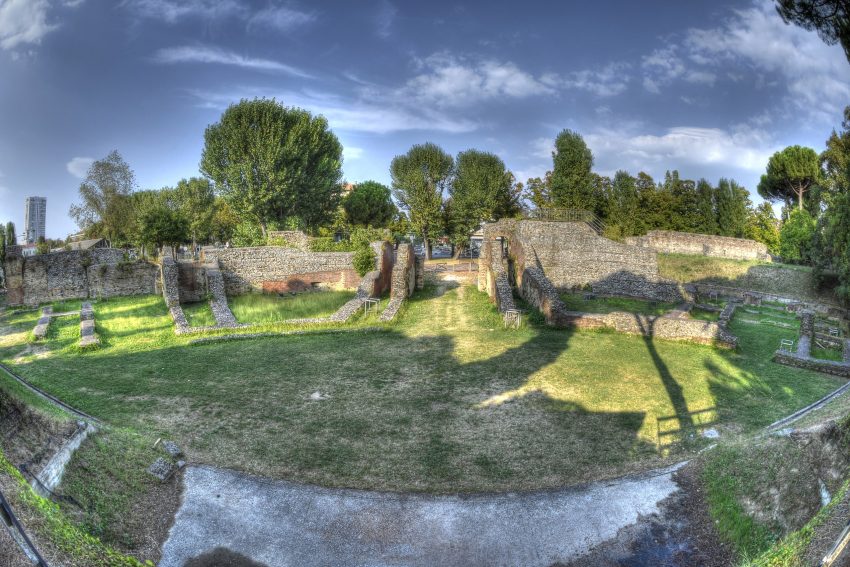
The Anfiteatro Romano di Rimini is one of the city's most evocative Roman-era remains: an oval amphitheatre whose surviving brickwork and foundations still hint at the scale of the spectacles once staged here. It sits just outside the tightest streets of the historic center, close enough to reach on foot, but far enough to feel like you've stepped into a quieter pocket of Rimini's past.
This is one of the things to see in Rimini when you want history that feels raw and unpolished-no grand reconstruction, just the outline of a real entertainment machine built for crowds, noise, and power. It also fits neatly into a walking tour of Rimini, especially if you're linking Roman landmarks with a relaxed wander through the center.
Table of Contents
- History and Significance of the Anfiteatro Romano di Rimini
- Things to See and Do in the Anfiteatro Romano di Rimini
- How to Get to the Anfiteatro Romano di Rimini
- Practical Tips on Visiting the Anfiteatro Romano di Rimini
- Where to Stay Close to the Anfiteatro Romano di Rimini
- Is the Anfiteatro Romano di Rimini Worth Visiting?
- For Different Travelers
- FAQs for Visiting Anfiteatro Romano di Rimini
- Nearby Attractions to the Anfiteatro Romano di Rimini
History and Significance of the Anfiteatro Romano di Rimini
The amphitheatre dates to the 2nd century AD and is traditionally linked to Emperor Hadrian, supported by the discovery of a coin bearing the emperor’s image within the structure. Like many Roman arenas, it was part of a wider strategy of public spectacle-providing mass entertainment that helped reinforce social order and civic identity through shared experiences.
Its location was deliberately practical. Built on the outskirts of Ariminum near the port area, it was positioned to handle large flows of visitors arriving by road, while keeping the intense crowds and logistics of games slightly removed from the city’s core. In its prime, the amphitheatre hosted gladiatorial combats and contests that turned the city into a stage for imperial culture.
Architecturally, the structure followed the classic Roman amphitheatre model: an oval plan built in concrete and faced with brick, with multiple tiers of arches that once rose impressively above the surrounding landscape. Over time, Rimini’s needs changed, and the arena’s role shifted from spectacle to defense when parts of it were absorbed into protective city walls during periods of heightened threat, reflecting how Roman infrastructure often became medieval fortification.
Things to See and Do in the Anfiteatro Romano di Rimini
Start by walking the perimeter to understand the amphitheatre’s oval footprint and how the remaining sections align with the original arcades. Even in ruin form, the geometry is the story-once you “see” the ellipse, you can mentally rebuild the arena’s seating bowl and imagine the crowd scale that would have filled it.
Look closely at the surviving brickwork and the rhythm of the arches. This is a good place to slow down and notice construction logic: how repeated structural bays created strength, how entrances and circulation would have worked, and how Roman design balanced speed of movement with control of large numbers of people.
Treat it as a short, atmospheric stop rather than a long museum-style visit. It pairs especially well with nearby Roman sights, so you can build a compact “ancient Rimini” route that moves from gateway monuments to civic streets and finishes with a quieter archaeological pause.
How to Get to the Anfiteatro Romano di Rimini
Federico Fellini International Airport (Rimini Airport) is the closest option, with Bologna Guglielmo Marconi Airport often the easiest alternative for broader flight choice. For the best deals and a seamless booking experience, check out these flights to Rimini on Booking.com. From either airport, you’ll typically continue by local bus, taxi, or a train connection depending on your arrival time.
Rimini’s main train station is a convenient starting point, and the amphitheatre is reachable with a straightforward walk through central streets or a short bus/taxi hop if you prefer to save time. Use Omnio to easily compare schedules, book train tickets, and find the best prices all in one place for a hassle-free journey across Italy. Local buses also make it easy to get close, after which it’s a simple final approach on foot.
If you’re driving, aim to park on the edge of the centro storico and walk in, as central access and parking can be limited or slow in busy periods. If you are looking to rent a car in Italy I recommend having a look at Discover Cars, first, as they compare prices and review multiple car rental agencies for you.
Practical Tips on Visiting the Anfiteatro Romano di Rimini
- Entrance fee:
- Best time to visit: Go in the morning for quieter surroundings and cleaner sightlines that make it easier to read the amphitheatre’s layout. Late afternoon can also be rewarding, especially if you want softer light for photos and a calmer, more reflective atmosphere.
- How long to spend: Plan 25-45 minutes for a relaxed circuit and a few pauses to take in the structure. If you’re pairing it with nearby Roman landmarks, it works best as one stop in a 2-3 hour old-town loop.
- Accessibility: The area is generally straightforward to reach, but the experience can involve uneven ground typical of archaeological sites. If you want the smoothest visit, approach at a slower pace and prioritize the most stable viewing paths.
- Facilities: Facilities are limited on-site, so plan for restrooms, snacks, and longer breaks in the nearby central streets and squares. It’s best approached as a short stop between café-friendly parts of the historic center.
Where to Stay Close to the Anfiteatro Romano di Rimini
For a culture-heavy itinerary, the best area to base yourself is Rimini’s historic center near the main sights; if your trip focuses on beach time, nightlife, and promenade walks, Marina Centro is usually the better fit.
If you want a central base that keeps the old town walkable and makes it easy to build Roman-era routes, DuoMo Hotel is a stylish option with a strong location. For simple transport links while staying close enough to walk into the center, Card International Hotel is practical and convenient. If you’d like a classic, higher-end stay that pairs well with evenings by the seafront while keeping the historic center accessible, Grand Hotel Rimini is a standout choice.
Is the Anfiteatro Romano di Rimini Worth Visiting?
Yes, if you appreciate places where you can feel the outline of history rather than just read about it. The amphitheatre is not a fully restored “wow” monument, but it has a grounded, authentic quality that makes the Roman layer of Rimini feel real.
It's also a smart use of time: quick to reach, easy to combine with other sights, and different in mood from the city's squares and churches. Even a short visit can add depth to your understanding of how Rimini functioned as a Roman city beyond its streets and arches.
What Other Travellers Say...

Anfiteatro Romano sits on Via Roma at the seaward edge of ancient Ariminum as a partly exposed oval in the grass; visitors note its once-impressive brick-faced concrete two-tier arches and compare it with other Roman amphitheatres, but much of the original structure remains hidden beneath later buildings and only part of the arena is visible from the street. Many reviewers describe it as an interesting slice of Roman history, though several warn that it is currently closed to independent visitors and typically only accessible by arranged group visits, and there is no visitor centre mentioned.


For Different Travelers
Families with Kids
This can work well for families because the concept is immediate: it’s an ancient arena, and kids can grasp that quickly without long explanations. A short circuit with simple “spot the arches” and “imagine the crowd” prompts usually keeps it engaging.
Keep expectations realistic and treat it as a brief adventure stop rather than a long visit. Pairing it with a nearby gelato or café break afterwards helps the day flow smoothly.
Couples & Romantic Getaways
For couples, the amphitheatre is best as a quiet contrast to the busier piazzas-a place to slow down and take in something atmospheric. It has a slightly hidden feel compared to Rimini’s headline landmarks, which can make the stop feel more personal.
Make it part of a gentle route that ends with an aperitivo in the center or a sunset walk toward the waterfront. The appeal here is less “big attraction energy” and more the shared feeling of discovering an older layer of the city together.
Budget Travelers
This is a strong budget-friendly stop because it adds meaningful history without requiring a major time commitment or a complicated plan. You can build an entire Roman-themed walking loop around it and keep costs low by moving on foot.
It also pairs well with free or low-cost highlights nearby, letting you create a full day of sightseeing that still feels varied. Think of it as a high-impact “texture stop” that rounds out the city’s Roman narrative.
History Buffs
If you’re interested in Roman urban life, this is a valuable stop because it shows the entertainment infrastructure that underpinned civic identity and control. The location and form make it a good case study in how Romans placed crowd-heavy venues at the edge of cities for logistics and movement.
To deepen the visit, connect it mentally to Rimini’s other Roman traces-gateways, roads, and civic spaces. That wider network helps the amphitheatre feel less like an isolated ruin and more like part of a coherent ancient city.
FAQs for Visiting Anfiteatro Romano di Rimini
Getting There
Tickets & Entry
Visiting Experience
Tours, Context & Itineraries
Photography
Food & Breaks Nearby
Safety & Timing
Nearby Attractions to the Anfiteatro Romano di Rimini
- Arch of Augustus: A landmark Roman gateway that pairs naturally with the amphitheatre for a compact ancient-history route.
- Tempio Malatestiano: A distinctive church that adds a Renaissance layer and a strong architectural contrast to Roman ruins.
- Piazza Tre Martiri: A lively central square with deep Roman roots and a modern memorial layer that helps you understand Rimini's layout.
- Piazza Cavour: Rimini's civic heart, ideal for cafés, people-watching, and a quick architectural loop among major public buildings.
- Castel Sismondo: A powerful Malatesta-era fortress near the central squares, adding medieval weight to an otherwise Roman-focused walk.
The Rimini Roman Amphitheatre appears in our Complete Guide to Visiting Rimini!

Moira & Andy
Hey! We're Moira & Andy. From hiking the Camino to trips around Europe in Bert our campervan — we've been traveling together since retirement in 2020!
This website uses affiliate links which may earn a commission at no additional cost to you!
Planning Your Visit
For full access contact Rimini Municipal Museums. In the summer it is used for theatrical performances.
Nearby Attractions
- Tempio Malatestiano (0.4) km
Church - Arch of Augustus (0.5) km
Historic Site - Piazza Tre Martiri (0.6) km
Historic Site and Square - Domus del Chirurgo (0.7) km
Historic Site - Museo della Città di Rimini (0.7) km
Historic Building and Museum - Palazzo Garampi (0.7) km
Palace - Piazza Cavour (0.8) km
Square - Palazzo del Fulgor (0.8) km
Museum - Porta Galliana (0.8) km
City Gate - Rimini Caput Viarum (0.9) km
Visitor Centre