Regio Theatre, Parma
Historic Building and Theatre in Parma
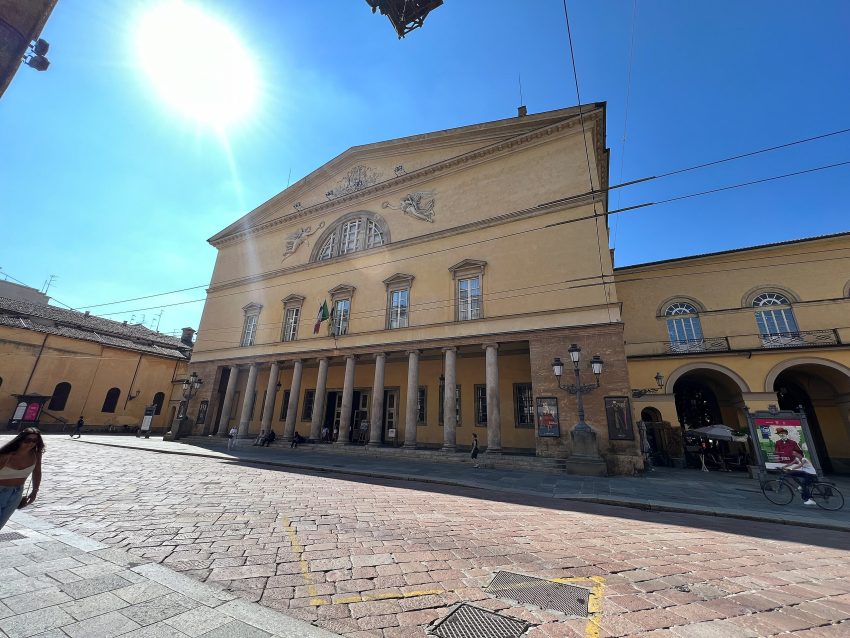
In the elegant streets of Parma, the Regio Theatre stands as a statement of culture and power, a neoclassical jewel commissioned by Maria Luigia and built between 1821 and 1829 on the former site of the Benedictine convent of St Alessandro. Its façade is immediately impressive: a broad portico carried by ten Ionic columns, a double row of windows, and decorative reliefs by Tommaso Bandini climbing the tympanum. The allegories of Fame and the Lyre on either side signal what this building is all about: the glory of music and the prestige that comes with it, making the Regio one of the must-see places in Parma for lovers of opera and architecture alike.
Inside, the theatre reveals a refined sequence of spaces that lead you from the neoclassical entrance hall into the elliptical auditorium. Here, four tiers of boxes and a high gallery wrap around stalls decorated in white and gold, a scheme completed by Girolamo Magnani in 1853 that still glows under the light of a huge Paris-made chandelier weighing around one ton. Above, a decorated ceiling and historic curtain painted by Borghese in 1824 frame the stage where Verdi's operas are given with the kind of intensity and polish that has earned Parma's audience a reputation for being among the most discerning in Italy. Whether you come for a performance or a guided tour, this theatre is a highlight of any walking tour of Parma that focuses on music and the arts.
Table of Contents
- History and Significance of the Regio Theatre
- Things to See and Do in the Regio Theatre
- How to Get to the Regio Theatre
- Practical Tips on Visiting the Regio Theatre
- Where to Stay close to the Regio Theatre
- Is the Regio Theatre Worth Visiting?
- FAQs for Visiting Regio Theatre
- Nearby Attractions to the Regio Theatre
History and Significance of the Regio Theatre
The Regio Theatre owes its existence to Maria Luigia, Duchess of Parma, who wanted a modern, prestigious venue that would place Parma firmly on the Italian operatic map. She commissioned architect Nicola Bettoli to design a new theatre, and construction took place between 1821 and 1829 on the site of the former Benedictine convent of St Alessandro. The resulting building reflects the taste of the time: a neoclassical exterior that speaks of order, balance and civic ambition, combined with an interior designed to flatter both performers and audience.
The façade is one of the clearest expressions of this vision. Bettoli’s portico of ten Ionic columns creates a dignified entry, while the double row of windows and Tommaso Bandini’s sculpted decorations animate the upper portion. Bandini’s allegories of Fame and the Lyre on the sides of the tympanum visually connect the theatre’s civic role with its artistic mission, turning the front of the building into a stone manifesto about the value of music in public life.
Over the decades, the Regio became particularly associated with the operas of Giuseppe Verdi, whose works are central to the Italian repertoire and especially beloved in Emilia-Romagna. The auditorium's white-and-gold décor, completed by Girolamo Magnani in 1853, gave the interior the refined yet theatrical atmosphere that suited Verdi premieres and revivals. With its ornate ceiling, historic curtain by Borghese from 1824 and grand chandelier imported from Paris, the theatre evolved into a benchmark venue where singers and conductors know they will face an audience that listens carefully and is not afraid to show its opinions.
Things to See and Do in the Regio Theatre
If you can, plan your visit around a performance: nothing shows off the Regio Theatre better than hearing an opera in the space it was built for. Arrive early to soak up the atmosphere in the neoclassical foyer, then move slowly into the auditorium and let your eyes travel around the elliptical stalls, four levels of boxes and upper gallery. The white-and-gold decoration makes the room feel both bright and intimate, especially when the chandelier is lit and the murmur of the audience builds before the curtain rises.
On a guided tour or open visit, pay close attention to the architectural and decorative details. From the stalls, look up to the decorated ceiling and trace the curves of the balconies; from one of the boxes, enjoy the perspective across the horseshoe-shaped auditorium towards the stage. Take a moment to admire the historic curtain painted by Borghese in 1824, which, when lowered, transforms the stage opening into a framed artwork. Guides or information panels often point out hidden technical features as well, from stage machinery to acoustic design.
Do not forget to view the façade from across the street or from the central axis of the square. Standing at a distance, the ten Ionic columns, double windows and tympanum decorations by Tommaso Bandini read as a carefully composed classical scene. If you have already visited Parma's cathedral and baptistery, compare how this 19th century monument expresses a different side of the city's cultural identity: not medieval faith, but modern artistic ambition. In a compact city like Parma, the Regio Theatre stands out as one of the top sights in Parma for understanding how music and civic pride intertwine.
How to Get to the Regio Theatre
The Regio Theatre is located in central Parma, within easy walking distance of the main squares and historic sights. Parma has a small airport and is also well served by larger hubs such as Bologna and Milan, from which you can reach the city by regional train, coach or rental car. For the best deals and a seamless booking experience, check out these flights to Parma on Booking.com. Once in Parma, local buses and taxis can drop you close to the historic centre, from where it is a short walk to the theatre.
If you are travelling by train within Italy, Parma is on key rail lines linking Milan, Bologna and other northern cities, making it an effortless addition to a wider itinerary.Use Omnio to easily compare schedules, book train tickets, and find the best prices all in one place for a hassle-free journey across Italy. From the railway station, the walk to the Regio Theatre takes roughly 15-20 minutes along flat city streets, or you can use local buses or taxis to reach the area around the old town and then continue on foot.
Visitors arriving by car will typically use the A1 motorway and follow signs for Parma’s centro; from there, it is best to park in one of the designated central car parks and walk into the historic area.If you are looking to rent a car in Italy I recommend having a look at Discover Cars, first, as they compare prices and review multiple car rental agencies for you. The theatre is well signposted and lies close to other major landmarks, so you can easily fold your visit into a loop that includes Piazza Garibaldi, the cathedral and baptistery.
Practical Tips on Visiting the Regio Theatre
- Suggested tips: If possible, experience both a daytime visit or tour and an evening performance; the building feels completely different when the lights go down and the orchestra strikes up.
- Best time to visit: Performance evenings during the opera season are ideal for atmosphere, while late morning or afternoon is better for quiet tours and photographs of the interior.
- Entrance fee: € 7,00
- Opening hours: Tuesday to Saturday 9.30am – 12.30pm / 2.30pm – 5.30pm; Sunday 10am – 4pm. Starting of the tours every 60 minutes. Duration 30 minutes.
- Official website: http://www.teatroregioparma.it/
- How long to spend: Allow 45-60 minutes for a guided tour or self-guided look around; an evening performance will of course take several hours including intervals.
- Accessibility: The theatre offers various seating options and usually has accessible entrances and lifts, though some historic areas and boxes may have steps; mention any mobility needs when booking.
- Facilities: Expect a cloakroom, toilets, a bar or refreshment area and possibly a small shop or kiosk selling programmes and recordings; more cafés and restaurants are nearby.
- Photography tip: Outside, step back far enough to capture the full portico and tympanum with their neoclassical lines; inside, focus on wide shots of the white-and-gold auditorium and close-ups of the chandelier and ceiling details, respecting any photography rules.
- Guided tours: Check for backstage or architectural tours that show you the stage machinery, rehearsal spaces and more technical aspects of the theatre.
- Nearby food options: Take advantage of Parma’s food culture before or after a performance with aperitivi and local dishes in the streets around the theatre, from traditional osterie to stylish wine bars.
Where to Stay close to the Regio Theatre
Staying near the historic centre makes it easy to attend evening performances at the Regio Theatre and walk back to your hotel afterwards. A refined option within walking distance of both the theatre and main squares is Grand Hotel de la Ville Parma, which combines modern comfort with convenient access to the old town. For a more intimate, characterful stay closer to the cathedral and baptistery yet still handy for the theatre, Palazzo Dalla Rosa Prati offers historic surroundings right on Piazza Duomo. Another central choice is Hotel Button, a friendly, well-located base that lets you stroll easily to the Regio Theatre, Piazza Garibaldi and many of Parma's best dining spots.
Is the Regio Theatre Worth Visiting?
The Regio Theatre is absolutely worth visiting, especially if you have even a passing interest in opera, architecture or 19th century cultural history. Its neoclassical façade, richly decorated interior and deep association with Verdi's music make it far more than just another city theatre; it is a place where Parma's artistic ambitions are still played out night after night. Experiencing the white-and-gold auditorium under the glow of the great chandelier, or hearing the first notes of an opera rise from the pit, gives you a direct connection to a tradition that has shaped the city's identity for two centuries.
What Other Travellers Say...

Teatro Regio, on Str. Giuseppe Garibaldi in Parma, is an opulent neoclassical opera house where visitors praise its stunning interior — golden details, red velvet and a frescoed ceiling — and enjoy guided tours, rehearsals and intimate performances such as café concerts; seating is arranged in small balcony boxes and the royal box is a popular photo spot.


FAQs for Visiting Regio Theatre
Nearby Attractions to the Regio Theatre
- Cattedrale di Parma: Romanesque cathedral with Correggio's Assumption of the Virgin in the dome, located within walking distance on Piazza Duomo.
- Baptistery of Parma: Pink Verona marble baptistery beside the cathedral, rich in medieval sculpture and symbolic decoration.
- Piazza Garibaldi: Central civic square lined with historic buildings, shops and cafés, ideal for pre- or post-theatre drinks.
- Palazzo della Pilotta: Expansive historic complex housing museums, courtyards and cultural institutions along the river.
- Teatro Farnese: Extraordinary early 17th century wooden theatre within Palazzo della Pilotta, offering a fascinating contrast to the 19th century Regio.
The Regio Theatre appears in our Complete Guide to Visiting Parma!

Moira & Andy
Hey! We're Moira & Andy. From hiking the Camino to trips around Europe in Bert our campervan — we've been traveling together since retirement in 2020!
This website uses affiliate links which may earn a commission at no additional cost to you!
Planning Your Visit
Tuesday to Saturday 9.30am - 12.30pm / 2.30pm - 5.30pm; Sunday 10am - 4pm.
Starting of the tours every 60 minutes. Duration 30 minutes.
€ 7,00
Nearby Attractions
- Basilica Santa Maria della Steccata (0.1) km
Basilica - Pilotta Palace (0.2) km
Museum and Palace - Piazza Garibaldi (0.2) km
Square - Teatro Farnese (0.2) km
Historic Building and Theatre - Chamber of St. Paul and Cell of St. Catherine (0.2) km
Monastery - Baptistery of Parma (0.3) km
Baptistery - Diocesan Museum (0.3) km
Museum - Cattedrale di Parma (0.3) km
Cathedral - Monastic Complex of San Giovanni Evangelista (0.4) km
Monastery - Parco Ducale (0.7) km
Park