Rambla del Raval, Barcelona
Street in Barcelona
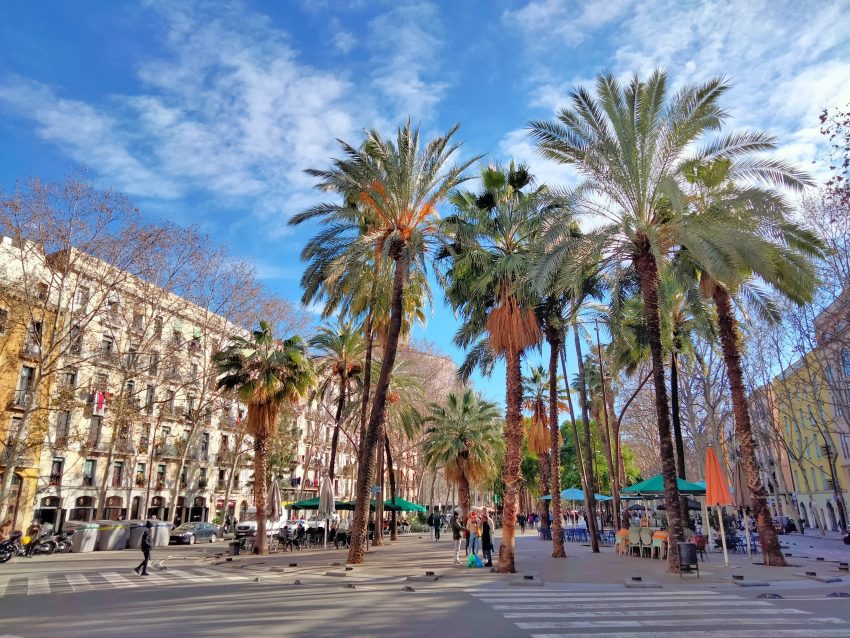
La Rambla del Raval is a broad, palm-lined boulevard in the heart of the Raval-less “postcard Barcelona” and more real-life Barcelona, with café terraces, buzzing bars, and a steady mix of locals, students, and travelers. It's the kind of place that's best experienced at street level, strolling slowly, choosing a terrace, and letting the neighborhood set the pace.
For a walking day, it works as a flexible connector: drop in after MACBA and CCCB, swing past for the giant Botero cat sculpture, and then continue toward La Rambla, El Born, or Sant Antoni. It's not a “must-see monument,” but it is one of the best places to feel the city's everyday social energy without committing to a ticketed attraction.
Table of Contents
- History and Significance of the La Rambla del Raval
- Things to See and Do in the La Rambla del Raval
- How to Get to the La Rambla del Raval
- Practical Tips on Visiting the La Rambla del Raval
- Where to Stay Close to the La Rambla del Raval
- Is the La Rambla del Raval Worth Visiting?
- For Different Travelers
- FAQs for Visiting La Rambla del Raval
- Nearby Attractions to the La Rambla del Raval
History and Significance of the La Rambla del Raval
La Rambla del Raval is relatively new by Barcelona standards, created as part of a wider effort to open up the neighborhood, improve living conditions, and replace some of the most overcrowded, unhealthy housing blocks that once dominated this part of the old city. That history matters because it explains the boulevard's unusual width and openness compared with the tighter medieval street grid around it.
The result is a public space that functions like a civic “living room” for the Raval: a place where different communities overlap naturally, where terraces spill into the street, and where public life is visible and constant. In a city famous for its grand avenues and formal squares, this boulevard feels intentionally everyday-built for lingering, meeting, and moving through the neighborhood.
A key symbol here is the oversized bronze cat by Fernando Botero (often called the Gato del Raval), which has become the rambla’s unofficial mascot and an easy photo stop. It’s playful, slightly surreal, and perfectly matched to the rambla’s role as a street that’s more about atmosphere than architecture.
Things to See and Do in the La Rambla del Raval
Start with a slow walk from one end to the other, using the boulevard as a people-watching corridor. The best experience is simple: pick a terrace, order something small, and watch the neighborhood flow past-especially in the early evening when the street starts to feel more social.
The Botero cat is the obvious “landmark moment,” and it's worth a short pause even if you're not usually a sculpture person. Walk around it, look at how different angles exaggerate its shape, and enjoy the fact that Barcelona lets public art be touched, climbed on, and treated casually rather than kept at arm's length.
If you want to make the rambla feel like part of a bigger route, use it as a bridge between nearby culture and food. It pairs naturally with MACBA/CCCB for a modern-art block, with Sant Antoni for a market-and-snack loop, or with El Born for a shift into more Gothic streets and tapas bars.
How to Get to the La Rambla del Raval
Barcelona-El Prat Airport (BCN) is the nearest major airport, and the simplest route is to get into the city centre and continue by metro or taxi to the Raval area. For the best deals and a seamless booking experience, check out these flights to Barcelona on Booking.com.
If you arrive by train at Barcelona Sants, take the metro into the centre (connections via Catalunya/Universitat/Paral·lel work well depending on your line) and walk the final stretch into the Raval. Train schedules and bookings can be found on Omio.
Driving is rarely worth it in this part of the old city because streets are tight, traffic is slow, and parking is limited; you’ll enjoy it more on foot or by metro. If you are looking to rent a car in Spain I recommend having a look at Discover Cars, first, as they compare prices and review multiple car rental agencies for you.
Practical Tips on Visiting the La Rambla del Raval
- Entrance fee: Free
- Opening hours: Open 24/7 as a public boulevard.
- Best time to visit: Late afternoon into early evening for the best terrace atmosphere; go in daylight if you want a calmer, more “neighborhood stroll” feel.
- How long to spend: 20-40 minutes for a walk-through and the Botero cat; 60-90 minutes if you stop for tapas or drinks and treat it as a proper break in your day.
- Accessibility: Largely flat and easy underfoot, with wide sidewalks and plenty of space to move around; the main challenge is navigating crowds at peak evening hours.
- Facilities: Plenty of cafés, bars, and restaurants directly on the boulevard, plus frequent seating and places to pause; keep normal city awareness for bags and phones, especially on busy terraces.
Where to Stay Close to the La Rambla del Raval
For a culture-heavy itinerary where you'll be walking constantly, base yourself in El Raval or the edge of El Born so you can move between museums, tapas streets, and the old city on foot; if your trip is more about classic headline sights and easy transport links, stay around Plaça de Catalunya and treat the Raval as an easy walk-in neighborhood.
For a stay right on the boulevard with a rooftop vibe and quick access to everything in the neighborhood, consider Barceló Raval. If you prefer a smaller, design-forward base a short walk away that’s ideal for walking days, Casa Camper Barcelona is a strong option. For a more classic, central base that still keeps you within easy walking distance of the rambla, Hotel 1898 works well.
Is the La Rambla del Raval Worth Visiting?
Yes-if you want a Barcelona moment that's more about street life than monuments, this is one of the best quick stops in the centre. It's easy, flexible, and genuinely atmospheric, especially if you use it for a terrace break between museums and markets.
Honest pivot: if you're short on time and your priority is iconic architecture or big-ticket sights, you can skip it without missing a “major attraction.” La Rambla del Raval is about vibe and neighborhood context, so it's most rewarding for travelers who like wandering and people-watching.
For Different Travelers
Families with Kids
This is a good family stop when you need space to walk without feeling squeezed into tiny lanes. Keep it simple: a quick stroll, a look at the Botero cat, and then a snack stop on a terrace where everyone can reset.
Evenings can be lively and crowded, so daytime is often easier with kids. Pair it with nearby open spaces or a museum that fits your family’s pace so the day doesn’t become “all walking, no payoff.”
Couples & Romantic Getaways
For couples, La Rambla del Raval is ideal as a low-pressure tapas-and-drinks stretch. Come just before dinner, choose a terrace, and let the neighborhood's energy do the work-this is a place for lingering rather than rushing.
It also works well as a “transition” stop between cultural sightseeing and nightlife. Start with museums nearby, wander the rambla at golden hour, and then head into El Born or Poble-sec for a more date-night feel.
Budget Travelers
This is an easy budget win because the main experience is free: walking, atmosphere, and public art. If you’re keeping costs down, treat it as your “night-out zone” for casual bites and a drink rather than pricier set menus in more polished districts.
To stretch value, combine it with free or low-cost nearby stops like neighborhood street walks, small galleries, and market-style eating. The rambla is best when you use it as part of a wider on-foot route rather than a standalone destination.
FAQs for Visiting La Rambla del Raval
Getting There
Visiting Experience
Tours, Context & Itineraries
Photography
Safety & Timing
Nearby Attractions to the La Rambla del Raval
- MACBA: Barcelona's contemporary art museum, with a plaza that's a daily street-life scene in itself.
- CCCB: A smart, idea-driven cultural center that often has strong exhibitions and talks.
- Mercat de la Boqueria: The city's most famous market, easy to pair with a Raval walk for snacks.
- Palau Güell: A Gaudí masterpiece nearby that adds a heavyweight architectural stop to your route.
- Sant Antoni Market: A more local-feeling market area that's great for casual food and a neighborhood wander.
The Rambla del Raval appears in our Complete Guide to Visiting Barcelona!

Moira & Andy
Hey! We're Moira & Andy. From hiking the Camino to trips around Europe in Bert our campervan — we've been traveling together since retirement in 2020!
This website uses affiliate links which may earn a commission at no additional cost to you!
Planning Your Visit
Open 24/7 as a public boulevard.
Free
Nearby Attractions
- Old Hospital de la Santa Creu (0.2) km
Courtyard, Historic Building and Historic Site - Església de Sant Agustí Nou del Raval (0.3) km
Church - Monastery of Sant Pau del Camp (0.4) km
Monastery - Museu d’Art Contemporani de Barcelona (0.4) km
Arts Venue, Attraction and Museum - Mercat de la Boqueria (0.4) km
Attraction, Bazaar and Market - Virreina Palace (0.4) km
Historic Building, Museum and Palace - Gran Teatre del Liceu (0.5) km
Arts Venue, Opera House and Theatre - Carrer Nou de la Rambla, 10 (0.5) km
Historic Building - Palau Güell (0.5) km
Historic Building, Historic Site and Palace - Mercat de Sant Antoni (0.5) km
Bazaar, Historic Building and Market