Puerta de Alcala, Madrid
Attraction, City Gate and Monument in Madrid
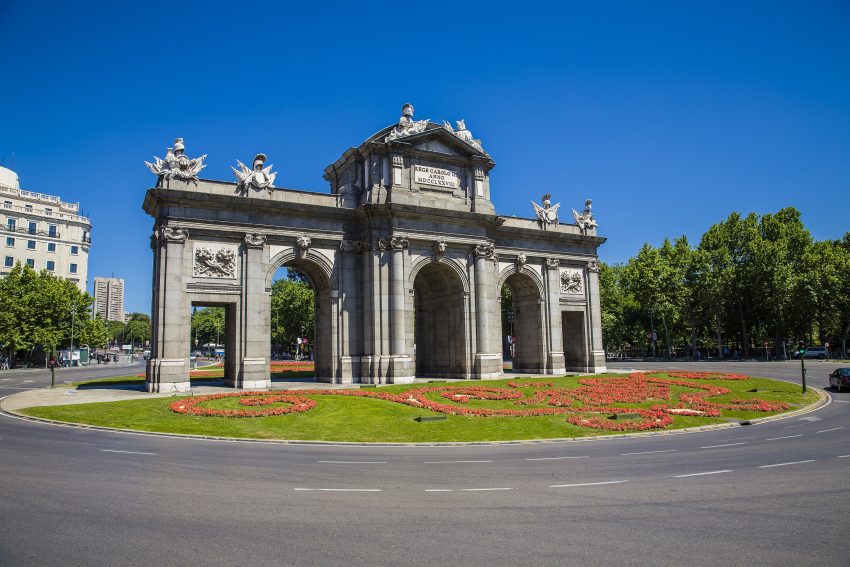
Puerta de Alcala is one of Madrid's signature monuments: a grand neoclassical stone gate standing in the middle of Plaza de la Independencia, where several major boulevards meet. It's right by the edge of El Retiro Park and a short walk from the elegant Salamanca neighborhood, making it an easy “on the way” stop between bigger sights.
Most travelers experience it as a quick, high-impact landmark on a walking tour or a self-guided stroll along Calle de Alcalá. For the best views, step back to the sidewalks and traffic islands around the roundabout to frame the full arch, then circle it to compare the different facades and sculptural details.
Table of Contents
- History and Significance of the Puerta de Alcala
- Things to See and Do in the Puerta de Alcala
- How to Get to the Puerta de Alcala
- Practical Tips on Visiting the Puerta de Alcala
- Where to Stay Close to the Puerta de Alcala
- Is the Puerta de Alcala Worth Visiting?
- For Different Travelers
- FAQs for Visiting Puerta de Alcala
- Nearby Attractions to the Puerta de Alcala
History and Significance of the Puerta de Alcala
Puerta de Alcala was commissioned under King Charles III and inaugurated in 1778, designed by the architect Francesco Sabatini. It replaced an older city gate and marked the eastern entrance to Madrid at a time when the city was being modernized with new avenues, promenades, and public works.
What makes it especially notable is its triumphal-arch style: a monumental, ceremonial gateway built as a statement of civic pride rather than as a defensive structure. Its five openings (three arched and two rectangular) and restrained neoclassical ornamentation reflect the Enlightenment-era taste that shaped much of Madrid’s late-18th-century look.
Today, the gate is a symbol of Madrid itself, anchoring a busy urban crossroads between the historic center, El Retiro, and the upscale shopping streets of Salamanca. Even if you only stop for ten minutes, it's a satisfying “I've arrived in Madrid” moment.
Things to See and Do in the Puerta de Alcala
Start by walking a full loop around the monument to appreciate how the details change from each angle: the sculptural reliefs, the crisp lines of the stonework, and the way the arches frame the city behind them. If you enjoy architecture, this is a great place to slow down and notice proportion, symmetry, and the subtle decorative elements that photographs often miss.
Pair your visit with a stroll into El Retiro Park, which begins just steps away. Many travelers treat Puerta de Alcala as a gateway not only in history but also in itinerary terms: it's a natural transition point between park time, museum time (toward the Prado area), and shopping or tapas in Salamanca.
For a simple “Madrid postcard” experience, come at golden hour or after dark when the lighting emphasizes the monument's depth and texture. It's also a strong stop on walking tours that cover the Paseo del Prado, Retiro, and the city's grand boulevards.
How to Get to the Puerta de Alcala
Madrid's nearest major airport is Adolfo Suárez Madrid–Barajas Airport (MAD), with easy connections into the city by metro, bus, taxi, and rideshare. For the best deals and a seamless booking experience, check out these flights to Madrid on Booking.com.
If you're arriving by train, Madrid-Puerta de Atocha and Chamartín stations connect to Spain's high-speed network; from either station you can reach the area by metro, bus, or a short taxi ride. Train schedules and bookings can be found on Omio.
By metro, the closest stop is Retiro (Line 2), with a short walk to the plaza; Banco de España (Line 2) is also walkable if you're coming from the Prado side. By bus, multiple lines run along Calle de Alcalá and around the plaza, which is handy if you're hopping between neighborhoods.
If you’re driving, expect heavy traffic and limited curbside stopping around the roundabout; it’s usually better to use a paid garage nearby and approach on foot. If you are looking to rent a car in Spain I recommend having a look at Discover Cars, first, as they compare prices and review multiple car rental agencies for you.
Practical Tips on Visiting the Puerta de Alcala
- Official website: https://www.restauracionpuertadealcala.es/
- Entrance fee: Free.
- Opening hours: 24 Hours.
- Best time to visit: Go early morning for calmer photos, or at sunset for warmer light and a more dramatic look. Night lighting is great too, but expect more traffic and crowds.
- How long to spend: Plan 10–25 minutes for photos and a walk-around, or 45–90 minutes if you’re combining it with a Retiro stroll.
- Accessibility: Viewing from the sidewalks is step-free, but crossing to the center islands can involve curb cuts and busy traffic signals; take your time and use designated crossings.
- Facilities: There are no visitor facilities at the monument itself; use cafes, restrooms, and services in El Retiro, nearby museums, or along Calle de Alcalá.
Where to Stay Close to the Puerta de Alcala
Base yourself in central Madrid near Retiro and Salamanca for the easiest walkable access to parks, museums, and classic boulevards.
If you want to wake up near greenery and still be close to major sights, the Retiro edge is ideal; if you prefer boutiques, polished streets, and a quieter feel at night, Salamanca is a strong choice. Here are five well-placed hotels that work well for different budgets and travel styles.
Wellington Hotel & Spa Madrid A classic Salamanca stay with a refined, old-school Madrid feel, great for travelers who want comfort, service, and an upscale base near shopping and restaurants.
Hotel Regina A convenient, central option that makes it easy to walk to Puerta de Alcala, Gran Vía, and the museum zone, ideal if you want to maximize sightseeing time.
Only YOU Boutique Hotel Madrid Stylish and lively without being chaotic, a good pick for couples or friends who want design-forward rooms and easy access to both Retiro and nightlife areas.
NH Collection Madrid Suecia A strong all-rounder near the Prado side, great if you’re building days around museums and want a reliable, comfortable hotel with a central location.
Hostal Persal A budget-friendly, well-located choice for travelers who prioritize location and value, with easy transit links to reach Puerta de Alcala quickly.
Is the Puerta de Alcala Worth Visiting?
Yes, it's worth visiting because it delivers a big “Madrid landmark” payoff with almost no time commitment. The location is perfect for stitching together a day around El Retiro, the Prado-area museums, and a walk along Calle de Alcalá, and it's one of the city's best quick photo stops.
Honest Pivot: if you dislike busy traffic circles, don’t care about architecture, or you’re already overloaded with monuments, you can skip a dedicated trip and simply admire it in passing on the way to Retiro or the museums. It’s most rewarding when you treat it as a scenic waypoint rather than a standalone attraction.
What Other Travellers Say...

Travelers rate Puerta de Alcala very highly, describing it as an iconic, must-see Madrid landmark with impressive neoclassical design and a strong sense of history. Common highlights include its location by Plaza de la Independencia and El Retiro, the monument's grand arches and sculptural details, and how photogenic it is in different light (especially winter skies and evening illumination). The most frequent drawbacks are that it sits in a busy traffic circle, which can make crossing and lingering feel hectic, and that the best photos often require stepping back and being patient with crowds and cars.


For Different Travelers
Puerta de Alcala is flexible: it works as a fast stop, a photography moment, or a short architecture break between bigger plans. Because it's outdoors and central, it's easy to fit into almost any itinerary style.
Families with Kids
Kids often enjoy the “giant gate” factor and the simple game of counting arches and spotting details, especially if you keep the stop short. Pair it with time in El Retiro right after so the visit feels like part of a bigger, kid-friendly outing.
For strollers, the sidewalks are manageable, but the plaza is surrounded by traffic, so keep a close hand and use crossings carefully. If you want a calmer family photo, aim for morning when the sidewalks are less crowded.
Couples & Romantic Getaways
For couples, it's a classic Madrid backdrop that feels especially atmospheric at sunset and after dark when the lighting adds drama. It also pairs naturally with a romantic walk into El Retiro or a dressier dinner in Salamanca.
If you like slow travel, use Puerta de Alcala as a starting point for a boulevard stroll: take your time, stop for a coffee, and let the city's grand architecture set the mood.
Budget Travelers
This is a high-value stop because it’s free and doesn’t require tickets, lines, or a strict schedule. You can build a great budget day by combining it with El Retiro, a picnic, and long walks through central neighborhoods.
To keep costs down, visit at off-peak times for photos, then walk to nearby areas rather than relying on taxis. It’s also a good “first landmark” if you’ve just arrived and want something iconic without spending money.
History Buffs
History lovers will appreciate how the monument reflects Charles III's modernization of Madrid and the shift toward neoclassical civic symbolism. It's also a useful anchor point for understanding how the city expanded beyond older walls and gates.
To add context, connect it with nearby museum visits and a walk along the Paseo del Prado, where many of Madrid’s Enlightenment-era urban improvements and cultural institutions cluster.
FAQs for Visiting Puerta de Alcala
Getting There
Tickets & Entry
Visiting Experience
Tours, Context & Itineraries
Photography
Accessibility & Facilities
Food & Breaks Nearby
Safety & Timing
Nearby Attractions to the Puerta de Alcala
- El Retiro Park: Madrid's most beloved park, perfect for lakeside walks, gardens, and a relaxed break after photos.
- Plaza de Cibeles: A grand square with an iconic fountain and one of the city's most striking architectural backdrops.
- Museo del Prado: World-class art museum with masterpieces that can anchor a full cultural day.
- Puerta del Sol: The city's central hub for people-watching, shopping streets, and classic Madrid energy.
- Gran Vía: Madrid's famous avenue for architecture, theaters, shopping, and lively evening strolls.
The Puerta de Alcala appears in our Complete Guide to Visiting Madrid!

Moira & Andy
Hey! We're Moira & Andy. From hiking the Camino to trips around Europe in Bert our campervan — we've been traveling together since retirement in 2020!
This website uses affiliate links which may earn a commission at no additional cost to you!
Planning Your Visit
24 Hours.
Free.
Nearby Attractions
- Parque del Retiro (0.3) km
Park - Palacio de Cibeles (0.3) km
Arts Venue, Historic Building and Town Hall - El Estanque (0.4) km
Attraction, Lake and Park - Museo Arqueologico Nacional (0.4) km
Museum - Biblioteca Nacional (0.5) km
Historic Building, Library and Museum - Plaza de Colon (0.6) km
Historic Site, Monument and Square - Museo Thyssen-Bornemisza (0.7) km
Arts Venue, Attraction and Museum - Círculo de Bellas Artes (0.7) km
Viewing Point - Edificio Metropolis (0.7) km
Attraction, Historic Building and Notable Building - Palacio de Velazquez (0.8) km
Arts Venue, Historic Building and Museum