Praza da Quintana de Mortos, Santiago de Compostela
Attraction, Historic Site and Square in Santiago de Compostela
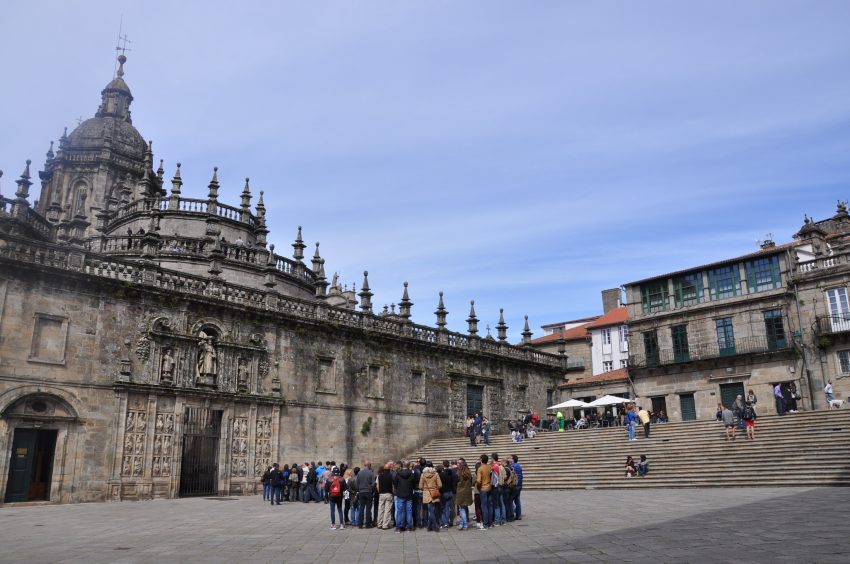
Tucked against the south side of Santiago de Compostela Cathedral, Praza da Quintana de Mortos is the lower level of the city's famous Quintana square, a broad stone plaza that feels both monumental and intimate at the same time. It's one of those places where you can pause mid-walk, look up at the cathedral's walls and towers, and immediately understand why Santiago has drawn pilgrims and travelers for centuries.
Most visitors experience it naturally on a walking tour of the Old Town, since it sits just steps from other headline sights like Praza das Praterías and the cathedral's entrances. For the best views, stand near the center of the lower plaza and look back toward the cathedral façade and the grand staircase that divides the “Mortos” (below) from the “Vivos” (above).
Table of Contents
- History and Significance of the Praza da Quintana de Mortos
- Things to See and Do in the Praza da Quintana de Mortos
- How to Get to the Praza da Quintana de Mortos
- Practical Tips on Visiting the Praza da Quintana de Mortos
- Where to Stay Close to the Praza da Quintana de Mortos
- Is the Praza da Quintana de Mortos Worth Visiting?
- For Different Travelers
- FAQs for Visiting Praza da Quintana de Mortos
- Nearby Attractions to the Praza da Quintana de Mortos
History and Significance of the Praza da Quintana de Mortos
Praza da Quintana is historically split into two terraces: the upper Quintana de Vivos and the lower Quintana de Mortos. The “Mortos” name is not poetic exaggeration: this lower level was once associated with burials, and the area functioned as a cemetery before it was reshaped into the public square you see today.
Over time, the space evolved from a practical, crowded medieval zone into a ceremonial urban stage framed by major religious and civic buildings. That layered history is part of what makes the plaza so compelling: you’re standing in a place that has shifted from sacred ground to public gathering space, with the cathedral always dominating the scene.
Today, the square’s significance is inseparable from Santiago’s identity as the end point of the Camino de Santiago. Even if you’re not walking the Camino, you’ll feel the pilgrim energy here, especially in the late afternoon and evening when the stone seems to glow and the plaza becomes a natural meeting point.
Things to See and Do in the Praza da Quintana de Mortos
Start by simply taking in the architecture that encloses the square: the cathedral’s imposing stonework on one side and historic buildings and monastery walls on the others. The plaza’s two-level design is part of the experience, so walk the staircase and look back down to appreciate the geometry and scale.
This is also a prime place for slow travel. Sit for a few minutes, listen to street musicians when they appear, and watch the steady flow of visitors moving between the cathedral and the surrounding lanes of the Old Town. If you’re visiting during a Holy Year or major festival periods, the plaza can feel like an outdoor foyer for the cathedral.
For photographers, the best “do” is to return twice: once in the morning for cleaner light and fewer people, and again at dusk for atmosphere. Night lighting can be especially striking, with the cathedral and surrounding stone surfaces creating a dramatic, high-contrast scene.
How to Get to the Praza da Quintana de Mortos
The nearest airport is Santiago–Rosalía de Castro Airport (SCQ), with Porto (OPO) and A Coruña (LCG) as useful alternatives depending on your route and flight prices. For the best deals and a seamless booking experience, check out these flights to Santiago de Compostela on Booking.com.
Santiago de Compostela is well connected by rail within Galicia and to major Spanish cities, and from the station you can reach the Old Town by taxi, bus, or a brisk walk depending on luggage and weather.Train schedules and bookings can be found on Omio.
If you’re traveling by car, aim for a public car park outside the tightest historic streets and finish on foot, since the Old Town has restricted access and narrow lanes.If you are looking to rent a car in Spain I recommend having a look at Discover Cars, first, as they compare prices and review multiple car rental agencies for you.
Once you’re in the historic center, the plaza is easiest to reach on foot: follow signs for the cathedral, then circle to the south side where the Quintana terraces open up.
Practical Tips on Visiting the Praza da Quintana de Mortos
- Entrance fee: Free.
- Opening hours: 24 Hours.
- Best time to visit: Early morning for calm and photos, or around sunset for the most atmospheric light on the cathedral stone.
- How long to spend: Plan 15–30 minutes if you’re passing through, or up to an hour if you want to linger, people-watch, and photograph both levels.
- Accessibility: The square itself is flat stone paving, but the split-level layout means steps between terraces; wheelchair users may need to approach via surrounding streets to avoid stairs.
- Facilities: There are plenty of cafés and services in the surrounding Old Town streets, but the plaza itself is primarily an open public space.
Where to Stay Close to the Praza da Quintana de Mortos
Base yourself in the Old Town (Centro Histórico) to be able to walk to the cathedral and the Quintana in minutes, especially early and late in the day when the atmosphere is best.
Parador de Santiago de Compostela (Hostal dos Reis Católicos) Chosen for its once-in-a-lifetime location beside the cathedral and its historic character that matches the spirit of Santiago.
NH Collection Santiago de Compostela Included for travelers who want a polished, modern stay with easy access to the center while keeping a bit of breathing room from the busiest lanes.
Hotel Costa Vella A great pick for charm-seekers who want a quieter, boutique feel and a pleasant walk into the cathedral area.
Hotel Virxe da Cerca Selected for its character and convenient position between the Old Town and transport links, making it practical for short stays.
Hotel Gelmírez Ideal if you want to be near the train station for arrivals/departures while still being within walking distance of the historic center.
Is the Praza da Quintana de Mortos Worth Visiting?
Yes, it's worth visiting, even if you're only in Santiago for a day. Praza da Quintana de Mortos gives you a powerful cathedral-side perspective, a sense of the city's layered history, and one of the most memorable “pause points” in the Old Town.
Honest Pivot: if you dislike crowds, open stone plazas, or you’re trying to prioritize ticketed interiors (museums, rooftops, guided cathedral spaces) with limited time, you can treat this as a quick pass-through rather than a dedicated stop. It shines most when you slow down, and not every itinerary has room for that.
For Different Travelers
Different travelers experience the Quintana in different ways, but it’s one of the easiest places in Santiago to connect the dots between architecture, pilgrimage culture, and everyday city life. Use it as a scenic waypoint rather than a checklist item.
Families with Kids
Kids often enjoy the sheer scale of the plaza and the “two-level” layout, which makes it feel like a natural stage. It’s also a good place to reset between tighter Old Town streets.
That said, keep an eye on little ones on the steps and edges, especially when it’s wet. If your family is sensitive to crowds, aim for morning visits when the space feels calmer.
Couples & Romantic Getaways
For couples, the plaza is at its best at dusk and after dark, when the lighting turns the cathedral walls into a dramatic backdrop. It’s a classic spot for a slow stroll that feels distinctly Santiago.
Pair it with a relaxed evening in the surrounding lanes for wine and tapas, then loop back through the square for a final look. The atmosphere is more romantic than “busy sightseeing,” especially outside peak hours.
Budget Travelers
Budget travelers will appreciate that this is a high-impact sight that costs nothing and fits naturally into a walking route. It's also a great place to take photos that feel iconic without paying for a viewpoint ticket.
If you’re traveling light, it works well as a meet-up point for free walking tours and for regrouping with friends. Just remember that nearby cafés in the most central lanes can be pricier than spots a few streets away.
FAQs for Visiting Praza da Quintana de Mortos
Getting There
Tickets & Entry
Visiting Experience
Tours, Context & Itineraries
Photography
Accessibility & Facilities
Food & Breaks Nearby
Safety & Timing
Nearby Attractions to the Praza da Quintana de Mortos
- Santiago de Compostela Cathedral: The city's defining landmark, with monumental façades and a powerful pilgrim presence.
- Praza das Praterías: A lively square beside the cathedral, great for architecture details and quick café breaks.
- Praza do Obradoiro: The grand ceremonial plaza in front of the cathedral, framed by iconic historic buildings.
- Monastery of San Paio de Antealtares: A major monastic complex bordering the Quintana, adding to the square's enclosed, dramatic feel.
- Mercado de Abastos de Santiago: The city's main market, ideal for tasting local produce and seeing everyday Santiago beyond the monuments.
The Praza da Quintana de Mortos appears in our Complete Guide to Visiting Santiago de Compostela!

Moira & Andy
Hey! We're Moira & Andy. From hiking the Camino to trips around Europe in Bert our campervan — we've been traveling together since retirement in 2020!
This website uses affiliate links which may earn a commission at no additional cost to you!
Planning Your Visit
24 Hours.
Free.
Nearby Attractions
- Fountain of Horses (0.1) km
Attraction, Fountain and Square - Museum of Pilgrimage (0.1) km
Attraction and Museum - Praza das Praterías (Santiago de Compostela) (0.1) km
Attraction and Square - O Cabildo (Santiago de Compostela) (0.1) km
Historic Building and Museum - Praza da Inmaculada (0.1) km
Attraction, Historic Site and Square - Mosteiro de San Martiño Pinario (0.1) km
Historic Building, Monastery and Museum - Museo Casa da Troia (0.1) km
Historic Building, Historic Site and Museum - Monasterio de San Paio de Antealtares (0.1) km
Church, Monastery and Museum - Santiago de Compostela Cathedral Museum (0.1) km
Cathedral and Museum - Praza de Cervantes (0.1) km
Historic Site and Square