Prasat Bayon, Siem Reap
Buddhist Temple in Siem Reap
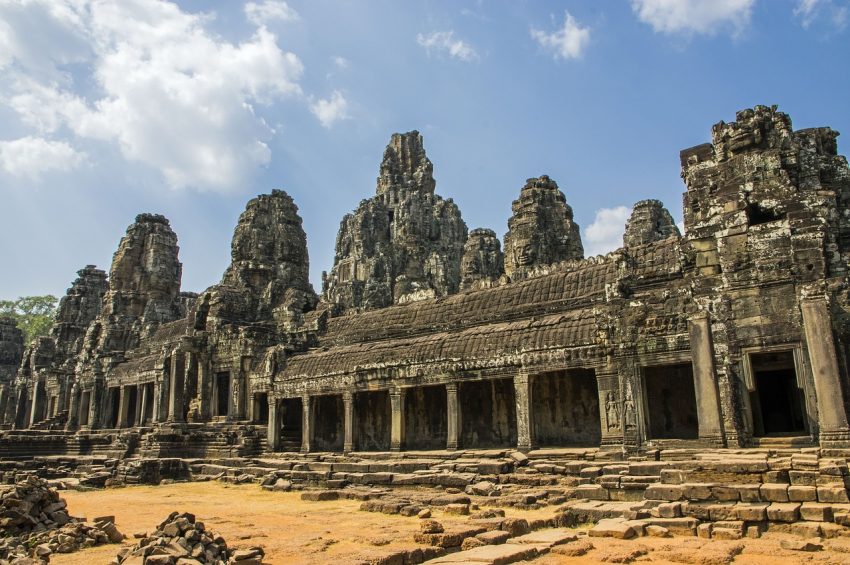
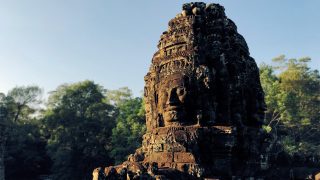
Bayon Temple is the iconic “smiling faces” temple at the heart of Angkor Thom, the walled royal city built by King Jayavarman VII. Unlike Angkor Wat's open symmetry, Bayon feels dense and immersive-stone passages, stacked terraces, and towers that seem to watch you from every angle as you move through the site.
It’s also one of the most rewarding temples in Angkor for travellers who like detail. The faces are the headline, but the real depth comes from the bas-reliefs: scenes of daily life and warfare carved with a narrative energy you don’t always get elsewhere. Bayon is compact enough to fit into a normal Angkor loop, yet distinctive enough that it often becomes the temple people remember most vividly.
Table of Contents
- History and Significance of the Bayon Temple
- Things to See and Do in the Bayon Temple
- How to Get to the Bayon Temple
- Practical Tips on Visiting the Bayon Temple
- Where to Stay Close to the Bayon Temple
- Is the Bayon Temple Worth Visiting?
- For Different Travelers
- FAQs for Visiting the Bayon Temple
- Nearby Attractions to the Bayon Temple
History and Significance of the Bayon Temple
Bayon was built in the late 12th to early 13th century as the state temple of Jayavarman VII, the ruler most associated with Angkor's great Buddhist building programme. Placed at the geometric centre of Angkor Thom, it functioned as a spiritual and political statement: a temple-mountain that anchored the capital and projected the king's authority across the empire.
The temple’s identity is famously layered. While strongly associated with Buddhism, Bayon absorbed changes under later rulers, including periods of Hindu restoration and additional modifications that altered its imagery and circulation. That long afterlife is part of why it feels complex on the ground-less like a single “finished” design and more like a living monument that was continually reinterpreted.
The face towers sit at the centre of Bayon’s significance and its scholarly debate. They are often linked to Avalokiteshvara (Lokeshvara), the bodhisattva of compassion, and also to the idea of the king as a divine ruler whose presence is everywhere. Standing beneath them, you feel the point immediately: this was architecture designed to communicate power, protection, and cosmic order, not just to impress.
Things to See and Do in the Bayon Temple
The face towers are best approached slowly and repeatedly. Bayon’s magic is how the expressions appear and disappear as you turn corners: one moment you’re in shade, the next you look up and find a calm smile framed by blue sky. If you have limited time, prioritise the upper terrace for the strongest face-to-face encounters, then work outward.
Do not skip the bas-reliefs. The outer galleries include lively scenes of battles, processions, market life, boats, and everyday routines, and they are some of the most human, legible carvings in the Angkor complex. If you want the most satisfying experience, pick a stretch of wall and actually “read” it-follow the action from panel to panel rather than treating it as background texture.
Bayon also rewards an unhurried circuit. The temple can feel like a stone maze, so it helps to accept a little wandering: take the stairways as they appear, pause at each terrace to look back over the towers, and keep scanning above you. If certain areas are temporarily restricted for conservation, treat that as a cue to spend more time on the reliefs and the shifting viewpoints rather than trying to force a single “must-see” route.
How to Get to the Bayon Temple
Most visitors base themselves in Siem Reap, with Siem Reap-Angkor International Airport (SAI) as the primary gateway for flights into the region. For the best deals and a seamless booking experience, check out these flights to Siem Reap on Booking.com. Phnom Penh International Airport (PNH) can also work if you are building a wider Cambodia itinerary and connecting onward by road or domestic flight. For the best deals and a seamless booking experience, check out these flights to Siem Reap on Booking.com.
There is no practical passenger train service to Siem Reap for most travellers, so buses, private transfers, and flights are the normal options for reaching the city. Train schedules and bookings can be found on Omio. Once in Siem Reap, Bayon is inside Angkor Thom and is typically reached by tuk-tuk, hired driver, guided tour, bicycle, or a combination that fits your temple plan for the day.
If you are travelling by car, the simplest approach is to hire a driver for a half-day or full-day Angkor route so you can sequence Bayon with nearby temples without backtracking.
Practical Tips on Visiting the Bayon Temple
- Entrance fee: Included with the Angkor Pass (1-day: US$37; 3-day: US$62; 7-day: US$72).
- Opening hours: Daily: 07:30–17:30.
- Official website: https://apsaraauthority.gov.kh/2021/08/05/bayon/
- Best time to visit: Go early for cooler air and softer light on the stone faces, or later in the afternoon when the crowds thin and the temple feels more atmospheric.
- How long to spend: Allow 60-120 minutes if you want faces plus bas-reliefs; shorter visits tend to miss the carvings that make Bayon feel uniquely “alive.”
- Accessibility: Expect uneven stone underfoot, narrow passages, and steep steps to upper levels; pace yourself and avoid rushing on worn stairways.
- Facilities: Bring water and sun protection, and plan breaks around your wider Angkor route rather than expecting amenities at the temple itself.
Where to Stay Close to the Bayon Temple
For a culture-heavy itinerary, base yourself in central Siem Reap so you can walk to restaurants and markets in the evening and still reach Angkor early; if your main priority is early starts and minimising transit time, stay on the quieter Angkor-side of town closer to the road leading to the park.
For a classic “heritage hotel” feel close to both town and the Angkor approach road, Raffles Grand Hotel d'Angkor is a strong choice for travellers who want comfort and a sense of occasion. If you prefer a modern luxury base in the heart of town for easy dining and nightlife, Park Hyatt Siem Reap is exceptionally convenient for a walkable, city-centre stay. For a stylish boutique option in a quieter pocket of central Siem Reap, Shinta Mani Angkor is well suited to travellers who want design-forward comfort without feeling removed from the action.
Is the Bayon Temple Worth Visiting?
Yes. If you visit only one temple beyond Angkor Wat, Bayon is a top contender because it offers something you cannot replicate elsewhere: those serene faces at close range, combined with unusually readable bas-reliefs that pull you into Angkor's world in a very direct way.
Honest pivot: if you are sensitive to tight spaces, steep steps, or sensory overload from crowds and guided groups moving through narrow corridors, Bayon can feel intense at peak hours. In that case, visit very early or late, keep your route simple, and consider spending more of your “deep looking” time at quieter temples where space and flow are easier.
What Other Travellers Say...

Bayon Temple in Krong Siem Reap is an atmospheric Angkor Thom temple famed for its many large, smiling stone faces and intricate carvings; visitors describe a mystical, peaceful site with unique towers and quiet pathways that reward taking time to listen and soak in the surroundings, though be aware there are sometimes aggressive wild monkeys that may take food.


For Different Travelers
Families with Kids
Bayon can work extremely well with kids if you turn it into a visual game rather than a history lesson: count faces, spot the biggest smile, and look for animals and boats in the carvings. Keeping the visit shorter and more interactive usually beats trying to cover every gallery.
The main family challenge is the terrain. Hold hands on stairways, avoid rushing in crowded corridors, and plan a calm break immediately after-Bayon is stimulating, and children often do best when you follow it with a snack stop and a quieter temple or shaded rest.
Couples & Romantic Getaways
For couples, Bayon is at its best when you time it for atmosphere. Early morning feels almost meditative, while late afternoon can be beautifully moody as light slants across the towers and the faces appear through shadow.
Make it part of a balanced Angkor day: pair Bayon with one “big open” temple and one quieter, nature-wrapped site so the experience feels varied rather than nonstop intensity. The contrast makes Bayon’s close-up, intimate feel even more memorable.
Budget Travelers
Budget travellers get strong value here because one Angkor Pass unlocks Bayon plus the rest of the core circuit, and the experience is substantial even without paid add-ons. The most cost-effective plan is a shared tuk-tuk day or bicycle route that strings Bayon together with nearby highlights inside Angkor Thom.
To avoid expensive last-minute decisions, decide your transport and temple sequence the night before. Bayon is central, but the park is large, and a little planning prevents paying more for convenience when you are tired and hot.
History Buffs
Bayon is essential for history-focused travellers because it sits at the intersection of religion, kingship, and empire-building. The faces and the temple’s shifting religious emphasis tell you as much about political ideology as they do about art and architecture.
The bas-reliefs are where the site becomes truly rich. Give yourself time to study the “daily life” panels, not just the battles-these carvings are one of the best windows into the texture of Angkorian society you’ll find on a standard temple route.
FAQs for Visiting the Bayon Temple
Getting There
Tickets & Entry
Visiting Experience
Tours, Context & Itineraries
Photography
Accessibility & Facilities
Nearby Attractions to the Bayon Temple
- Baphuon: A monumental temple-mountain nearby with steep climbs and wide views over Angkor Thom.
- Terrace of the Elephants: A long ceremonial terrace with striking carvings, ideal for a quick, high-impact stop.
- Terrace of the Leper King: A compact terrace famous for intricate, layered stonework and strong mythic atmosphere.
- Ta Prohm: The jungle-wrapped temple where tree roots and stone collide in the most dramatic way.
- Angkor Wat: The essential anchor of the whole complex, best paired with Bayon for a perfect “contrast day” in Angkor.
The Prasat Bayon appears in our Complete Guide to Visiting Siem Reap!

Moira & Andy
Hey! We're Moira & Andy. From hiking the Camino to trips around Europe in Bert our campervan — we've been traveling together since retirement in 2020!
This website uses affiliate links which may earn a commission at no additional cost to you!
Planning Your Visit
Daily: 07:30-17:30.
Included with the Angkor Pass (1-day: US$37; 3-day: US$62; 7-day: US$72).
Nearby Attractions
- Bayon Temple (0) km
Buddhist Temple - Baphuon (0.4) km
Buddhist Temple - Terrace of the Elephants (0.5) km
Historic Site - Phimeanakas (0.6) km
Buddhist Temple - Terrace of the Leper King (0.7) km
Historic Site - Preah Palilay (0.9) km
Buddhist Temple - South Gate of Angkor Thom (1.5) km
City Gate - Angkor Thom North Gate (1.6) km
City Gate - Kmoch Gate (Gate of the Dead) (1.5) km
City Gate - Victory Gate of Angkor Thom (1.6) km
City Gate