Porta Napoli, Lecce
City Gate, Historic Site and Monument in Lecce

Porta Napoli is Lecce's most recognizable city gate: a monumental triumphal arch that marks a classic “you've arrived” moment at the edge of the historic center. Built in pale local stone and framed by elegant classical lines, it's both a landmark for navigation and a quick hit of history before you dive into Lecce's Baroque streets.
You'll find it at the northwestern entrance to the old town, where modern Lecce meets the pedestrian-friendly core. It's an easy stop on any self-guided walk, and many walking tours use it as a meeting point or early highlight before heading toward the city's churches, piazzas, and artisan-lined lanes.
Table of Contents
- History and Significance of the Porta Napoli
- Things to See and Do in the Porta Napoli
- How to Get to the Porta Napoli
- Practical Tips on Visiting the Porta Napoli
- Where to Stay Close to the Porta Napoli
- Is the Porta Napoli Worth Visiting?
- For Different Travelers
- FAQs for Visiting Porta Napoli
- Nearby Attractions to the Porta Napoli
History and Significance of the Porta Napoli
Porta Napoli was erected in 1548 as a celebratory gateway connected to Emperor Charles V (Carlo V), whose era saw major fortification works across southern Italy. While it functioned as an entrance to the city, its design is intentionally triumphal rather than purely defensive, projecting authority and prestige at the threshold of Lecce.
Architecturally, the gate leans into classical symmetry: Corinthian columns, a strong central opening, and an ornate upper section that reads like a civic statement in stone. Look for heraldic details and the overall “Roman” feel, which was a deliberate way to link Lecce’s identity to imperial power and continuity.
Today, Porta Napoli’s significance is also practical: it’s one of the clearest markers of where the historic center begins. Passing under the arch still feels like crossing a boundary, from wider streets into a tighter, more atmospheric maze of limestone facades and sunlit courtyards.
Things to See and Do in the Porta Napoli
Start by taking in the gate from both sides. From the outside, you get the full sense of scale and the clean, ceremonial lines; from the inside, it becomes a frame for the first glimpses of Lecce's old town. If you're on a walking tour, this is a great place to ask your guide for quick context on Charles V, the city walls, and how Lecce's look evolved over time.
Spend a few minutes scanning the decorative elements: columns, coats of arms, and the overall composition that makes it feel more like a triumphal arch than a simple gate. It’s also a handy spot for orientation: once you step through, you’re well-positioned to continue on foot toward Lecce’s major Baroque highlights and lively streets.
Finally, treat Porta Napoli as a pacing stop rather than a standalone “attraction.” It's ideal for a short pause, a few photos, and a reset before you continue deeper into the historic center for churches, palazzi, and cafés.
How to Get to the Porta Napoli
The nearest airports are Brindisi Airport (Salento) for the quickest arrival, and Bari Airport if you're combining Lecce with a broader Puglia itinerary. For the best deals and a seamless booking experience, check out these flights to Lecce on Booking.com.
Lecce is well connected by rail, with frequent services to/from major hubs in Puglia and beyond; from Lecce train station you can walk, take a short taxi ride, or use local buses to reach the historic center near Porta Napoli. Use Omnio to easily compare schedules, book train tickets, and find the best prices all in one place for a hassle-free journey across Italy.
If you’re driving, aim for parking outside the old town and walk in, since access near the historic center can be restricted and streets can be narrow. If you are looking to rent a car in Italy I recommend having a look at Discover Cars, first, as they compare prices and review multiple car rental agencies for you.
Practical Tips on Visiting the Porta Napoli
- Entrance fee: Free.
- Opening hours: 24 Hours.
- Best time to visit: Early morning for softer light and fewer people, or golden hour for warm stone tones and better photos.
- How long to spend: 10–20 minutes is enough for photos and a quick look, or 30 minutes if you’re using it as the start of a longer old-town walk.
- Accessibility: The area is generally flat and walkable, but surfaces around the historic center can be uneven; a wheelchair-friendly route may require small detours.
- Facilities: No dedicated visitor facilities at the gate itself; you’ll find cafés, restrooms, and services a short walk inside the old town.
Where to Stay Close to the Porta Napoli
Base yourself in Lecce's historic center for the easiest walks, the best evening atmosphere, and the most convenient access to Porta Napoli and the city's main sights.
Patria Palace Hotel Lecce Chosen for its polished luxury feel and prime old-town location, making it easy to start mornings with a quiet walk to the gate before the city gets busy.
Risorgimento Resort Included for a central, full-service stay with a refined vibe, ideal if you want comfort and a walk-everywhere base near Lecce’s key streets.
Palazzo Sant'Anna Lecce A great pick for travelers who want boutique character and a more intimate, design-forward stay within the historic fabric of the city.
Hotel Delle Palme Selected for a practical, good-value option that’s still walkable to the center, useful if you prefer a slightly quieter setting without being far out.
B&B Palazzo Bernardini Included for its local, historic charm and a more personal stay experience, perfect if you like small properties with a sense of place.
Is the Porta Napoli Worth Visiting?
Yes. Porta Napoli is one of those landmarks that instantly anchors your Lecce experience: it's beautiful, historically meaningful, and perfectly placed as a gateway into the old town. Even if you're short on time, it's a quick, high-impact stop that pairs naturally with a longer walk through Lecce's Baroque core.
Honest Pivot: if you're not interested in architecture or history and you're already overwhelmed by “photo stops,” you can skip a dedicated visit and simply pass through it on your way elsewhere. It's best appreciated as part of a walking route rather than a destination that needs its own time block.
What Other Travellers Say...

Reviews are overwhelmingly positive, with travelers calling Porta Napoli an iconic, photogenic gateway into Lecce's historic center. Common highlights include its grand triumphal-arch design, classical details like Corinthian columns and coats of arms, and how it naturally leads into atmospheric streets and piazzas. Visitors also appreciate that it's easy to stop by on a walk and pairs well with exploring the old town. A few drawbacks show up indirectly: it can feel like a quick stop rather than a standalone attraction, and the area around it may be busy depending on time of day.


For Different Travelers
Porta Napoli works best as a flexible, low-effort highlight: you can spend five minutes or fold it into a full day of wandering. Because it's outdoors and central, it's easy to adapt to different travel styles and energy levels.
Families with Kids
Kids usually enjoy the simple “gateway” idea: walking under a big arch feels like entering a storybook city. Keep it short and turn it into a mini mission: spot the columns, find the crest, then head for gelato deeper in town.
If you’re traveling with a stroller, plan a smoother route into the center and expect some uneven paving nearby. It’s a good first stop before a longer loop, since you can decide quickly whether the group is up for more walking.
Couples & Romantic Getaways
Porta Napoli is an easy romantic prelude to Lecce: arrive around sunset, take a few photos, then wander into the old town as the lights come on. The warm stone and calm early-evening atmosphere make it feel cinematic.
Use it as a starting line for a slow evening: pick a route that leads toward lively piazzas, then finish with aperitivo or dinner nearby. It’s a simple moment that sets the tone for the rest of the night.
Budget Travelers
This is a perfect budget-friendly sight because it’s outdoors, central, and doesn’t require tickets. You can build an entire self-guided walking day around it, pairing it with churches, streets, and squares that are also free to enjoy from the outside.
To keep costs down, visit early, carry a water bottle, and plan your paid stops (museums, rooftop views) selectively. Porta Napoli gives you a strong “must-see” feeling without spending anything.
History Buffs
History lovers will appreciate how Porta Napoli reflects the political reality of 16th-century southern Italy and the symbolic language of imperial architecture. It's a compact lesson in how cities used monumental entrances to communicate power.
For deeper context, connect it mentally to Lecce’s former walls and the broader defensive upgrades associated with the period. It’s also a great anchor point for comparing Lecce’s later Baroque flourish with earlier, more classical forms.
FAQs for Visiting Porta Napoli
Getting There
Tickets & Entry
Visiting Experience
Tours, Context & Itineraries
Photography
Accessibility & Facilities
Food & Breaks Nearby
Safety & Timing
Nearby Attractions to the Porta Napoli
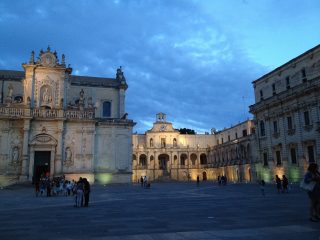
- Piazza del Duomo: Lecce’s showpiece square, surrounded by ornate Baroque architecture and best enjoyed in the softer light of late afternoon.
- Basilica di Santa Croce: The city's most famous Baroque facade, packed with intricate stonework and a must for architecture lovers.
- Piazza Sant'Oronzo: Lecce's lively central hub with cafés, people-watching, and layers of history in one compact area.
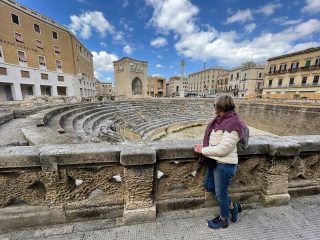
- Roman Amphitheatre (Anfiteatro Romano): A striking ancient remnant tucked into the modern cityscape, easy to add to a walking loop.
- Porta Rudiae: Another historic city gate that helps you understand Lecce's old entrances and the shape of the historic center.
The Porta Napoli appears in our Complete Guide to Visiting Lecce!

Moira & Andy
Hey! We're Moira & Andy. From hiking the Camino to trips around Europe in Bert our campervan — we've been traveling together since retirement in 2020!
This website uses affiliate links which may earn a commission at no additional cost to you!
Planning Your Visit
24 Hours.
Free.
Nearby Attractions
- Palazzo dei Celestini (0.4) km
Attraction, Historic Building and Palace - Basilica di Santa Croce (0.4) km
Basilica - Jewish Museum (0.4) km
Museum - Piazza Sant'Oronzo (0.5) km
Square - Sedile (0.5) km
Palace - Lecce Cathedral (0.5) km
Cathedral - Teatro Romano di Lecce (0.5) km
Roman Site - Anfiteatro Romano di Lecce (0.6) km
Amphitheatre - Chiesa di Santa Chiara (0.6) km
Attraction, Church and Religious Building - Basilica di San Giovanni Battista al Rosario (0.6) km
Basilica, Church and Religious Building