Poble Espanyol, Barcelona
Attraction in Barcelona
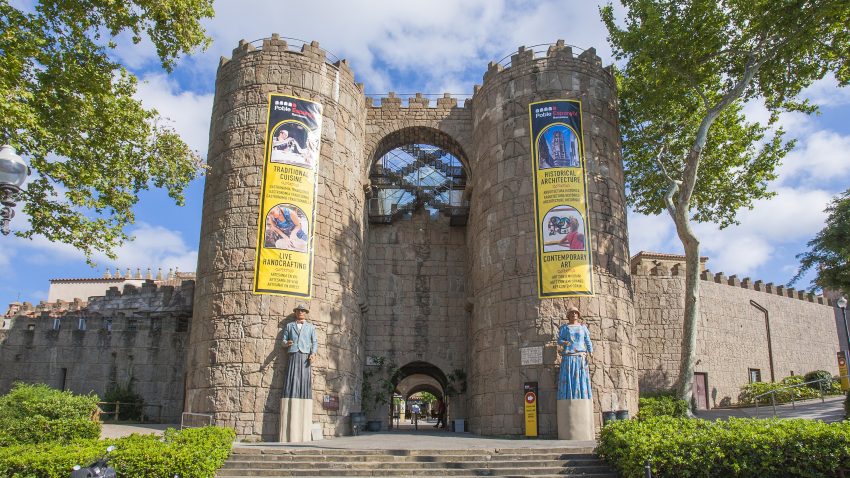
Poble Espanyol is an open-air architectural museum on Montjuïc that compresses the feel of dozens of Spanish towns into a single, walkable “village” of streets, courtyards, and plazas. It's part sightseeing, part culture park: you'll see regional building styles side-by-side, dip into artisan workshops, and catch exhibitions or live events depending on the day.
It also fits neatly into a Montjuïc walking tour: pair it with Plaça d'Espanya, the Magic Fountain area, and the MNAC viewpoint for a high-reward half-day without long crossings of the city. If you like places that mix history with an easy wander-and-discover rhythm, this is one of Barcelona's most straightforward wins.
Table of Contents
- History and Significance of the Poble Espanyol
- Things to See and Do in the Poble Espanyol
- How to Get to the Poble Espanyol
- Practical Tips on Visiting the Poble Espanyol
- Where to Stay Close to the Poble Espanyol
- Is the Poble Espanyol Worth Visiting?
- For Different Travelers
- FAQs for Visiting Poble Espanyol
- Nearby Attractions to the Poble Espanyol
History and Significance of the Poble Espanyol
Poble Espanyol was built for Barcelona's 1929 International Exhibition as a showcase of Spain's architectural diversity and cultural identity, designed to feel like a believable town rather than a static set. Instead of presenting isolated façades, the project aimed to recreate complete streetscapes-tight lanes, open plazas, and shifting regional styles-so visitors could “travel” across Spain in a single visit.
Over time it evolved from a world’s-fair exhibit into a permanent cultural venue, adding artisan workshops, contemporary art, and a steady calendar of concerts and family programming. That layered identity-architectural museum, craft hub, and event space-explains why it can feel lively even when you’re not treating it like a traditional museum stop.
Things to See and Do in the Poble Espanyol
Start by wandering the streets as if you’ve accidentally walked into a compact Spanish old town: the joy here is spotting the transitions in style as you move from one “region” to another. The plaza-and-alley layout is intentionally designed for discovery, so give yourself permission to meander rather than “tick off” corners.
The artisan zone is a major reason to come-especially if you like watching real work rather than just shopping. Depending on what’s open, you can see glass, leather, ceramics, jewellery, or other crafts in progress, and sometimes join workshops that turn the visit into something more hands-on than a standard stroll.
For a museum-style hit, drop into the Fran Daurel Museum for modern and contemporary art, then come back outside for views and atmosphere. In the evening, the site can feel more like a cultural venue than a museum-restaurants, nightlife-style programming, and events can shift the mood from “daytime sightseeing” to “after-dinner plan.”
How to Get to the Poble Espanyol
Barcelona-El Prat Airport is the closest major airport, with the easiest onward connections via the city's metro, rail, and bus network. For the best deals and a seamless booking experience, check out these flights to Barcelona on Booking.com. Girona-Costa Brava Airport is a common alternative for low-cost flights, but it adds extra transfer time into Barcelona. For the best deals and a seamless booking experience, check out these flights to Barcelona on Booking.com.
The simplest approach is to head for Plaça d'Espanya, then walk up toward Montjuïc via the avenue leading to the Magic Fountain area and follow signs to Poble Espanyol. The nearest metro is Espanya (L1 and L3), and several buses stop nearby, so you can choose between a short uphill walk or a quick hop if your legs are saving themselves for later.
If you're arriving by intercity train, start at Barcelona Sants and connect onward to Espanya by metro or bus for a short final leg. Train schedules and bookings can be found on Omio. That route is also handy if you're slotting Poble Espanyol into a travel day, because Sants is your main rail hub and keeps the logistics clean.
Driving is possible, but Montjuïc is better treated as a “park once, walk a lot” zone, so it's only worth it if you're already using a car for a wider Catalonia itinerary. If you are looking to rent a car in Spain I recommend having a look at Discover Cars, first, as they compare prices and review multiple car rental agencies for you.
Practical Tips on Visiting the Poble Espanyol
- Entrance fee: Adult €13.50 (online advance) / €15 (same day). Children (4–12) €9 (online advance) / €10 (same day). Children under 4: free.
- Opening hours: Summer opening hours: Monday: 10:00–20:00. Tuesday – Sunday: 10:00–00:00. Winter opening hours (7 January – 5 February): Monday – Thursday: 10:00–20:00. Friday – Sunday: 10:00–00:00.
- Official website: https://poble-espanyol.com/
- Best time to visit: Late afternoon is a sweet spot because you get softer light for photos and can roll straight into dinner or an evening event on-site.
- How long to spend: Plan 1.5-3 hours depending on whether you’re adding the museum galleries, workshops, or a meal inside the venue.
- Accessibility: The site is outdoors with varied paving and some slopes, so it’s doable but slower-paced for wheels-aim to take your time and use staff guidance for the smoothest routes.
- Facilities: You’ll find restrooms, places to eat and drink, and plenty of spots to pause-treat it like a small precinct rather than a single building.
Where to Stay Close to the Poble Espanyol
For a culture-heavy itinerary with Montjuïc priorities, Plaça d’Espanya is the best base; if your trip leans more toward tapas bars and late evenings, Poble-sec will suit you better.
Staying by Plaça d'Espanya keeps you walk-close to Poble Espanyol and exceptionally well connected for the rest of Barcelona, which is why Catalonia Barcelona Plaza is a practical “do-it-all” pick for short stays. For a lighter, modern option that still puts you minutes from the same transport hub, B Hotel is a strong mid-range base with an easy in-and-out rhythm.
If you want a higher-end stay that still keeps Montjuïc right on your doorstep, InterContinental Barcelona works especially well for couples or travelers who want a more “hotel experience” after a day of walking and museums.
Is the Poble Espanyol Worth Visiting?
Yes-especially if you want a low-stress, high-variety Barcelona stop that combines architecture, crafts, and open-air wandering in one place. It's not trying to be the city's deepest historical site; it's trying to be an enjoyable, well-designed cultural snapshot, and it succeeds on those terms.
Honest pivot: if you dislike curated or “constructed” attractions and only want original medieval fabric, you may find it less compelling than Barcelona's Gothic Quarter or a dedicated museum day. It's also less satisfying if you rush through-this place rewards slow strolling, workshop browsing, and a flexible schedule.
What Other Travellers Say...

Poble Espanyol is an open-air architectural museum built for the 1929 exhibition, designed like a “mini Spain” with 117 buildings representing regional styles, plus artisan workshops, galleries, and places to eat. Visitors like it as a relaxed, spacious wander—good for photos, browsing craft shops, and a family-friendly afternoon when you want a break from central Barcelona's crowds. A common caveat is that while it may stay open late, many shops and services (like audio guides) shut earlier, so it's best visited in the daytime or early evening.


For Different Travelers
Families with Kids
Poble Espanyol works well for families because it's outdoors, contained, and built for wandering-kids can roam between plazas and lanes without the stop-start fatigue of a traditional museum. If you time it right, family activities can turn it into a play-and-discover visit rather than a “look but don't touch” experience.
To keep it smooth, aim for a daytime visit when energy is highest, then add a snack stop before you leave. The format also makes it easy to split up briefly-one adult can browse workshops while the other keeps the pace kid-friendly in the open spaces.
Couples & Romantic Getaways
For couples, this is a good “shared wandering” stop: you can take it slowly, dip into galleries, and finish with a drink or meal on-site without needing to cross town. Late afternoon into evening is particularly good if you want photos, softer light, and a more atmospheric feel.
If you’re building a mini-route, pair it with Montjuïc viewpoints for a high-impact half-day that doesn’t feel rushed. It’s also a nice alternative when you want something cultural that isn’t as intense as back-to-back major museums.
Budget Travelers
As a paid attraction, it’s best approached strategically: use it as a multi-hour stop that replaces several smaller activities, especially if you plan to spend time in the artisan areas and galleries. If you’re watching spending closely, treat it as your “one ticketed thing” for the day and keep the rest of the route focused on free viewpoints and walks around Montjuïc.
You’ll get more value by visiting when the venue is lively-events, demonstrations, or exhibitions can make the ticket feel far more worthwhile. Bring a water bottle, pace the cafés as optional rather than automatic, and let the strolling do the heavy lifting.
History Buffs
History-focused travelers should frame Poble Espanyol as a 1929 cultural project rather than an ancient site: the significance is in what it was designed to represent and how it staged “Spain” for an international audience. That lens makes the visit more interesting, because you'll notice how the village layout and architectural choices guide your experience.
To deepen it, focus on the contrasts between regional styles and the way the precinct is engineered to feel like an organic town. Then pair it with a more “original fabric” stop in Barcelona afterward, so you get both constructed narrative and authentic urban history in the same day.
FAQs for Visiting Poble Espanyol
Getting There
Tickets & Entry
Visiting Experience
Photography
Food & Breaks Nearby
Safety & Timing
Nearby Attractions to the Poble Espanyol
- MNAC (Museu Nacional d'Art de Catalunya): A major art museum with one of the best terrace viewpoints over Barcelona.
- Magic Fountain of Montjuïc: A classic evening stop near Plaça d’Espanya, best combined with nearby Montjuïc walks.
- CaixaForum Barcelona: A striking cultural centre with rotating exhibitions in a former modernist industrial building.
- Mirador de l’Alcalde: A scenic Montjuïc viewpoint with gardens and city-and-sea panoramas.
- Olympic Ring (Anella Olímpica): The 1992 Olympic zone with stadium landmarks and easy strolling routes across Montjuïc.
The Poble Espanyol appears in our Complete Guide to Visiting Barcelona!

Moira & Andy
Hey! We're Moira & Andy. From hiking the Camino to trips around Europe in Bert our campervan — we've been traveling together since retirement in 2020!
This website uses affiliate links which may earn a commission at no additional cost to you!
Planning Your Visit
Summer opening hours: Monday: 10:00-20:00. Tuesday - Sunday: 10:00-00:00.
Winter opening hours (7 January - 5 February): Monday - Thursday: 10:00-20:00. Friday - Sunday: 10:00-00:00.
Adult €13.50 (online advance) / €15 (same day). Children (4-12) €9 (online advance) / €10 (same day). Children under 4: free.
Nearby Attractions
- Mies van der Rohe Pavilion (0.3) km
Historic Building - Museu Nacional d'Art de Catalunya (0.3) km
Historic Building, Museum and Viewing Point - Palauet Albéniz (0.4) km
Palace - Palau de Congressos de Barcelona (0.4) km
Attraction, Historic Building and Notable Building - Torre Calatrava (0.5) km
Tower - Museu Etnològic de Barcelona (0.5) km
Attraction and Museum - Lluís Companys Olympic Stadium (0.6) km
Attraction, Historic Site and Notable Building - Museu Olímpic i de l'Esport Joan Antoni Samaranch (0.7) km
Museum - Consorci Mercat de les Flors - Centre de les Arts en Moviment (0.7) km
Arts Venue and Theatre - Catalan Museum of Archaeology (0.7) km
Museum