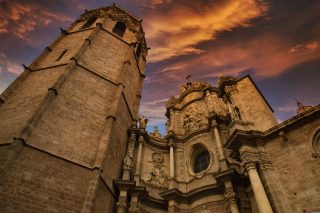
Plaza de la Virgen, Valencia
Area, Attraction and Square in Valencia

Plaza de la Virgen is one of Valencia's most iconic Old Town squares, a pedestrian-friendly meeting point where history, architecture, and everyday city life blend seamlessly. Set in the La Seu area of Ciutat Vella, it's framed by major landmarks like Valencia Cathedral, the Basilica of the Virgin of the Forsaken, and the Palau de la Generalitat.
It's an easy highlight to include on a walking tour of the historic center, and it also works as a “base” for exploring nearby sights on foot. For the best views and atmosphere, linger near the Turia Fountain in the middle of the plaza, then circle the edges to appreciate the façades, terraces, and the cathedral's Apostles' Door area.
Table of Contents
- History and Significance of the Plaza de la Virgen
- Things to See and Do in the Plaza de la Virgen
- How to Get to the Plaza de la Virgen
- Practical Tips on Visiting the Plaza de la Virgen
- Where to Stay Close to the Plaza de la Virgen
- Is the Plaza de la Virgen Worth Visiting?
- For Different Travelers
- FAQs for Visiting Plaza de la Virgen
- Nearby Attractions to the Plaza de la Virgen
History and Significance of the Plaza de la Virgen
Plaza de la Virgen sits on ground that has been important to Valencia for centuries: it's widely regarded as the successor to the Roman forum of Valentia, which helps explain why the area still feels like a natural civic center today. Even if you're not “doing history,” you'll sense that this is a place where the city has long gathered—socially, politically, and religiously.
Over time, the square became defined by the institutions around it. The cathedral complex anchors one side, while the Basilica of the Virgen de los Desamparados (Valencia's beloved patron figure) adds a distinctly local devotional identity to the space.
The plaza is also closely tied to Valencia’s living traditions. It’s a stage for ceremonies, seasonal celebrations, and the kind of public rituals that make a city feel more than just a collection of monuments.
Things to See and Do in the Plaza de la Virgen
Start at the Turia Fountain, the plaza’s centerpiece, which references the river that once ran through the city and shaped Valencia’s relationship with water and agriculture. It’s the classic photo spot, but it’s also a good place to pause and watch the square’s rhythm—street musicians, families, and locals meeting for coffee.
Next, look up and outward: the cathedral's presence is constant, and the Basilica's distinctive profile makes the plaza feel uniquely Valencian. If you're doing a self-guided walk, this is a smart place to connect the dots between nearby highlights like the cathedral area, Plaza de la Reina, and the small lanes of Ciutat Vella.
Finally, do what locals do: pick a terrace seat for a drink or a light meal and let the architecture be your backdrop. The plaza is especially rewarding at golden hour, when the stone façades warm up and the atmosphere turns more relaxed.
How to Get to the Plaza de la Virgen
Valencia is served primarily by Valencia Airport (VLC), with Alicante–Elche Airport (ALC) and Castellón–Costa Azahar Airport (CDT) as additional options depending on your route and flight prices. For the best deals and a seamless booking experience, check out these flights to Valencia on Booking.com.
If you're arriving by rail, Valencia's main long-distance station (Estació del Nord) and the high-speed hub (València Joaquín Sorolla) make it straightforward to reach the city from Madrid, Barcelona, and other major Spanish cities.Train schedules and bookings can be found on Omio.
Within Valencia, the plaza is best reached on foot from the Old Town, or by combining metro/bus with a short walk through Ciutat Vella. If you're traveling by car, plan to park outside the historic center and walk in, since the Old Town has restricted access and limited parking.If you are looking to rent a car in Spain I recommend having a look at Discover Cars, first, as they compare prices and review multiple car rental agencies for you.
Practical Tips on Visiting the Plaza de la Virgen
- Entrance fee: Free.
- Opening hours: 24 Hours.
- Best time to visit: Come early in the morning for quieter photos and a calmer feel, or around sunset for the most flattering light and a lively terrace scene.
- How long to spend: 20–40 minutes is enough for a look and photos, but it’s easy to spend 1–2 hours if you add a café stop and nearby cathedral-area sightseeing.
- Accessibility: The square is largely flat and pedestrianized, but the surrounding Old Town streets can be uneven; comfortable shoes help, and wheelchair users may prefer the smoothest approach routes from larger nearby streets.
- Facilities: You’ll find plenty of cafés and restaurants around the edges; for public restrooms, plan to use facilities in nearby museums, major monuments, or larger cafés.
Where to Stay Close to the Plaza de la Virgen
For most visitors, the best area to base yourself is Ciutat Vella (Valencia’s historic center) so you can walk to the plaza early and late, when it’s at its most atmospheric.
If you want to step out straight into the Old Town's landmarks, choose a stay within Ciutat Vella's La Seu or El Carme pockets—both keep you close to Plaza de la Virgen while offering different vibes (La Seu feels more monumental; El Carme feels more bohemian and nightlife-adjacent). Here are five solid options to consider, each for a slightly different travel style:
Caro Hotel Chosen for its boutique-luxury feel and design-forward interiors in a prime Old Town location that makes early-morning plaza walks effortless.
MYR Palacio Vallier Included for its elegant, classic atmosphere right in the historic core—great if you want a refined base with a strong sense of place.
Hotel Ad Hoc Monumental A good pick for travelers who want a smaller, quieter-feeling hotel close to the action without being on the noisiest streets.
Hotel SH Inglés Boutique Recommended for a comfortable, central stay that’s convenient for walking between the plaza, shopping streets, and other Old Town highlights.
Vincci Mercat Added for its stylish, modern comfort near the Central Market—ideal if you want quick access to food spots while staying within easy walking distance of Plaza de la Virgen.
Is the Plaza de la Virgen Worth Visiting?
Yes—Plaza de la Virgen is absolutely worth visiting because it delivers the “Valencia Old Town” feeling in one compact, walkable scene: landmark architecture, a photogenic fountain, and a steady hum of local life. It's also a practical waypoint, linking the cathedral area with other must-sees nearby, so it rarely feels like a detour.
Honest Pivot: If you dislike busy tourist hubs or you’re short on time and have already seen several European cathedral squares, you might treat it as a quick pass-through rather than a linger-and-sit stop. It shines most when you slow down—so if you’re rushing between ticketed attractions, it may not land as a standalone highlight.
What Other Travellers Say...

Reviewers describe the Turia Fountain as a beautiful, symbolic landmark in Plaza de la Virgen, praised for its statues and the way it reflects Valencia's history and the Turia River's irrigation system. Many note it's a great spot for photos, with the cathedral and basilica nearby and plenty of surrounding shops and restaurants. The area can feel busy, as it attracts many visitors who come to pose and take pictures.


For Different Travelers
Plaza de la Virgen works well as a flexible stop: you can make it a quick photo break, a café pause, or the starting point for a deeper Old Town wander. Your experience will depend less on “what to do” and more on timing, pace, and whether you pair it with nearby monuments.
Families with Kids
Kids usually enjoy the open space and the fountain as a focal point, and parents appreciate that it’s easy to navigate without traffic. It’s a good reset point between more structured visits, especially if you’re doing the Old Town on foot.
To keep it smooth, aim for earlier hours when the square is less crowded and terrace service is faster. Pair it with a short, snack-friendly stop nearby so the plaza becomes a break rather than another “must-see.”
Couples & Romantic Getaways
For couples, the plaza is at its best in the evening when the light softens and the terraces feel more atmospheric. It’s a simple, romantic setting for a slow drink with cathedral views.
Make it part of a walk that threads through the Old Town lanes, then return to the plaza to people-watch. The contrast between quiet side streets and the lively square is part of the charm.
Budget Travelers
Plaza de la Virgen is a strong budget-friendly highlight because it's a top-tier sight that costs nothing to experience. You can get great photos, soak up the atmosphere, and build an entire Old Town walking route around it.
If you want to keep spending low, skip the most touristy terrace seats and grab a takeaway drink or snack from a nearby spot, then enjoy it while strolling. The square is also a great anchor for a DIY itinerary linking other free-to-see streets and plazas.
FAQs for Visiting Plaza de la Virgen
Getting There
Tickets & Entry
Visiting Experience
Tours, Context & Itineraries
Photography
Accessibility & Facilities
Food & Breaks Nearby
Safety & Timing
Nearby Attractions to the Plaza de la Virgen
- Valencia Cathedral: The city's landmark cathedral complex, steps away, with major architectural and cultural significance.
- Basilica of the Virgen de los Desamparados: A beloved local religious site that defines the plaza's identity and skyline.
- Palau de la Generalitat: An important historic civic building that adds political and architectural weight to the square.
- Plaza de la Reina: A neighboring square that connects the cathedral area to shopping streets and broader city routes.
- Central Market (Mercado Central): One of Europe's great food markets, ideal for snacks and a lively local atmosphere.
The Plaza de la Virgen appears in our Complete Guide to Visiting Valencia!

Moira & Andy
Hey! We're Moira & Andy. From hiking the Camino to trips around Europe in Bert our campervan — we've been traveling together since retirement in 2020!
This website uses affiliate links which may earn a commission at no additional cost to you!
Planning Your Visit
24 Hours.
Free.
Nearby Attractions
- Basilica de la Virgen de los Desamparados (0.0) km
Basilica, Church and Religious Building - La Catedral (0.1) km
Cathedral, Historic Building and Tower - Cripta Arqueologica (0.1) km
Historic Site, Museum and Roman Site - Palacio de Benicarlo (0.1) km
Historic Building, Historic Site and Palace - Iglesia de San Lorenzo (0.1) km
Church and Religious Building - Almudin de Valencia (0.1) km
Gallery, Historic Building and Museum - El Miguelete (0.2) km
Attraction, Cathedral and Tower - Plaza de la Reina (0.2) km
Area, Attraction and Square - Torres de Serranos (0.3) km
City Gate, Monument and Tower - Iglesia y Torre de Santa Catalina (0.3) km
Church, Tower and Viewing Point