Plaça de Sant Jaume, Barcelona
Square in Barcelona
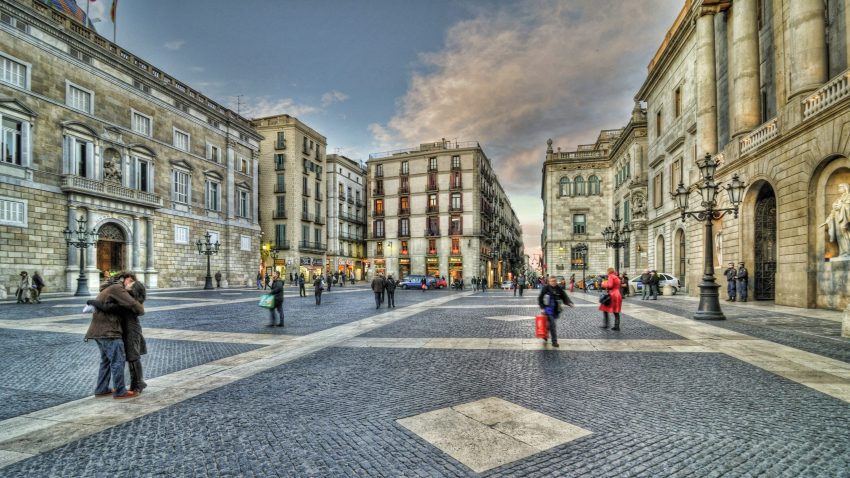
Plaça de Sant Jaume is the Gothic Quarter's most “official” square, where Barcelona's City Hall faces the Palau de la Generalitat across a clean, open plaza that's been the city's power stage for centuries. It's not a monument you tour so much as a place you read: balconies, façades, flags, and the constant comings-and-goings that make it feel like a living civic set.
It's also a natural anchor point on any old-city walking tour. You can loop here easily from the Cathedral, Plaça del Rei, and El Born, then continue toward La Rambla or the harbour-making Sant Jaume the perfect mid-route pause to recalibrate, people-watch, and feel the city's everyday rhythm.
Table of Contents
- History and Significance of the Plaça de Sant Jaume
- Things to See and Do in the Plaça de Sant Jaume
- How to Get to the Plaça de Sant Jaume
- Practical Tips on Visiting the Plaça de Sant Jaume
- Where to Stay Close to the Plaça de Sant Jaume
- Is the Plaça de Sant Jaume Worth Visiting?
- For Different Travelers
- FAQs for Visiting Plaça de Sant Jaume
- Nearby Attractions to the Plaça de Sant Jaume
History and Significance of the Plaça de Sant Jaume
Plaça de Sant Jaume sits on one of the oldest “decision-making” sites in Barcelona, occupying the historical core where the city's civic life has long concentrated. The square is closely tied to governance: on one side stands the Palau de la Generalitat (Catalonia's government), and on the other the Ajuntament (Barcelona City Hall), creating a face-to-face layout that visually sums up the city's administrative identity.
The square's deeper story reaches back to Roman Barcelona (Barcino), when this area formed part of the city's central grid. Over time, medieval institutions and later urban reshaping consolidated the plaza into the form you see today, making it a layered space where different eras of Barcelona's power and planning overlap.
Today, its significance is also social and ceremonial. It's where major festivals and public gatherings play out-castells (human towers), civic celebrations, demonstrations, and seasonal displays-so even a short stop can give you a sense of what Barcelona cares about in the present tense.
Things to See and Do in the Plaça de Sant Jaume
Start by facing each building in turn and letting the square “explain” itself: City Hall’s formal frontage and the Generalitat’s historic presence create a rare civic symmetry in the middle of tight medieval streets. It’s one of the easiest places to understand Barcelona’s public life without needing a ticket.
If you’re lucky with timing, you might catch a public event-anything from a small ceremony to a festival performance-because the square functions as a stage. Even without an event, the atmosphere changes through the day: morning calm, midday movement, then a more dramatic feel as the light drops and the façades glow.
Use Sant Jaume as a connector stop. From here, it's easy to build a compact mini-route: Cathedral area, Plaça del Rei, Plaça de Sant Jaume, then down toward Port Vell. That loop gives you medieval texture, civic identity, and waterfront relief without long distances.
How to Get to the Plaça de Sant Jaume
Barcelona-El Prat Airport is the closest major airport, with straightforward connections into the centre by metro, train, and airport bus services. For the best deals and a seamless booking experience, check out these flights to Barcelona on Booking.com. Girona-Costa Brava Airport is another common arrival option for low-cost flights, but it adds an extra transfer into Barcelona before you continue into the old city. For the best deals and a seamless booking experience, check out these flights to Barcelona on Booking.com.
If you're arriving by train, Barcelona Sants is the main station; from there, connect by metro or taxi toward the Gothic Quarter, then walk the final stretch through pedestrian lanes. Train schedules and bookings can be found on Omio. The last approach is on foot because the square sits inside the old city’s narrow street network where walking is simplest.
Buses and the metro can get you close to the Gothic Quarter edges, but you'll always finish with a short walk. Aim to approach via the Cathedral zone or from Jaume I area so you're not fighting against the densest tourist flows.
Driving is not recommended for this stop because central traffic, restricted access, and parking constraints make it slower than public transport plus walking. If you are looking to rent a car in Spain I recommend having a look at Discover Cars, first, as they compare prices and review multiple car rental agencies for you.
Practical Tips on Visiting the Plaça de Sant Jaume
- Entrance fee: Daily
- Opening hours: 24 Hours
- Best time to visit: Early morning for a quieter square and cleaner photos, or late afternoon when the light adds drama to the façades and the lanes feel more atmospheric.
- How long to spend: 10-20 minutes as a quick stop, or 45-90 minutes if you combine it with nearby historic sights and slow wandering through the Gothic Quarter.
- Accessibility: Expect uneven paving and tight medieval streets on the approach; the square itself is open, but the surrounding lanes can be slow for wheels.
- Facilities: Treat this as a “pause point” rather than a serviced attraction-plan cafés and restrooms around the Cathedral, Via Laietana edges, or El Born.
Where to Stay Close to the Plaça de Sant Jaume
For a culture-heavy itinerary with maximum walkability to major sights, base yourself in the Gothic Quarter or El Born; if you want calmer nights and easier transport links, stay on the Eixample edge and walk in for your old-city days.
For an atmospheric old-town base within easy walking distance, Mercer Hotel Barcelona keeps you right in the historic core. If you want boutique style with a strong Gothic Quarter feel, Hotel Neri Relais & Châteaux is a classic pick for travelers who want the old city at their doorstep.
For a modern, comfortable option that stays close to the Cathedral and old-city routes, H10 Madison works well for long walking days and quick returns between stops.
Is the Plaça de Sant Jaume Worth Visiting?
Yes. It's one of the most “Barcelona” squares in the sense that it's not just pretty-it's functional, symbolic, and woven into how the city actually operates. As a walking-tour stop, it delivers high context in a short time and sits exactly where you'll naturally be exploring anyway.
Honest pivot: if you only enjoy attractions with an interior experience (museums, viewpoints, churches), the square can feel like a fast photo stop unless you're interested in civic buildings, events, or the lived texture of the Gothic Quarter. In that case, treat it as a brief pass-through on the way to nearby interior sights.
What Other Travellers Say...

Plaça de Sant Jaume (Ciutat Vella) is Barcelona's main civic square, set in the Gothic Quarter between the city's key government buildings, and it's rated 4.6/5 from around 460 reviews. Most people experience it as a crossroads you naturally pass through while walking the old city, and the appeal is the setting rather than an “attraction” you queue for: open space, historic façades, and that sense you're standing in a place where official Barcelona still happens day to day. Reviews split into two common moods. On an ordinary day, some describe it as simply a pleasant square—nice for a quick pause, but not something they'd go out of their way for if they're short on time. When the city is in festival mode, though, it becomes a real focal point. Multiple reviewers mention events during La Mercè (including castells, the Catalan human towers), where the square fills up and the atmosphere shifts from calm to spectacle. The main practical note is expectations and cost creep. The square itself is free and best treated as a “stop-and-soak-it-in” place: look around, take in the civic architecture, then continue deeper into the Gothic Quarter. One reviewer complains about a nearby paid entry feeling like a tourist trap (around €20), so if you see ticketing or an “extra” experience attached to your visit, it's worth checking exactly what you're paying for versus simply enjoying the square as part of a walk.


For Different Travelers
Families with Kids
This works best as a short “spot the important buildings” stop rather than a long linger. Kids often enjoy the open space after narrow lanes, and it’s an easy place to reset before continuing to something more interactive nearby.
To make it land, give it a simple hook: this is where big city decisions happen, and festivals sometimes turn the square into a performance space. Keep it brief, then move on toward a market, park, or museum that matches their energy.
Couples & Romantic Getaways
For couples, Sant Jaume is a strong atmosphere stop-especially in the late afternoon when the square feels calmer and the Gothic streets around it become more cinematic. It's a good place to slow down, take a few photos, and then drift into El Born or the Cathedral area for a more romantic evening loop.
It also works as a “route pivot” point: you can decide here whether your day continues toward the waterfront or deeper into the old city. That flexibility is useful when you’re keeping the trip spontaneous.
Budget Travelers
This is a budget-friendly highlight: it’s free, central, and genuinely meaningful for understanding Barcelona’s political and civic identity. Use it as a high-context stop between paid attractions, and let the surrounding streets provide the entertainment.
If you want to maximise value, time your route to catch a public event or festival atmosphere. Even without that, the square is worth it as a quick anchor point on a self-guided Gothic Quarter walk.
FAQs for Visiting Plaça de Sant Jaume
Getting There
Visiting Experience
Photography
Accessibility & Facilities
Safety & Timing
Nearby Attractions to the Plaça de Sant Jaume
- Barcelona Cathedral: A major Gothic landmark that's an easy walk away and pairs naturally with a Sant Jaume stop.
- Plaça del Rei: A medieval square with strong royal-history atmosphere, ideal for continuing your Gothic Quarter loop.
- MUHBA (Barcelona History Museum): A deeper context stop for Roman and medieval Barcelona, close enough to combine without extra transit.
- El Born: A nearby neighbourhood for cafés, museums, and narrow streets that feel distinct from the Gothic Quarter lanes.
- Port Vell: The harbour area that makes a great “open space” finish after old-city walking.
The Plaça de Sant Jaume appears in our Complete Guide to Visiting Barcelona!

Moira & Andy
Hey! We're Moira & Andy. From hiking the Camino to trips around Europe in Bert our campervan — we've been traveling together since retirement in 2020!
This website uses affiliate links which may earn a commission at no additional cost to you!
Planning Your Visit
24 Hours
Daily
Nearby Attractions
- Palau de la Generalitat de Catalunya (0.0) km
Historic Building, Historic Site and Palace - Temple d'August (0.1) km
Roman Site - Plaça de Sant Just (0.1) km
Square - Pont del Bisbe (0.1) km
Attraction and Bridge - Palau del Lloctinent (0.1) km
Archive, Historic Building and Palace - Plaça del Rei (0.1) km
Square - Barcelona Roman Walls (0.1) km
City Walls and Roman Site - Palau Requesens (0.1) km
Arts Venue, Historic Building and Palace - Capella de Santa Àgueda (0.2) km
Church, Historic Building and Museum - Cathedral of Barcelona (0.2) km
Cathedral, Historic Building and Religious Building