Plaça de l'Àngel, Barcelona
Square in Barcelona
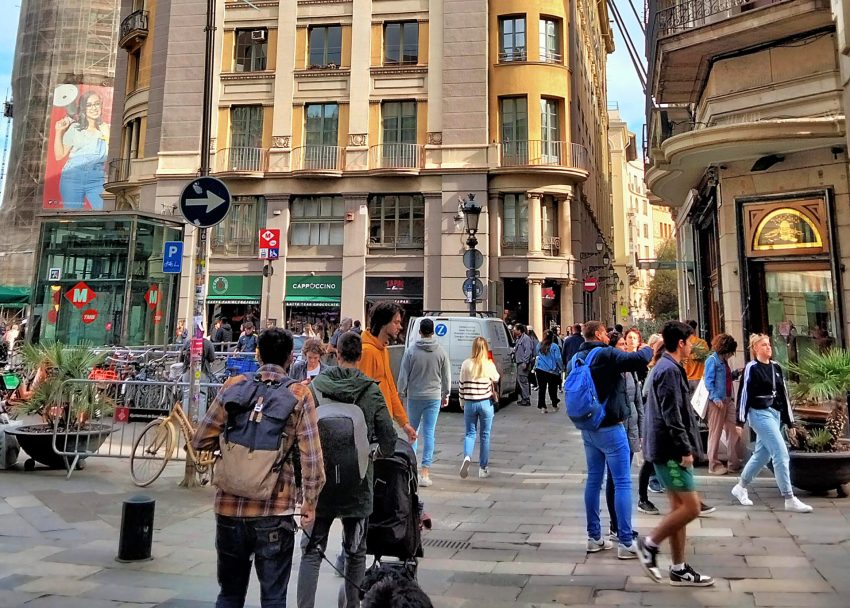
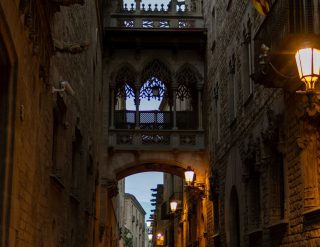
Plaça de l'Àngel is one of those “blink and you miss it” Barcelona places that ends up sticking in your memory: a compact square that feels like a hinge between the intimate lanes of the Barri Gòtic and the broader sweep of Via Laietana. It's not a grand plaza designed for lingering-more a meeting point where streets, stories, and daily life keep crossing paths.
It also works brilliantly as a pause-point on a Gothic Quarter walking tour: you can take a breath, orient yourself, and then continue toward the Cathedral, the Roman wall fragments nearby, or down toward the Born. If you're trying to understand how Barcelona's oldest layers sit under the modern city, this small square is a surprisingly useful place to stand still.
Table of Contents
- History and Significance of the Plaça de l’Àngel
- Things to See and Do in the Plaça de l’Àngel
- How to Get to the Plaça de l’Àngel
- Practical Tips on Visiting the Plaça de l’Àngel
- Where to Stay Close to the Plaça de l’Àngel
- Is the Plaça de l’Àngel Worth Visiting?
- For Different Travelers
- FAQs for Visiting Plaça de l’Àngel
- Nearby Attractions to the Plaça de l’Àngel
History and Significance of the Plaça de l’Àngel
Plaça de l'Àngel sits in the historic core of Barcelona, where traces of Roman Barcino still map onto today's street plan. In the Roman period, this area connected with one of the gates in the city wall (often described in sources discussing the old cardus/decumanus layout), which helps explain why the surrounding streets feel like they “want” to funnel you in particular directions.
The square's name is commonly linked to an “angel” tradition associated with Barcelona's early Christian story-world, especially the cult of Santa Eulàlia and the city's medieval religious imagination. Over time, the angel idea became part of the place's identity in local writing about the Gothic Quarter, even as the neighborhood repeatedly reshaped itself.
Modern Barcelona altered the area's feel dramatically when Via Laietana was driven through the old city in the early 20th century, creating a faster north-south corridor and changing how people moved through Ciutat Vella. Plaça de l'Àngel ended up right at that seam-one foot in the old lanes, one foot in the more “planned” modern street.
Things to See and Do in the Plaça de l’Àngel
Start by using the square as a navigation node. If you're walking without a strict plan, it's an easy point to decide: into the Gothic Quarter for the Cathedral and narrow medieval streets, or outward toward the broader avenues and faster routes. The constant flow makes it feel lived-in, not staged.
Look around for small details that hint at older layers-this part of the city rewards “slow eyes.” Several write-ups of the square highlight the angel motif and how it has appeared in the square’s setting over time (including references to an earlier monument and later re-siting). Even if you don’t chase every detail down, it’s a good prompt to notice façades and niches rather than just the street-level bustle.
Treat Plaça de l'Àngel as a launchpad for nearby Roman and medieval fragments. A short walk puts you close to places where the Roman walls and the Gothic city's later structures overlap-exactly the kind of layered streetscape Barcelona does best when you're on foot and not rushing.
If you like small, local-feeling food stops, you’re also in a handy position to dip into the surrounding lanes for cafés, bakeries, and old-school sweet shops that still feel rooted in the neighborhood rather than designed for a single “attraction” moment.
How to Get to the Plaça de l’Àngel
Most visitors arrive via Barcelona-El Prat Airport (BCN), then continue into the city by Aerobús, metro, or taxi to the old-town edge near Via Laietana. For the best deals and a seamless booking experience, check out these flights to Barcelona on Booking.com.
If you're arriving by rail, Barcelona Sants is the main station for long-distance services, and it connects easily by metro/taxi toward the Gothic Quarter; from there, Plaça de l'Àngel is best reached on foot once you're in the centre. Train schedules and bookings can be found on Omio..
By metro, the simplest option is usually Jaume I (L4), which puts you within a few minutes’ walk and keeps the approach straightforward even if you’re not confident navigating the Gothic Quarter’s lanes.
If you’re driving, treat this as a “park outside, walk in” stop-old-town streets are narrow, restrictions are common, and walking the final stretch is almost always faster and calmer. If you are looking to rent a car in Spain I recommend having a look at Discover Cars, first, as they compare prices and review multiple car rental agencies for you..
Practical Tips on Visiting the Plaça de l’Àngel
- Entrance fee: Free
- Opening hours: 24 Hours
- Best time to visit: Aim for early morning for quieter streets and cleaner sightlines; late afternoon is livelier and feels more like “real” neighborhood flow.
- How long to spend: 10-20 minutes as a standalone stop, or longer if you’re using it as a pivot point to explore lanes in multiple directions.
- Accessibility: Pavements are generally manageable, but the wider area involves uneven surfaces, curb changes, and occasional crowding.
- Facilities: The square itself is mainly a pass-through; rely on nearby cafés and public-facing businesses in the surrounding streets for restrooms and breaks.
Where to Stay Close to the Plaça de l’Àngel
For a culture-heavy Barcelona itinerary, base yourself in or right beside the Barri Gòtic so you can walk to the Cathedral-area sights early, before day-trippers peak; if nightlife and late dinners matter more, you may prefer the edges of El Born where evenings feel more spacious but still central.
If you want to be steps from the Gothic Quarter’s atmospheric lanes, consider Hotel Neri, a polished, boutique option tucked deep in the old streets. If you like a luxury stay with a historic setting and easy access to both Gothic Quarter and Born, Mercer Hotel Barcelona is an excellent base that keeps walking distances short in every direction. For a slightly more contemporary-feeling base that still lands you in the heart of the old city, H10 Madison works well for travelers who want rooftop downtime between sight stops.
Is the Plaça de l’Àngel Worth Visiting?
Yes-because it’s a “connector” stop that quietly improves your whole old-town walk. It helps you understand where you are, makes it easy to stitch together the Cathedral area, Roman remnants, and the Born, and gives you a real sense of how Barcelona’s layers meet at street level.
Honest pivot: skip it if you’re only collecting big-ticket landmarks and you’re short on time-this isn’t a destination square with a single headline sight. It pays off most for walkers who enjoy reading the city as they go.
For Different Travelers
Families with Kids
This is best treated as a short reset point rather than an activity stop: a place to regroup, check directions, and keep moving toward more “visual” wins like the Cathedral area or the Born. If you’re traveling with a stroller, plan a slightly wider-route approach to avoid the tightest lanes and the most uneven surfaces.
Kids who like “city spotting” games can do well here: look for old stones, niches, street signs, and the way the neighborhood changes character within a few steps. Keep expectations simple and use it to break up a longer walking loop.
Couples & Romantic Getaways
Plaça de l'Àngel works as a gentle hinge in an unhurried old-town wander-pause, choose a lane, then let Barcelona decide the next five minutes. The romantic value is in the flow: drifting from medieval alleys to a café stop, then back into quiet streets that suddenly open onto major sights.
For a low-effort date-style plan, use it as a midpoint between the Cathedral area and a Born dinner, taking the scenic lanes rather than the fastest route. It’s more about atmosphere than a single “must-see” object.
Budget Travelers
This is a good stop precisely because it’s a free, central waypoint that helps you build a self-guided route without paying for anything. Use it to link together nearby highlights you can enjoy from the street-church façades, Roman wall fragments, and lively neighbourhood scenes.
If you’re watching spending, plan your breaks in this part of town carefully: prices rise fast on the most obvious streets. Walk one or two turns away from the main flow and you’ll often find better-value coffee and snacks.
FAQs for Visiting Plaça de l’Àngel
Getting There
Visiting Experience
Tours, Context & Itineraries
Photography
Accessibility & Facilities
Food & Breaks Nearby
Safety & Timing
Nearby Attractions to the Plaça de l’Àngel
- Barcelona Cathedral: A Gothic landmark with a dramatic façade and a lively square that's easy to reach on foot from here.
- Plaça de Sant Jaume: The civic heart of the old city, lined by major government buildings and perfect for a short historic detour.
- Roman Walls and Plaça de Ramon Berenguer III: A strong “ancient Barcelona” pairing where stonework and later medieval layers sit side by side.
- Basílica de Santa Maria del Mar: A beautiful Gothic church in El Born that feels calmer and more spacious than the Cathedral area.
- Picasso Museum: A rewarding cultural stop nearby, especially if you want an indoor anchor to balance an old-town walking loop.
The Plaça de l'Àngel appears in our Complete Guide to Visiting Barcelona!

Moira & Andy
Hey! We're Moira & Andy. From hiking the Camino to trips around Europe in Bert our campervan — we've been traveling together since retirement in 2020!
This website uses affiliate links which may earn a commission at no additional cost to you!
Planning Your Visit
24 Hours
Free
Nearby Attractions
- Barcelona Roman Walls (0.0) km
City Walls and Roman Site - Palau Requesens (0.0) km
Arts Venue, Historic Building and Palace - Plaça del Rei (0.1) km
Square - Capella de Santa Àgueda (0.1) km
Church, Historic Building and Museum - Plaça de Sant Just (0.1) km
Square - Plaça de Ramon Berenguer el Gran (0.1) km
Roman Site and Square - Palau del Lloctinent (0.1) km
Archive, Historic Building and Palace - Temple d'August (0.1) km
Roman Site - Museu Frederic Marès (0.2) km
Historic Site, Museum and Sculpture - Plaça de Sant Jaume (0.2) km
Square