Plaça de Catalunya, Barcelona
Square in Barcelona
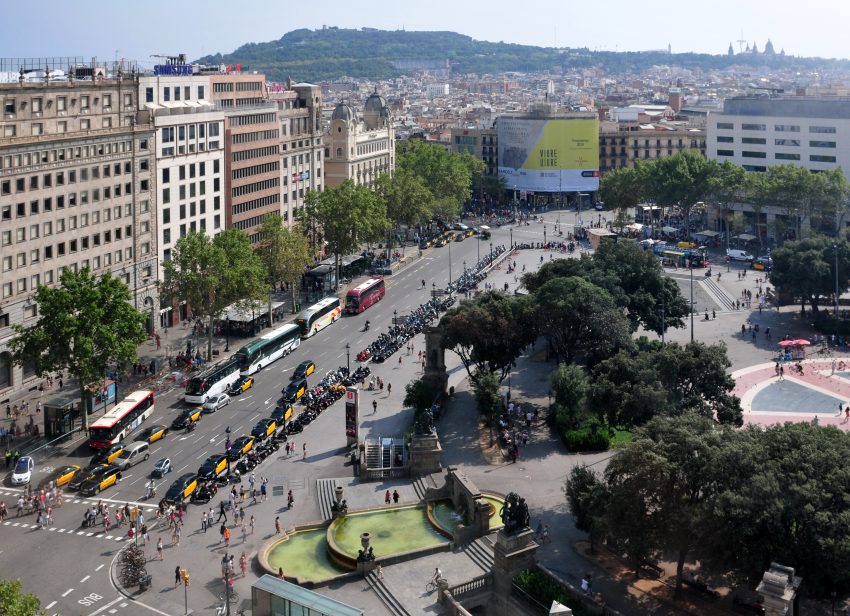
Plaça de Catalunya is Barcelona's big, bright “reset point”: the square where the old city and the Eixample click together, and where you naturally end up whether you planned to or not. It's a broad, busy plaza framed by grand facades and department stores, with fountains, pigeons, and a steady flow of locals cutting across town.
For most visitors, the best way to experience it is as the start (or midpoint) of a walking tour: step out here, decide whether you're heading down Las Ramblas toward the Gothic Quarter and the sea, or up Passeig de Gràcia toward Gaudí's showpiece architecture. Even if you don't “visit” it like a museum, it's one of the most practical and atmospheric places to get your bearings in Barcelona.
Table of Contents
- History and Significance of the Plaça de Catalunya
- Things to See and Do in the Plaça de Catalunya
- How to Get to the Plaça de Catalunya
- Practical Tips on Visiting the Plaça de Catalunya
- Where to Stay Close to the Plaça de Catalunya
- Is the Plaça de Catalunya Worth Visiting?
- For Different Travelers
- FAQs for Visiting Plaça de Catalunya
- Nearby Attractions to the Plaça de Catalunya
History and Significance of the Plaça de Catalunya
For centuries, this area sat just beyond Barcelona's medieval walls, a liminal space between the compact old city and the open land beyond. As the city expanded and the Eixample plan reshaped Barcelona in the 19th century, the idea of a true central square became essential: a place that could stitch together the historic centre and the new boulevards, and handle the growing movement of people, trams, and commerce.
Plaça de Catalunya took its modern form in the early 20th century and was officially inaugurated on 2 November 1927, reflecting Barcelona's push to present itself as a modern European capital. In the years around the 1929 International Exhibition, the square and its surroundings became a showcase zone for prestige addresses-hotels, cafés, theatres, and flagship retail-cementing its role as the city's social and commercial heart.
Look closely and you’ll see how the square still works as an open-air civic stage: public art, broad sightlines, and constant movement. One of the most notable landmarks is Josep Maria Subirachs’ Monument to Francesc Macià, a distinctive, stepped form that adds a modern political note to an otherwise classically “big city” space.
Things to See and Do in the Plaça de Catalunya
Start with the simple pleasure of watching Barcelona move. The square is a crossroads for commuters, shoppers, and visitors, and that rhythm is part of the experience: the rush of Las Ramblas, the cleaner lines of Eixample streets, and the sense that every direction leads somewhere useful.
Walk the perimeter to take in the fountains and sculptural details, then cross the centre slowly, using it as a staging point. If you're building a DIY route, this is an easy place to “choose your chapter”: old Barcelona down toward the Gothic Quarter and the waterfront, or modernist Barcelona up toward Passeig de Gràcia's architecture and boutiques.
Pay attention to the corners. One side tends to feel more “gateway to Las Ramblas,” while another opens toward the wide avenues of the Eixample, and each has a slightly different atmosphere. If you want one classic moment, pause near the fountains, look outward, and you'll feel how the square links the city's two identities: historic and modern, local and visitor-facing.
How to Get to the Plaça de Catalunya
Barcelona-El Prat Airport (BCN) is the main arrival point, and the Aerobús runs directly to Plaça de Catalunya, which is one of the easiest airport-to-centre transfers in the city. For the best deals and a seamless booking experience, check out these flights to Barcelona on Booking.com.
If you're arriving by train, Barcelona Sants is the main long-distance station, and from there you can reach Catalunya quickly by metro or commuter rail connections, making Plaça de Catalunya a practical first stop with luggage. Train schedules and bookings can be found on Omio.
City buses and multiple metro lines converge here, so even if you’re staying outside the centre, it’s usually simplest to aim for “Catalunya” as your transfer point and then continue on foot. If you’re traveling by car, expect heavy traffic, limited street parking, and restrictions in the central zones, so a paid underground car park on the edge of the centre is the least stressful option. If you are looking to rent a car in Spain I recommend having a look at Discover Cars, first, as they compare prices and review multiple car rental agencies for you.
Practical Tips on Visiting the Plaça de Catalunya
- Entrance fee: Free.
- Opening hours: Open 24 hours.
- Best time to visit: Early morning is best for a calmer feel and cleaner photos; late afternoon works well if you want atmosphere and don’t mind crowds. Avoid peak midday if you’re using it mainly as a meeting point.
- How long to spend: 10-20 minutes is enough to take it in and set your route; allow 30-45 minutes if you’re pausing for photos, a coffee nearby, or using it to branch into two neighbourhood walks.
- Accessibility: The square is generally flat and easy to cross, but crowd density can make moving through the centre slower, especially at rush hour. If you have limited mobility, skirt the edges for smoother pacing.
- Facilities: You’ll find plenty of cafés, shops, and services around the perimeter, plus excellent public transport connections for quick exits in any direction. Keep personal belongings secure in busy areas, as it’s a high-traffic spot.
Where to Stay Close to the Plaça de Catalunya
If your priority is a culture-heavy, walk-everywhere itinerary, base yourself within a short stroll of Plaça de Catalunya so you can split your days easily between the Gothic Quarter and Eixample highlights; if nightlife is the main focus, lean toward the edges of El Raval or the lower Eixample so you can dip in and out without relying on late-night transport.
For a genuinely doorstep-central stay with a polished feel, Olivia Plaza Hotel puts you right on the square for early starts and easy returns. If you want a classic, well-located hotel that keeps you close to both Las Ramblas and the Eixample grid, Hotel Regina Barcelona is a reliable base with a long-standing address near the action. For a comfortable, full-service option a couple of minutes away on a calm side street, Catalonia Plaza Catalunya balances convenience with an easy walk to major routes.
Is the Plaça de Catalunya Worth Visiting?
Yes-because even if it isn’t a “sit-inside-and-tour” attraction, it’s one of Barcelona’s most useful and revealing public spaces. Stand here for five minutes and you’ll understand how the city connects, where the main pedestrian currents flow, and how quickly you can pivot between the old town and the modernist avenues.
Honest pivot: if you dislike busy transport hubs and big-city crowds, you can treat it as a pass-through rather than a destination. In that case, aim for a quick look, then move on to the Gothic Quarter's smaller squares or the calmer stretches of Eixample streets for a more intimate Barcelona feel.
What Other Travellers Say...

Plaça de Catalunya is Barcelona's main central square, sitting right where the historic old city meets the newer Eixample. It's a broad, tree-lined space with fountains and sculptures, ringed by shops and cafés, and it regularly hosts events. Reviewers consistently describe it as lively and energetic, and many treat it as the natural starting point for exploring because it links directly to major areas and streets like La Rambla, Passeig de Gràcia, and the Gothic Quarter.



For Different Travelers
Families with Kids
For families, Plaça de Catalunya works best as a practical waypoint: an easy meeting spot, a place to reset, and a straightforward start to shorter walking loops. The open space and fountains are visually engaging, but it's busy, so it's less about letting kids roam and more about keeping the stop short and purposeful.
Use it to plan a kid-friendly route: down toward Las Ramblas for street energy and simple snacks, or up toward Passeig de Gràcia where the sidewalks are wide and the architecture keeps things interesting. If you're using a stroller, the area is generally manageable, but the densest foot traffic can slow you down at peak times.
Couples & Romantic Getaways
For couples, this is more of a “begin the day here” scene than a romantic linger. The best move is to meet in the square, grab a quick coffee nearby, then stroll into a more atmospheric area-Gothic lanes for old-world ambience or Passeig de Gràcia for elegant window-shopping and architectural stops.
In the evening, it's a useful anchor point for transitioning between dinner zones, but it can feel hectic rather than intimate. If you want a more romantic square experience, use Plaça de Catalunya as the connector and spend your unhurried time in smaller plazas deeper in the old town.
Budget Travelers
Budget travelers will appreciate that Plaça de Catalunya is essentially a free “city navigation tool.” It's a natural landmark for self-guided walking routes, a simple place to meet friends, and a hub where you can move around without relying on taxis.
Because it’s central, it’s also a good area to compare transport options and choose walking over paid rides. The main caution is the temptation factor: major shopping and tourist corridors start here, so it’s worth deciding your route first and spending your money on the specific sights you care about.
FAQs for Visiting Plaça de Catalunya
Getting There
Tickets & Entry
Visiting Experience
Tours, Context & Itineraries
Photography
Accessibility & Facilities
Food & Breaks Nearby
Safety & Timing
Nearby Attractions to the Plaça de Catalunya
- Las Ramblas: Barcelona's famous promenade that runs straight down from the square toward the waterfront, packed with street life and quick detours.
- Passeig de Gràcia: a grand avenue for Modernisme architecture and high-end shopping, with several Gaudí landmarks within easy walking distance.
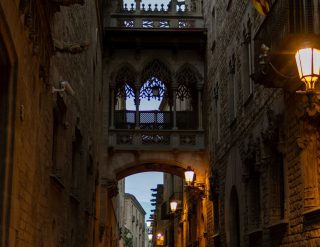
- Barri Gòtic (Gothic Quarter): a dense maze of medieval streets where you'll find small plazas, historic buildings, and a very different pace.
- Barcelona Cathedral: the Gothic Quarter's main cathedral, best combined with a wander through nearby lanes and squares.
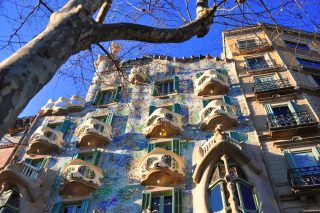
- Casa Batlló: one of Gaudí's most iconic façades, an easy walk up Passeig de Gràcia from the plaza.
The Plaça de Catalunya appears in our Complete Guide to Visiting Barcelona!

Moira & Andy
Hey! We're Moira & Andy. From hiking the Camino to trips around Europe in Bert our campervan — we've been traveling together since retirement in 2020!
This website uses affiliate links which may earn a commission at no additional cost to you!
Planning Your Visit
Open 24 hours.
Free.
Nearby Attractions
- Passeig de Gràcia (0.1) km
Area, Promenade and Street - Santa Anna Church (0.1) km
Church - Els Quatre Gats (0.3) km
Arts Venue, Café and Historic Building - Palau de la Música Catalana (0.4) km
Arts Venue, Historic Building and Theatre - COAC (Col·legi d’Arquitectes de Catalunya) (0.4) km
Arts Venue and Historic Building - Casa Calvet (0.5) km
Attraction, Historic Building and Notable Building - Mercat Gòtic (0.5) km
Attraction, Bazaar and Market - Plaça Nova (0.5) km
Square - Virreina Palace (0.5) km
Historic Building, Museum and Palace - Museu d’Art Contemporani de Barcelona (0.5) km
Arts Venue, Attraction and Museum