Piazza Tre Martiri, Rimini
Historic Site and Square in Rimini
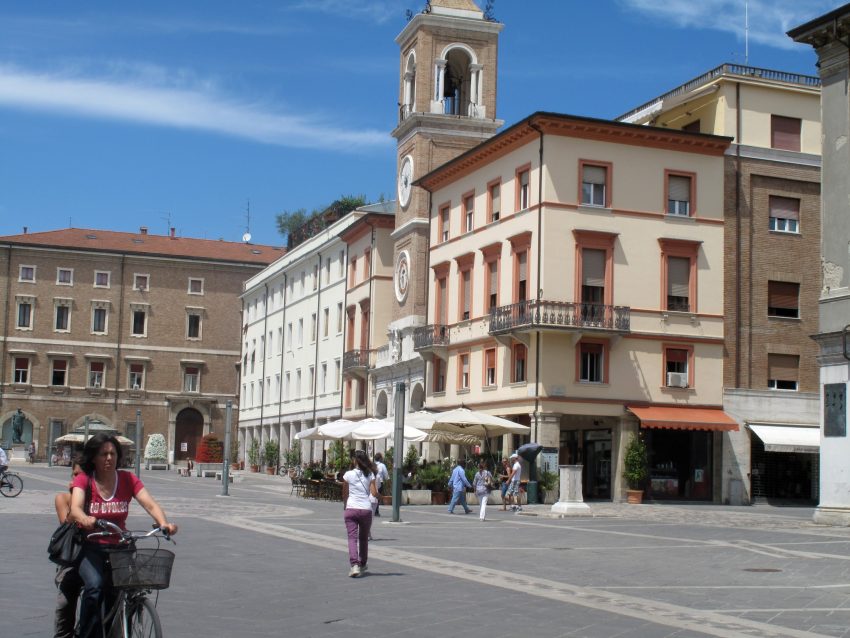
Piazza Tre Martiri is Rimini's central meeting point and one of those places you'll likely pass through more than once without even trying. Set in the historic center where the Roman city's main axes once crossed, it works as a natural pause in the day: a place to orient yourself, sit with a coffee, and feel the rhythm of local life moving around you.
What makes the square memorable is how many eras it holds in one open space-Roman foundations, Renaissance touches, and modern commemorations-without feeling like an outdoor museum. It's one of the must-see places in Rimini, and it also slots perfectly into a walking tour of Rimini because so many of the old town's key streets and landmarks radiate from here.
Table of Contents
- History and Significance of the Piazza Tre Martiri
- Things to See and Do in the Piazza Tre Martiri
- How to Get to the Piazza Tre Martiri
- Practical Tips on Visiting the Piazza Tre Martiri
- Where to Stay Close to the Piazza Tre Martiri
- Is the Piazza Tre Martiri Worth Visiting?
- For Different Travelers
- FAQs for Visiting Piazza Tre Martiri
- Nearby Attractions to the Piazza Tre Martiri
History and Significance of the Piazza Tre Martiri
Long before it carried its current name, this square was the Roman forum area-Rimini’s civic heart where commerce, politics, and public life converged. Its location at the crossing of the ancient decumanus and cardo isn’t just a fun historical detail; it explains why the square still feels like a “center of gravity” in the city today. The porticoes and long-established market function (it was known for centuries as a produce-focused piazza) reinforce that sense of continuity.
The modern name, Piazza Tre Martiri, commemorates three young partisans-Mario Cappelli, Luigi Nicolò, and Adelio Pagliarani-executed here on August 16, 1944. A memorial marker keeps that history present without overwhelming the square's day-to-day atmosphere, and it adds an important layer to understanding Rimini beyond its Roman fame.
The Clock Tower helps define the square’s character and scale. Built in the 16th century and reshaped after later damage, it remains a focal point, and its astronomical-style dial (with calendar and lunar elements) gives the space a distinctly old-world personality-especially when you notice how people naturally use the tower as a meeting landmark.
Things to See and Do in the Piazza Tre Martiri
Begin by slowing down and reading the square like a map. Look for how the main pedestrian routes feed into it, then choose one direction and let the streets pull you toward your next stop. If you enjoy details, the Clock Tower is the first obvious anchor: it’s the kind of feature you can admire quickly, then keep noticing as you return to the square at different times of day.
In the middle of the piazza, you'll find references to Julius Caesar's legendary moment after crossing the Rubicon, including a commemorative monument and a statue associated with that tradition. Whether you're deeply into Roman history or just curious, it's an easy way to connect the square's everyday bustle with the larger story of Rimini as a Roman city.
Don’t underestimate the square as a simple “experience” stop rather than a checklist sight. Grab a pastry or espresso nearby, sit for ten minutes, and watch how the space works-locals cutting across on errands, friends meeting under the tower, and evening strolls that turn the piazza into an open-air living room.
How to Get to the Piazza Tre Martiri
Because it's in the historic center, reaching Piazza Tre Martiri is generally straightforward once you're in Rimini, and most visitors arrive on foot as part of an old-town wander.
If you're flying in, Federico Fellini International Airport (Rimini Airport) is the closest, while Bologna Guglielmo Marconi Airport is a common alternative for more flight options. For the best deals and a seamless booking experience, check out these flights to Rimini on Booking.com. From either airport, you’ll typically continue by local bus, taxi, or train connections depending on where you land and your schedule.
If you arrive by train, Rimini’s main station is a convenient starting point, and the walk to the square is usually around 10-15 minutes through central streets. Use Omnio to easily compare schedules, book train tickets, and find the best prices all in one place for a hassle-free journey across Italy. It’s an easy route that also gives you a quick sense of how the modern city transitions into the old town.
Local buses run between the station area, central Rimini, and the edges of the historic center, and you can usually get close before finishing with a short walk. If you're driving, plan to park outside the most restricted central zones and walk in, as access rules can limit how close you can get by car at certain times. If you are looking to rent a car in Italy I recommend having a look at Discover Cars, first, as they compare prices and review multiple car rental agencies for you.
Practical Tips on Visiting the Piazza Tre Martiri
- Entrance fee: Free public space.
- Opening hours: 24 Hours
- Official website:
- Best time to visit: Visit in the early evening when the square feels most atmospheric and lively, then return briefly in the morning for a quieter look at the details and architecture.
- How long to spend: 20-45 minutes is enough to take it in properly, and it works best as a flexible stop you revisit as you explore nearby streets and landmarks.
- Accessibility: The square is generally easy to navigate with mostly flat, pedestrian-friendly surfaces, though paving can be uneven in places typical of historic centers.
- Facilities: You’ll find plenty of cafés, pastry shops, and everyday services right around the piazza, making it an easy place for a restroom break, a quick snack, or a short rest.
Where to Stay Close to the Piazza Tre Martiri
For a culture-heavy itinerary, base yourself in Rimini’s historic center near Corso d’Augusto; if your trip’s main focus is beach time and evening promenade energy, Marina Centro is often the better base for that style of stay.
If you want to be able to step out and start exploring immediately, a central boutique option is DuoMo Hotel, which puts you close to the old town’s core. For a practical, well-connected stay that’s easy for train arrivals while still walkable to the center, consider Card International Hotel. If you’d like a comfortable base that leans slightly more toward the seafront while keeping the historic center within easy reach, Hotel Luxor is a solid choice.
Is the Piazza Tre Martiri Worth Visiting?
Yes, because it’s both historically meaningful and genuinely useful as a traveler-an easy landmark that helps you understand Rimini’s layout while giving you a concentrated dose of the city’s layered story. Even if you’re not seeking out “squares” as a category, this one tends to become a natural highlight simply because you keep returning to it.
It also offers something many attractions don’t: an authentic slice of daily life in a historically important setting. A few unhurried minutes here can make the rest of the old town feel more coherent and more connected to Rimini’s past.
What Other Travellers Say...

Statua di Giulio Cesare stands on the north side of Piazza Tre Martiri in Rimini's historic centre; a large bronze figure in armour and cloak, it's a 20th‑century cast not the original but serves as a focal point of the square, traditionally linked to Caesar's supposed speech after crossing the Rubicon and set on a longstanding pedestal with a Latin inscription. Visitors note the statue faces Rome, mention the square's former name in memory of three partisans executed there, and recommend pausing in the pleasant piazza to relax and enjoy street musicians.


For Different Travelers
Families with Kids
This is a good stop for families because it’s open, flexible, and doesn’t require long attention spans. Kids can move around safely in a pedestrian-focused space while adults take in the tower, monuments, and street life.
To make it work smoothly, treat the piazza as a reset point between bigger sights. A quick snack stop or a simple “spot the clock and statue” mini-game can turn it into an easy win without turning it into a long lecture.
Couples & Romantic Getaways
For couples, Piazza Tre Martiri is best as part of an evening stroll when the square feels most alive and inviting. The café scene and warm lighting create an easy, low-pressure atmosphere that suits slow travel.
Use it as a springboard: pause for an aperitivo nearby, then wander the surrounding lanes without a strict plan. The pleasure here is in the flow-short stops, small discoveries, and the feeling of being in the city rather than just visiting it.
Budget Travelers
Budget travelers will appreciate that the square is a high-value stop that costs nothing and fits naturally into a day of walking. It’s also an excellent place to sit, rest, and plan the next hour without needing a paid attraction as an anchor.
If you’re managing costs, use the area around the piazza for simple food breaks rather than full sit-down meals. A pastry and coffee stop here can feel like an experience in itself, especially if you time it for people-watching.
FAQs for Visiting Piazza Tre Martiri
Getting There
Visiting Experience
Tours, Context & Itineraries
Photography
Accessibility & Facilities
Food & Breaks Nearby
Safety & Timing
Nearby Attractions to the Piazza Tre Martiri
- Tempio Malatestiano: A standout church with distinctive design details that reveal Rimini's Renaissance ambition in a compact, visitable space.
- Arch of Augustus: An iconic Roman gateway that pairs well with the piazza for a simple historic-center route.
- Piazza Cavour: Rimini's civic heart with elegant buildings and a café scene that's ideal for lingering and people-watching.
- Castel Sismondo: A historic fortress that adds medieval weight to a day otherwise focused on Roman and Renaissance Rimini.
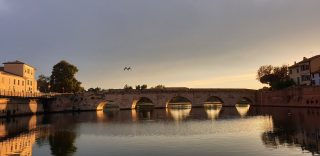
- Ponte di Tiberio: A remarkably preserved Roman bridge that makes an excellent scenic endpoint to an old-town walk.
The Piazza Tre Martiri appears in our Complete Guide to Visiting Rimini!

Moira & Andy
Hey! We're Moira & Andy. From hiking the Camino to trips around Europe in Bert our campervan — we've been traveling together since retirement in 2020!
This website uses affiliate links which may earn a commission at no additional cost to you!
Planning Your Visit
24 Hours
Free public space.
Nearby Attractions
- Tempio Malatestiano (0.1) km
Church - Piazza Cavour (0.3) km
Square - Palazzo Garampi (0.3) km
Palace - Domus del Chirurgo (0.3) km
Historic Site - Arch of Augustus (0.3) km
Historic Site - Palazzo del Fulgor (0.3) km
Museum - Porta Montanara di Rimini (0.3) km
City Gate - Museo della Città di Rimini (0.4) km
Historic Building and Museum - Castel Sismondo (0.4) km
Castle and Museum - Rimini Caput Viarum (0.5) km
Visitor Centre