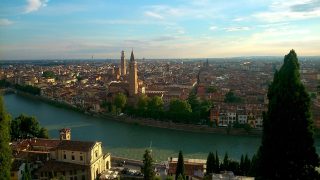
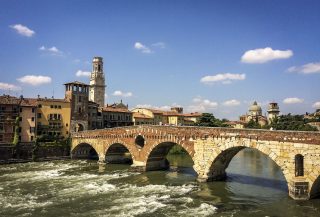
Piazza Brà, Verona
Square in Verona

Piazza Bra (often simply called La Bra) is Verona's largest square and the city's most natural meeting point, where the historic centre opens out into a broad, walkable stage. It's best known as the “foyer” of the Arena di Verona, but the real pleasure is the open space itself: a place to slow down, take in the façades, and feel the city's everyday rhythm alongside its headline sights.
Because it's both central and atmospheric, it's one of the top sights in Verona and an easy anchor for a walking tour of Verona, especially if you want a route that feels effortless rather than over-planned. Come here at different times of day and it changes character: calm and spacious in the morning, lively and social by aperitivo hour, and distinctly theatrical on opera nights when the square seems to pulse toward the Arena.
History and Significance of Piazza Bra
Although the area has long existed as a widening by the city’s core routes, Piazza Bra began to take on its recognisable “square” form from the 16th century onward, when major buildings helped define its edges and perspective. The point was not only aesthetic; it was civic: shaping an open urban room where people could gather, circulate, and experience Verona’s public life with the Arena as the dominant focal point.
A key part of the square’s identity is the Liston, the broad paved promenade that runs along the edge and has become synonymous with the Veronese habit of the passeggiata. Over time, the square developed into a place for strolling, meeting, and marking the city’s calendar, from markets and fairs to modern cultural events that still use the piazza as a natural gathering space.
The architecture around the square reinforces that sense of civic theatre. Palazzo Barbieri gives the eastern side a formal, administrative presence as Verona’s town hall, while the Gran Guardia on the south side adds a monumental “event hall” feel that mirrors the Arena’s cultural pull and keeps the square active beyond a single landmark.
Things to See and Do in Piazza Bra
Start with the obvious: take a slow lap that keeps the Arena in view, because the changing angles are half the experience. Piazza Bra is one of those places where a few steps can turn a snapshot into a dramatic city portrait, especially when the light catches the Arena’s pale stone.
Then do what locals do and walk the Liston at an unhurried pace, using it as your base for people-watching and a coffee or aperitivo stop. It’s also the best way to notice how the square “works” as a social space: friends meeting, families lingering, and visitors naturally funnelling toward the Arena entrance.
Finally, look beyond the amphitheatre. Palazzo Barbieri’s frontage helps explain the square’s role as Verona’s civic living room, and the Gran Guardia often adds extra interest when there are exhibitions or public events, giving you a cultural layer even if you’re not heading into the Arena itself.
How to Get to Piazza Bra
Piazza Bra is in Verona's historic centre and is straightforward to reach on foot once you're anywhere in the old town. If you're navigating, aim for the Arena di Verona in Piazza Bra and let the square reveal itself as the space opens up.
For flights, the closest airport is Verona Villafranca Airport (VRN), with additional options at Bergamo (BGY) and Venice Marco Polo (VCE) if you want broader route choice. For the best deals and a seamless booking experience, check out these flights to Verona on Booking.com. From VRN, city shuttles and taxis make it easy to reach the centre, then you can walk straight into Piazza Bra.
By train, Verona Porta Nuova is the main station for high-speed and regional services, and it's a short, simple transfer to Piazza Bra by bus, taxi, or a manageable walk if you're travelling light. Use Omnio to easily compare schedules, book train tickets, and find the best prices all in one place for a hassle-free journey across Italy. City buses run frequently toward the centre, which is often the easiest option if you want to save your steps for the old town.
If you’re arriving by car, use a central garage near the historic edge and walk in, since access rules and traffic in the core can slow short journeys more than you expect. If you are looking to rent a car in Italy I recommend having a look at Discover Cars, first, as they compare prices and review multiple car rental agencies for you.
Practical Tips on Visiting Piazza Bra
- Entrance fee: Free
- Opening hours: 24 Hours
- Best time to visit: Late afternoon into early evening, when the square fills with energy and the Arena backdrop feels most dramatic.
- How long to spend: 20-40 minutes for a relaxed circuit and photos, or longer if you’re building in an aperitivo stop before a performance.
- Accessibility: The square is broadly flat and easy to navigate, but busy periods can make moving through the centre feel slower.
- Facilities: Plenty of cafés, restaurants, and services line the square, making it an ideal practical “reset point” during a sightseeing day.
Where to Stay Close to Piazza Bra
For a culture-heavy itinerary, base yourself in the Centro Storico around Piazza Bra so you can walk to the main sights early and keep evenings effortless; if your priority is fast rail access and easy arrivals, staying near Verona Porta Nuova can be more convenient with a quick hop into the centre.
For a stay that puts you steps from the Arena and the square’s evening atmosphere, Hotel Milano & SPA is a consistently strong, central pick. If you want a practical, well-located base that keeps you close to Piazza Bra and the main routes into the old town, Hotel Mastino makes logistics easy. For a more classic historic-centre feel while staying comfortably walkable to the square, Hotel Accademia is a reliable choice.
Is the Piazza Bra Worth Visiting?
Yes, because it's Verona's most natural “starting square,” where the city's scale, rhythm, and main landmark come together in one place. Even if you never go inside the Arena, Piazza Bra is where Verona feels most immediately legible and most confidently itself.
It’s also a high-value stop because it doesn’t demand effort: you can drop in for five minutes or let it become the backbone of your day. The square works equally well as a sightseeing highlight, a social pause, and a pre-show gathering point that makes an opera-night itinerary feel special before you even take your seat.
What Other Travellers Say...

Arena di Verona on Piazza Bra is a well‑preserved Roman amphitheatre that still hosts a summer opera programme and occasional markets and events; visitors praise the ability to walk around and climb for city views, touch the smooth seating, and enjoy late‑day light, though some modern seating and event modifications are visible and admission queues or booking fees can apply — families note kids may lose interest quickly but young children can enter free.


For Different Travelers
Families with Kids
Piazza Bra works well for families because it’s spacious, visually impressive, and easy to understand at a glance. Kids often respond instantly to the scale of the Arena, and the open layout makes it simpler to take breaks without feeling boxed into narrow lanes.
To keep it smooth, treat the square as a flexible base: arrive, do a short lap, then use the cafés and edge paths for quick stops as needed. If you’re visiting in peak periods, aim for earlier hours when movement is easier and the experience feels calmer.
Couples & Romantic Getaways
For couples, Piazza Bra is Verona at its most cinematic, especially as the light softens and the square transitions into evening. The combination of the Arena backdrop and the slow flow of people along the Liston creates a natural “date-night” atmosphere without you having to plan much.
Make it romantic by keeping it simple: a slow stroll, one drink, and a few minutes standing back far enough to take the whole scene in. If you’re seeing a performance, arriving early lets you enjoy the build-up rather than rushing straight from one stop to the next.
Budget Travelers
Budget travellers can get a lot from Piazza Bra because the experience is inherently free and still feels iconic. It’s a perfect example of Verona’s “pay nothing, see something huge” value: architecture, atmosphere, and people-watching in one stop.
To stretch the day, use the square as your anchor point and build outward on foot toward other free highlights like river viewpoints and historic streets. That approach keeps your spend focused on one or two paid entries elsewhere while still feeling like you’ve seen the city properly.
FAQs for Visiting Piazza Bra
Getting There
Tickets & Entry
Visiting Experience
Tours, Context & Itineraries
Photography
Accessibility & Facilities
Food & Breaks Nearby
Safety & Timing
Nearby Attractions to Piazza Bra
- Arena di Verona: Verona's monumental Roman amphitheatre and the square's defining landmark, especially atmospheric on opera nights.
- Palazzo Barbieri: The city hall building that frames the square and adds a distinctly civic, grand façade to the scene.
- Gran Guardia: A monumental building on the south side that often hosts cultural events and exhibitions.
- Via Mazzini: The main shopping street leading into the historic core, ideal for an easy stroll from the square.
- Piazza delle Erbe: Verona's lively historic square, perfect for continuing your route into the city's medieval heart.
The Piazza Brà appears in our Complete Guide to Visiting Verona!

Moira & Andy
Hey! We're Moira & Andy. From hiking the Camino to trips around Europe in Bert our campervan — we've been traveling together since retirement in 2020!
This website uses affiliate links which may earn a commission at no additional cost to you!
Nearby Attractions
- Arena di Verona (0.1) km
Amphitheatre - Porta Borsari (0.4) km
Historic Building - Arco dei Gavi (0.4) km
- Castelvecchio Museum (0.4) km
Castle and Museum - Ponte Scaligero (0.5) km
Bridge - Juliet's House (0.5) km
Historic Building - Piazza Delle Erbe (0.6) km
Square - Torre dei Lamberti (0.6) km
Tower - Piazza dei Signoria (0.7) km
Square - Loggia del Consiglio (0.7) km
Historic Building