Phnom Bok, Siem Reap
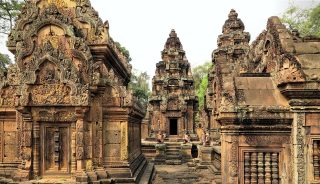
Buddhist Temple near Siem Reap

Phnom Bok Temple in Siem Reap is a small, summit-top Angkor-era temple that rewards you for leaving the main circuit behind. Set on a low mountain in the countryside, it combines a short hike with a quiet, atmospheric ruin at the top. It is worth a stop if you want a calmer Angkor experience with a sense of arrival.
The site sits about 22 km northeast of Siem Reap and can be reached by car, tuk-tuk, or motorbike on paved roads. The final approach is on foot, either up steep stairs or along a winding dirt trail, both usually shaded. Plan for around two hours door-to-door on site, including the climb, time at the top, and the descent.
Table of Contents
- History and Significance of the Phnom Bok Temple
- Things to See and Do in the Phnom Bok Temple
- Practical Tips on Visiting the Phnom Bok Temple
- Where to Stay Close to the Phnom Bok Temple
- Is the Phnom Bok Temple Worth Visiting?
- For Different Travelers
- FAQs for Visiting Phnom Bok Temple
- Nearby Attractions to the Phnom Bok Temple
History and Significance of the Phnom Bok Temple
Phnom Bok Temple dates to the 10th century and is one of the region's classic “mountain temples” associated with King Yasovarman. Like Phnom Bakheng and Phnom Krom, it uses elevation and approach to create a ritual sense of ascent. Even though the sanctuary is modest in scale, its hilltop placement gives it outsized presence.
At the summit, the temple’s surviving reliefs and sacred remnants point to its Hindu roots, including Shiva worship represented by a large linga. Over time, the site’s fabric has weathered and partially collapsed, which is part of its appeal for travelers who like less-restored ruins. It also offers a useful architectural comparison if you are trying to understand Angkor’s early temple-mountain tradition.
Things to See and Do in the Phnom Bok Temple
Start with the climb itself, choosing either the steep stairway or the gentler dirt trail depending on heat and knees. The stairs typically take around 25 minutes to ascend at a steady pace, while the trail can be quicker and easier for descending. Avoid climbing around midday in the hot season, even if the route is shaded.
On the way up, look out for the old pagoda and its colorful paintings that illustrate Buddhist stories, which adds a lived-in layer to the landscape. It is a small but memorable detour that makes the approach feel more like a local pilgrimage route than a simple hike. Bring water from the base, as you will want it on the steps.
At the top, slow down and look closely at the better-preserved carvings and the remaining sacred stone elements, including the linga. The views can be excellent with an unobstructed horizon in places, though tree growth means some sightlines are partially screened. If you are aiming for sunrise or sunset, do not assume access outside official hours and bring a torch if you end up walking in low light.
Practical Tips on Visiting the Phnom Bok Temple
- Entrance fee: Included in the Angkor Pass
- Opening hours: Open daily from 7:30 am to 5:30 pm
- Official website: https://www.angkorenterprise.gov.kh/en
- Best time to visit: Early morning for cooler temperatures and clearer views; late afternoon is pleasant, but avoid the midday climb in the hot season.
- How long to spend: About 2 hours, including the ascent, time at the summit, and the descent.
- Accessibility: Not suitable for wheelchairs; expect steep stairs or an uneven dirt trail and rough stone surfaces at the top.
- Facilities: Drink stalls and toilets are available at the foot of the mountain; bring water and wear grippy footwear for the descent.
Where to Stay Close to the Phnom Bok Temple
The best base is central Siem Reap near the river and Old Market area, where you have the widest choice of restaurants, transport, and straightforward pick-ups for temple days.
For a polished, central boutique option, consider Shinta Mani Angkor. If you prefer a heritage-style property with a prime location by the Royal Residence, FCC Angkor by Avani is a strong choice. For calm design and excellent service in a convenient central pocket, Viroth's Hotel is a dependable base.
Is the Phnom Bok Temple Worth Visiting?
Yes, if you want a quieter Angkor stop that feels earned, with a shaded climb and a peaceful summit setting. It is especially good for travelers who like pairing temples with a short hike and who value atmosphere and views as much as architecture.
If you are short on time, sensitive to heat, or prefer easy-access monuments with extensive restoration, you may want to skip Phnom Bok Temple. It is better as an “extra” once you have covered your core Angkor priorities, rather than a must-do on a first, tightly scheduled visit.
What Other Travellers Say...

Phnom Bok Temple is a hilltop Hindu ruin in the Bakheng style with weathered stone carvings and split sandstone towers; visitors describe a steep climb of roughly 600+ steps to reach panoramic views over rice fields, Tonlé Sap and distant temple plains, with the site usually far less crowded than the main Angkor circuit. Reviewers recommend going early or late to avoid heat, bringing plenty of water and sturdy shoes, taking care on mossy or clay sections and broken handrails, and note the peaceful, reflective atmosphere that makes the effort—and the photo opportunities—worthwhile.


For Different Travelers
Families with Kids
Phnom Bok Temple works best for families with older children who are comfortable with a sustained stair climb and uneven stones at the top. Go early, carry more water than you think you need, and treat the ascent as the main activity rather than a quick add-on.
For younger kids, the heat risk and the steep steps can turn it into a stressful outing. If you do go, keep expectations flexible and be willing to stop short if the climb becomes uncomfortable.
Couples & Romantic Getaways
For couples, Phnom Bok Temple is a strong choice when you want a quieter, more private-feeling temple outing away from the busiest routes. The shared climb and the calm summit make it feel more personal than many quick photo stops.
Late afternoon can be atmospheric, but plan around heat and do not rely on being alone at peak times. Pair it with another nearby, low-crowd temple to make a relaxed half-day loop.
Budget Travelers
Phnom Bok Temple is good value because it is included in the Angkor Pass and does not require paid add-ons to enjoy. A tuk-tuk or motorbike hire is usually all you need, and the on-site time is naturally self-guided.
To keep costs down, combine it with nearby sites in the same direction so you are not paying for multiple separate out-and-back trips. Starting early also reduces the chance you will end up paying extra simply to escape the heat.
History Buffs
History-focused travelers will appreciate Phnom Bok Temple as a clear, quieter example of Angkor's early temple-mountain idea. It is a good place to notice how ascent, elevation, and compact sanctuaries work together to create meaning.
Seeing Phnom Bok alongside Phnom Bakheng and Phnom Krom helps you recognize shared layouts and the broader political-religious logic of the era. Spend time with the reliefs and sacred remnants, and the site becomes more than a viewpoint hike.
FAQs for Visiting Phnom Bok Temple
Getting There
Tickets & Entry
Visiting Experience
Tours, Context & Itineraries
Photography
Accessibility & Facilities
Food & Breaks Nearby
Safety & Timing
Nearby Attractions to the Phnom Bok Temple
- Banteay Samre: A compact, well-preserved temple with fine carvings and a calmer feel than the headline Angkor sites.
- Banteay Srei: A renowned temple celebrated for exceptionally detailed carvings in distinctive pink sandstone.
- Pre Rup: A striking temple-mountain with strong geometry and good late-day light for photos.
- East Mebon: A classic Baray-era temple known for its corner elephant sculptures and open, symmetrical plan.
- Phnom Kulen: A sacred mountain area offering a different Angkor context, with natural scenery and cultural significance.
The Phnom Bok appears in our Complete Guide to Visiting Siem Reap!

Moira & Andy
Hey! We're Moira & Andy. From hiking the Camino to trips around Europe in Bert our campervan — we've been traveling together since retirement in 2020!
This website uses affiliate links which may earn a commission at no additional cost to you!
Planning Your Visit
Open daily from 7:30 am to 5:30 pm
Included in the Angkor Pass
Nearby Attractions
- East Mebon Temple (7.1) km
Buddhist Temple - Ta Som (7.6) km
Buddhist Temple - Pre Rup Temple (7.6) km
Buddhist Temple - Pre Rup Temple (7.6) km
Hindu Temple - Srah Srang & Kandal Srah Srang (9.1) km
Historic Site and Reservoir - Krol Ko Temple (9.5) km
Buddhist Temple - Neak Pean (9.5) km
Buddhist Temple - Neak Poan – The Mystical Island Temple (9.5) km
Buddhist Temple - Banteay Kdei (9.9) km
Buddhist Temple - Prasat Kravan (10.3) km
Hindu Temple