Phnom Bakheng, Siem Reap
Buddhist Temple in Siem Reap
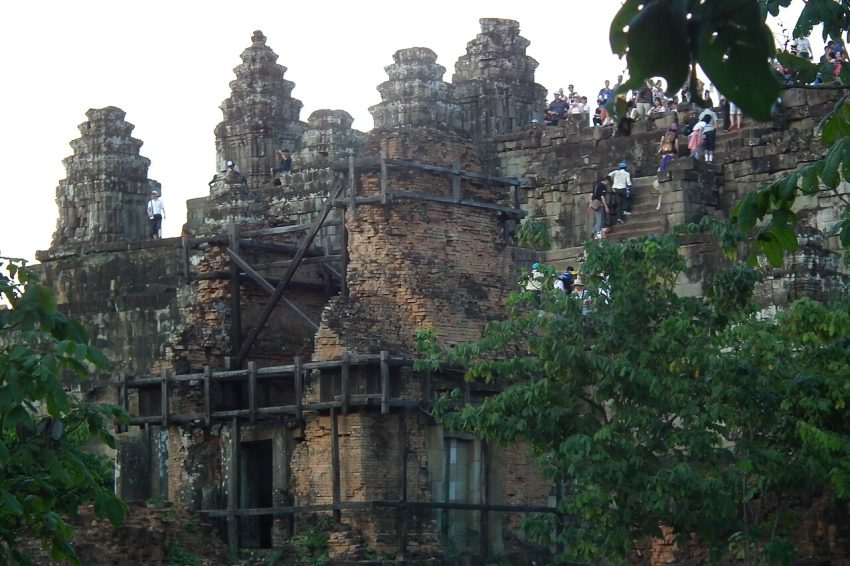
Phnom Bakheng is a hilltop Hindu temple in the Angkor Archaeological Park, set roughly between Angkor Wat and Angkor Thom and reached by an uphill walk through the forest. Built as a “temple mountain” dedicated to Shiva, it was designed to feel like a sacred summit-an elevated place where the architecture, the climb, and the view all work together.
Today it's famous for one thing above all: sunset. From the upper tiers you can catch a sweeping, treetop-level panorama, with Angkor Wat sitting in the distance when the light is clear. It's popular for a reason, but it's also one of the more tightly managed temples in the park, so a good experience here comes down to timing and expectations.
Table of Contents
- History and Significance of the Phnom Bakheng
- Things to See and Do in the Phnom Bakheng
- How to Get to the Phnom Bakheng
- Practical Tips on Visiting the Phnom Bakheng
- Where to Stay Close to the Phnom Bakheng
- Is the Phnom Bakheng Worth Visiting?
- For Different Travelers
- FAQs for Visiting Phnom Bakheng
- Nearby Attractions to the Phnom Bakheng
History and Significance of the Phnom Bakheng
Phnom Bakheng was built at the end of the 9th century under King Yasovarman I and predates Angkor Wat by more than two centuries. It once served as the state temple of Yasodharapura, the new capital founded when the court shifted from the earlier centre at Hariharalaya (Roluos). In other words, this wasn't a “side temple” on the circuit-this was the symbolic centrepiece of the early Angkor landscape.
Its hilltop position is deliberate, both spiritually and politically. In Khmer sacred architecture, temple mountains echo Mount Meru, the mythic home of the gods, and Phnom Bakheng leans hard into that idea: a steep ascent, stacked terraces, and a cluster of sanctuaries at the top that turn the summit into a ritual focal point. Long after its Hindu foundation, the site was also adapted for Buddhist use, and traces of that later layer remain part of its story.
Conservation is now central to Phnom Bakheng’s modern significance. The combination of heavy footfall and fragile stone has made it one of Angkor’s most threatened monuments, and ongoing protection and restoration efforts are as much a part of the site’s present as its ancient past.
Things to See and Do in the Phnom Bakheng
First, treat the climb as part of the visit rather than an inconvenience. The approach through the trees helps you reset from the busier main temples, and it builds anticipation as the views start to open up. Once you reach the upper terraces, pause and look back out over the forest canopy-this is one of the best “big landscape” moments in Angkor, and it’s worth enjoying even if you’re not here at sunset.
At the top, explore the upper levels slowly and safely. Phnom Bakheng is full of tight passages, steep steps, and worn stone, so it rewards careful pacing. The central sanctuary and the remaining towers give you a feel for the original temple layout, while the panoramic edges are where you'll naturally drift for photos and light.
If sunset is your goal, plan your day around it. The viewpoint experience here is managed to protect the monument, and the best sunsets happen when you arrive early enough to avoid stress. If you miss the main upper tiers, the hill still offers a beautiful dusk atmosphere from lower vantage points, so it’s not “all or nothing” unless you make it that way.
How to Get to the Phnom Bakheng
The nearest airport is Siem Reap Angkor International Airport (SAI), with transfers into Siem Reap town and then onward into the Angkor Archaeological Park. For the best deals and a seamless booking experience, check out these flights to Siem Reap on Booking.com. Most visitors arrange a full-day or half-day Angkor driver (tuk-tuk or car) and include Phnom Bakheng on the Small Circuit, often as the final stop for sunset.
Cambodia's rail network does not provide a practical route for reaching Angkor from most traveller entry points, so arrivals are typically by flight or long-distance bus, then local transport in Siem Reap. Train schedules and bookings can be found on Omio. Once you’re in the park, you will be dropped near the base and continue on foot up the hill, so wear shoes you trust on uneven stone.
If you’re travelling by car, your driver will handle the park roads and drop-off area, but you should still budget time for the uphill walk and the slower movement on the upper tiers.
Practical Tips on Visiting the Phnom Bakheng
- Entrance fee: Included with the Angkor Archaeological Park Pass (1-day US$37; 3-day US$62; 7-day US$72).
- Opening hours: Daily: 05:00–19:00.
- Official website: https://www.angkorenterprise.gov.kh/
- Best time to visit: Come early morning for calmer exploring, or arrive well before sunset if you want the famous views without last-minute pressure.
- How long to spend: Plan 60-90 minutes including the uphill walk; add extra buffer if you’re aiming for sunset and want a relaxed pace.
- Accessibility: The uphill approach and steep, uneven temple steps make this a challenging site for limited mobility; it’s best for confident walkers.
- Facilities: Bring water and insect repellent, and plan proper food breaks back in Siem Reap or at larger stops rather than expecting services at the hill.
- Crowd management: Visitor numbers on the upper temple are limited at peak times (especially sunset), so arriving early is the simplest way to avoid disappointment.
- Safety note: Access to the top is restricted for children under 12 and for pregnant women.
Where to Stay Close to the Phnom Bakheng
For a culture-heavy itinerary, base yourself in central Siem Reap near the river and Old Market area so you can start early, return easily for breaks, and keep evenings walkable; if your priority is a quieter, resort-style stay, choose a property slightly out of the centre where pools and downtime are the main feature after long temple days.
For a grand, heritage-style base with strong service and easy access to Angkor routes, consider Raffles Grand Hotel d'Angkor. If you want a stylish boutique option that still feels calm and grown-up after busy temple hours, Viroth's Hotel. For a comfortable, well-located mid-range stay that keeps restaurants and evening plans simple, Iberostar Selection Angkor works well as a practical base.
Is the Phnom Bakheng Worth Visiting?
Yes, as long as you approach it as an experience rather than a single photo. The combination of the forest climb, the temple-mountain design, and the wide views makes Phnom Bakheng feel different from the flatter, courtyard-based temples-and it's one of the best places in Angkor to understand how landscape and religion were meant to merge.
Honest pivot: if you dislike crowds and your schedule is tight, you can skip the sunset rush and still have an excellent Angkor trip by focusing on sunrise at Angkor Wat and late-afternoon exploring at less bottlenecked temples. Phnom Bakheng is best for travellers who are happy to time it carefully and treat the climb and the atmosphere as the point, not just the viewpoint.
What Other Travellers Say...

Phnom Bakheng Temple is a pyramid-style Hindu and Buddhist ruin popular for sunrise and sunset views; visitors say the climb through forest is rewarding with panoramic vistas over Angkor Wat, the walk is mostly easy but involves many stairs at the end and limited space at the summit, so arrive early and bring water, a flashlight and something soft to sit on for the best experience.


For Different Travelers
Families with Kids
Phnom Bakheng can work for families if everyone is comfortable with a steady uphill walk and careful footing on steep stone. The “goal” of reaching the top is motivating, and kids often enjoy the sense of climbing to a real summit rather than moving through flat corridors.
The main constraint is safety and suitability: the upper tiers are steep and crowded at sunset, and access to the top is restricted for children under 12. If you’re travelling with younger kids, aim for an earlier visit for the climb and forest feel, then choose a different sunset spot that’s less stressful.
Couples & Romantic Getaways
This is one of Angkor’s most naturally romantic stops, simply because sunset over the jungle canopy is hard to beat. If you time it well, it can feel like a real “finale” to a temple day, with the climb slowing your pace and the view doing the rest.
The trick is to keep it pleasant rather than hectic. Arrive early, accept that you may not get the absolute front-row viewpoint, and focus on the atmosphere-warm light on stone, forest below, and the sense of being above the park.
Budget Travelers
Phnom Bakheng is excellent value because it's included in your Angkor Pass and doesn't require any special add-on ticket. If you're managing costs, it's a strong “big experience” stop that rewards planning more than spending.
To keep the day efficient, pair it with a simple Small Circuit route and make Phnom Bakheng your final stop, so you're not paying extra transport time shuttling back and forth. The biggest budget win here is avoiding wasted hours in queues by arriving early.
History Buffs
Phnom Bakheng is a key site for understanding early Angkor, because it anchors the moment when Yasovarman I reshaped the region around a new capital and a new state temple. Seeing it after Angkor Wat is especially revealing: it shows how the “temple mountain” idea looked before later architecture refined and expanded the concept.
It's also valuable for the layers-Hindu foundation, later Buddhist reuse, and modern conservation pressures. If you like places where you can read multiple centuries of meaning in one structure, Phnom Bakheng delivers that in a compact, very tangible way.
FAQs for Visiting Phnom Bakheng
Getting There
Tickets & Entry
Visiting Experience
Tours, Context & Itineraries
Photography
Accessibility & Facilities
Food & Breaks Nearby
Safety & Timing
Nearby Attractions to the Phnom Bakheng
- Angkor Wat: The park's most famous temple, best paired with Phnom Bakheng for a “grand monument plus panorama” day.
- Bayon Temple: The face-tower icon of Angkor Thom, a dramatic contrast to Phnom Bakheng's earlier, hilltop pyramid form.
- Ta Prohm: The atmospheric jungle temple where roots and stone collide, ideal earlier in the day before the heat peaks.
- Banteay Kdei: A quieter Jayavarman VII-era temple with maze-like galleries that feels calmer than the main circuit highlights.
- Srah Srang: A scenic reservoir that’s perfect for a peaceful pause, especially if you want water-and-sky views without the hill climb.
The Phnom Bakheng appears in our Complete Guide to Visiting Siem Reap!

Moira & Andy
Hey! We're Moira & Andy. From hiking the Camino to trips around Europe in Bert our campervan — we've been traveling together since retirement in 2020!
This website uses affiliate links which may earn a commission at no additional cost to you!
Planning Your Visit
Daily: 05:00-19:00.
Included with the Angkor Archaeological Park Pass (1-day US$37; 3-day US$62; 7-day US$72).
Nearby Attractions
- South Gate of Angkor Thom (0.6) km
City Gate - Angkor Thom North Gate (3.6) km
City Gate - Ta Prohm Kel (0.9) km
Buddhist Temple - Angkor Wat (1.7) km
Buddhist Temple - Prasat Bayon (2.0) km
Buddhist Temple - Bayon Temple (2.0) km
Buddhist Temple - Baphuon (2.2) km
Buddhist Temple - Phimeanakas (2.4) km
Buddhist Temple - Terrace of the Elephants (2.5) km
Historic Site - Terrace of the Leper King (2.7) km
Historic Site