Església de Sant Agustí Nou del Raval, Barcelona
Church in Barcelona
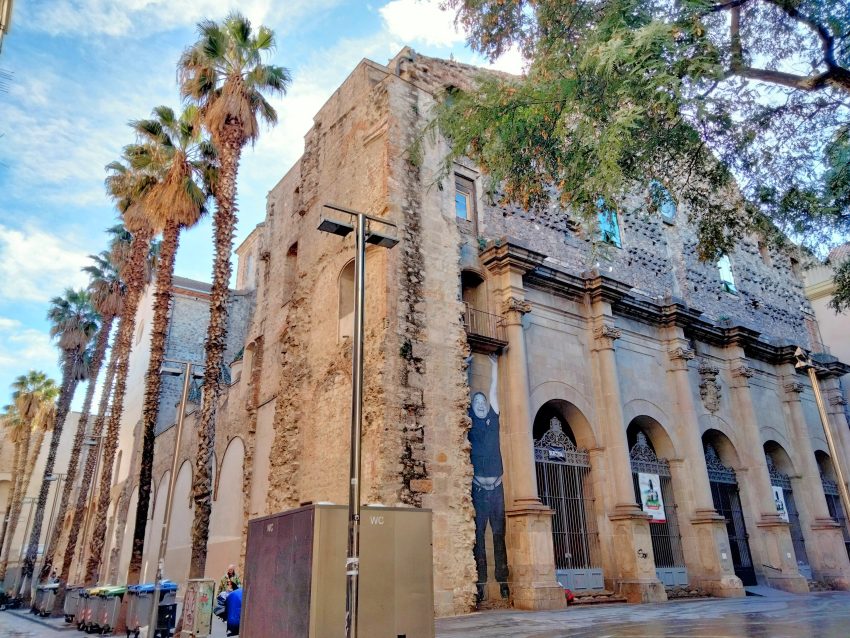
Just off the busier lanes of El Raval, the Església de Sant Agustí Nou del Raval is the kind of Barcelona church that catches you off guard: an unfinished façade outside, then a surprisingly luminous, classically balanced interior once you step in. It's a calm stop in a neighbourhood that can feel intense, and it rewards travellers who like the city's quieter layers beyond the Gothic Quarter greatest hits.
This is an easy add-on for a walking tour that links La Rambla, the Raval galleries, and the Sant Antoni edge of Ciutat Vella. If you time it well, it's one of the best “reset” stops in central Barcelona: a short interior visit, a few minutes of quiet, then you're back out into street life.
Table of Contents
- History and Significance of the Església de Sant Agustí Nou del Raval
- Things to See and Do in the Església de Sant Agustí Nou del Raval
- How to Get to the Església de Sant Agustí Nou del Raval
- Practical Tips on Visiting the Església de Sant Agustí Nou del Raval
- Where to Stay Close to the Església de Sant Agustí Nou del Raval
- Is the Església de Sant Agustí Nou del Raval Worth Visiting?
- For Different Travelers
- FAQs for Visiting Església de Sant Agustí Nou del Raval
- Nearby Attractions to the Església de Sant Agustí Nou del Raval
History and Significance of the Església de Sant Agustí Nou del Raval
The church and its wider complex were created after a major shift in the city's fabric in the early 18th century. When the area of La Ribera was reshaped following 1714 and the construction of the Ciutadella forced religious communities to relocate, the Augustinians moved their base to El Raval, beginning a new convent and church here in the late 1720s, with the ensemble taking shape through the mid-18th century.
Architecturally, it sits in a particularly interesting Barcelona moment: baroque classicism shading toward neoclassicism, built with a sense of grandeur but never fully completed. The façade project, attributed to Pere Costa, remained unfinished, and that incompletion is now part of the site's character-an exterior that feels abruptly “paused,” fronting an interior that feels carefully composed and surprisingly bright.
The 19th and 20th centuries were turbulent for the complex. Occupation, confiscations, damage during waves of anti-clerical violence, and later repurposings all changed how the building functioned, yet the church remained an anchor. Today it reads as both a place of worship and a piece of Barcelona’s layered civic history: a sacred space that also bears the marks of the city’s political and social upheavals.
Things to See and Do in the Església de Sant Agustí Nou del Raval
Start outside with the façade: the “unfinished” look is not a trick of age, it’s a real fragment of a larger intention. Take a moment to notice how the entrance feels more like an open threshold than a completed frontage, which sets up the contrast you’ll feel once inside.
Inside, pay attention to the light. The nave and side chapels are arranged to create a clean, classical rhythm, and the overall effect is brighter and more spacious than you might expect from the street. Look upward as well: the vaulting and the dome area (with an opening that draws light down) are key to why the interior feels airy rather than heavy.
If you enjoy slow travel, this is also a good context stop. Rather than rushing through, sit quietly for a few minutes and treat it as a pause between the Raval's museums, markets, and cafés. It's one of the better places in the centre to experience Barcelona at a lower volume.
How to Get to the Església de Sant Agustí Nou del Raval
Barcelona-El Prat Airport (BCN) is the nearest airport, and the simplest plan is to reach the city centre (Aerobús, train, or taxi) and then walk in from the La Rambla/Raval side. For the best deals and a seamless booking experience, check out these flights to Barcelona on Booking.com.
If you arrive by train at Barcelona Sants, take the metro toward the centre and finish with a short walk through El Raval; this last stretch is straightforward on foot and avoids traffic bottlenecks. Train schedules and bookings can be found on Omio.
Local buses and the metro will get you close, but the final approach is best done walking because the surrounding streets are dense and often busy with pedestrians.
Driving is not ideal in Ciutat Vella due to access restrictions and limited parking; if you have a car, park outside the old city and come in by metro and walking. If you are looking to rent a car in Spain I recommend having a look at Discover Cars, first, as they compare prices and review multiple car rental agencies for you.
Practical Tips on Visiting the Església de Sant Agustí Nou del Raval
- Entrance fee: Free.
- Opening hours: Daily: 10:00-13:00 & 16:00-19:00.
- Official website: http://ravalcultural.bcn.cat/ca/content/parroquia-de-sant-agusti
- Best time to visit: Mid-morning on a weekday for the quietest interior; late afternoon is also good for softer light. If a service is underway, keep your visit brief and discreet.
- How long to spend: 15-30 minutes for an unhurried look inside plus a few minutes outside to appreciate the “unfinished” façade and the square.
- Accessibility: Expect some uneven paving in the surrounding streets; step-free entry may depend on which door is open. If you need barrier-free access, plan a flexible visit and contact the parish in advance.
- Facilities: No dedicated visitor facilities; assume no public restrooms and no ticket desk. For cafés, water, or toilets, use nearby bars and bakeries around El Raval or toward La Rambla. A modest dress standard is recommended (especially in summer beachwear).
Where to Stay Close to the Església de Sant Agustí Nou del Raval
For a culture-heavy itinerary, base yourself in El Raval or the Gothic Quarter edge so you can walk to La Rambla, galleries, and the historic core; if your trip prioritises calmer streets and easier transport links, stay around Sant Antoni or the Eixample border for a more spacious feel while still being close to Ciutat Vella.
For a stylish, well-located base right in the Raval, Barceló Raval puts you within easy walking distance and works well for a nightlife-and-food focused trip. If you want something quieter but still walkable, Casa Camper Barcelona is a strong pick for comfort and location just off the busiest lanes.
If you prefer to stay on the Sant Antoni side (great for markets and a less tourist-saturated feel), Hotel Casa Bonay is a good base with quick access back into the old city on foot or by metro.
Is the Església de Sant Agustí Nou del Raval Worth Visiting?
Yes, especially if you like churches as “living architecture” rather than just photo backdrops. The unfinished façade and unexpectedly luminous interior make it one of the more distinctive quick stops in central Barcelona, and it fits naturally into a Raval walking route without demanding a big time commitment.
Honest pivot: if you're already overloaded with Barcelona's major churches (cathedral, Santa Maria del Mar, Sagrada Família) and you're not exploring El Raval, you can skip it without regret. This place shines most when you're already in the neighbourhood and want a quieter, more local-feeling interior.
What Other Travellers Say...

Parròquia de Sant Agustí is an 18th-century parish church tucked just off the busy centre near La Rambla and La Boqueria, and it's easy to overlook until you're close. Visitors describe an austere, slightly weathered exterior that opens into a surprisingly serene interior filled with statues and devotional imagery, making it a worthwhile quiet stop while exploring Ciutat Vella. Practical notes from reviews: it's a short walk from Liceu metro, masses run regularly (including a Filipino mass on Sundays), and the church also hosts events like choir concerts and well-known Easter processions.


For Different Travelers
Families with Kids
This works best as a short, calm stop: step inside, point out the scale and the light, then move on before attention spans dip. Pair it with something more kinetic nearby, like a market wander or a short stroll toward the museum zone.
El Raval can be busy and visually intense, so keep the route simple and purposeful, especially with strollers. Visiting earlier in the day usually makes the surrounding streets easier to navigate.
Couples & Romantic Getaways
For couples, this is a great “unexpected” Barcelona moment-quiet, atmospheric, and different from the headline church circuit. It fits nicely between a slow La Rambla-side wander and a longer lunch or wine stop in Sant Antoni.
If you like travel that feels exploratory, treat this as a small detour with a payoff: a few minutes inside, then back out into the neighbourhood with no fixed plan other than walking.
Budget Travelers
It's free and centrally placed, which makes it a high-value stop if you're exploring on foot. Use it as a break point on a self-guided loop that strings together La Rambla, the Raval cultural sites, and Sant Antoni without paying for tours.
If you’re trying to avoid transport costs, this location is ideal: it’s close enough to walk from major hubs, and the visit doesn’t require timed tickets or reservations.
History Buffs
The site is rich in “Barcelona as a changing city” history: relocation after early-18th-century urban upheaval, later damage and repurposings, and a long afterlife beyond its original monastic setting. It's a good complement to the city's medieval narrative because it foregrounds later centuries that visitors often skim.
To build a mini-theme, pair this with a walk that highlights the Raval’s evolution-old institutions, newer cultural anchors, and street-level change-rather than only the Gothic Quarter’s medieval core.
FAQs for Visiting Església de Sant Agustí Nou del Raval
Getting There
Tickets & Entry
Visiting Experience
Tours, Context & Itineraries
Photography
Accessibility & Facilities
Nearby Attractions to the Església de Sant Agustí Nou del Raval
- La Rambla - Barcelona's classic promenade, ideal to pair as an “on the way” approach before cutting into El Raval.
- Mercat de la Boqueria - A high-energy food stop nearby, good for a snack break after a quiet church visit.
- MACBA - Barcelona's contemporary art anchor, a natural next stop if you're exploring the Raval cultural cluster.
- CCCB - Strong rotating exhibitions and a good complement to MACBA, often reachable in the same short walk.
- Mercat de Sant Antoni - A better “local” market atmosphere and a useful end-point for food and transport connections.
The Església de Sant Agustí Nou del Raval appears in our Complete Guide to Visiting Barcelona!

Moira & Andy
Hey! We're Moira & Andy. From hiking the Camino to trips around Europe in Bert our campervan — we've been traveling together since retirement in 2020!
This website uses affiliate links which may earn a commission at no additional cost to you!
Planning Your Visit
Daily: 10:00-13:00 & 16:00-19:00.
Free.
Nearby Attractions
- Mercat de la Boqueria (0.2) km
Attraction, Bazaar and Market - Gran Teatre del Liceu (0.2) km
Arts Venue, Opera House and Theatre - Virreina Palace (0.2) km
Historic Building, Museum and Palace - Carrer Nou de la Rambla, 10 (0.2) km
Historic Building - Palau Güell (0.3) km
Historic Building, Historic Site and Palace - Basílica de Santa Maria del Pi (0.3) km
Basilica, Church and Tower - Sala Parés (0.3) km
Arts Venue and Gallery - Old Hospital de la Santa Creu (0.3) km
Courtyard, Historic Building and Historic Site - Plaça de Sant Josep Oriol (0.3) km
Square - Rambla del Raval (0.3) km
Street