Park Güell, Barcelona
Park in Barcelona
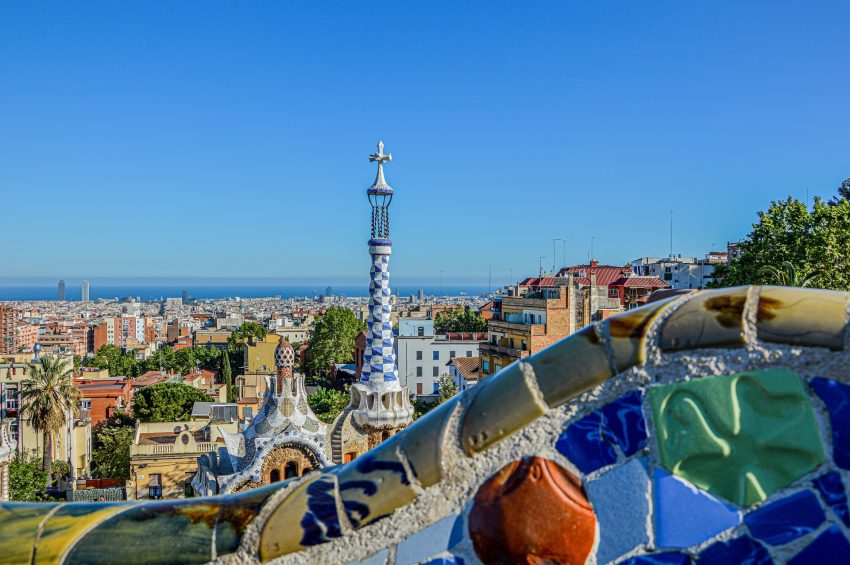
Park Güell is Gaudí at his most imaginative: a hillside park where stone becomes waves, mosaics become skin, and architecture dissolves into nature. Set above Barcelona in the Gràcia area, it was originally conceived as an upscale “garden city” project, but what remains today is far better for travelers-a public green space crowned by some of the city's most iconic Modernisme details.
It's also one of the best “big-ticket” stops to build a walking tour around: pair Park Güell with a wander through Gràcia's small plazas and cafés, then continue toward other Gaudí highlights for a full day that feels distinctly Barcelona. If you time it right, you'll get the classic bench-and-skyline views without feeling like you're shuffling through a photo queue.
Table of Contents
- History and Significance of the Park Güell
- Things to See and Do in the Park Güell
- How to Get to the Park Güell
- Practical Tips on Visiting the Park Güell
- Where to Stay Close to the Park Güell
- Is the Park Güell Worth Visiting?
- For Different Travelers
- FAQs for Visiting Park Güell
- Nearby Attractions to the Park Güell
History and Significance of the Park Güell
Park Güell began in 1900 as a private real-estate vision backed by Eusebi Güell and designed by Antoni Gaudí-an attempt to create a landscaped residential community inspired by fashionable ideas of healthy living and green, airy neighborhoods. Only a small portion of the planned housing was ever realized, but the site became a concentrated showcase of Gaudí's design language: organic forms, structural experimentation, and decorative craftsmanship that rewards slow looking.
After the project stalled, the city eventually transformed the area into a public park, and it later earned global recognition as part of UNESCO’s “Works of Antoni Gaudí.” That UNESCO status isn’t just a label-it explains why access is regulated: the park’s most delicate surfaces (especially the mosaic work) need protection from constant foot traffic and weathering.
Things to See and Do in the Park Güell
Start at the main entrance for the fairytale gatehouses and the famous dragon (the mosaic salamander) on the stairway-an early hint that this isn’t a typical city park. From there, climb toward the Hypostyle Room, where rows of columns create a cool, temple-like space that feels engineered and theatrical at once, especially when the light shifts across the stone.
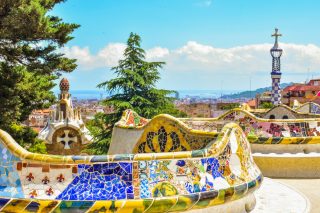
The headline moment is the Nature Square terrace and its serpentine bench: a long, undulating viewpoint that frames Barcelona’s rooftops, the sea on clear days, and the sense that you’re standing inside Gaudí’s imagination. Move slowly along the curves-different angles reveal different patterns, and the best photos usually come from taking a step back rather than squeezing in close.
If you want a quieter side of Park Güell, peel away from the busiest axis and explore the viaduct paths and pine-shaded trails that stitch the hill together. These routes feel more local and more “park-like,” and they're where you notice how cleverly Gaudí used landforms, stone, and gentle gradients to choreograph movement through the landscape.
How to Get to the Park Güell
Barcelona-El Prat Airport (BCN) is the nearest major airport, and the simplest approach is to get into the city and continue by metro or bus toward Gràcia and the park. For the best deals and a seamless booking experience, check out these flights to Barcelona on Booking.com.
If you're arriving by train at Barcelona Sants, you can connect easily to the metro network and make your way to Lesseps (L3) or Vallcarca (L3), then walk uphill or use a bus/taxi for the final climb. Train schedules and bookings can be found on Omio.
From central Barcelona, the metro is usually the fastest backbone, but the last stretch is steep, so many visitors prefer a bus (or a short taxi ride) for the final ascent-especially in summer heat. Driving is possible, but street parking is limited and the approach roads can be slow, so it's rarely the most relaxing choice for this stop. If you are looking to rent a car in Spain I recommend having a look at Discover Cars, first, as they compare prices and review multiple car rental agencies for you.
Practical Tips on Visiting the Park Güell
- Entrance fee: General ticket €18. Children (7–12) €13.50. Children (0–6) free. Over 65 €13.50. (Discount/free categories require documentation.)
- Opening hours: Daily: 09:30–17:30.
- Official website: https://parkguell.barcelona/ca/planifica-la-teva-visita/tarifes-horaris
- Best time to visit: Book the first time band of the day for the calmest terraces and cleanest photos; late afternoon can be beautiful but usually busier. Avoid the hottest midday hours in summer-the uphill approaches feel much tougher in heat.
- How long to spend: 1.5-2.5 hours covers the main monumental area plus a quieter loop on the paths; add time if you want a slow stroll through the upper trails and viewpoints.
- Accessibility: Expect steep gradients, uneven paths, and steps in parts of the park; mobility can be challenging, especially between viewpoints. If you have limited mobility, plan a shorter route that prioritizes the most accessible zones and minimize uphill walking by using public transport/taxi to the closest drop-off.
- Facilities: Restrooms are available on-site, and there are a few places to pause, but the busiest areas can feel exposed-bring water, sun protection, and grippy shoes (mosaic and stone surfaces can be slippery after rain).
Where to Stay Close to the Park Güell
If your priority is minimizing transit and being able to pop up to the park early, base yourself around Gràcia or Lesseps; if you want a culture-heavy itinerary with easy access to multiple headline sights, choose Eixample and commute up for Park Güell as a half-day highlight.
For a convenient, park-adjacent base with straightforward transport links, consider Hotel Ronda Lesseps. For a solid-value option that keeps you close to Gràcia’s café-and-plaza atmosphere, Hotel BESTPRICE Gracia is a practical pick. If you'd rather stay slightly more central while still keeping Park Güell within easy reach by metro, Pol & Grace Hotel works well for a flexible Barcelona itinerary.
Is the Park Güell Worth Visiting?
Yes-if you want one Gaudí experience that combines architecture, craftsmanship, and panoramic Barcelona in a single visit, Park Güell delivers, and it's hard to replace with anything else. The textures, the curves, and the viewpoint energy feel uniquely “here,” even if you've seen the photos a hundred times.
Honest pivot: if you strongly dislike timed-entry crowds, steep walking, or “must-see” landmarks with a lot of camera traffic, you may be happier focusing on smaller Modernisme sites in the city (where the pace is calmer) and saving Park Güell for a return trip or an off-peak season.
What Other Travellers Say...

Park Güell in Gràcia is a verdant hillside park famous for Gaudí's mosaic-covered architecture, whimsical sculptures, and panoramic views over Barcelona. Visitors highlight standout photo spots like the dragon fountain, sweeping terraces, and twisting columns, describing it as an open-air art gallery with a relaxed, colorful atmosphere. Expect crowds in peak slots and note that parts are ticketed, so pre-booking and comfortable shoes make the visit smoother.


For Different Travelers
Families with Kids
Kids usually love Park Güell because it feels like a storybook world-bright mosaics, animal shapes, and winding paths that invite exploration. Plan a simple route (entrance → dragon → terrace → shaded trails) and build in a snack break so it stays fun rather than turning into “one more viewpoint.”
If you’re visiting with a stroller, treat it like a walking workout: some paths are uneven and the slopes can be tiring, so a baby carrier can be easier for the busiest central area. Aim for an earlier time band so you’re not navigating tight photo spots at peak hours.
Couples & Romantic Getaways
For couples, Park Güell is best as a “slow morning” stop: arrive early, take the terrace views without rushing, then drift down into Gràcia for a café brunch and a wander through its small plazas. The park's curves and lookout points make it easy to create your own mini-route that feels personal rather than checklist-driven.
For a more romantic vibe, prioritize the quieter viaduct paths and shaded trails, where you can actually hear the wind through the pines. If you’re chasing golden light, late-afternoon color can be beautiful, but expect busier photo energy.
Budget Travelers
Park Güell can be done efficiently: book the time you want, focus on the central highlights, then spend the rest of your day in the park's surrounding neighborhoods, which are great for low-cost exploring. Gràcia, in particular, rewards budget travelers with walkable streets, casual food options, and plenty of atmosphere without needing paid attractions.
If you're watching every euro, decide whether Park Güell is your one “paid Gaudí” stop and balance it with free viewpoints, markets, and neighborhood walks elsewhere. The key is to treat it as a half-day anchor rather than stacking multiple expensive tickets back-to-back.
History Buffs
History-minded visitors get the most out of Park Güell by treating it as an urban-planning story as much as an art site: a failed private development that became a civic landmark, with design choices that blur architecture, landscape engineering, and symbolism. Look for how Gaudí used structure (columns, retaining walls, viaducts) to solve practical hillside problems while still making everything feel expressive.
To add context, read a little on Gaudí and Eusebi Güell beforehand and then “spot the clues” on-site-why the main axis is so theatrical, how the terrace frames the city, and how the materials echo local craft traditions. It’s a place where the backstory genuinely changes what you notice.
FAQs for Visiting Park Güell
Getting There
Tickets & Entry
Visiting Experience
Tours, Context & Itineraries
Photography
Accessibility & Facilities
Food & Breaks Nearby
Safety & Timing
Nearby Attractions to the Park Güell
- Gaudí House Museum: Visit the former home of Gaudí for a more personal look at his life and design world.
- Casa Vicens: A standout early Gaudí work nearby, rich in color, pattern, and inventive detail.
- Bunkers del Carmel: One of Barcelona’s best sunset viewpoints, with sweeping panoramas over the city.
- Gràcia Neighborhood Plazas: Small squares like Plaça del Sol are perfect for a café stop and local atmosphere.
- Recinte Modernista de Sant Pau: A remarkable Modernisme complex that feels like a city within a city, and it’s a rewarding architectural counterpoint to Gaudí.
The Park Güell appears in our Complete Guide to Visiting Barcelona!

Moira & Andy
Hey! We're Moira & Andy. From hiking the Camino to trips around Europe in Bert our campervan — we've been traveling together since retirement in 2020!
This website uses affiliate links which may earn a commission at no additional cost to you!
Planning Your Visit
Daily: 09:30-17:30.
General ticket €18. Children (7-12) €13.50. Children (0-6) free. Over 65 €13.50. (Discount/free categories require documentation.)
Nearby Attractions
- Casa Museu Gaudí (0.1) km
Museum - Gaudí Experiència (0.1) km
Attraction - Casa Vicens Gaudí (1.1) km
Attraction, Historic Building and Museum - Casa Comalat (1.9) km
Attraction, Historic Building and Notable Building - CosmoCaixa Museum of Science (1.9) km
Attraction and Museum - Casa de les Punxes (1.9) km
Attraction, Historic Building and Notable Building - Palau del Baró de Quadras (2.0) km
Attraction, Historic Building and Palace - Basílica de la Sagrada Família (2.2) km
Basilica, Cathedral and Historic Building - La Pedrera - Casa Milà (2.2) km
Attraction, Historic Building and Notable Building - Col·legi de les Teresianes (2.2) km
Attraction, Historic Building and Notable Building