Pamukkale
Natural Phenomenon near Marmaris
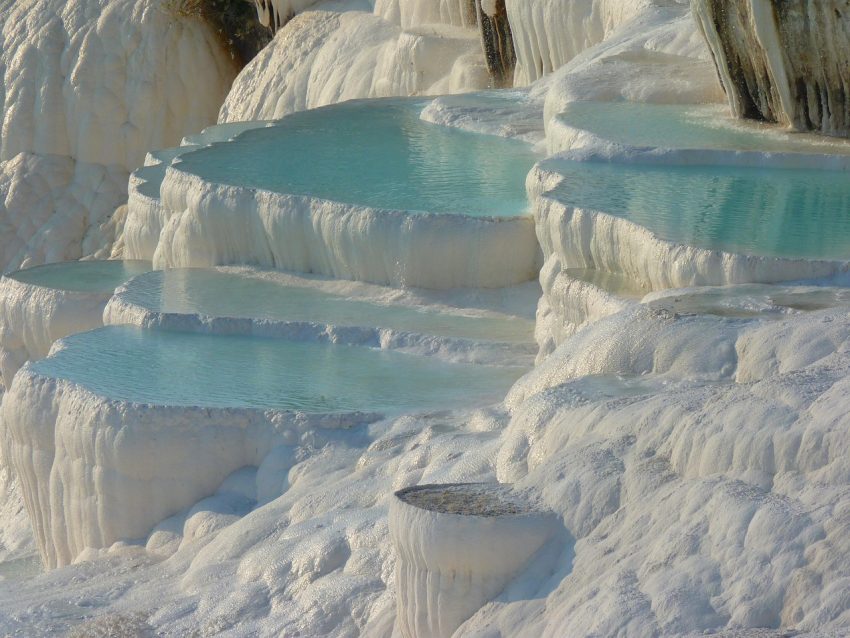
Pamukkale, meaning “Cotton Castle” in Turkish, is one of the best places to go on a day trip from Antalya and among the most iconic sights in Turkey. This otherworldly landscape, formed by calcium-rich thermal waters cascading down the hillside, creates shimmering white terraces that look like frozen waterfalls. Visitors can walk barefoot along the warm pools, soak in mineral waters, and gaze across the valley below - an experience that feels both peaceful and surreal.
History and Significance
Pamukkale's unique formations date back thousands of years, created by the flow of mineral-laden thermal springs that deposited thick layers of travertine over the hillside. The site has been a spa destination since ancient times, with its thermal waters believed to have healing properties. Just above the terraces lies the ancient city of Hierapolis, founded by the Phrygians and later expanded by the Romans, who built elaborate baths, temples, and theatres around the springs.
Over the centuries, Pamukkale became a sacred site, where people came to bathe and rejuvenate. Today, it's a UNESCO World Heritage Site, protected for its natural and historical significance. The combination of the gleaming white terraces and the ruins of Hierapolis makes it one of the top sights in Turkey, admired for both its geological wonder and cultural heritage.
Things to See and Do
The main attraction is walking along the travertine terraces, where visitors can wade through shallow pools filled with warm, mineral-rich water. Shoes are not allowed, ensuring the preservation of the delicate formations and giving visitors a unique barefoot experience. The Cleopatra Pool, located within the Hierapolis complex, offers the chance to swim among submerged marble columns - said to have fallen during an earthquake.
Visitors can also explore the ruins of Hierapolis, including its grand Roman theatre, the Temple of Apollo, and the ancient necropolis stretching for kilometres along the ridge. The on-site museum showcases artefacts found in the area, while panoramic viewpoints at sunset offer unforgettable photo opportunities.
Practical Tips for Visitors
- Best time to visit: Spring (April-June) and autumn (September-October) for pleasant weather and smaller crowds.
- How long to spend: Half a day to a full day for the terraces, pool, and ancient ruins.
- Photography tip: Visit early morning or late afternoon for softer light and fewer people on the terraces.
- Facilities: Restrooms, cafés, and changing areas available at the main entrances.
- Accessibility: The upper paths are suitable for most visitors, though some sections are slippery.
- Guided tours: Available from Antalya, Denizli, and nearby towns, often including Hierapolis entry.
- Nearby food options: Restaurants and tea houses in Pamukkale village serve traditional Turkish cuisine.
How to Get There
Pamukkale is located about 19 kilometres from Denizli and approximately 230 kilometres from Antalya, making it one of the best places to go on a day trip from Antalya. Visitors can drive via the D650 highway or join one of the many organized tours departing daily from Antalya. Buses from Denizli to Pamukkale run frequently, taking about 30 minutes. Trains also connect Denizli with major Turkish cities like Izmir and Istanbul. Parking is available near both the north and south entrances to the site.
Nearby Attractions
Beyond the terraces and Hierapolis, visitors can explore several top attractions near Pamukkale. The ancient city of Laodicea, just 10 kilometres away, offers well-preserved ruins from the Hellenistic and Roman periods. The Kaklık Cave, known as the “Underground Pamukkale,” features similar travertine formations in a cave setting. For a relaxing end to the day, the nearby Karahayit hot springs provide vibrant red and green mineral pools, offering a quieter and more local spa experience. Together, these sites make Pamukkale one of Turkey's most remarkable natural and cultural destinations.
What Other Travellers Say...

Travertines of Pamukkale in Merkez, Pamukkale offer surreal snow‑white limestone terraces and warm azure pools reached via a walk over rough rocks and paths through an ancient city; visitors must remove shoes and socks to enter the travertine area, and many praise the warm, tickling water underfoot, especially at sunrise or sunset when crowds are smaller. The site is large, with picnic benches, gardens, cafes, a museum and an amphitheater nearby, but some terraces are closed for conservation and not all pools are filled, so views vary; there is an entrance fee and parking, facilities like restrooms can be busy, and the stones may be slippery, so come prepared with comfortable footwear, a swimsuit, water and respect for on‑site rules.


The Pamukkale appears in our Complete Guide to Visiting Bodrum!

Moira & Andy
Hey! We're Moira & Andy. From hiking the Camino to trips around Europe in Bert our campervan — we've been traveling together since retirement in 2020!
This website uses affiliate links which may earn a commission at no additional cost to you!
Planning Your Visit
Typically 6:30 am to 8:00 pm (summer), 8:00 am to 5:00 pm (winter).
Around 700 TL (includes Hierapolis and the terraces). Cleopatra Pool entry extra.
Nearby Attractions
- Hierapolis (1.3) km
Historic Site - Denizli (Laodicea) (15.9) km
Ancient City - Aphrodisias (42.2) km
Ancient City - Alaşehir (Philadelphia) (71.4) km
Ancient City - Sardis (113.5) km
Ancient City - Stratonikeia (115.3) km
Historic Site - Cleopatra Island (131.4) km
Island - Dalyan Turtle Beach (133.3) km
Beach - Milas (136.5) km
Historic Site and Town - Marmaris National Park (138.7) km
National Park