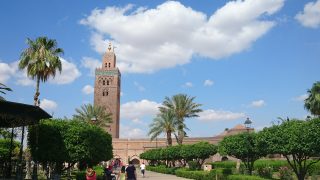
Palm Grove of Marrakech, Marrakesh
Gardens in Marrakesh

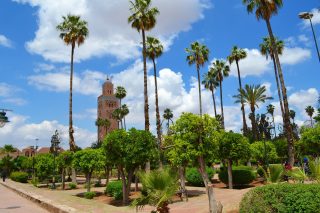
The Palm Grove of Marrakech, or Palmeraie, is where the city dissolves into a sea of green. Stretching across thousands of hectares northeast of the medina, this palm oasis is dotted with date palms, olive and fruit trees, luxury villas, and resort complexes, yet still retains something of its original desert-edges character. It feels worlds away from the tight alleys of the old town, offering big skies, long views, and the chance to experience camel rides and sunset light among the trees. For many visitors, it is one of the best places to visit in Marrakech when you want to swap markets and monuments for open space and a more relaxed rhythm.
Despite the resort developments and modern roads, the Palmeraie's story goes back nearly a thousand years, to the Almoravid period and the ingenious khettara irrigation channels that first made large-scale planting here possible. Local legend tells of soldiers scattering date seeds that sprouted into palms, while historians point to careful water engineering and long-term agricultural planning. Today, the palm grove is often visited on walking tours of Marrakech or half-day excursions, combining its oasis atmosphere with hotel pickups, guided camel treks, and photo stops that show how the city and its palm belt sit between the plains and the Atlas Mountains.
Table of Contents
- History and Significance of the Palm Grove of Marrakech
- Things to See and Do in the Palm Grove of Marrakech
- How to Get to the Palm Grove of Marrakech
- Practical Tips on Visiting the Palm Grove of Marrakech
- Where to Stay close to the Palm Grove of Marrakech
- Is the Palm Grove of Marrakech Worth Visiting?
- FAQs for Visiting Palm Grove of Marrakech
- Nearby Attractions to the Palm Grove of Marrakech
History and Significance of the Palm Grove of Marrakech
The origins of the Palm Grove of Marrakech lie in the early centuries of the city itself. While legend claims that Arab warriors camped on the plain of Haouz and casually scattered date seeds-some dropping into lance holes and later sprouting into palms-the real story is more deliberate. Under the Almoravid dynasty, who founded Marrakech in the 11th century, and their successors, the area was shaped into a managed oasis using a network of khettaras: underground channels that tapped aquifers and brought water gently down from higher ground. This technology allowed a semi-arid landscape to support large numbers of trees and crops.
Over the centuries, the Palmeraie became both productive and symbolic. The date palms, referred to in old tales as “the ardent children of the African earth and sun”, were valued for food, shade, and fibres, while olive and fruit trees added diversity and resilience. At its height, the area was said to hold tens of thousands of trees; now, estimates run to more than 100,000 date palms scattered across some 7,000 hectares on the Route de Fès and the Circuit de la Palmeraie. The oasis not only helped feed the city but also signalled its prosperity to travellers approaching from the north and east.
In the 20th century, the Palmeraie became a testing ground for urban planning and tourism. Early regulations barred buildings from exceeding the height of the palm trees, preserving a low, green skyline. Later, as Marrakech grew and international tourism expanded, resort hotels, villas, and leisure facilities-such as the Palmeraie Rotana Resort and Nikki Beach-moved into the area. Urbanisation and changing water use have put pressure on the oasis, but it remains an iconic landscape on the edge of the city, where traditional irrigation and planting coexist uneasily with modern development and visitor expectations.
Things to See and Do in the Palm Grove of Marrakech
For most travellers, the classic way to experience the Palmeraie is on a camel ride. Guided treks take you along sandy tracks between rows of palms, giving you time to feel the slow sway of the camel, listen to the crunch of hooves, and soak up the colours of the sky and trees. Outfits and headscarves are often provided for photos, and rides can be timed for sunrise or, more commonly, sunset, when the light softens and the palms cast long shadows. It is a simple experience, but one that many visitors remember as their most atmospheric brush with the oasis.
Beyond camel rides, the Palmeraie offers a patchwork of experiences. Some visitors come for quad biking or buggy tours that weave through the palms and nearby desert-edge terrain, adding a dose of speed and adrenaline. Others are drawn by the resorts and day passes that give access to pools, gardens, spas, and restaurants set amid manicured green spaces. Even a simple carriage or taxi ride through the area can be enjoyable, letting you watch the contrast between traditional fields, scattered villages, and high-end developments unfold along the Circuit de la Palmeraie.
If you are interested in the oasis itself rather than just activities, pay attention to the irrigation channels, small plots of cultivated land, and older clusters of palms still used by local families. You can sometimes spot areas where artesian wells and reservoirs continue to feed the groves, showing how the Palmeraie’s survival still depends on careful water management. Taken together, these glimpses reveal that the oasis is not just a backdrop for leisure, but a living landscape that has been continually adapted over nearly a millennium.
How to Get to the Palm Grove of Marrakech
The Palm Grove of Marrakech lies northeast of the city, along the Route de Fès (N8) and the Circuit de la Palmeraie, making it easy to reach from the medina or the newer districts. Most international visitors first arrive via Marrakech Menara Airport, a short drive from the centre with regular flights from major European cities and other Moroccan hubs. For the best deals and a seamless booking experience, check out these flights to Marrakesh on Booking.com. From the airport or your hotel, you can arrange a taxi or transfer directly to the Palmeraie or to a specific resort or activity meeting point.
If you are already in Marrakech, the simplest way to reach the palm grove independently is by taxi or horse-drawn carriage. Drivers are familiar with the area; from Jemaa el-Fnaa or other central points, the journey typically takes around 20-30 minutes depending on traffic, while a full carriage outing that loops through the medina and out to the palms can take closer to two hours and effectively becomes part of the sightseeing experience.
Visitors staying elsewhere in Morocco can reach Marrakech by train from cities such as Casablanca, Rabat, and Tangier, arriving at the main railway station in Gueliz.Train schedules and bookings can be found on Omio. From there, petit taxis and pre-arranged excursions can take you out towards the Palmeraie. There are also tourist buses, such as City Tour services, with routes like “Ruta Tour Palmeral” that include the palm grove as one of their stops. Many small-group tours depart from hotels or central pick-up points, bundling transport, guiding, and activities into a single package.
If you have a hire car, you can drive towards the Palmeraie via the Route de Fès or the ring roads around Marrakech, following signs for Circuit de la Palmeraie and resort entrances. Parking is typically available at hotels, activity bases, and some roadside spots, but driving within the palm groves themselves is limited to established tracks and access roads.
Practical Tips on Visiting the Palm Grove of Marrakech
- Suggested tips: Book camel or quad excursions with reputable operators, and always confirm what is included (transport, clothing, refreshments) before you pay.
- Best time to visit: Early morning or late afternoon offer the most pleasant temperatures and the best light; sunset rides are especially popular for photography.
- Entrance fee: Access to the Palmeraie itself is free; expect from €20–€30 per person for typical camel or quad excursions
- Opening hours: 9am-5.30pm
- Official website: https://visitmarrakech.com/en/listing/la-palmeraie/
- How long to spend: Plan 2-3 hours for a standard excursion including hotel pickup, activity, and transfers; longer if you are combining multiple activities or a resort day pass.
- Accessibility: Terrain is uneven and sandy, and mounting a camel or quad can be challenging for visitors with reduced mobility; check access details with your tour operator in advance.
- Facilities: Facilities vary by area; resorts and activity bases offer toilets, shade, and sometimes drinks or snacks, while more remote parts of the grove have few amenities.
- Photography tip: Aim for golden hour and try to capture silhouettes of palms and riders against the sky; wide shots along straight lines of trees help convey the scale of the oasis.
- Guided tours: Joining a guided tour simplifies logistics and can include cultural explanations and tea breaks with local families, adding depth to the experience.
- Nearby food options: Many resorts and hotels within the Palmeraie offer restaurants and poolside snacks; otherwise, head back towards the city where the Gueliz and medina districts have abundant dining choices.
Where to Stay close to the Palm Grove of Marrakech
Staying in or near the Palmeraie gives you a resort-style base with easy access to both the oasis and the city. A classic option is Palmeraie Rotana Resort, a large complex with pools, gardens, and on-site activities that make it simple to combine relaxation with forays into the groves. For a more intimate luxury feel, Dar Ayniwen Garden Hotel & Bird Zoo offers villa-style accommodation in lush gardens, blending the sense of an oasis retreat with personalised service. Travellers who want a stylish, adult-focused escape might consider Nikki Beach Resort & Spa Marrakech, which pairs contemporary design and pool scenes with views over the surrounding palms.
Is the Palm Grove of Marrakech Worth Visiting?
The Palm Grove of Marrakech is definitely worth visiting if you are curious about the landscapes that surround the city and keen to experience more than just its medina and monuments. While it is not a manicured garden in the traditional sense, the sheer scale of the palms, the interplay between old irrigation systems and new resorts, and the simple pleasure of moving through the oasis on camelback or quad bike make for a memorable outing. As a place where legend, history, and modern tourism all meet, the Palmeraie comfortably earns its reputation as one of the things to do in Marrakech that offers a very different perspective on the Red City.
What Other Travellers Say...

Marrakech Palmeraie Quad & Camel Tours, located on the Route de Fès in Marrakech, offers outdoor activities in the Palmeraie area where you can ride quads, buggies, motorbikes, camels or try biking; visitors describe it as an open, palm‑tree dotted space popular for sunsets and short excursions, good for photos and sports, though some find it small and recommend joining a guided tour for better value.


FAQs for Visiting Palm Grove of Marrakech
Nearby Attractions to the Palm Grove of Marrakech
- Jardin Majorelle and Yves Saint Laurent Museum: A colourful artist's garden and a sleek museum in the modern city, showcasing design, fashion, and Berber culture.
- Menara Gardens: A historic reservoir and orchard southwest of the city, famed for its pavilion and views towards the High Atlas Mountains.
- Marrakech Souks: The bustling markets of the medina, where you can dive into textiles, spices, and local crafts after a calmer morning in the Palmeraie.
- Jemaa el-Fnaa: The city's legendary main square, full of food stalls and performers, providing a lively contrast to the open spaces of the palm grove.
- Ben Youssef Madrasa: A beautifully restored Islamic college with intricate stucco and tilework, offering an architectural highlight back in the heart of the old city.
The Palm Grove of Marrakech appears in our Complete Guide to Visiting Marrakesh!

Moira & Andy
Hey! We're Moira & Andy. From hiking the Camino to trips around Europe in Bert our campervan — we've been traveling together since retirement in 2020!
This website uses affiliate links which may earn a commission at no additional cost to you!
Planning Your Visit
9am-5.30pm
Access to the Palmeraie itself is free; expect from €20-€30 per person for typical camel or quad excursions
Nearby Attractions
- Ben Youssef Madrasa (4.2) km
Madrasa - Marrakech Museum (4.3) km
Museum - Almoravid Koubba (4.4) km
Historic Building - Le Jardin Secret (4.6) km
Gardens and Historic Building - Dar Si Said (4.6) km
Historic Building and Museum - Tiskiwin Museum (4.7) km
Museum - Souks of Marrakesh (4.7) km
Market - Dar el Bacha (4.8) km
Historic Building and Museum - Bahia Palace (4.8) km
Palace - Jemaa el-Fnaa (4.8) km
Market and Square