Palazzo Re Enzo, Bologna
Palace in Bologna

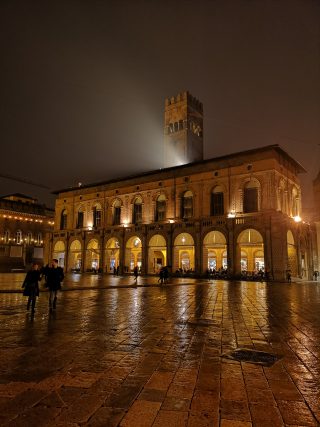
Rising majestically on Piazza del Nettuno, next to Palazzo del Podestà, the Palazzo Re Enzo is one of the most fascinating historic buildings in Bologna. Known as the “New Palace” when first built, it later took the name of King Enzo of Sardinia, whose captivity within its walls gave rise to centuries of stories and legend. Today, the palace is one of the top attractions in Bologna and a great place to visit on a walking tour of Bologna, offering visitors a glimpse into the city's medieval heart and its enduring spirit of independence.
The building's red-brick Gothic façade, soaring arches, and grand interiors reflect Bologna's medieval might. Once a symbol of power and imprisonment, Palazzo Re Enzo now serves as a vibrant cultural venue, hosting exhibitions, conferences, and artistic events that keep its long history alive.
History and Significance of the Palazzo Re Enzo
Palazzo Re Enzo was constructed between 1244 and 1246 as an extension of the Palazzo del Podestà to accommodate Bologna's growing administrative needs. Soon after its completion, fate gave the palace a new identity. Following his capture by the Guelphs at the Battle of Fossalta in 1249, Enzo of Sardinia - the illegitimate son of Emperor Frederick II - was imprisoned here. Though a prisoner, Enzo's treatment was unusually generous: he was allowed certain freedoms by day but confined at night, allegedly within a suspended cage.
Legend adds a romantic dimension to his story. It is said that Enzo fathered several children during his captivity, including one named Bentivoglio, born from his love affair with Lucia di Viadagola, a peasant woman. According to legend, the name “Bentivoglio,” meaning “I love you,” came from Enzo’s tender words to her - a name that would later become synonymous with Bologna’s ruling family in the Renaissance era.
In 1386, Antonio di Vincenzo - the architect of the Basilica of San Petronio - completed the majestic Sala dei Trecento (Hall of the Three Hundred), which served as the city’s archive. The palace’s upper floor underwent significant renovation in 1771 under Giovanni Giacomo Dotti, while the Gothic appearance we see today is the result of Alfonso Rubbiani’s meticulous 1905 restoration, part of Bologna’s broader effort to revive its medieval character.
Things to See and Do in the Palazzo Re Enzo
Visitors to Palazzo Re Enzo can explore its grand interiors during cultural exhibitions and events that open the building to the public. The vast halls, such as the Sala dei Trecento, offer a sense of the palace’s historic weight, with high vaulted ceilings and soft light filtering through Gothic windows. The architecture captures both strength and elegance, serving as a living reminder of Bologna’s medieval glory.
On the palace’s right-hand side, you’ll find the entrance to the Chapel of Santa Maria dei Carcerati, once a place where condemned prisoners came to pray before execution. The ground floor originally stored war equipment and the city’s Carroccio - a sacred war cart symbolizing communal pride - while the upper levels housed judicial offices and administrative rooms. Don't forget to pause in the courtyard to appreciate the palace's harmonious proportions and the striking view of Piazza Maggiore framed by its arches.
Today, Palazzo Re Enzo has been reborn as one of Bologna's key cultural venues. Its historic halls host art exhibitions, conferences, concerts, and heritage events throughout the year, blending the past and present in a uniquely atmospheric setting.
How to Get There
For those arriving by train, Bologna Centrale is the nearest major railway station and about a 15-20-minute walk or short bus ride to Piazza Maggiore. Use Omnio to easily compare schedules, book train tickets, and find the best prices all in one place for a hassle-free journey across Italy. Travelers arriving by car can park at Parcheggio VIII Agosto or Tanari Parking, both within walking distance of the historic centre. If you are looking to rent a car in Italy I recommend having a look at Discover Cars, first, as they compare prices and review multiple car rental agencies for you.
Practical Tips on Visiting the Palazzo Re Enzo
- Best time to visit Palazzo Re Enzo: During temporary exhibitions or open-house events for access inside.
- Entrance fee in Euros: Free courtyard access; ticketed entry for exhibitions and special events.
- Opening hours: Vary depending on the event schedule.
- Official website: www.palazzoreenzo.com
- How long to spend: Around 30-60 minutes depending on the event or tour.
- Accessibility: Fully accessible with lifts and ramps.
- Facilities: Restrooms, café, and event spaces available inside.
- Photography tip: Capture the façade’s red-brick arches and the dramatic contrast with Piazza del Nettuno’s open space.
- Guided tours: Offered occasionally during cultural festivals and city heritage days.
- Nearby food options: Numerous cafés and trattorias around Piazza Maggiore and Via Rizzoli.
Is the Palazzo Re Enzo Worth Visiting?
Yes - the Palazzo Re Enzo is one of the must-see places in Bologna, where legend and history intertwine beneath magnificent Gothic arches. From tales of King Enzo's captivity to its modern role as a cultural landmark, the palace embodies Bologna's ability to preserve its heritage while adapting to the present. It's a captivating stop for anyone exploring the city's medieval core.
What Other Travellers Say...

Palazzo Re Enzo, on Piazza del Nettuno in Bologna, is a Gothic palace with a striking brick façade, battlements and a notable interior often used for festivals and professional events; visitors report a charming colonnaded courtyard (sometimes closed to the public) and ground-floor businesses like bars and a bookshop. Some say the interior is compact and access can be limited to certain times of year, with entry sometimes requiring a booking or permission, while others note it is included with the city welcome card though staff may at times restrict entry.


FAQs for Visiting the Palazzo Re Enzo
Nearby Attractions to the Palazzo Re Enzo
- Sala Borsa - A public library and archaeological site located across the square.
- Piazza Maggiore - The heart of Bologna, surrounded by monumental civic and religious buildings.
- Fountain of Neptune - Giambologna's iconic sculpture standing right beside the palace.
- Palazzo del Podestà - Famous for its whispering vault and carved portico.
- Basilica of San Petronio - A Gothic landmark that dominates the city's skyline.
The Palazzo Re Enzo appears in our Complete Guide to Visiting Bologna!

Moira & Andy
Hey! We're Moira & Andy. From hiking the Camino to trips around Europe in Bert our campervan — we've been traveling together since retirement in 2020!
This website uses affiliate links which may earn a commission at no additional cost to you!
Planning Your Visit
Nearby Attractions
- Piazza Nettuno (0.0) km
Statue - Palazzo del Podesta (0.0) km
Palace - Monument to Fallen Partisans (0.1) km
Monument - Palazzo d'Accursio (0.1) km
Palace - Piazza Maggiore (0.1) km
Square - Biblioteca Salaborsa (0.1) km
Historic Site and Library - Fontana Vecchia (0.1) km
Fountain - San Pietro Cathedral (0.1) km
Cathedral - Palazzo dei Banchi (0.2) km
Palace - Basilica of San Petronio (0.2) km
Basilica