Palazzo Ducale, Modena
Palace in Modena
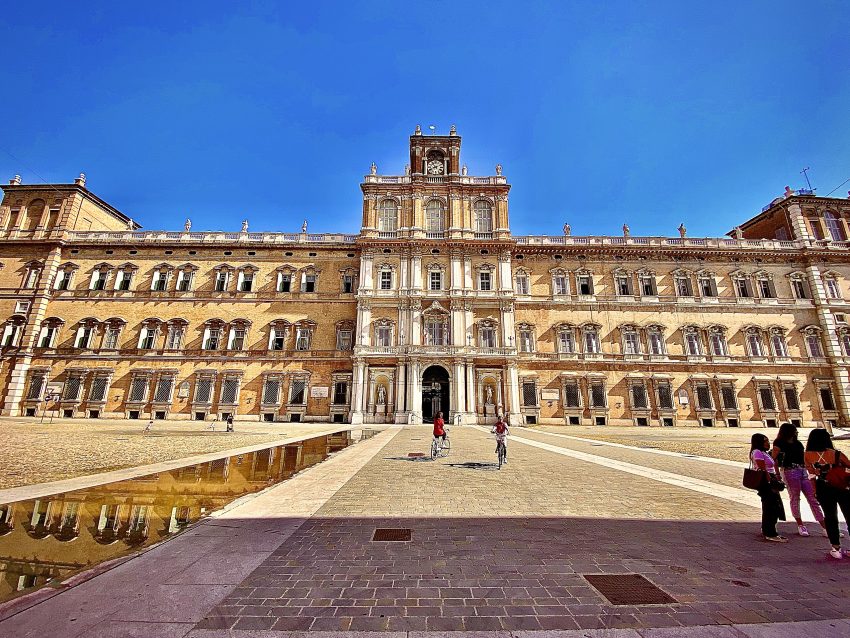
Rising at the edge of Modena's historic centre, the Palazzo Ducale di Modena is one of the top attractions in Modena for travellers who love grand architecture with a story behind it. Commissioned in 1634 by Duke Francesco I d'Este, this immense Baroque residence replaced a medieval Este castle and was designed by Bartolomeo Avanzini with guidance from some of the greatest architects of the age, including Girolamo Rainaldi, Gian Lorenzo Bernini, Francesco Borromini, and Pietro da Cortona. For more than two centuries it served as the residence of the Este court, projecting power and prestige with its long, statue-topped façade and elegant courtyards.
Today, the palace is home to the illustrious Military Academy of Modena, which trains future officers of the Italian Army and Carabinieri. Behind the monumental exterior, courtyards, staircases, and ceremonial halls still reflect the splendour of the Este dukes, now intertwined with the rituals and discipline of military life. This spot is one of the best places to see in Modena if you want to understand how the city evolved from a ducal capital to a modern Italian province, all within the walls of a single, extraordinary building often visited on walking tours of Modena.
Table of Contents
- History and Significance of the Palazzo Ducale di Modena
- Things to See and Do in the Palazzo Ducale di Modena
- How to Get to the Palazzo Ducale di Modena
- Practical Tips on Visiting the Palazzo Ducale di Modena
- Where to Stay close to the Palazzo Ducale di Modena
- Is the Palazzo Ducale di Modena Worth Visiting?
- FAQs for Visiting the Palazzo Ducale di Modena
- Nearby Attractions to the Palazzo Ducale di Modena
History and Significance of the Palazzo Ducale di Modena
The story of Palazzo Ducale di Modena begins long before its Baroque façade took shape. In 1291, Obizzo d'Este, Marquis of Ferrara, built a castle on this site, strategically positioned where Modena's canals converged before flowing towards the Po. Surrounded by water and walls, the fortress symbolised Este control over the city and its trade routes. Roughly fifty years later it was remodelled, continuing to serve as a stronghold and residence for the ruling family.
When Ferrara devolved to the Pope in 1598, Modena became the capital of the Este duchy. Duke Cesare d'Este quickly realised that the medieval castle no longer matched the standards of a European court seeking recognition among Europe's great powers. His successor, Duke Francesco I d'Este, responded by commissioning a new palace in 1634. Bartolomeo Avanzini drew up the main design, while luminaries such as Rainaldi, Bernini, Borromini, and Pietro da Cortona contributed ideas and refinements. The result was a vast Baroque residence with a long, regular façade, three aligned tiers of windows, sculpted statues along its balustrades, and a carefully balanced play of volumes between the central block and side wings.
For generations, the Palazzo Ducale functioned as the heart of the Este court, hosting receptions, political negotiations, and daily life for the ducal family. After the last duke, Francesco V of Asburgo-Este, left in 1859 and the former duchy merged with Piedmont, the Savoy royal house inherited the building. In 1860, King Vittorio Emanuele II visited Modena and assigned the palace to the Military Infantry School, marking the start of its military vocation. Although the building suffered damage during the World Wars, it was restored and formally returned to the Military Academy in 1947 by President Enrico De Nicola, preserving its historic role as a centre of authority-first ducal, then royal, now republican.
Things to See and Do in the Palazzo Ducale di Modena
Most visitors begin by admiring the palace from the outside. The façade, with its three vertically aligned tiers of windows, is crowned by statues poised on balustrades, giving the whole building a sense of rhythm and ceremony. The differing heights of the central block and side wings create a dynamic silhouette, while the central entrance hints at the processional routes that once led nobles and envoys from the square into the ducal world. Even a simple stroll around the exterior gives you an appreciation of just how large and imposing the palace really is.
Inside, the architectural heart of the palace is the Cortile d’Onore. This grand courtyard, framed by a two-storey loggia, is a textbook example of Baroque design, where symmetry and vertical lines combine with open space to create a theatrical setting. From here, the Scalone d’Onore-the Honour Staircase-rises towards the state rooms. Lined with Roman statues, this sweeping staircase was conceived as a ceremonial route, guiding guests upwards through a sequence of visual cues and symbolic references to Rome’s imperial past. Even today, when used for military events and ceremonies, it retains its sense of drama.
Access to the interior can be limited because the palace functions as an active Military Academy, but on certain occasions or guided visits you may be able to see some of the historic rooms. These spaces, once used by the Este dukes, now coexist with classrooms and training facilities, illustrating how the building has adapted to new roles without losing its original grandeur. Even if you only see the palace from outside and from the Cortile d’Onore during special openings, the experience offers a powerful glimpse of Modena’s ducal and military identities layered together in one place.
How to Get to the Palazzo Ducale di Modena
Palazzo Ducale di Modena stands on the edge of the historic centre, within easy walking distance of Piazza Grande, Modena Cathedral, and other key sights. Most international visitors arrive via Bologna Guglielmo Marconi Airport, then continue to Modena by train, shuttle, or car, as the city lies roughly 40 kilometres away. For the best deals and a seamless booking experience, check out these flights to Modena on Booking.com.
From Modena’s railway station, it is usually a pleasant 15-20 minute walk to the palace along central streets, or a short ride on local buses or by taxi if you prefer a quicker connection.Use Omnio to easily compare schedules, book train tickets, and find the best prices all in one place for a hassle-free journey across Italy. Once you reach the historic core, the palace is easy to spot thanks to its immense façade and prominent position facing a broad square.
If you are travelling by car, be aware that Modena’s centre includes limited traffic zones and that on-street parking near major monuments is restricted.If you are looking to rent a car in Italy I recommend having a look at Discover Cars, first, as they compare prices and review multiple car rental agencies for you. It is generally best to park in a public car park or garage on the outskirts of the old town and continue on foot, which also lets you enjoy the surrounding streets and nearby attractions before or after your visit.
Practical Tips on Visiting the Palazzo Ducale di Modena
- Suggested tips: Check in advance if any guided tours or special open days are available, as access to interiors is often restricted due to the active Military Academy.
- Best time to visit: Daytime hours are ideal for appreciating the façade and courtyard; early morning or late afternoon light makes the stone details and statues especially photogenic.
- Entrance fee: €10.00
- Opening hours: The visits take place on Saturday and Sunday and are organized and coordinated by Modenatur.
- Official website: https://www.visitmodena.it/it/scopri-modena/arte-e-cultura/palazzi-storici-e-castelli/palazzo-ducale-accademia-militare
- How long to spend: Allow around 30-60 minutes to admire the exterior, courtyard (when accessible), and surrounding square; more if you join a guided interior tour.
- Accessibility: The exterior and surrounding square are generally accessible, but interior areas and historic staircases may present challenges for visitors with reduced mobility.
- Facilities: There are no public visitor facilities inside the palace; cafés, restaurants, and restrooms are available in the nearby streets of the historic centre.
- Photography tip: Capture wide-angle shots from the square to include the full façade, then focus on details such as statues, windows, and the loggia of the Cortile d’Onore during special openings.
- Guided tours: When available, guided tours offer valuable insight into both the ducal period and the current role of the Military Academy; places may be limited, so plan ahead.
- Nearby food options: The streets around the palace and towards Piazza Grande are full of trattorias, cafés, and wine bars where you can sample Modenese specialities after your visit.
Where to Stay close to the Palazzo Ducale di Modena
Staying near Palazzo Ducale di Modena puts you within easy reach of both the palace and the city's main UNESCO sites. For a stylish and central base, Hotel Cervetta 5 offers a cosy, design-conscious atmosphere just a short walk from the palace and Piazza Grande. If you prefer a slightly more upscale stay with convenient access to both the historic centre and the railway station, Best Western Premier Milano Palace Hotel is a solid choice. Another appealing option is PHI Hotel Canalgrande, housed in a historic palazzo that echoes the grand Baroque lines of the Palazzo Ducale while providing modern comfort.
Is the Palazzo Ducale di Modena Worth Visiting?
Palazzo Ducale di Modena is definitely worth visiting, even if you only experience it from the outside. As one of Europe's notable Baroque palaces, it tells the story of Modena's transformation from a fortified medieval outpost to a refined ducal capital and, later, a modern Italian city. The combination of Este court history and ongoing military use gives the building a unique continuity of power and prestige. For travellers interested in architecture, history, or simply the feel of grand urban spaces, the palace adds depth and drama to any visit to Modena.
What Other Travellers Say...

Palazzo Ducale at Piazzale della Rosa 10 in Sassuolo is a well‑preserved Baroque villa offering guided tours of expansive frescoed interiors, sculptures and gardens; visitors praise the stunning wall and ceiling paintings, spacious grounds and quiet atmosphere, note the knowledgeable attendants and that some areas require steps to access, and many recommend it as a worthwhile, uncrowded stop when visiting nearby towns.


FAQs for Visiting the Palazzo Ducale di Modena
Nearby Attractions to the Palazzo Ducale di Modena
- Modena Cathedral (Duomo di Modena): A superb Romanesque church with richly carved portals, a beautiful interior, and a moving crypt.
- Ghirlandina Tower: The city's iconic bell tower beside the cathedral, offering panoramic views of Modena when open for climbs.
- Piazza Grande: The UNESCO-listed main square, framed by the cathedral, Ghirlandina, and historic civic buildings.
- Palazzo dei Musei: A cultural hub housing Modena's key art and archaeological collections, a short walk from the palace.
- Mercato Albinelli: A traditional covered market where you can taste local produce, cured meats, cheeses, and Modena’s famed balsamic vinegar.
The Palazzo Ducale appears in our Complete Guide to Visiting Modena!

Moira & Andy
Hey! We're Moira & Andy. From hiking the Camino to trips around Europe in Bert our campervan — we've been traveling together since retirement in 2020!
This website uses affiliate links which may earn a commission at no additional cost to you!
Planning Your Visit
The visits take place on Saturday and Sunday and are organized and coordinated by Modenatur.
€10.00
Nearby Attractions
- Estense Ducal Garden (0.4) km
Gardens - Torre della Ghirlandina (0.4) km
Tower - Modena Cathedral (0.4) km
Cathedral - Piazza Grande (0.4) km
Square - Palazzo dei Musei (0.7) km
Museum - Museo Enzo Ferrari (0.7) km
Museum - Chiesa di San Francesco (0.8) km
Church - Villa San Donnino (8.6) km
Museum - Bologna Guglielmo Marconi Airport (31.1) km
Airport - Sanctuary of San Luca (34.8) km
Church