Palazzo della Loggia, Brescia
Historic Building and Palace in Brescia
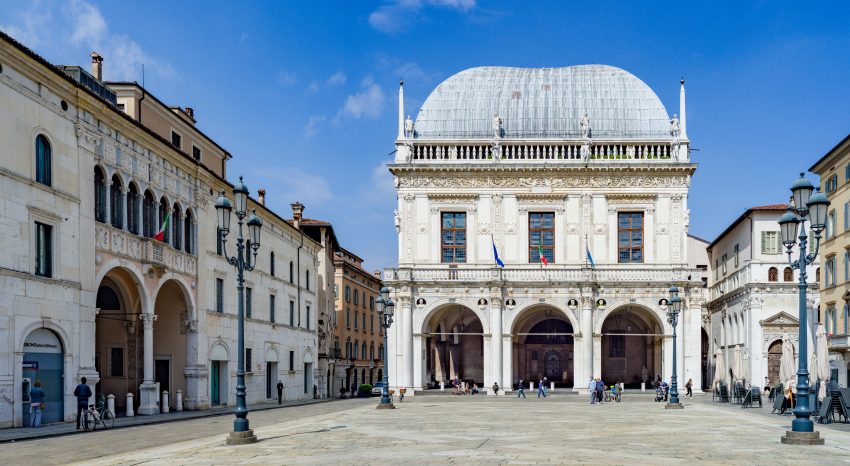
Standing proudly on the elegant Piazza della Loggia, the Palazzo della Loggia is one of the best places to visit in Brescia for travellers who appreciate Renaissance architecture, civic history, and atmospheric piazzas. Built between the late 15th and 16th centuries, this majestic white-marble palace has long been the symbolic centre of government in the city. Its Venetian inspiration, Botticino marble façade, and sculptural decorations make it one of northern Italy's most refined civic buildings.
The palace is especially admired for its three-arched loggia facing the square, its powerful rhythm of pilasters and windows, and its grand former council hall known as the Salone Vanvitelliano. This spot is one of the best places to see in Brescia and is often visited on walking tours of Brescia that wind through the historic core and the surrounding Renaissance landmarks.
Table of Contents
- History and Significance of Palazzo della Loggia
- Things to See and Do in Palazzo della Loggia
- How to Get There
- Practical Tips on Visiting Palazzo della Loggia
- Where to Stay close to Palazzo della Loggia
- Is Palazzo della Loggia Worth Visiting?
- FAQs for Visiting Palazzo della Loggia
- Nearby Attractions to Palazzo della Loggia
History and Significance of Palazzo della Loggia
The story of Palazzo della Loggia begins in 1484, when Brescia's leaders decided to create a monumental civic palace that reflected good governance and the prestige of the Venetian Republic, which ruled the city at the time. After early proposals by Tomaso Formentone, construction began in 1492 under Filippo Grassi, who designed the imposing ground-floor arches. The project evolved over nearly a century and involved some of the most renowned architects of the Renaissance, including Jacopo Sansovino, Andrea Palladio, and Lodovico Beretta, who ultimately completed the building in 1574.
The palace mirrors Venetian civic architecture in its use of white stone, upper-level fenestration, and roof design. At the same time, Brescia asserted its own identity by embedding Latin inscriptions discovered during excavations. The Renaissance façade contains the celebrated cycle of the thirty Caesars, sculpted mainly by Gasparo Cairano-an exceptional example of Lombard stone carving. After a fire in 1575 destroyed the original ship-hull roof, temporary coverings were used until Luigi Vanvitelli's vast octagonal hall was built in the 18th century. The 1914 reconstruction restored the roof to its Renaissance form.
Things to See and Do in Palazzo della Loggia
Visitors can admire the palace's monumental façade facing Piazza della Loggia, with its elegant arcades and sculptural programme. The ground-floor portico features cross vaults adorned with keystones carved by Cairano between 1497 and 1502. Inside, the richly decorated entrance portal by Stefano Lamberti leads to the Antonio Tagliaferri staircase, embellished with early 20th-century frescoes depicting allegorical and mythological scenes.
On the upper level, the Salone Vanvitelliano-an octagonal hall supported by eight brick columns-was designed in the 18th century and remains one of the palace's most remarkable spaces. Frescoes by Gaetano Cresseri, including Vulcan's Workshop and Rome Triumphant, add further artistic depth. The palace also houses historic paintings by Giulio and Antonio Campi, as well as the intriguing Lodoiga statue, reinstalled in 2011. Although the palace functions as the seat of the Municipal Council, parts of it open occasionally for exhibitions and public events.
How to Get There
Palazzo della Loggia sits directly on Piazza della Loggia, one of Brescia's central squares. It is easily accessible on foot from the main pedestrian areas and nearby landmarks such as Duomo Nuovo and Via Musei. The Brescia Metro stop Vittoria is a short walk from the square. Use Omnio to easily compare schedules, book train tickets, and find the best prices all in one place for a hassle-free journey across Italy. Visitors arriving by car can use parking areas around Piazza Vittoria and walk to the palace. If you are looking to rent a car in Italy I recommend having a look at Discover Cars, first, as they compare prices and review multiple car rental agencies for you.Travellers flying into Milan Bergamo or Verona can reach Brescia by regional train services. For the best deals and a seamless booking experience, check out these flights to Brescia on Booking.com.
Practical Tips on Visiting Palazzo della Loggia
- Best time to visit Palazzo della Loggia: Early morning or late afternoon for photographs of the illuminated façade.
- Entrance fee in Euros: Free; interior access only during special openings.
- Opening hours: Exterior always accessible; interior varies with events.
- Official website: Check the Municipality of Brescia for public opening dates.
- How long to spend: 15-30 minutes; longer if visiting interior halls.
- Accessibility: Piazza is flat and accessible; some interiors require stairs.
- Facilities: Cafés and restaurants located throughout the surrounding piazza.
- Photography tip: Capture the palace from the centre of the piazza for symmetry.
- Guided tours: Sometimes available during cultural events.
- Nearby food options: Plenty of cafés and trattorias around the square.
Where to Stay close to Palazzo della Loggia
Staying near Piazza della Loggia gives you instant access to Brescia's most atmospheric square and its Renaissance landmarks. A charming choice nearby is Albergo Orologio, offering boutique comfort in the old town. For a refined stay close to the cathedral district, consider Hotel Vittoria. The peaceful Centro Paolo VI provides historic accommodations in a villa with gardens. For a modern option with easy transport links, AC Hotel Brescia is a solid choice.
Is Palazzo della Loggia Worth Visiting?
Absolutely. Palazzo della Loggia is one of the must-see places in Brescia, offering a captivating blend of Renaissance architecture, Venetian influence, and local artistic excellence. Whether you admire it from the piazza or visit during an open event, the palace reflects the civic pride and cultural depth at the heart of Brescia's identity.
What Other Travellers Say...

Piazza della Loggia sits at the heart of Brescia's historic center, surrounded by Renaissance-era buildings and dominated by a 16th-century clocktower; visitors praise its clean, elegant atmosphere, note it's a lively spot for people-watching and aperitifs, and recommend pausing for a meal or coffee at nearby cafés while enjoying the mix of architectural charm.


FAQs for Visiting Palazzo della Loggia
Nearby Attractions to Palazzo della Loggia
- Duomo Nuovo & Duomo Vecchio: Two neighbouring cathedrals showcasing different eras of architecture.
- Piazza Paolo VI: One of Brescia's historic squares framed by churches and palaces.
- Brixia Archaeological Park: Roman Capitolium, theatre, and ruins along Via Musei.
- Santa Giulia Museum: A vast monastic complex with Roman houses and medieval treasures.
- Pinacoteca Tosio Martinengo: Brescia’s premier art gallery featuring Renaissance masterpieces.
The Palazzo della Loggia appears in our Complete Guide to Visiting Brescia!

Moira & Andy
Hey! We're Moira & Andy. From hiking the Camino to trips around Europe in Bert our campervan — we've been traveling together since retirement in 2020!
This website uses affiliate links which may earn a commission at no additional cost to you!
Planning Your Visit
Nearby Attractions
- Piazza della Vittoria (0.2) km
Square - Broletto Palace (0.2) km
Palace and Square - Duomo Nuovo (0.2) km
Basilica - Duomo Vecchio, Brescia (0.2) km
Cathedral - Torre della Pallata (0.3) km
Tower - Santa Maria della Carità (0.3) km
Church - Brixia Parco Archeologico (0.5) km
Historic Building and Museum - Piazza del Foro and Roman Theater (0.5) km
Historic Site - Brescia Castle (0.6) km
Castle - Civici Musei d'Arte e Storia Santa Giulia (0.7) km
Historic Building and Museum