Palazzo del Fulgor, Rimini
Museum in Rimini
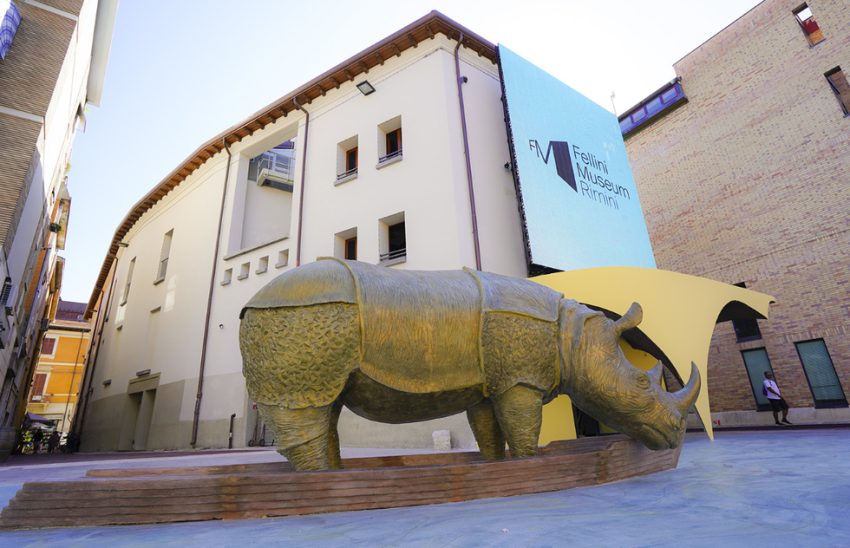
Palazzo del Fulgor, accessed from Piazzetta San Martino, is one of Rimini's most characterful cultural stops: a building where a working cinema lives on the ground floor and a multi-level Fellini experience unfolds above it. Even before you step inside, it has that unmistakable feeling of a place made for storytelling-part film landmark, part museum-style journey, and part deep-dive into how a director's imagination becomes a shared cultural language.
If you want a single stop that captures Rimini's creative identity beyond its Roman stones and piazzas, this is one of the must-see places in Rimini, and it fits effortlessly into a walking tour of Rimini because it sits right where you'll likely be wandering anyway, between lively streets, historic corners, and easy café breaks.
Table of Contents
- History and Significance of the Palazzo del Fulgor
- Things to See and Do in the Palazzo del Fulgor
- How to Get to the Palazzo del Fulgor
- Practical Tips on Visiting the Palazzo del Fulgor
- Where to Stay Close to the Palazzo del Fulgor
- Is the Palazzo del Fulgor Worth Visiting?
- For Different Travelers
- FAQs for Visiting Palazzo del Fulgor
- Nearby Attractions to the Palazzo del Fulgor
History and Significance of the Palazzo del Fulgor
Palazzo del Fulgor matters because it's not just “about” Federico Fellini in a generic museum sense-it's built around the idea that cinema is both a public ritual and a private process. With the Fulgor Cinema on the ground floor, the building preserves a living connection to filmgoing, while the upper floors shift into the backstage world of research, memory, and creative construction.
The first floor frames Fellini’s universe through original posters and fliers, anchoring the experience in the real cultural footprint of his films. It also opens the door to a deeper layer via a digital archive, where drawings, letters, and personal accounts help you understand the messy, human side of creation-how ideas take shape, change direction, and eventually become scenes that feel inevitable on screen.
Upstairs, the experience becomes more sensory and intimate. The Stanza delle Parole leans into Fellini's voice and presence, while the themed rooms broaden out into influence, friendships, and the way his work rippled far beyond Rimini. In that sense, Palazzo del Fulgor is both a tribute and a working interpretation center: it doesn't just celebrate the myth, it shows you how the myth was made.
Things to See and Do in the Palazzo del Fulgor
Begin on the first floor with the visual “gateway” material-posters, fliers, and the cues that pull you into Fellini’s imaginary world without asking you to be an expert. It’s the easiest way to get oriented, and it sets a tone that feels playful rather than academic, even when the content is historically rich.
On the second floor, give yourself time for the rooms that change the pace. The Stanza delle Parole is the emotional anchor, while the Cinemino works like a fast, global overview of Fellini’s impact. The Convivio adds a social dimension-work, friendships, the wider creative circle-and the Moviola stations are where the visit turns hands-on, letting you re-edit clips and feel, in a small way, how rhythm and choice shape meaning.
The third floor is where the museum leans into origins and invention, exploring the magic lantern as a precursor to cinema and a source of imagery that echoes through Fellini’s work. Finish by lingering in the Altane area, where projected scenes and a lounge-like setup invite you to slow down, absorb, and let the imagery settle. On the way in or out, don’t miss the rhinoceros sculpture at the entrance, a bold symbol that ties the whole center together, plus the lighter “Rina” counterpart that functions as the museum’s playful ambassador.
How to Get to the Palazzo del Fulgor
Federico Fellini International Airport (Rimini Airport) is the closest airport for reaching the city, while Bologna Guglielmo Marconi Airport is the most common alternative for a wider range of flights. For the best deals and a seamless booking experience, check out these flights to Rimini on Booking.com. From either airport, continue into central Rimini by bus, taxi, or a train connection depending on your arrival time and route.
Rimini’s main train station is a convenient base, and the walk into the historic center is straightforward, making this an easy first stop if you want to start sightseeing immediately after arriving. Use Omnio to easily compare schedules, book train tickets, and find the best prices all in one place for a hassle-free journey across Italy. If you prefer, local buses and short taxi rides can shorten the walk, but the on-foot approach is often the most enjoyable because it naturally introduces you to the city’s central streets.
If you’re driving, park on the edge of the centro storico and walk in, since the inner center can be slow for cars and parking is often easier just outside the tightest lanes. If you are looking to rent a car in Italy I recommend having a look at Discover Cars, first, as they compare prices and review multiple car rental agencies for you.
Practical Tips on Visiting the Palazzo del Fulgor
- Entrance fee: Adults: €12
- Opening hours: Tuesday to Sunday: 10am-1pm and 4pm-7pm, Closed on Mondays
- Official website: http://www.fellinimuseum.it/en/
- Best time to visit: Late morning is ideal if you want a calmer, unhurried experience before the afternoon streets get busier. Early evening also works well if you want to pair the visit with dinner plans and a slow stroll through the lit-up historic center afterward.
- How long to spend: Plan 60-90 minutes if you want to enjoy the full multi-floor experience, including the interactive rooms and time to linger with projections. If you’re short on time, 40-50 minutes can still feel satisfying if you focus on one floor for context and one for the immersive highlights.
- Accessibility: Expect a curated indoor route, but allow for typical historic-building constraints and occasional crowd pinch points near interactive stations. If you need extra time moving between spaces, visiting earlier in the day usually makes the experience more comfortable.
- Facilities: The surrounding area is packed with cafés and services, so it’s easy to build in a pre- or post-visit break nearby. Inside, facilities are usually oriented around the visitor experience rather than a full museum campus, so plan longer rests and meals in the streets and piazzas around it.
Where to Stay Close to the Palazzo del Fulgor
For a culture-heavy itinerary, base yourself in Rimini’s historic center so you can walk to the main sights; if your trip focuses on beach time and nightlife, Marina Centro is the better base for seafront energy and evening promenade life.
If you want a stylish central stay with the historic core right outside your door, DuoMo Hotel is a strong choice for walkability and design. For a practical option with easy transport links while staying close enough to walk into the center, Card International Hotel keeps things simple. If you’d rather be closer to the waterfront while still reaching the center without hassle, Hotel Luxor is a convenient Marina Centro base.
Is the Palazzo del Fulgor Worth Visiting?
Yes, especially if you want something in Rimini that feels modern, creative, and distinctly tied to the city's identity rather than its ancient foundations. The experience is immersive without being demanding, and it's one of the rare cultural stops that can satisfy both casual visitors and dedicated film lovers.
It's also worth it because it helps you see Rimini differently. After Palazzo del Fulgor, the city's streets can feel more cinematic-less like a checklist of landmarks and more like a living backdrop where stories have always been staged.
What Other Travellers Say...

Fellini Museum Palazzo del Fulgor on Via Giuseppe Verdi in Rimini offers an informative look at Federico Fellini's work with a strong digital archive and interactive displays, plus rotating artist exhibitions; visitors praise the upper floor as more engaging than the ground floor and note that much of the content is in Italian which can limit accessibility for non‑Italian speakers, and some have reported variable front‑desk service.


For Different Travelers
Families with Kids
This works well for families because the experience is visual, varied, and interactive, with rooms that naturally reset attention spans. The hands-on elements are especially useful for keeping momentum, and the multi-floor layout makes it easy to move briskly through sections that don’t click.
To keep it smooth, set a simple plan: one floor for “quick context,” one floor for “hands-on fun,” then finish with a snack break nearby. That rhythm avoids museum fatigue and keeps the visit upbeat.
Couples & Romantic Getaways
For couples, Palazzo del Fulgor is a great shared experience because it's immersive and conversation-friendly, especially if you enjoy art, atmosphere, and the idea of stepping into a creative universe together. It pairs beautifully with an evening stroll through the historic center, when Rimini feels softer and more theatrical.
Make it part of a simple date loop: museum, a slow walk through nearby streets, then a relaxed aperitivo. It’s not a heavy “study” visit, so it fits naturally into a romantic day without taking over the schedule.
Budget Travelers
Budget travelers will appreciate that this is a compact, high-impact cultural stop in the middle of a walkable day. It’s also easy to combine with free highlights nearby, meaning you can build a full itinerary without stacking multiple paid entries.
If you’re prioritizing value, focus on the floors and rooms that are most distinctive to this site-the interactive stations and immersive projections-then keep the rest of your day centered on free piazzas, streets, and viewpoints.
History Buffs
Even if cinema isn’t your main interest, this stop works for history buffs because it shows how a city’s identity continues to evolve through culture, not only monuments. It’s a modern layer of Rimini’s story, and it connects naturally to nearby medieval and Roman stops that anchor the older timeline.
If you want to make it feel historical rather than purely artistic, treat it as a “Rimini identity” visit, then follow it with a loop through the city's older civic spaces to see how different eras sit side by side.
FAQs for Visiting Palazzo del Fulgor
Getting There
Tickets & Entry
Visiting Experience
Tours, Context & Itineraries
Photography
Accessibility & Facilities
Food & Breaks Nearby
Safety & Timing
Nearby Attractions to the Palazzo del Fulgor
- Piazza Cavour: Rimini's main civic square, perfect for cafés, people-watching, and historic palazzi in one compact setting.
- Tempio Malatestiano: A landmark church that adds a strong Renaissance layer and architectural contrast to the Fellini-focused visit.
- Domus del Chirurgo: A glass-roofed Roman house excavation that gives you an intimate, “everyday life” window into ancient Rimini.
- Castel Sismondo: A Malatesta-era fortress that adds medieval weight and a dramatic silhouette to your old-town loop.
- Ponte di Tiberio: A remarkably preserved Roman bridge that makes a scenic endpoint to a central walking route.
The Palazzo del Fulgor appears in our Complete Guide to Visiting Rimini!

Moira & Andy
Hey! We're Moira & Andy. From hiking the Camino to trips around Europe in Bert our campervan — we've been traveling together since retirement in 2020!
This website uses affiliate links which may earn a commission at no additional cost to you!
Planning Your Visit
Tuesday to Sunday: 10am-1pm and 4pm-7pm, Closed on Mondays
Adults: €12
Nearby Attractions
- Palazzo Garampi (0.1) km
Palace - Piazza Cavour (0.1) km
Square - Rimini Caput Viarum (0.1) km
Visitor Centre - Museo della Città di Rimini (0.2) km
Historic Building and Museum - Domus del Chirurgo (0.2) km
Historic Site - Castel Sismondo (0.3) km
Castle and Museum - Ponte di Tiberio (0.3) km
Bridge and Historic Site - Piazza Tre Martiri (0.3) km
Historic Site and Square - Porta Galliana (0.4) km
City Gate - Tempio Malatestiano (0.4) km
Church