Palau del Lloctinent, Barcelona
Archive, Historic Building and Palace in Barcelona
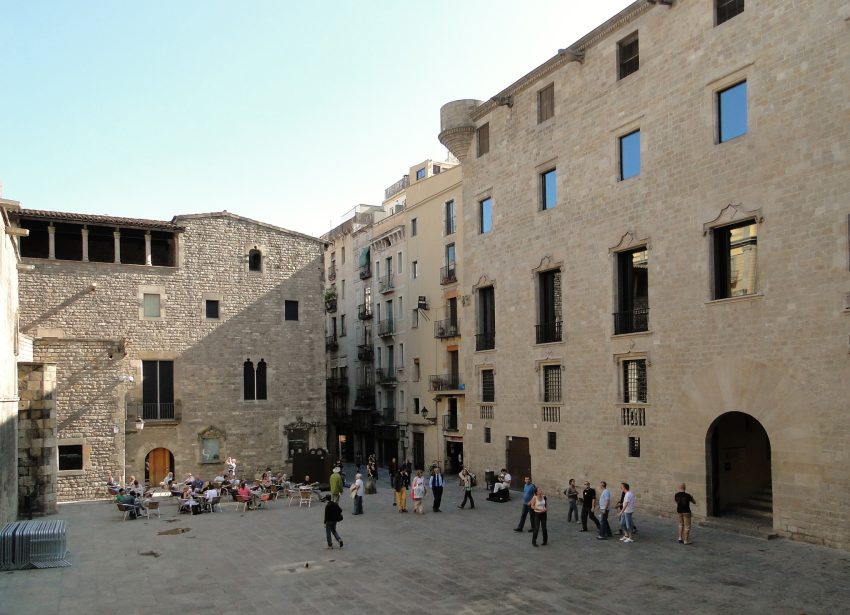
Tucked into Barcelona's Gothic Quarter beside Plaça del Rei, the Palau del Lloctinent (Viceroy's Palace) is one of those places you can walk past without realizing how much history sits behind its stone façade. It's closely linked to the Archives of the Crown of Aragon, and the building's calm courtyard feels like a small time capsule amid the busy lanes of Ciutat Vella.
It's an easy add-on to a walking tour of the Gothic Quarter, especially if you're already visiting Barcelona Cathedral, the Roman walls, or the museums around Plaça del Rei. For the best experience, aim to see it as part of a slow stroll through the old town, when you can appreciate the architectural details and the quieter atmosphere.
Table of Contents
- History and Significance of the Palau del Lloctinent
- Things to See and Do in the Palau del Lloctinent
- How to Get to the Palau del Lloctinent
- Practical Tips on Visiting the Palau del Lloctinent
- Where to Stay Close to the Palau del Lloctinent
- Is the Palau del Lloctinent Worth Visiting?
- For Different Travelers
- FAQs for Visiting Palau del Lloctinent
- Nearby Attractions to the Palau del Lloctinent
History and Significance of the Palau del Lloctinent
Built in the mid-16th century, the Palau del Lloctinent was created as a seat of authority in Catalonia, reflecting the political and administrative power of the era. Its architecture bridges late Gothic traditions with Renaissance influences, which is exactly what makes it stand out in a neighborhood dominated by medieval streetscapes.
Over the centuries, the palace has been tied to the documentary and institutional history of the Crown of Aragon, a major Mediterranean power whose records are preserved through the archive system associated with the site. Even if you're not an archive researcher, the building's role as a keeper of historical memory gives the visit a sense of weight beyond its modest size.
Today, the Palau del Lloctinent is best understood as a historic building you experience through space: stone, arches, stairways, and the kind of courtyard that makes you pause and look up. It's not a blockbuster attraction, but it's a meaningful one if you enjoy places where Barcelona's layers are visible.
Things to See and Do in the Palau del Lloctinent
The highlight for most visitors is the courtyard: a peaceful, photogenic space where Renaissance proportions and Gothic-era textures meet. Take your time here, because the charm is in the details, from the symmetry of the arcades to the way light moves across the stone.
If an exhibition is running, it can add useful context and make the visit feel more “complete,” especially for travelers who like interpretive displays. Even without an exhibition, the upper walkways and interior vantage points (when accessible) are worth checking for architectural angles and quieter views.
This is also a great “between stops” visit: short, low-effort, and rewarding if you're already exploring the Gothic Quarter on foot. Pair it with Plaça del Rei and nearby medieval sites for a compact, history-forward mini-itinerary.
How to Get to the Palau del Lloctinent
The nearest airport is Barcelona–El Prat (BCN), with Girona–Costa Brava (GRO) and Reus (REU) sometimes used for low-cost flights depending on season and routes. For the best deals and a seamless booking experience, check out these flights to Barcelona on Booking.com.
If you're arriving by train, Barcelona Sants is the main hub for high-speed and regional services, and from there you can connect by metro, taxi, or a short onward ride to the old town. Train schedules and bookings can be found on Omio.
Within the city, the Gothic Quarter is best reached by metro and then explored on foot, since many streets are narrow and pedestrian-focused. If you're traveling by car, plan to park outside the historic center and walk in, as driving and parking in Ciutat Vella can be slow and restrictive. If you are looking to rent a car in Spain I recommend having a look at Discover Cars, first, as they compare prices and review multiple car rental agencies for you.
Practical Tips on Visiting the Palau del Lloctinent
- Official website: https://www.cultura.gob.es/archivos-aca/en/portada.html
- Entrance fee: Free.
- Opening hours: Monday – Sunday: 10:00–19:00. Closed: December 25–26, January 1 & 6.
- Best time to visit: Go earlier in the day for a calmer feel, or slip in mid-afternoon when nearby lanes can be less congested. Weekdays tend to feel more relaxed than weekends in the Gothic Quarter.
- How long to spend: Plan for 15–30 minutes if you're mainly seeing the courtyard and architecture. Add extra time if you're combining it with Plaça del Rei and nearby museums.
- Accessibility: Expect historic-building constraints such as steps and uneven surfaces in parts of the site. If step-free access matters, confirm on arrival which areas are currently accessible.
- Facilities: Treat this as a short cultural stop rather than a full-service visitor center. Use nearby cafés and public facilities around the Cathedral and Via Laietana area.
Where to Stay Close to the Palau del Lloctinent
If you want the easiest sightseeing days, base yourself in the Gothic Quarter or the bordering parts of El Born for walkable access to the old town.
Hotel Neri Relais & Châteaux A boutique splurge right in the Gothic Quarter, ideal if you want atmospheric streets at your doorstep and a quiet, design-forward retreat after busy sightseeing.
Catalonia Catedral A practical, comfortable choice close to the Cathedral, great for travelers who want a central base with reliable amenities and easy walking routes.
H10 Madison Well-located for old-town exploring, with a polished feel that suits couples and short-stay visitors who value convenience and a strong location.
K+K Hotel Picasso A solid option on the edge of El Born near Parc de la Ciutadella, good if you want quick access to the Gothic Quarter but slightly more breathing room.
Motel One Barcelona-Ciutadella A good-value modern stay within easy reach of the old town, ideal for budget-conscious travelers who still want a stylish, straightforward base.
Is the Palau del Lloctinent Worth Visiting?
Yes, especially if you enjoy architecture, hidden corners, and the quieter side of Barcelona's history. It's a small stop that delivers a strong sense of place, and it fits naturally into a Gothic Quarter walk without demanding much time.
Honest Pivot: If you're chasing big interiors, extensive exhibits, or a “must-see” checklist experience, you may find it too subtle. In that case, prioritize larger nearby attractions and treat the Palau del Lloctinent as an optional bonus if you have extra time in Ciutat Vella.
What Other Travellers Say...

Reviews are overwhelmingly positive, with travelers describing Palau del Lloctinent as a beautiful, low-key find in the heart of the Gothic Quarter. Common highlights include the serene courtyard, striking Renaissance-era architecture, and the sense of stepping back in time while exploring a lesser-known historic building. Visitors also appreciate that it's easy to pop in while walking between major sights. The main downsides mentioned or implied are that it's a smaller, subtle attraction (so it can feel brief if you expect a full museum experience) and that access or exhibits may be limited depending on what's open that day.


For Different Travelers
The Palau del Lloctinent works best as a flexible, low-commitment visit that you can slot into a day of old-town wandering. It's more about atmosphere and architectural character than a long, structured museum-style experience.
Families with Kids
For families, the biggest advantage is that the visit can be short and low-pressure, which helps if you’re managing energy levels and snack schedules. The courtyard can feel like a calm reset button between busier stops.
That said, there may not be many hands-on elements, so it’s best paired with nearby attractions that have more visual variety. Consider turning it into a quick “spot the details” game (arches, stairs, coats of arms) to keep kids engaged.
Couples & Romantic Getaways
Couples will appreciate the quieter atmosphere and the feeling of discovering a tucked-away corner of the city together. It’s a good place for slow photos and a more intimate pace than the main thoroughfares.
Make it part of a romantic old-town loop: Palau del Lloctinent, Plaça del Rei, then a café or wine stop in El Born. The experience is less about ticking boxes and more about lingering.
Budget Travelers
This is a strong budget-friendly stop because it doesn't require a big time investment and can fit into a walking day with minimal transport costs. If you're exploring Barcelona on foot, it's an easy win.
To maximize value, combine it with other free-to-see historic streets and squares nearby. Plan your day around neighborhoods rather than paid attractions, and use this as one of your “quiet highlights.”
History Buffs
History lovers will enjoy the building's institutional connections and its place within the political story of Catalonia and the Crown of Aragon. Even without deep interpretation on-site, the setting itself communicates authority and continuity.
For a richer experience, visit with a bit of context in mind and pair it with Plaça del Rei’s surrounding medieval sites. You’ll get more out of the details when you’re looking for architectural transitions and civic symbolism.
FAQs for Visiting Palau del Lloctinent
Getting There
Tickets & Entry
Visiting Experience
Tours, Context & Itineraries
Photography
Accessibility & Facilities
Food & Breaks Nearby
Safety & Timing
Nearby Attractions to the Palau del Lloctinent
- Plaça del Rei: A historic square surrounded by medieval buildings, ideal for soaking up old Barcelona's atmosphere.
- Barcelona Cathedral: The Gothic heart of the city, with an impressive façade and a lively surrounding neighborhood.
- Museu d'Història de Barcelona (MUHBA): A great place to dive into the city's Roman and medieval layers, often with underground remains.
- El Born: A nearby neighborhood for boutiques, tapas, and a more local-feeling evening stroll.
- Las Ramblas: Barcelona's famous promenade, best used as a connector to other areas rather than a destination in itself.
The Palau del Lloctinent appears in our Complete Guide to Visiting Barcelona!

Moira & Andy
Hey! We're Moira & Andy. From hiking the Camino to trips around Europe in Bert our campervan — we've been traveling together since retirement in 2020!
This website uses affiliate links which may earn a commission at no additional cost to you!
Planning Your Visit
Monday - Sunday: 10:00-19:00.
Closed: December 25-26, January 1 & 6.
Free.
Nearby Attractions
- Plaça del Rei (0.0) km
Square - Museu Frederic Marès (0.0) km
Historic Site, Museum and Sculpture - Capella de Santa Àgueda (0.0) km
Church, Historic Building and Museum - Temple d'August (0.1) km
Roman Site - Cathedral of Barcelona (0.1) km
Cathedral, Historic Building and Religious Building - Pont del Bisbe (0.1) km
Attraction and Bridge - Plaça de Ramon Berenguer el Gran (0.1) km
Roman Site and Square - Casa de l'Ardiaca (0.1) km
Archive, Courtyard and Historic Building - Plaça de l'Àngel (0.1) km
Square - Plaça de Sant Jaume (0.1) km
Square