One Pillar Pagoda, Hanoi
Buddhist Temple in Hanoi
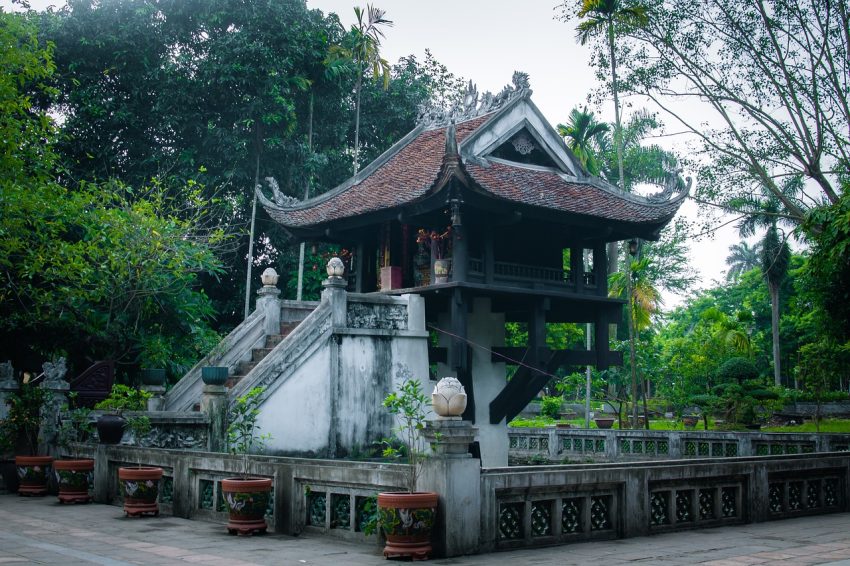
The One Pillar Pagoda is one of the most iconic religious structures in Vietnam, drawing visitors with its serene beauty, symbolic architecture, and legendary origins. Built in 1049 by King Ly Thai Tong, the pagoda stands gracefully above a lotus pond on a single stone pillar, embodying purity and enlightenment. For many travellers, this compact yet deeply meaningful monument offers a quiet moment of reflection amid Hanoi's vibrant energy.
Located within the Ho Chi Minh Complex, the pagoda is often visited on walking tours of Hanoi's Ba Dinh District, giving travellers a convenient opportunity to combine history, culture, and architecture in one stop. With its elegant silhouette rising from tranquil waters, it remains one of the must-see places in Hanoi.
Table of Contents
- History and Significance of One Pillar Pagoda
- Things to See and Do in One Pillar Pagoda
- How to Get to One Pillar Pagoda
- Practical Tips on Visiting One Pillar Pagoda
- Where to Stay close to One Pillar Pagoda
- Is One Pillar Pagoda Worth Visiting?
- FAQs for Visiting One Pillar Pagoda
- Nearby Attractions to One Pillar Pagoda
History and Significance of One Pillar Pagoda
The origin of the One Pillar Pagoda is rooted in a legend that reflects both devotion and gratitude. King Ly Thai Tong, who longed for an heir, prayed frequently to Buddha. One night, he dreamt of the Goddess of Mercy, Quan Am Bo Tat, offering him a child while seated on a lotus. Shortly after, the queen gave birth to a prince. To honour this divine blessing, the king commissioned a pagoda built in the shape of a lotus blossom.
In 1105, King Ly Nhan Tong expanded the structure, adding Linh Chieu Lake and enhancing its spiritual surroundings. Although the pagoda was destroyed by the French in 1954, it was meticulously restored in 1955 and later recognised as a National Historic Heritage site in 1962. In 2012, it was honoured by the Asia Record Organization as “The Pagoda with the Most Unique Architecture in Asia,” further cementing its cultural importance.
Things to See and Do in One Pillar Pagoda
Visitors come to the pagoda not only to admire its unusual architectural form but also to appreciate the calm and contemplative atmosphere around the pond. The structure sits on a single stone pillar rising from the lotus pool, forming the Lien Hoa Dai-a square wooden sanctuary with curved roofs adorned by dragons.
Inside the shrine stands the statue of Avalokitesvara Bodhisattva (Quan Thế Âm Bồ Tát), surrounded by ceremonial objects such as candles, vases, and incense burners. As you walk up the thirteen steps leading into the sanctuary, stone steles carved with historical inscriptions introduce the pagoda’s long past. The courtyard and surrounding grounds provide a peaceful place to observe worshippers, admire symbolic carvings, and reflect on the philosophical meaning behind the design.
From afar, the pagoda resembles a lotus emerging from the water-a motif symbolising purity, wisdom, and the noble character of Vietnamese culture. This imagery is so emblematic that the One Pillar Pagoda appears on the 5,000 Vietnamese dong coin.
How to Get to One Pillar Pagoda
The pagoda is located beside the Ho Chi Minh Mausoleum in Ba Dinh District, making it easily reachable from the city centre. Travellers flying into Hanoi arrive at Nội Bài International Airport, located about 40 minutes northwest of the site. For the best deals and a seamless booking experience, check out these flights to Hanoi on Booking.com.
Hanoi Railway Station is only a short ride away, offering convenient access via taxi or bus. Train schedules and bookings can be found on Omio.
Reaching the pagoda by car is straightforward thanks to main roads connecting Ba Dinh District to Old Quarter and West Lake, though parking areas can be limited during peak hours.
Practical Tips on Visiting One Pillar Pagoda
- Suggested tips: Visit early in the morning to enjoy a quiet atmosphere before tour groups arrive.
- Best time to visit: Early morning or late afternoon for cooler temperatures and softer light.
- Entrance fee: Free
- Opening hours: 08:00 - 17:00 (every day)
- How long to spend: 20-30 minutes.
- Accessibility: Some steps lead into the pagoda; the surrounding courtyard is accessible.
- Facilities: Restrooms, shaded seating, and nearby souvenir shops.
- Photography tip: Capture the pagoda’s reflection in the lotus pond for a balanced, iconic image.
- Guided tours: Many city tours include a stop here, providing useful historical context.
- Nearby food options: Plenty of cafés and restaurants around Dien Bien Phu Street and Ho Chi Minh Mausoleum area.
Where to Stay close to One Pillar Pagoda
For travellers wanting to stay near Ba Dinh’s cultural landmarks, several excellent accommodation options are available. Luxury travellers may enjoy Dolce by Wyndham Hanoi Golden Lake. A comfortable mid-range option is Super Hotel Candle. For boutique charm close to major sights, consider La Sinfonía del Rey Hotel.
Is One Pillar Pagoda Worth Visiting?
Absolutely. One Pillar Pagoda is a small structure, but its beauty, symbolism, and legendary origins make it a meaningful stop for anyone visiting Hanoi. Its place within the Ho Chi Minh Complex also makes it one of the best places to see in Hanoi for understanding the city's cultural and spiritual identity.
What Other Travellers Say...

One Pillar Pagoda, located in Ba Đình, Hà Nội, is a small, peaceful Buddhist temple set above a lotus pond on a single pillar and designed to resemble a lotus blossom; visitors praise its tranquil gardens, traditional architecture and photogenic setting, note it can be busy with tourists yet remains calming, and mention nearby attractions make it easy to combine with a walk around the area.


FAQs for Visiting One Pillar Pagoda
Nearby Attractions to One Pillar Pagoda
- Ho Chi Minh Mausoleum: The resting place of Vietnam's revered leader.
- Presidential Palace Gardens: Lush landscaped grounds open to visitors.
- Ho Chi Minh Museum: A striking museum dedicated to Ho Chi Minh's life and legacy.
- Imperial Citadel of Thang Long: A UNESCO-listed complex with 1,300 years of history.
- Vietnam Military History Museum: Exhibits tanks, aircraft, and wartime relics.
The One Pillar Pagoda appears in our Complete Guide to Visiting Hanoi!

Moira & Andy
Hey! We're Moira & Andy. From hiking the Camino to trips around Europe in Bert our campervan — we've been traveling together since retirement in 2020!
This website uses affiliate links which may earn a commission at no additional cost to you!
Planning Your Visit
08:00 – 17:00 (every day)
Free
Nearby Attractions
- Ho Chi Minh Museum (0.1) km
Museum - Ho Chi Minh’s Mausoleum (0.2) km
Mausoleum - Ba Dinh Square (0.2) km
Square - Ho Chi Minh's Stilt House (0.3) km
Historic Building - Presidential Palace (0.4) km
Palace - Vietnam National Museum of Fine Arts (0.7) km
Museum - Imperial Citadel of Thang Long (0.7) km
Castle - Lenin Park (0.8) km
Park - Vietnam Military History Museum (0.8) km
Museum - Temple of Literature (0.9) km
Religious Building