Old Hospital de la Santa Creu, Barcelona
Courtyard, Historic Building and Historic Site in Barcelona
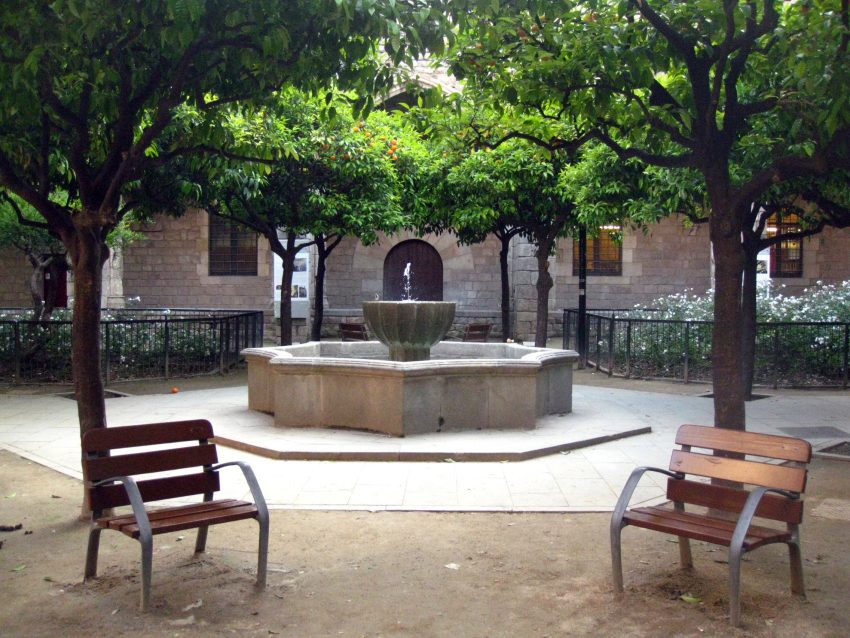
Tucked just off Carrer de l'Hospital in El Raval (Ciutat Vella), the Old Hospital de la Santa Creu is one of Barcelona's most atmospheric Gothic complexes: stone arcades, a calm courtyard, and a sense of the medieval city still very much intact.
It's best visited as a quick, rewarding detour on a walking tour that links La Rambla, the Boqueria area, and the lanes of the Raval and Gothic Quarter. Come for the architecture and the quiet, then continue on foot toward Plaça Reial, the Cathedral area, or Sant Antoni for a broader neighborhood contrast.
Table of Contents
- History and Significance of the Old Hospital de la Santa Creu
- Things to See and Do in the Old Hospital de la Santa Creu
- How to Get to the Old Hospital de la Santa Creu
- Practical Tips on Visiting the Old Hospital de la Santa Creu
- Where to Stay Close to the Old Hospital de la Santa Creu
- Is the Old Hospital de la Santa Creu Worth Visiting?
- For Different Travelers
- FAQs for Visiting Old Hospital de la Santa Creu
- Nearby Attractions to the Old Hospital de la Santa Creu
History and Significance of the Old Hospital de la Santa Creu
Founded in the early 1400s, the Hospital de la Santa Creu was created to consolidate several smaller medieval hospitals into a single major institution for Barcelona. For centuries it played a central role in the city's public health and charity, serving residents long before modern medical campuses existed.
Architecturally, the complex is a standout example of Catalan civil Gothic: cloister-like courtyards, pointed arches, and long, elegant galleries designed for light and air. Even if you’re not a specialist, the layout makes it easy to imagine how the space functioned as a place of care and refuge.
Today, the historic buildings are closely tied to Barcelona's cultural life, with the Biblioteca de Catalunya (Library of Catalonia) based here. That shift from hospital to cultural institution gives the site a unique “living monument” feel: it's historic, but still part of the city's daily rhythm.
Things to See and Do in the Old Hospital de la Santa Creu
Start with the courtyard and the surrounding arcades. The best moments here are simple: walking the perimeter, looking up at the stonework, and noticing how quickly the street noise fades once you step inside.
Next, look for the exterior staircases and the main entrance areas connected to the Biblioteca de Catalunya. Even a short peek into accessible public zones can add context, especially if there’s a small display or temporary exhibit space open.
If you enjoy slow travel, treat this as a “breathing space” between busier sights. Sit for a few minutes, take photos of repeating arches and textures, and then continue your route deeper into Ciutat Vella.
How to Get to the Old Hospital de la Santa Creu
Barcelona–El Prat Airport (BCN) is the main international gateway, with Girona–Costa Brava (GRO) and Reus (REU) sometimes useful for low-cost flights depending on season. For the best deals and a seamless booking experience, check out these flights to Barcelona on Booking.com.
If you're arriving by rail, Barcelona Sants is the primary long-distance station, and it connects easily to the city by Metro and local trains for a quick transfer into Ciutat Vella. Train schedules and bookings can be found on Omio.
By car, driving into central Barcelona can be slow and parking is limited, so it's usually best to park outside the core and finish by Metro or on foot. If you are looking to rent a car in Spain I recommend having a look at Discover Cars, first, as they compare prices and review multiple car rental agencies for you.
Practical Tips on Visiting the Old Hospital de la Santa Creu
- Official website: https://www.bnc.cat/eng
- Entrance fee: Free (self-guided access to public areas); guided group visits: €25 per group.
- Opening hours: Monday – Friday: 09:00–20:00. Saturday: 09:00–14:00. Sunday: Closed on Sunday.
- Best time to visit: Late morning on a weekday is ideal for a calmer feel and better light in the courtyard. If you’re visiting in summer, aim earlier to avoid the hottest part of the day.
- How long to spend: Plan 20–40 minutes for the courtyard and architectural details, longer if you’re pairing it with nearby stops in El Raval. It works well as a “bonus” sight rather than a main event.
- Accessibility: The surrounding streets are walkable but can be busy, and some historic surfaces may be uneven. If you need step-free access, confirm the most suitable entrance points before you go.
- Facilities: Facilities are limited on-site, so plan for cafés and services nearby along La Rambla, around the Boqueria area, or toward Sant Antoni.
Where to Stay Close to the Old Hospital de la Santa Creu
Base yourself in Ciutat Vella (El Raval or the edge of the Gothic Quarter) if you want to explore on foot and dip in and out of sights with minimal transit.
Hotel 1898 A strong pick for comfort right by La Rambla, making it easy to walk to the hospital complex and return for a break.
Barceló Raval A convenient El Raval base close to the site, ideal if you like a modern hotel in a neighborhood with lots of local energy.
Hotel Neri Relais & Châteaux A more intimate, high-end option in the Gothic Quarter for travelers who want historic ambiance and a quieter-feeling base.
Catalonia Ramblas Great for transport connections and easy walking access into Ciutat Vella, with a comfortable, full-service setup.
Casa Camper Barcelona A stylish boutique stay near the museum-and-café corridor of El Raval, perfect if you want design-forward comfort close to the action.
Is the Old Hospital de la Santa Creu Worth Visiting?
Yes, especially if you enjoy historic architecture and want a quieter counterpoint to Barcelona's headline attractions. It's a low-effort stop with a high “atmosphere return,” and it fits naturally into a walking day around La Rambla, the Boqueria area, and the Gothic Quarter.
Honest Pivot: if you prefer attractions with curated exhibits, signage, and a structured visitor route, this may feel too subtle or “empty” to justify a special trip. It’s best for travelers who like discovering overlooked corners and appreciating a place for its space and mood.
What Other Travellers Say...

Visitors rate the Old Hospital de la Santa Creu highly for its beautiful Gothic architecture, peaceful courtyards, and calm atmosphere away from the busiest tourist streets. Many appreciate that it's relatively uncrowded and makes a pleasant stop while walking around Ciutat Vella. Common downsides mentioned are that there's limited “content” or structured sightseeing on-site, and a few travelers note the area can feel a bit uneasy at times, especially if the gardens are being used as a shelter.


For Different Travelers
The Old Hospital de la Santa Creu is flexible: you can make it a quick photo stop, a quiet sit-down break, or a small architectural highlight on a longer Ciutat Vella walk.
Families with Kids
For families, this works best as a short reset stop between bigger activities. The open courtyard feel can be a welcome breather when kids need a calmer pace.
Keep expectations simple: it’s more about space and atmosphere than hands-on exhibits. Pair it with a nearby market stroll or a park/play stop afterward.
Couples & Romantic Getaways
Couples will appreciate the peaceful, tucked-away vibe and the beautiful Gothic lines that photograph well. It’s a good place for a slower moment away from the busiest streets.
Try visiting mid-morning or late afternoon for softer light and fewer passersby. It's an easy add-on before a tapas plan in El Raval or the Gothic Quarter.
Budget Travelers
Budget travelers will like that this is a quick, walkable sight that doesn’t require a big time commitment. It’s ideal when you want something meaningful without building your day around tickets.
Use it as part of a self-guided walking route through Ciutat Vella, linking free-to-enjoy streetscapes, plazas, and viewpoints.
History Buffs
History lovers will enjoy the “layers” here: a medieval civic institution turned cultural complex, still embedded in everyday Barcelona. The architecture helps tell the story even without extensive interpretation.
To deepen the visit, read a little about medieval hospitals in Catalonia beforehand, then look for how the courtyard-and-gallery design supported light, ventilation, and movement.
FAQs for Visiting Old Hospital de la Santa Creu
Getting There
Tickets & Entry
Visiting Experience
Tours, Context & Itineraries
Photography
Accessibility & Facilities
Food & Breaks Nearby
Safety & Timing
Nearby Attractions to the Old Hospital de la Santa Creu
- La Boqueria Market: Barcelona's iconic food market, perfect for a quick snack crawl and people-watching.
- La Rambla: The city's famous promenade, lively for strolling and connecting to nearby sights.
- MACBA (Museu d'Art Contemporani de Barcelona): A modern-art hub with a plaza that's great for a short rest and street-scene photos.
- Plaça Reial: A classic palm-lined square for a drink stop and an easy Gothic Quarter detour.
- Barcelona Cathedral (Cathedral of the Holy Cross and Saint Eulalia): A major Gothic landmark and a natural next step on a Ciutat Vella walking route.
The Old Hospital de la Santa Creu appears in our Complete Guide to Visiting Barcelona!

Moira & Andy
Hey! We're Moira & Andy. From hiking the Camino to trips around Europe in Bert our campervan — we've been traveling together since retirement in 2020!
This website uses affiliate links which may earn a commission at no additional cost to you!
Planning Your Visit
Monday - Friday: 09:00-20:00.
Saturday: 09:00-14:00.
Sunday: Closed on Sunday.
Free (self-guided access to public areas); guided group visits: €25 per group.
Nearby Attractions
- Rambla del Raval (0.2) km
Street - Museu d’Art Contemporani de Barcelona (0.2) km
Arts Venue, Attraction and Museum - Església de Sant Agustí Nou del Raval (0.3) km
Church - Virreina Palace (0.3) km
Historic Building, Museum and Palace - Mercat de la Boqueria (0.3) km
Attraction, Bazaar and Market - Sala Parés (0.4) km
Arts Venue and Gallery - Església de Santa Maria de Montalegre de Barcelona (0.4) km
Church, Historic Building and Religious Building - Basílica de Santa Maria del Pi (0.4) km
Basilica, Church and Tower - Plaça de Sant Josep Oriol (0.4) km
Square - Gran Teatre del Liceu (0.4) km
Arts Venue, Opera House and Theatre