National Museum of Ravenna
Historic Building and Museum in Ravenna
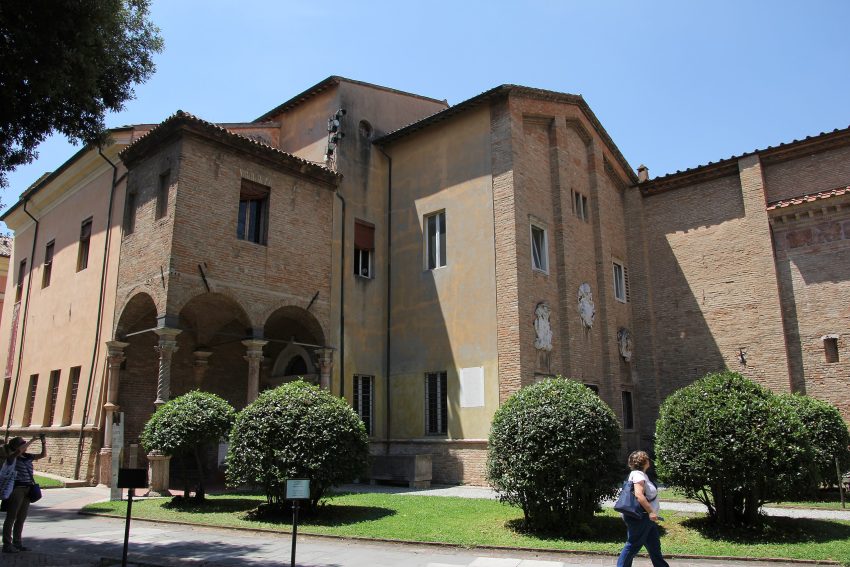
Set right beside the Basilica of San Vitale, the National Museum of Ravenna occupies the former Benedictine monastery complex, where Renaissance cloisters and monastic rooms create a calm, atmospheric setting for the city's most wide-ranging collection of artefacts. It's the kind of museum that feels like a hidden layer behind the headline monuments, and it adds depth to any Ravenna visit because it gathers objects that help explain what you've been seeing in churches and mosaics all day.
If you enjoy pairing grand interiors with the quieter story of everyday material culture, this museum is one of the things to do in Ravenna, and it's a great place to visit on a walking tour of Ravenna because it sits within the same compact cluster as San Vitale and the Mausoleum of Galla Placidia. You can step from world-famous mosaics straight into cloisters filled with inscriptions, sculpture, and finely crafted objects that make the city's history feel tangible.
Table of Contents
- History and Significance of the National Museum of Ravenna
- Things to See and Do in the National Museum of Ravenna
- Practical Tips on Visiting the National Museum of Ravenna
- Where to Stay close to the National Museum of Ravenna
- Is the National Museum of Ravenna Worth Visiting?
- FAQs for Visiting National Museum of Ravenna
- For Different Travelers
- Nearby Attractions to the National Museum of Ravenna
History and Significance of the National Museum of Ravenna
The National Museum of Ravenna has been housed in this monastery complex since the late 19th century, but its roots reach back further, to scholarly monastic collecting in the 18th century. Learned monks from major local abbeys, especially those connected to Classe, assembled objects with artistic, ancient, and natural-historical value, building a collection shaped by curiosity and local pride long before modern museum practice took hold.
Today, the museum’s significance lies in its breadth. It brings together archaeological finds, Roman and Byzantine stonework, sculpture tied to Ravenna’s UNESCO monuments, and a large array of applied arts, including ivories, icons, and ceramics. In a city where many visitors focus on mosaics, this museum acts as a connective tissue, showing you the objects, fragments, and decorative traditions that sat around those glittering interiors and shaped Ravenna’s daily and ceremonial life across centuries.
The setting matters too. The two Renaissance cloisters and former abbatial spaces create an experience that feels consistent with what’s on display: you are not walking through a neutral modern gallery, but through an architectural environment that has its own historical weight. Even when you’re looking at a single carved capital or a fragment of a sarcophagus, the monastery backdrop keeps you anchored in Ravenna’s layered history.
Things to See and Do in the National Museum of Ravenna
Begin on the ground floor in the first cloister, where the Roman lapidary collection is displayed: epigraphs, stelae, reliefs, and sarcophagi from the 1st to the 3rd century. This is a rewarding section if you like the “texture” of a place, because inscriptions and carved stone fragments reveal names, titles, and civic habits that don't survive in grand narrative history. Look out for standout pieces such as the Apotheosis of Augustus relief and the ancient Greek herms recovered from the sea near Ravenna, which feel like unexpected travellers from a different world.
Move to the second cloister for stone artefacts spanning late antiquity into the Baroque era. This is where you begin to see the shift from Roman language to early Christian and Byzantine forms, including the Traditio Legis sarcophagus and distinctive capitals associated with Theodoric’s era, often described as “butterfly” capitals. If you’ve already visited San Vitale, this is the perfect moment to notice how architectural carving and decorative motifs circulate across monuments and periods.
On the first floor, the museum becomes more varied and more intimate, with collections designed to evoke Ravenna’s historical splendour. The monumental staircase is part of the experience, and the rooms beyond introduce Renaissance bronzes and plaques, richly specific material such as furnishings from an 18th-century pharmacy, and sections linked to lost or transformed sites, including elements connected with Santa Croce and research on the Palatium and Theodoric’s court. This is also where the collections of ivories, icons, and ceramics add a different pace: smaller objects, close viewing, and an emphasis on craftsmanship.
Try to end your visit in the former refectory, where a fresco cycle attributed to Pietro da Rimini brings a painterly dimension that complements the museum's stone and mosaic-heavy story. After a day of glittering tesserae, a room of frescoes can feel like stepping into a quieter, more human register of medieval art.
Practical Tips on Visiting the National Museum of Ravenna
- Suggested tips: Visit after San Vitale while the architecture and motifs are fresh in your mind, and give yourself time for the cloisters because they are an essential part of the atmosphere.
- Best time to visit: Late morning or early afternoon on a weekday, when you can move slowly through the rooms without feeling rushed by groups.
- Entrance fee: Adults: €6.00
- Opening hours: Tuesday, Thursday and Friday: 8.30 am – 7.30 pm Wednesday: 2 pm – 7.30 pm Saturday and Sunday: 8.30 am – 2 pm Every 1st Sunday of the month: 8.30 am – 7.30 pm (free admission)
- Official website: https://museiravenna.cultura.gov.it/
- How long to spend: 60-120 minutes depending on your interest in archaeology and applied arts; the collections are broad and easy to underestimate.
- Accessibility: The historic monastery setting may include steps and uneven surfaces; check current access routes if you require step-free circulation.
- Facilities: Expect limited on-site services; plan cafés and longer breaks in the nearby San Vitale area or the city centre.
- Photography tip: If permitted, focus on the cloister atmosphere and a few key objects rather than trying to document everything; the museum rewards selective, thoughtful looking.
- Guided tours: If you’re interested in Ravenna’s broader history beyond mosaics, a guided museum visit helps connect inscriptions, sculpture, and the UNESCO monuments into one story.
- Nearby food options: The surrounding central streets offer plenty of options, from quick lunches to sit-down trattorias, making it easy to place this museum between major monuments.
Where to Stay close to the National Museum of Ravenna
To stay close to the museum and the major UNESCO cluster, choose accommodation in central Ravenna so you can walk to San Vitale, the cloisters, and the evening dining streets without relying on transport. Hotel Bisanzio is well located for early visits and quick returns between sights. For a more boutique feel in the heart of the historic centre, Albergo Cappello makes it easy to combine museums with cafés and nighttime strolls. If you prefer apartment-style space for a longer stay, Residence La Reunion is a flexible base within comfortable walking distance.
Is the National Museum of Ravenna Worth Visiting?
Yes, especially if you want your Ravenna trip to feel complete rather than purely monumental. The museum adds context you can't get from churches alone: inscriptions, fragments, ivories, icons, and everyday objects that make the city's long timeline tangible and human.
It’s also an excellent choice if you need a change of rhythm. After several gold-and-blue interiors, the cloisters and mixed collections give your eyes and mind a different kind of engagement, and you’ll often find that the museum makes you appreciate the monuments more when you return to them.
FAQs for Visiting National Museum of Ravenna
What Other Travellers Say...

National Museum of Ravenna, on Via San Vitale, is housed in a former monastery with peaceful cloisters and compact galleries that make it easy to wander slowly; inside are early Christian artworks, close-up mosaic fragments, delicate ivory carvings and a lapidarium, all well presented with clear labels and thoughtful lighting—allow at least an hour, bring a light sweater as galleries can be cool, and be aware some visitors report confusing ticketing and mixed experiences with entrance staff while others praise the quiet, inspiring displays and rare objects.


For Different Travelers
Families with Kids
This museum works best for families if you keep the visit selective. Start in the cloisters, where kids can move a bit more freely and treat inscriptions and carved stones like a “find the symbols” game, then choose one or two rooms upstairs rather than trying to cover everything.
If your children have already seen several churches, use the museum as a change of pace: it’s less about sitting quietly and more about spotting objects and imagining who used them. A planned snack break afterward helps keep the experience positive and manageable.
Couples & Romantic Getaways
For couples, the monastery setting makes this museum feel calmer and more reflective than many city museums. It’s an ideal mid-afternoon visit when you want a quieter cultural stop that still feels tied to Ravenna’s main story.
Because it’s next to San Vitale, it also pairs naturally with a slow, elegant itinerary: major mosaics first, then the museum’s objects and cloisters, then aperitivo and dinner back in the centre.
Budget Travelers
The museum is a strong value if you like museums because it offers a lot of content in one ticket and sits in the heart of the UNESCO cluster, so you won’t spend anything extra getting there. To keep costs down, build a walkable day around this area and limit taxis.
If you are prioritising spending, this can be a smart alternative to multiple separate paid entries, giving you variety and depth without requiring a long list of tickets.
History Buffs
This is one of the best places in Ravenna for visitors who want evidence and context rather than highlights alone. The inscriptions and lapidary collections ground the city's Roman and late antique life, while the Byzantine sculpture, capitals, and sarcophagi show how Ravenna's artistic language evolved across the key centuries.
The first-floor sections linked to lost or transformed sites, and the collections of ivories and icons, are especially rewarding for understanding how Ravenna connected to wider Mediterranean networks. If you enjoy reconstructing the past from fragments, this museum will likely be one of your favourite stops.
Nearby Attractions to the National Museum of Ravenna
- Basilica of San Vitale: Ravenna's most celebrated mosaic interior and a cornerstone of the city's UNESCO heritage.
- Mausoleum of Galla Placidia: A compact, starry mosaic masterpiece that feels like stepping into an illuminated night sky.
- Domus dei Tappeti di Pietra: An underground mosaic site offering a different perspective on Ravenna's domestic and artistic past.
- MAR – Ravenna Art Museum: A modern counterpoint with contemporary exhibitions and modern mosaics in a Renaissance cloister setting.
- Dante's Tomb: A quiet central landmark that adds a literary layer to a day of Ravenna history.
The National Museum of Ravenna appears in our Complete Guide to Visiting Ravenna!

Moira & Andy
Hey! We're Moira & Andy. From hiking the Camino to trips around Europe in Bert our campervan — we've been traveling together since retirement in 2020!
This website uses affiliate links which may earn a commission at no additional cost to you!
Planning Your Visit
Tuesday, Thursday and Friday: 8.30 am - 7.30 pm
Wednesday: 2 pm - 7.30 pm
Saturday and Sunday: 8.30 am - 2 pm
Every 1st Sunday of the month: 8.30 am - 7.30 pm (free admission)
Adults: €6.00
Nearby Attractions
- Basilica of San Vitale (0.0) km
Basilica - Mausoleum of Galla Placidia (0.1) km
Mausoleum - Domus dei Tappeti di Pietra (0.2) km
Historic Site and Museum - Piazza del Popolo (0.4) km
Square - Neonian Baptistery (0.5) km
Baptistery - Ravenna Cathedral (0.5) km
Cathedral - Arian Baptistery (0.5) km
Baptistery - Museo Dante (0.6) km
Historic Building and Museum - Archbishop's Museum (0.6) km
Museum - Archbishop's Chapel of St. Andrew (0.6) km
Church