National Museum of Cambodia, Phnom Penh
Museum in Phnom Penh

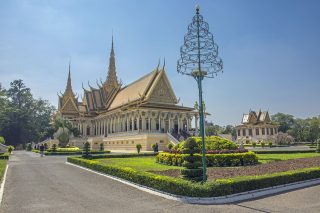
Just north of the Royal Palace in Phnom Penh, the National Museum of Cambodia is the country's cultural treasure chest, holding more than 14,000 artifacts that trace Cambodia's story from prehistory through the height of the Khmer Empire and into the modern era. Its red sandstone-style pavilions and tiered roofs, inspired by traditional Khmer temple forms, create a peaceful courtyard around pools of lotus and frangipani, a calming contrast to the bustle of the streets outside and one of the top attractions in Phnom Penh if you want to understand the country beyond Angkor.
Inside, the museum is as much about continuity as it is about display. Sculptures of Hindu deities and Buddhas, ancient ceramics, bronzes and inscriptions are arranged to show how Khmer art, religion and kingship evolved over centuries. The building itself, designed by George Groslier and constructed from 1917 to 1924, is part of that story: a “traditional Khmer” museum conceived under French rule, then reclaimed by Cambodians after independence and painstakingly restored after the devastation of the Khmer Rouge years. Today, with new repatriated masterpieces joining the galleries, it is a great place to visit on a walking tour of Phnom Penh, especially combined with the Royal Palace and riverside.
Table of Contents
- History and Significance of the National Museum of Cambodia
- Things to See and Do in the National Museum of Cambodia
- How to Get to the National Museum of Cambodia
- Practical Tips on Visiting the National Museum of Cambodia
- Where to Stay close to the National Museum of Cambodia
- Is the National Museum of Cambodia Worth Visiting
- FAQs for Visiting National Museum of Cambodia
- Nearby Attractions to the National Museum of Cambodia
History and Significance of the National Museum of Cambodia
The National Museum of Cambodia was born from George Groslier's vision in the early 20th century. A passionate historian and curator, he argued that Cambodian arts needed both revival and protection, and set out to design a museum that felt rooted in Khmer tradition rather than purely colonial style. The foundation stone was laid on 15 August 1917, and the building was inaugurated during Khmer New Year on 13 April 1920 in the presence of King Sisowath and French officials. Its distinctive architecture blends temple-like roofs, courtyards and sculptural ornament with practical museum spaces, while later additions in 1924 extended the eastern wings to give the complex more presence and symmetry.
After independence in 1953, control of the museum passed to the Cambodian state and it became closely linked with the Royal University of Fine Arts, creating a shared mission around archaeology, conservation and traditional arts training. Students and scholars worked alongside curators to catalogue sculptures, restore damaged pieces and document inscriptions, helping to build a national narrative through material culture.
The Khmer Rouge years (1975-1979) marked a dark chapter. Phnom Penh was evacuated, the museum abandoned and its collections left vulnerable to theft, damage and neglect. Many staff members were killed or displaced, and countless artifacts were lost. When the museum reopened on 13 April 1979, it did so with a skeleton team and a damaged collection, but it quickly became a symbol of cultural survival. In the decades since, the institution has rebuilt its holdings, strengthened ties with the university and taken on a leading role in repatriating looted Khmer art, with high-profile returns continuing into 2024.
Things to See and Do in the National Museum of Cambodia
Your visit will likely begin in the central courtyard, one of the museum’s most photogenic spaces. Four lotus ponds and lush plantings create a cool, shaded oasis, with cloister-like galleries running around the edges. In the courtyard stands the famous statue of the Leper King, identified in Hindu tradition as Yama, the deity of death. The surrounding portico is lined with intricate stone carvings, bas-reliefs and lintels rescued from temples across the country, giving you an immediate sense of the refinement and variety of Khmer sculpture.
Inside the galleries, the collection unfolds more or less chronologically. Early rooms introduce prehistoric finds and the first stone and bronze pieces from the Funan and Chenla periods, while later halls showcase the glorious flowering of Khmer art during the Angkorian era: powerful images of Shiva, Vishnu and other Hindu deities; serene, iconic Buddhas; and dynamic narrative reliefs. Inscriptions in Old Khmer and Sanskrit, carved onto stelae dating from the 6th to the 11th centuries, give names and dates to kings, temples and donors, tying the sculptures back to specific places and people.
The museum also highlights Cambodia’s Buddhist heritage, particularly in the Post-Angkorian Buddha gallery, opened in 2000. Here, delicate wooden and bronze Buddhas, often once housed in pagodas, are arranged in a contemplative space that still functions as a place of worship for some visitors. Elsewhere you will find ceramics, bronzes and ethnographic objects that show everyday life, from ritual tools to household items. More recently repatriated pieces, including sculptures returned from abroad, help tell the story of how Cambodian art has travelled and how the country is working to bring stolen items home.
How to Get to the National Museum of Cambodia
Most international visitors arrive in Cambodia via Phnom Penh International Airport or Siem Reap International Airport, with Phnom Penh's airport the most convenient for reaching the museum. For the best deals and a seamless booking experience, check out these flights to Phnom Penh on Booking.com. From the airport, taxis, tuk-tuks and ride-hailing services can bring you into the city centre in around 30-45 minutes, depending on traffic.
Within Cambodia, Phnom Penh is linked to other cities by a combination of trains and buses, though overland travellers most often arrive by bus or minivan from destinations such as Siem Reap, Sihanoukville or Kampot.Train schedules and bookings can be found on Omio. Once in the capital, tuk-tuks are usually the easiest way to reach the museum, which sits just north of the Royal Palace and close to the riverside.
If you are travelling by car, either rented or with a driver, the museum is centrally located near the junction of key boulevards and the riverfront. Parking is mostly informal and curbside, so many visitors prefer to be dropped at the entrance and arrange a pick-up time for later.
Practical Tips on Visiting the National Museum of Cambodia
- Suggested tips: Start with the courtyard and outer galleries before tackling the denser sculpture halls; pick up a booklet or hire a guide so the key pieces and periods make sense as you move through.
- Best time to visit: Late morning or mid-afternoon are good for balancing light and crowds; the shaded courtyard and airy galleries make the museum a pleasant retreat from midday heat.
- Entrance fee: Adults: $5.00
- Opening hours: Daily from 8am to 5pm. Last admission tickets are sold at 4.30pm.
- Official website: https://www.cambodiamuseum.info/
- How long to spend: Allow at least 1.5-2 hours for a first visit; serious art and history fans will easily fill half a day exploring galleries, inscriptions and the courtyard.
- Accessibility: The museum is mostly on one level with open courtyards and covered walkways, but some thresholds and uneven floors may pose challenges; there is limited seating in some galleries, so plan short rest breaks.
- Facilities: On site you will find a ticket office, restrooms and a small shop selling postcards, replica sculptures and books on Cambodian art and culture.
- Photography tip: Photography is not allowed inside the galleries, so focus on capturing the courtyard, ponds, rooflines and carved details along the outer portico; visit earlier or later in the day for softer shadows and richer colours.
- Guided tours: French- and English-speaking guides are usually available at the entrance for a fixed fee, and are highly recommended if you want a structured walkthrough of the main highlights and historical periods.
- Nearby food options: The museum’s central location means you are a short walk from numerous cafés and restaurants along the riverside and surrounding streets, ideal for a meal or drink before or after your visit.
Where to Stay close to the National Museum of Cambodia
Staying near the National Museum puts you within easy walking distance of the Royal Palace, riverside promenade and several key pagodas. For a classic, historic option with full facilities, Raffles Hotel Le Royal offers colonial-era charm and a short tuk-tuk ride to the museum and riverside. If you prefer to be closer on foot, Plantation Urban Resort & Spa sits just a few minutes’ walk from both the museum and the Royal Palace, with a tranquil pool and garden to escape the city heat. For a more intimate boutique stay, Blue Lime Phnom Penh gives you a tucked-away base almost around the corner from the museum, perfect if you plan to visit more than once or enjoy the nearby cafés and bars.
Is the National Museum of Cambodia Worth Visiting
The National Museum of Cambodia is absolutely worth visiting if you want to understand the depth and resilience of Khmer culture. Here you encounter the stone faces, bronzes and inscriptions that lie behind the ruins of Angkor and the living Buddhist traditions you see in pagodas, all under one roof. The building itself tells a story of artistic revival, colonial influence, independence, near-destruction under the Khmer Rouge and renewal through conservation and repatriation. For many travellers, it is one of the best places to visit in Phnom Penh, offering a calm, reflective counterpoint to the city's traffic, markets and riverside energy.
What Other Travellers Say...

National Museum of Cambodia on Preah Ang Eng Street houses traditional Khmer art and religious artifacts in a terracotta building inspired by temple architecture; visitors praise its peaceful galleries of sculptures, relics, ceremonial objects, statues and ancient jewels that convey the richness of Khmer craftsmanship and culture, note a soothing courtyard garden ideal for tea or coffee, and advise that much interpretation is in French and Khmer so a guide can help, while some find displays understated and desire more storytelling.


FAQs for Visiting National Museum of Cambodia
Nearby Attractions to the National Museum of Cambodia
- Royal Palace and Silver Pagoda: Just south of the museum, the living royal complex and its sacred pagoda offer a vivid complement to the historical focus of the galleries.
- Riverside promenade and Sisowath Quay: A short walk away, this busy riverfront strip is ideal for a stroll, people-watching and finding a café after your museum visit.
- Wat Ounalom: One of Phnom Penh's most important pagodas and a key centre of Cambodian Buddhism, located near the river.
- Wat Phnom: The hilltop temple that gave the city its name, set in a small park a tuk-tuk ride from the museum.
- Tuol Sleng Genocide Museum: A former Khmer Rouge prison turned memorial, providing essential context on Cambodia's 20th-century trauma to balance the deeper historical perspective you gain at the museum.
The National Museum of Cambodia appears in our Complete Guide to Visiting Phnom Penh!

Moira & Andy
Hey! We're Moira & Andy. From hiking the Camino to trips around Europe in Bert our campervan — we've been traveling together since retirement in 2020!
This website uses affiliate links which may earn a commission at no additional cost to you!
Planning Your Visit
Daily from 8am to 5pm. Last admission tickets are sold at 4.30pm.
Adults: $5.00
Nearby Attractions
- Wat Ounalom (0.3) km
Buddhist Temple - Royal Palace of Cambodia (0.3) km
Palace - Sisowath Quay (0.7) km
Walk - Phnom Penh Night Market (0.9) km
Market - Central Market (Phsar Thmey) (1.0) km
Market - Independence Monument (1.1) km
Monument - Wat Langka (1.1) km
Buddhist Temple - Wat Phnom (1.3) km
Buddhist Temple - Tuol Sleng Genocide Museum (2.3) km
Museum - Russian Market (Phsar Toul Tum Poung) (3.2) km
Market