Museo Diocesano, Bari
Museum in Bari

The Museo Diocesano di Bari sits in Bari Vecchia, housed on the first floor of the Archbishop's Palace beside the Cathedral of San Sabino, and it's the kind of place that quietly upgrades your understanding of the city. Known also as the Museo degli Exultet, it brings together sacred art, church treasures, and architectural fragments that make sense of Bari's religious history beyond the façades.
On a walking tour of Bari, this museum is one of the things to see in Bari when you want a calmer, more reflective stop that still feels genuinely special. The headline draw is the collection of Exultet scrolls and the Benedizionale, but the supporting cast matters too: paintings, sculpture, vestments, and precious liturgical objects that map centuries of devotion and artistry in a space you can comfortably visit without turning the day into a marathon.
Table of Contents
- History and Significance of the Museo Diocesano di Bari
- Things to See and Do in the Museo Diocesano di Bari
- How to Get to the Museo Diocesano di Bari
- Practical Tips on Visiting the Museo Diocesano di Bari
- Where to Stay Close to the Museo Diocesano di Bari
- Is the Museo Diocesano di Bari Worth Visiting?
- For Different Travelers
- FAQs for Visiting Museo Diocesano di Bari
- Nearby Attractions to the Museo Diocesano di Bari
History and Significance of the Museo Diocesano di Bari
The museum was established in 1981 and built around the idea that the artistic and devotional heritage of Bari’s churches should be preserved, interpreted, and kept connected to the living heart of the old city. Its setting next to the cathedral is part of the message: the objects here are not abstract “museum pieces,” but fragments of a wider sacred landscape that shaped Bari’s identity over centuries.
What makes the Museo Diocesano di Bari especially significant is its focus on the Exultet tradition, a distinctive medieval form tied to the Easter liturgy in southern Italy. The scrolls are not only devotional objects but also works of visual culture, designed so imagery could be read by the congregation as the text was sung, giving you a rare, tangible link to how faith was performed and experienced in the Middle Ages.
The collection also traces broader historical shifts, moving from early Christian and medieval material into the post-Trent world and later baroque and modern eras. That chronological sweep makes the museum useful even if you’re not a specialist, because you can see how taste, technique, and religious life evolve in step with Bari’s role as a port city connected to wider Mediterranean currents.
Things to See and Do in the Museo Diocesano di Bari
Begin with the Exultet and Benedizionale rooms, since these are the museum’s defining treasures and the most memorable visual experience. Look closely at how text, notation, and imagery work together: even without reading Italian or Latin, you can sense the intended rhythm of revelation as the scroll would be unrolled during the Easter vigil.
Next, give time to the pinacoteca and the treasury displays, where paintings and liturgical metalwork reveal the wealth, taste, and devotional priorities of Bari Vecchia's churches. The museum's strength is contrast: fragile parchment and jewel-like miniatures on one side, then weighty silverwork, reliquaries, and vestments on the other, each medium telling a different part of the same story.
Finally, do not skip the sculptural and architectural fragments connected to the cathedral’s long building history. These pieces are particularly rewarding if you’ve already been inside San Sabino, because you start recognising motifs and understanding what survives, what changed, and why Bari’s Romanesque look is really a layered palimpsest rather than a single moment frozen in time.
How to Get to the Museo Diocesano di Bari
Bari Karol Wojtyła Airport (BRI) is the nearest airport and is the most practical choice for reaching the city quickly. For the best deals and a seamless booking experience, check out these flights to Bari on Booking.com.
From Bari Centrale, you can walk toward Bari Vecchia and the cathedral area, or take a short local connection if you prefer to save steps for exploring the old town lanes. Use Omnio to easily compare schedules, book train tickets, and find the best prices all in one place for a hassle-free journey across Italy.
Local buses and taxis are easy to use for getting to the edge of the old town, but once you're in Bari Vecchia, walking is usually the fastest option because the streets narrow and the atmosphere is part of the point.
If you're driving, it's typically easiest to park outside the tightest parts of Bari Vecchia and continue on foot toward the cathedral quarter. If you are looking to rent a car in Italy I recommend having a look at Discover Cars, first, as they compare prices and review multiple car rental agencies for you.
Practical Tips on Visiting the Museo Diocesano di Bari
- Entrance fee: €4 (standard); €3 (reduced).
- Opening hours: (Summer) April – September: Daily: 09:00–21:00; (Winter) October – March: Daily: 09:00–19:00.
- Official website: https://www.museodiocesanomolfetta.it/home/
- Best time to visit: Late morning or mid-afternoon works well, especially if you want a quieter feel after the cathedral’s busiest moments.
- How long to spend: Plan for 45-90 minutes, depending on how closely you read the displays and linger with the scrolls.
- Accessibility: Expect stairs and historic thresholds within the palace setting; if mobility is a concern, check access options before you arrive.
- Facilities: Treat it as a focused museum visit rather than a full-service complex, and plan cafés and longer breaks in the old town nearby.
Where to Stay Close to the Museo Diocesano di Bari
For a culture-heavy itinerary, base yourself in Bari Vecchia or on its immediate edge so you can walk to the cathedral area early and late with minimal effort; if your priority is transport links and a smoother arrival/departure rhythm, the Murat district near Bari Centrale is the most convenient base.
For an atmospheric stay right in the old town fabric, Palazzo Calò places you within easy walking distance of the cathedral quarter. If you want a classic city-centre option that balances comfort with walkability to both the old town and modern shopping streets, JR Hotels Oriente Bari is a strong, central base. For a simpler, good-value stay that still keeps you close to the centre, Boston Hotel Bari is a practical choice for budget-conscious travellers.
Is the Museo Diocesano di Bari Worth Visiting?
Yes, especially if you want Bari to feel like more than a quick loop of famous churches and photogenic lanes. The museum gives context and texture, turning what you see outside into a story you can actually follow through objects, materials, and lived religious culture.
It is also a smart “time-to-value” stop: the visit is compact, the highlights are genuinely distinctive, and it pairs naturally with the cathedral area without needing complicated logistics. If you’re curating your day for depth rather than sheer quantity, it earns its place.
What Other Travellers Say...

Archdiocese of Bari - Bitonto at Largo S. Sabino 7 sits in Bari Vecchia and draws visitors for its beautiful interior and the archbishop's palace spaces; reviewers praise its charm and recommend including it in an evening visit to old Bari.


For Different Travelers
Families with Kids
Families tend to enjoy this museum most when you treat it as a short, high-focus visit rather than trying to absorb every label. Pick two or three “anchor” objects (the scrolls, a standout reliquary, a dramatic vestment) and let that be enough.
Because the collection is precious and detail-heavy, it works best with children who enjoy spotting patterns, animals, and scenes in artworks. Pairing it with open-air time in Bari Vecchia immediately afterwards keeps the day balanced.
Couples & Romantic Getaways
For couples, the appeal is its quiet intensity: a small space that feels removed from the street bustle, where you can slow down and share the sense of discovering something rare. The Exultet rooms, in particular, have that “only in this city” quality that makes a trip feel specific and memorable.
It also fits neatly into a gentle old-town date structure: cathedral and museum for cultural depth, then a long walk and an unhurried meal nearby. The museum’s scale keeps the mood light rather than exhausting.
Budget Travelers
Budget travellers will appreciate that this is a concentrated cultural stop that doesn’t demand half a day. If you’re prioritising value, it’s a good alternative to stacking multiple larger museums, because you still come away with a distinct experience tied directly to Bari’s identity.
It’s also easy to build into a walking-based day where your main costs are a couple of key entries and everything else is atmosphere: lanes, viewpoints, churches, and the waterfront. Used that way, the museum feels like a high-quality “paid highlight” within an otherwise low-cost itinerary.
History Buffs
History-focused travellers should see this as a material companion to Bari’s Romanesque monuments. The museum helps you read the cathedral’s long timeline through fragments and objects, and it adds a strong medieval layer via the Exultet tradition that is unusually vivid and well explained by the objects themselves.
If you like micro-history, pay attention to craft: scripts, pigments, metalwork techniques, and textile details. These are the kinds of clues that turn “medieval” from a general label into something tangible and specific to southern Italy’s liturgical world.
FAQs for Visiting Museo Diocesano di Bari
Getting There
Tickets & Entry
Visiting Experience
Tours, Context & Itineraries
Photography
Accessibility & Facilities
Food & Breaks Nearby
Safety & Timing
Nearby Attractions to the Museo Diocesano di Bari
- Cattedrale di San Sabino: Bari's Romanesque cathedral, essential for understanding the setting and story behind the museum's collection.
- Basilica di San Nicola: A major pilgrimage church with a powerful interior and deep links to Bari's identity as a port of saints and sailors.
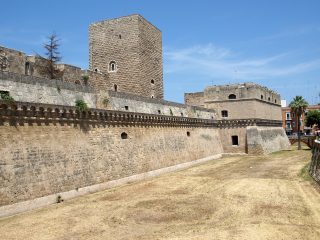
- Castello Svevo: A formidable Norman-Swabian fortress that adds political and military context to your old-town walk.
- Piazza Mercantile: One of the old town's most characterful squares, ideal for a pause with views of everyday Bari life.
- Lungomare Nazario Sauro: The seafront promenade where you can reset after the dense lanes of Bari Vecchia with open views and fresh air.
The Museo Diocesano appears in our Complete Guide to Visiting Bari!

Moira & Andy
Hey! We're Moira & Andy. From hiking the Camino to trips around Europe in Bert our campervan — we've been traveling together since retirement in 2020!
This website uses affiliate links which may earn a commission at no additional cost to you!
Planning Your Visit
(Summer) April - September: Daily: 09:00-21:00;
(Winter) October - March: Daily: 09:00-19:00.
€4 (standard); €3 (reduced).
Nearby Attractions
- Bari Civic Museum (0.1) km
Museum - Bari Cathedral (0.1) km
Cathedral - Swabian Castle (0.2) km
Castle - Bari Sotterranea (0.2) km
Historic Site - Piazza del Ferrarese (0.3) km
Square - Piazza Mercantile (0.3) km
Square - Basilica San Nicola (0.3) km
Church - Museo Nicolaiano (0.3) km
Museum - Margherita Theatre (0.4) km
Theatre - Sant’Antonio Abate Fortino (0.4) km
Castle