Museo del Puerto Fluvial de Caesaraugusta, Zaragoza
Historic Site, Museum and Roman Site in Zaragoza
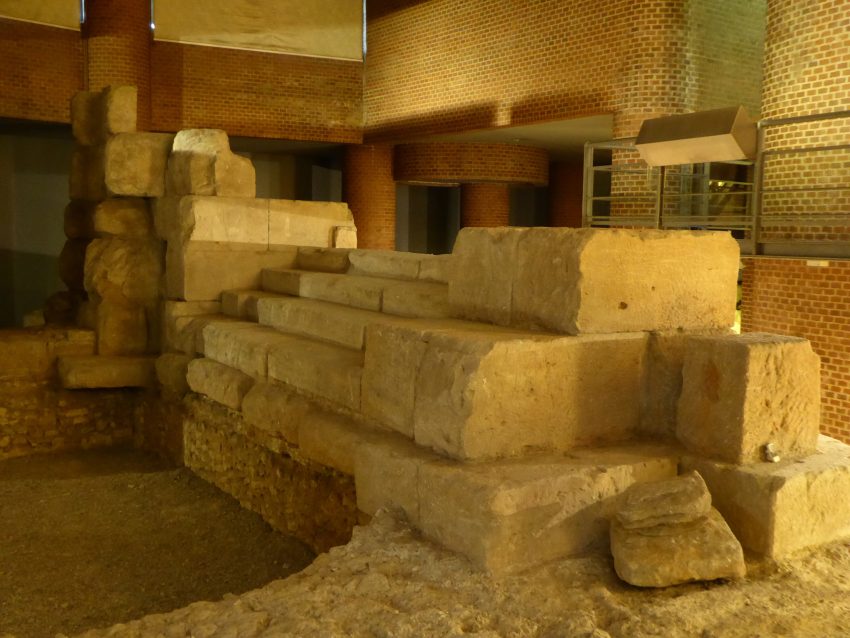
Tucked beneath Plaza de San Bruno in Zaragoza's historic center, the Museo del Puerto Fluvial de Caesaraugusta is a small but memorable site museum built around the archaeological remains of the Roman river port. You'll descend below street level to see the foundations, access structures, and interpretive displays that explain how the Ebro River powered commerce and daily life in ancient Caesaraugusta.
It's an easy add-on to a walking tour of the old town: you're close to La Seo Cathedral, the riverside, and several other Roman-era stops. Many visitors get the best value by pairing it with the Ruta Caesaraugusta circuit (Forum, River Port, Public Baths, and Theatre), turning a short museum visit into a satisfying half-day of Roman Zaragoza.
Table of Contents
- History and Significance of the Museo del Puerto Fluvial de Caesaraugusta
- Things to See and Do in the Museo del Puerto Fluvial de Caesaraugusta
- How to Get to the Museo del Puerto Fluvial de Caesaraugusta
- Practical Tips on Visiting the Museo del Puerto Fluvial de Caesaraugusta
- Where to Stay Close to the Museo del Puerto Fluvial de Caesaraugusta
- Is the Museo del Puerto Fluvial de Caesaraugusta Worth Visiting?
- For Different Travelers
- FAQs for Visiting Museo del Puerto Fluvial de Caesaraugusta
- Nearby Attractions to the Museo del Puerto Fluvial de Caesaraugusta
History and Significance of the Museo del Puerto Fluvial de Caesaraugusta
The museum preserves part of the monumental riverfront infrastructure that connected the Ebro's docks to the civic heart of Roman Caesaraugusta. In antiquity, the Ebro was a working highway: goods, people, and information moved along the river, and the port helped Zaragoza function as a regional hub.
What makes this site especially interesting is how it shows the city’s “back-of-house” logistics rather than just grand monuments. Instead of a single showpiece statue or temple façade, you’re looking at the practical architecture of trade and movement: access points, levels, and the built environment that linked river traffic to the forum.
Because the remains sit beneath today’s streets, the visit also highlights Zaragoza’s layered urban history. You’re literally walking through a modern city built over Roman foundations, which is exactly why the Ruta Caesaraugusta museums work so well as a set.
Things to See and Do in the Museo del Puerto Fluvial de Caesaraugusta
Start with the in-situ ruins: the preserved structural elements help you visualize how the port area functioned and how people moved between the river and the city. Take your time with the interpretive panels and models, which are key to turning “stone remains” into a coherent story.
Look out for exhibits that explain trade and everyday life in Roman Zaragoza, including the kinds of goods that would have passed through the port. If an audiovisual is running during your visit, it's worth catching for context, especially if you're doing the museum quickly as part of a multi-stop itinerary.
Finally, use the museum as a springboard for the rest of the Roman route. The River Port pairs naturally with the nearby Forum museum and makes the Theatre and Public Baths feel more connected, because you’ll understand how the city’s public life, commerce, and infrastructure fit together.
How to Get to the Museo del Puerto Fluvial de Caesaraugusta
For flights, the nearest airport is Zaragoza Airport (ZAZ), with Barcelona–El Prat (BCN) and Madrid–Barajas (MAD) as major international alternatives if you're building a broader Spain itinerary. For the best deals and a seamless booking experience, check out these flights to Zaragoza on Booking.com.
Zaragoza is well connected by train, and arriving at Zaragoza-Delicias station is often the simplest option from Madrid or Barcelona; from there, you can continue by taxi or local bus toward the old town. Train schedules and bookings can be found on Omio.
If you’re driving, aim for parking options outside the tightest historic-center streets and walk in, since the museum sits in the Casco Histórico near Plaza de San Bruno. If you are looking to rent a car in Spain I recommend having a look at Discover Cars, first, as they compare prices and review multiple car rental agencies for you.
Practical Tips on Visiting the Museo del Puerto Fluvial de Caesaraugusta
- Official website: https://www.zaragoza.es/sede/portal/museos/puerto/
- Entrance fee: Adults: €3; Reduced: €2; Free for under 16 and 65+; Free entry on the first Sunday of each month. Ruta Caesaraugusta (4 museums): €7; Reduced: €5.
- Opening hours: Tuesday – Saturday: 10:00–14:00 & 17:00–21:00. Sunday: 10:00–14:30. Closed on Monday.
- Best time to visit: Go mid-morning for a calmer experience, or use the late-afternoon opening to break up a day of sightseeing in the old town.
- How long to spend: Plan 30–45 minutes for the museum itself, or 2–4 hours if you’re combining it with the full Ruta Caesaraugusta circuit.
- Accessibility: The museum is below street level; expect stairs, but there is lift access for most visitors who need it.
- Facilities: Keep expectations modest: it’s a compact site museum, so plan café breaks and longer rest stops in the surrounding old town.
Where to Stay Close to the Museo del Puerto Fluvial de Caesaraugusta
Base yourself in Zaragoza’s Casco Histórico (Old Town) if you want the easiest walk to the Roman route museums, La Seo, and evening tapas streets.
Catalonia El Pilar This is a strong pick for a central, walkable stay with quick access to the old town sights and an easy stroll to the Roman museums.
Hotel Alfonso A practical, well-located option on a main artery between historic sights, shopping, and dining, making it convenient for a short city break.
INNSiDE by Meliá Zaragoza Great if you want a modern feel and easy connections across the center while still being close enough to walk to the museum.
NH Collection Gran Hotel de Zaragoza A classic, comfortable choice with a more upscale vibe, ideal if you want a polished base near the city’s central sights.
Hotel Palafox A solid higher-comfort option with extra amenities, good for travelers who want a more relaxing hotel experience after museum-hopping.
Is the Museo del Puerto Fluvial de Caesaraugusta Worth Visiting?
Yes, especially if you enjoy archaeology or want a deeper understanding of Zaragoza beyond its headline landmarks. It's compact, central, and pairs perfectly with the other Ruta Caesaraugusta museums, so the “value per step” is high when you're already exploring the old town.
Honest Pivot: if you prefer big, object-heavy museums or you rely heavily on English-language interpretation, this may feel a bit minimal on its own. In that case, either bundle it with the full Roman route (so the context builds across sites) or prioritize the Theatre and Forum first and treat the River Port as an optional extra.
What Other Travellers Say...

Google reviewers describe this as a small, interesting underground museum that's easy to fit into a day in Zaragoza's old town. The most common positives are the good value of the multi-site Roman combo ticket, the calm atmosphere compared with busier attractions, and the way the ruins and audiovisual displays add context to Roman Zaragoza. The most frequent drawbacks are limited English-language information and the fact that the museum is compact, so it can feel brief if you visit it on its own.


For Different Travelers
The Museo del Puerto Fluvial de Caesaraugusta works best as a short, high-context stop: it's not a long visit, but it adds meaning to what you'll see elsewhere in Zaragoza. Think of it as a “connector” museum that makes the Roman city feel more complete.
Families with Kids
This is a manageable museum for families because it’s small and doesn’t demand a long attention span. Kids who like “underground places” and ruins often enjoy the change of pace from churches and plazas.
To keep it fun, pair it with a simple scavenger-hunt approach: look for how people moved between levels and imagine what arrived by boat. Then reward everyone with a snack stop nearby in the old town.
Couples & Romantic Getaways
For couples, the museum is a quiet, uncrowded-feeling stop that adds a thoughtful layer to a day of strolling Zaragoza’s historic streets. It’s especially nice as a brief cultural interlude between cathedral visits and café time.
Make it part of a slow itinerary: museum first, then a walk toward the river and onward to La Seo and Plaza del Pilar. The contrast between underground ruins and open plazas makes the day feel varied.
Budget Travelers
Budget travelers get excellent value by using the multi-site ticket for the Roman route, turning several paid attractions into one cohesive experience. Because each museum is relatively short, you can pack a lot of history into a single day without extra transport costs.
If you’re watching spending closely, also look out for free-entry days and plan your route so you’re not backtracking. The old town is very walkable, which helps keep the day inexpensive.
History Buffs
If Roman urbanism and infrastructure interest you, this museum is a must-do in Zaragoza. It's less about spectacle and more about how the city worked: trade, movement, and the relationship between river and forum.
For maximum payoff, visit the River Port and Forum on the same day so you can connect the dots between commerce and civic life. Add the Baths and Theatre to round out the “public life” side of the story.
FAQs for Visiting Museo del Puerto Fluvial de Caesaraugusta
Getting There
Tickets & Entry
Visiting Experience
Tours, Context & Itineraries
Photography
Accessibility & Facilities
Food & Breaks Nearby
Safety & Timing
Nearby Attractions to the Museo del Puerto Fluvial de Caesaraugusta
- La Seo Cathedral (Catedral del Salvador): A must-see Gothic-Mudejar landmark just steps away, perfect to pair with the Roman route.
- Plaza del Pilar: Zaragoza's iconic main square with major monuments and a lively atmosphere.
- Museo del Foro de Caesaraugusta: The natural companion stop to understand the civic center that connected to the port.
- Museo de las Termas Públicas de Caesaraugusta: A compact site museum that rounds out the “daily life” side of Roman Zaragoza.
- Museo del Teatro de Caesaraugusta: The showpiece of the route, with impressive remains that help you imagine Roman entertainment at scale.
The Museo del Puerto Fluvial de Caesaraugusta appears in our Complete Guide to Visiting Zaragoza!

Moira & Andy
Hey! We're Moira & Andy. From hiking the Camino to trips around Europe in Bert our campervan — we've been traveling together since retirement in 2020!
This website uses affiliate links which may earn a commission at no additional cost to you!
Planning Your Visit
Tuesday - Saturday: 10:00-14:00 & 17:00-21:00.
Sunday: 10:00-14:30.
Closed on Monday.
Adults: €3; Reduced: €2; Free for under 16 and 65+; Free entry on the first Sunday of each month. Ruta Caesaraugusta (4 museums): €7; Reduced: €5.
Nearby Attractions
- Cathedral of the Savior of Zaragoza (0.1) km
Cathedral, Historic Building and Historic Site - Arco del Deán (0.1) km
Attraction, Historic Building and Monument - Museo del Foro de Caesaraugusta (0.1) km
Museum and Roman Site - Puente de Piedra (0.1) km
Attraction and Bridge - La Lonja (0.2) km
Arts Venue, Gallery and Historic Building - Museo de las Termas Públicas de Caesaraugusta (0.3) km
Museum and Roman Site - Goya Museum - Ibercaja Collection (0.3) km
Arts Venue, Gallery and Museum - Cathedral-Basilica of Our Lady of the Pillar (0.4) km
Basilica, Cathedral and Religious Building - Plaza del Pilar (0.4) km
Attraction and Square - Museo del Teatro de Caesaraugusta (0.4) km
Museum, Roman Site and Theatre