Museo del Bandolero, Ronda
Museum in Ronda

Tucked into Ronda's historic streets, Museo del Bandolero is a small but surprisingly absorbing museum that focuses on the real bandoleros who shaped the myths of the Serranía de Ronda in the 19th and early 20th centuries. It's the kind of place that turns a dramatic landscape into a human story, explaining why these mountains bred outlaws, how they were seen by locals and outsiders, and how the legend grew until “bandit country” became part of Ronda's identity.
What makes the museum especially enjoyable is that it doesn't just spotlight criminals or folklore; it builds a broader picture of everyday life at the time, from the politics and policing of the region to the traditions that travellers associated with Ronda. If you're looking for one of the things to see in Ronda that adds context to the town beyond viewpoints and bridges, it's an easy, rewarding stop to fold into a walking tour of Ronda.
Table of Contents
- History and Significance of the Museo del Bandolero
- Things to See and Do in the Museo del Bandolero
- How to Get to the Museo del Bandolero
- Practical Tips on Visiting the Museo del Bandolero
- Where to Stay Close to the Museo del Bandolero
- Is the Museo del Bandolero Worth Visiting?
- For Different Travelers
- FAQs for Visiting the Museo del Bandolero
- Nearby Attractions to the Museo del Bandolero
History and Significance of the Museo del Bandolero
The museum's theme is rooted in a specific moment in southern Spain's history, when the rugged Serranía mountains and the roads around Ronda became notorious for bandit activity. Economic hardship, isolation, shifting political power, and the sheer difficulty of policing mountainous terrain all helped create the conditions where banditry could take hold, sometimes by choice and sometimes by desperation.
What's fascinating is how quickly the bandolero became a “romantic” figure in the European imagination. Foreign visitors came to Andalusia expecting drama, danger, and folklore, and the region's bandit stories fed that appetite-turning real people into legends, and legends into an enduring tourist mythology.
By placing bandits alongside documents, objects, and the story of the Guardia Civil, Museo del Bandolero helps you see the era as more than a collection of colourful anecdotes. It frames banditry as part of a wider social reality: a hard landscape, a tense period, and a region where reputation travelled faster than the truth.
Things to See and Do in the Museo del Bandolero
Start with the galleries that set the scene, especially the section on Romantic Travellers. Paintings and period documents help you understand how Ronda and the Serranía were perceived from the outside, and how official laws and edicts tried-and often struggled-to control the realities of rural life.
The heart of the museum for most visitors is Living the Bandits World, where dioramas, images, weapons, money, and official stamps create a tangible sense of what banditry looked like on the ground. Even if you’re not a “museum person,” these exhibits tend to hold attention because they’re concrete, visual, and story-driven rather than abstract.
The Men and the Names gallery is the one you’ll remember later, because it focuses on the best-known bandoleros and the way their reputations still echo today. It’s an effective reminder that legends are built around individuals-names that survive because they were feared, admired, hunted, or all three at once.
Finish with The Ones Who Followed the Trace, dedicated to the Guardia Civil and the fight against bandits. It brings balance to the story, showing how the state responded, what enforcement looked like, and why the “bandit age” didn’t last forever, even if the romance of it still lingers.
How to Get to the Museo del Bandolero
Most visitors reach Ronda via Málaga Airport, then continue inland for a day trip or an overnight stay. For the best deals and a seamless booking experience, check out these flights to Ronda on Booking.com. Seville Airport can also work well if Ronda is part of a wider Andalusia route. For the best deals and a seamless booking experience, check out these flights to Ronda on Booking.com.
Ronda’s train station is a practical arrival point, and from there it’s straightforward to walk or take a short taxi ride into the historic centre for the museum. Train schedules and bookings can be found on Omio. Local buses and taxis are useful if you want to save your legs for the gorge-edge walks and old-town exploring.
If you're travelling by car, the easiest approach is to park once in a central lot and explore on foot, since the most enjoyable routes in Ronda are pedestrian-focused. If you are looking to rent a car in Spain I recommend having a look at Discover Cars, first, as they compare prices and review multiple car rental agencies for you.
Practical Tips on Visiting the Museo del Bandolero
- Entrance fee: Adults: €3.75
- Opening hours: Daily: 11:00 - 19:30
- Official website: http://www.museobandolero.com/
- Best time to visit: Go mid-morning or mid-afternoon for a calmer visit, especially outside peak day-trip hours. If you're in Ronda for one day, it fits nicely as a “context stop” between viewpoints.
- How long to spend: Plan for 45-75 minutes for a thorough visit, longer if you like reading labels and comparing the different galleries. It’s compact enough to enjoy without museum fatigue, but detailed enough to reward a slower pace.
- Accessibility: Expect a historic building layout and potentially uneven floors or stair transitions between rooms. If you need step-free access, it’s best to confirm the easiest route at the entrance before you start.
- Facilities: Facilities are usually limited to basics, so plan café and restroom breaks around the nearby old-town streets. It’s a good “drop-in” museum rather than a place built for long lingering.
Where to Stay Close to the Museo del Bandolero
For a culture-heavy itinerary, base yourself in central Ronda near the old town and gorge viewpoints so you can walk everywhere and enjoy the atmosphere early and late; if your main focus is transport ease for onward travel and day trips, the station side can be more convenient while still staying walkable to the historic centre.
For a well-located, comfortable base with classic views nearby, Catalonia Reina Victoria is a strong option. If you want a landmark stay right by the gorge and central sights, Parador de Ronda makes walking-based sightseeing effortless. For a smaller, characterful stay that suits the old-town mood, Soho Boutique Palacio San Gabriel is an easy fit.
Is the Museo del Bandolero Worth Visiting?
Yes, if you want Ronda to feel like more than a beautiful viewpoint city. The museum gives the Serranía a narrative-why these mountains mattered, how people lived, and how fear and folklore shaped the region's reputation.
It's especially worthwhile if you enjoy travel that adds context to place. After the museum, the landscapes around Ronda tend to feel more “readable,” because you've seen the human stories that once played out across the same terrain.
What Other Travellers Say...

Galería del Bandolero - Museo del Bandolero in El Borge presents a compact, well-curated look at banditry in Andalusia and the local area, with a varied collection including striking photos; visitors praise the welcoming, knowledgeable host (Ismael) who offers personal, English-language guided tours and local tips, and many recommend tasting or buying the Bandolera dessert wine.


For Different Travelers
Families with Kids
This museum can work well for older kids and teens, especially those who enjoy dramatic stories and “real history” that feels closer to an adventure narrative than a textbook. The exhibits with objects, weapons, and dioramas tend to keep attention better than text-heavy displays.
For younger children, keep it short and pick one or two galleries rather than trying to cover everything. It pairs well with an outdoor break afterward so the day stays balanced.
Couples & Romantic Getaways
If you like travel that goes beyond the obvious, this is a fun shared stop because it adds a storytelling layer to Ronda’s scenery. It can also be a good rainy-day or midday break when you want to step indoors without losing the sense of place.
The best way to do it as a couple is to treat it as a “conversation museum” and compare reactions: who feels sympathetic, who feels sceptical, and what the exhibits reveal about myth versus reality.
Budget Travelers
Museo del Bandolero is a strong value stop because it delivers a distinctive theme you won't find in every city museum. It's a good way to add depth to your itinerary without turning the day into a list of expensive admissions.
Use it to anchor a mostly free day of walking: viewpoints, promenades, old-town streets, and one paid museum that actually changes how you understand the region.
History Buffs
This is a niche museum, but it’s satisfying if you’re interested in the social history of rural Spain-law enforcement, poverty, mobility, and how landscapes shape behaviour. The inclusion of official documents and the Guardia Civil angle helps keep it grounded, not just romanticised.
To get the most from it, read the exhibits as a case study of an era rather than a collection of curiosities. You’ll leave with a clearer sense of why the “bandit age” happened here, and why it ended.
FAQs for Visiting the Museo del Bandolero
Getting There
Tickets & Entry
Visiting Experience
Tours, Context & Itineraries
Photography
Accessibility & Facilities
Food & Breaks Nearby
Safety & Timing
Nearby Attractions to the Museo del Bandolero
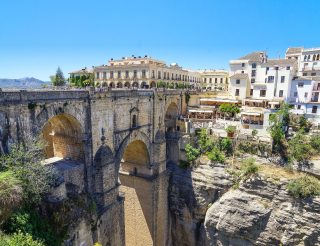
- Puente Nuevo: Ronda's iconic bridge with the most famous gorge views and classic photo angles.
- Jardines de Cuenca: Hanging terraces along the Tajo ledges with shifting perspectives of cliffs and city.
- Palacio de Mondragón: A Mudéjar-Renaissance palace with a courtyard atmosphere and museum-style exhibits.
- Baños Árabes de Ronda: Exceptionally preserved medieval baths with atmospheric vaulted spaces.
- Plaza Duquesa de Parcent: One of the city's most beautiful historic squares, surrounded by major monuments and calm old-town ambience.
The Museo del Bandolero appears in our Complete Guide to Visiting Ronda!

Moira & Andy
Hey! We're Moira & Andy. From hiking the Camino to trips around Europe in Bert our campervan — we've been traveling together since retirement in 2020!
This website uses affiliate links which may earn a commission at no additional cost to you!
Planning Your Visit
Daily: 11:00 – 19:30
Adults: €3.75
Nearby Attractions
- Town Hall of Ronda (0.0) km
Historic Building - Murallas de Ronda (0.0) km
City Walls - Church of Santa María la Mayor (0.1) km
Church and Historic Building - Plaza Duquesa de Parcent (0.1) km
Square - San Sebastian Minaret (0.1) km
Minaret - Casa del Gigante (0.1) km
Museum and Palace - Puerte de la Cijara (0.2) km
City Gate - Palacio de Mondragon (0.2) km
Gardens, Museum and Palace - Castillo del Laurel (0.2) km
Castle - Museo Lara (0.2) km
Museum