Museo de las Termas Públicas de Caesaraugusta, Zaragoza
Museum and Roman Site in Zaragoza
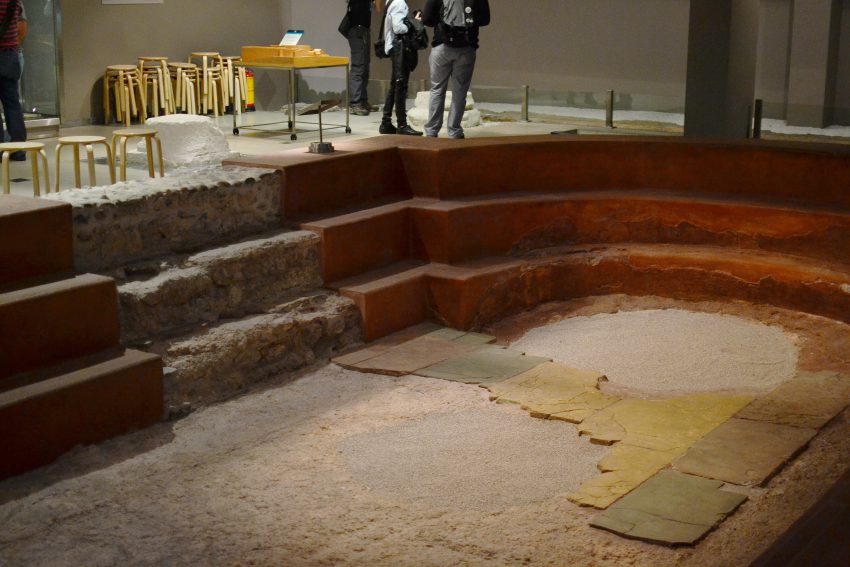
Tucked into Zaragoza's historic centre, the Museo de las Termas Públicas de Caesaraugusta is a small site-museum built around the ruins of Roman public baths. It's not a “big gallery” kind of place; instead, you're looking down onto authentic archaeological remains-stonework, water systems, and the footprint of a social space that once mattered as much as any forum or theatre.
It's also one of the easiest Roman-era stops to weave into a self-guided Zaragoza walking tour, especially if you're exploring the cluster of Caesaraugusta museums nearby. Even if you're not usually a museum person, the scale works in its favour: you can get real context quickly, then step back outside and keep exploring the old streets with a sharper eye.
Table of Contents
- History and Significance of the Museo de las Termas Públicas de Caesaraugusta
- Things to See and Do in the Museo de las Termas Públicas de Caesaraugusta
- How to Get to the Museo de las Termas Públicas de Caesaraugusta
- Practical Tips on Visiting the Museo de las Termas Públicas de Caesaraugusta
- Where to Stay Close to the Museo de las Termas Públicas de Caesaraugusta
- Is the Museo de las Termas Públicas de Caesaraugusta Worth Visiting?
- For Different Travelers
- FAQs for Visiting Museo de las Termas Públicas de Caesaraugusta
- Nearby Attractions to the Museo de las Termas Públicas de Caesaraugusta
History and Significance of the Museo de las Termas Públicas de Caesaraugusta
In Roman Caesaraugusta, public baths were far more than a place to wash. They were social infrastructure-where people came to meet, talk business, relax, and follow the rhythms of city life in a space designed for both hygiene and leisure. The remains here offer a grounded reminder that “Roman life” was often practical, communal, and surprisingly organised.
What makes this museum especially worthwhile is that it preserves the feeling of a real urban facility embedded in a living city. Instead of imagining baths as distant ruins on the outskirts, you see how they fitted into a dense street plan and worked alongside other public spaces. It’s a clean, concrete way to understand how Romans built cities to function.
Things to See and Do in the Museo de las Termas Públicas de Caesaraugusta
Start with the main archaeological remains and take your time scanning the layout-this is a place where the “shape” of the site tells the story. Look for the bathing area footprint and the engineering details: channels, drainage, and the logic of how water moved through the complex.
Most visitors get the most out of pairing the ruins with the interpretive materials (panels and any audiovisual elements on site). They help translate stones into lived experience: who used the baths, how the routines worked, and why the baths were such an important social equaliser in Roman towns.
Because the museum is compact, it's also ideal as a “moment of context” between bigger sights. Treat it like a short, focused stop: arrive curious, follow the narrative, and leave with a clearer mental map of Roman Zaragoza.
How to Get to the Museo de las Termas Públicas de Caesaraugusta
If you're flying in, Zaragoza Airport (ZAZ) is the closest option, with onward transfers into the city by taxi or bus. For the best deals and a seamless booking experience, check out these flights to Zaragoza on Booking.com. Madrid-Barajas (MAD) and Barcelona-El Prat (BCN) can also work well if flights are cheaper, then you connect onward to Zaragoza by fast rail or coach. For the best deals and a seamless booking experience, check out these flights to Zaragoza on Booking.com.
By train, Zaragoza-Delicias is the main station, with frequent high-speed services linking Zaragoza with Madrid and Barcelona; from there it's an easy taxi or local bus hop into the historic centre. Train schedules and bookings can be found on Omio. Once you’re in the old town, the museum sits in the walkable core, so it’s usually simplest to approach on foot as part of a wider sightseeing loop.
Intercity buses also arrive at Zaragoza-Delicias, often at good prices from nearby cities, and they're practical if you're building an Aragon itinerary. If you're driving, aim to park outside the tightest historic-centre streets and walk in, since central access and parking can be limited depending on the day. If you are looking to rent a car in Spain I recommend having a look at Discover Cars, first, as they compare prices and review multiple car rental agencies for you.
Practical Tips on Visiting the Museo de las Termas Públicas de Caesaraugusta
- Entrance fee: €3 (general); €2 (reduced).
- Opening hours: Tuesday – Saturday: 10:00–14:00 & 17:00–21:00. Sunday & public holidays: 10:00–14:30. Closed on Monday.
- Official website: https://www.zaragoza.es/sede/portal/museos/termas/
- Best time to visit: Late morning or early evening sessions tend to feel calmer, and they fit neatly between outdoor stops in the historic centre.
- How long to spend: Plan around 30-45 minutes for an unhurried visit, longer if you like reading every panel and taking photos.
- Accessibility: Expect an archaeological-site layout; surfaces and viewing platforms may include steps or uneven areas, so check current access notes on the official site before you go.
- Facilities: Keep expectations modest-this is a small site-museum, so treat nearby cafés in the old town as your best option for restrooms, snacks, and longer breaks.
Where to Stay Close to the Museo de las Termas Públicas de Caesaraugusta
For a culture-heavy itinerary, base yourself in Zaragoza's historic centre so you can walk to the Roman museums, the cathedral area, and evening tapas without relying on transport; if your trip prioritises quick connections, consider staying nearer Zaragoza-Delicias for easy arrivals and departures.
If you want to be steps from the old-town sights and able to dip in and out of museums at your own pace, consider Hotel Sauce, which is well placed for classic walking routes through the centre. For a similarly central stay with a polished, comfortable feel, Catalonia El Pilar puts you close to major landmarks and the atmosphere of the historic core. If you’d like a more upscale base that still keeps the old town within an easy stroll, NH Collection Gran Hotel de Zaragoza works well as a slightly more “city-hotel” hub.
Is the Museo de las Termas Públicas de Caesaraugusta Worth Visiting?
Yes-especially if you like Roman history, archaeology, or simply want a quick, tangible “this is what daily life looked like” moment while exploring Zaragoza. It's compact, well-situated, and surprisingly satisfying when you treat it as part of a Roman-themed mini-route rather than a standalone, half-day museum.
Honest pivot: if you’re short on time and only want the biggest, most visually dramatic sights, this may feel too small and interpretive for your style. In that case, prioritise Zaragoza’s major churches, viewpoints, and one of the larger Roman sites, then only add the baths if you find yourself nearby with an extra half hour.
What Other Travellers Say...

Reviewers recommend the Ruta Caesaraugusta combo ticket, saying the four Roman sites (including the theatre, forum, port and baths) are interesting, good value, and a welcome break from crowds, with helpful staff. The audiovisual presentation is appreciated, but it can be Spanish-only and access may be paused during showings, leading to unclear wait times. A few visitors also mention confusion about opening/closing times and occasional early closure.


For Different Travelers
Families with Kids
This is a good “short attention span” museum: it’s small, easy to navigate, and different from a typical gallery because you’re looking at real ruins in place. It can be a fun challenge to ask kids to spot where water might have flowed and how a Roman bath day might have worked.
To keep it smooth, pair it with a reward stop nearby-gelato, a plaza break, or a quick market visit-so the museum becomes one bite-sized chapter in a bigger day. If you’re doing a walking loop, it’s a handy indoor reset if the weather turns.
Couples & Romantic Getaways
For couples, this works best as a “quiet discovery” between larger landmarks. There’s something inherently atmospheric about stepping down into a hidden layer of the city, then resurfacing into old-town streets for tapas and a slow evening wander.
Combine it with a gentle historic-centre stroll-cathedral area, a scenic plaza pause, then a cosy bar in El Tubo-and it becomes a thoughtful, low-effort highlight rather than a schedule-heavy museum commitment.
Budget Travelers
Value-wise, it’s an easy win: a low-cost ticket for a real archaeological site in a prime location, with no need for extra transport once you’re in the centre. It’s also ideal if you prefer shorter paid attractions and more time wandering streets, viewpoints, and churches.
If you're leaning into Roman Zaragoza, look out for multi-site ticket options that bundle several Caesaraugusta museums, since they can improve the cost-per-sight significantly when you plan a focused Roman afternoon.
History Buffs
If you like reconstructing cities in your head, this museum is pure fuel: the baths tell you how Romans organised public life beyond politics and monuments. Pay attention to the practical engineering details, because they’re the connective tissue between “ruins” and “real city.”
For deeper context, treat the baths as one stop in a Roman sequence-baths, theatre, forum, river-port narrative-so you understand how public leisure, entertainment, administration, and trade all fitted together in Caesaraugusta.
FAQs for Visiting Museo de las Termas Públicas de Caesaraugusta
Getting There
Tickets & Entry
Visiting Experience
Tours, Context & Itineraries
Photography
Accessibility & Facilities
Food & Breaks Nearby
Safety & Timing
Nearby Attractions to the Museo de las Termas Públicas de Caesaraugusta
- Museo del Teatro de Caesaraugusta: Explore Roman Zaragoza through the remains of its ancient theatre, with strong context on entertainment and urban life.
- Museo del Foro de Caesaraugusta: A clear, museum-style introduction to the administrative heart of Roman Caesaraugusta with excellent interpretive framing.
- Catedral del Salvador (La Seo): A standout cathedral complex where layers of Zaragoza's history sit side-by-side in one richly detailed setting.
- Basílica de Nuestra Señora del Pilar: The city's iconic landmark, best paired with a slow plaza walk and a look at the riverfront atmosphere.
- El Tubo: Zaragoza's most famous tapas quarter, perfect for turning a history-heavy afternoon into an easy, delicious evening.
The Museo de las Termas Públicas de Caesaraugusta appears in our Complete Guide to Visiting Zaragoza!

Moira & Andy
Hey! We're Moira & Andy. From hiking the Camino to trips around Europe in Bert our campervan — we've been traveling together since retirement in 2020!
This website uses affiliate links which may earn a commission at no additional cost to you!
Planning Your Visit
Tuesday - Saturday: 10:00-14:00 & 17:00-21:00. Sunday & public holidays: 10:00-14:30. Closed on Monday.
€3 (general); €2 (reduced).
Nearby Attractions
- Museo del Teatro de Caesaraugusta (0.1) km
Museum, Roman Site and Theatre - Goya Museum - Ibercaja Collection (0.2) km
Arts Venue, Gallery and Museum - Arco del Deán (0.2) km
Attraction, Historic Building and Monument - Museo del Foro de Caesaraugusta (0.2) km
Museum and Roman Site - Cathedral of the Savior of Zaragoza (0.2) km
Cathedral, Historic Building and Historic Site - La Lonja (0.3) km
Arts Venue, Gallery and Historic Building - El Tubo (0.3) km
Area, Street and Walk - Museo del Puerto Fluvial de Caesaraugusta (0.3) km
Historic Site, Museum and Roman Site - Puente de Piedra (0.3) km
Attraction and Bridge - Calle Alfonso I (0.3) km
Area, Street and Walk