Mt. Pilatus, Lucerne
Mountain in Lucerne
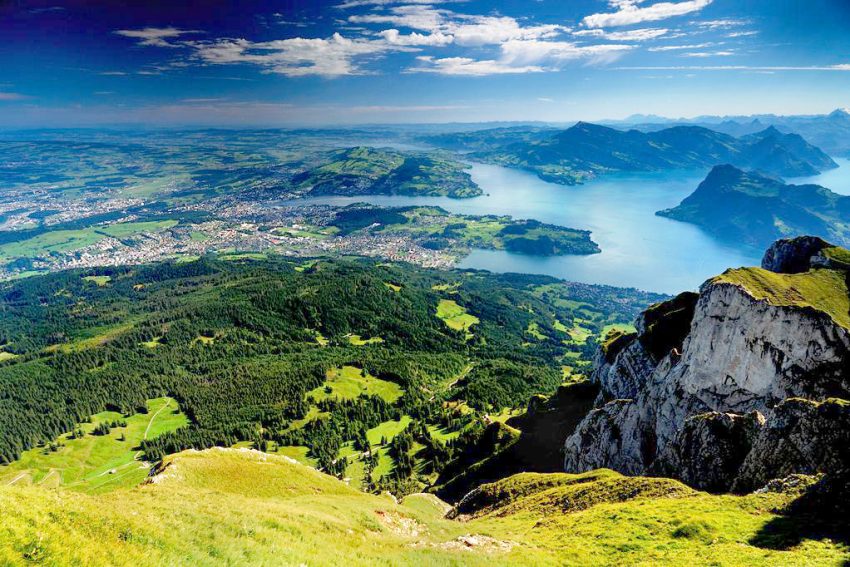
Pilatus rises in a jagged wall above Lake Lucerne, its cluster of peaks forming the dramatic backdrop you notice as soon as you step into the city. Between Tomlishorn, Esel and Oberhaupt you get a full sweep of Central Switzerland: glittering lakes, the distant Bernese Alps and, on clear days, tiny boats far below. Many visitors come up for the view, but spending time on the terraces, walking the ridge paths and watching the light change over Lucerne's rooftops quickly makes it feel like one of the top attractions in Lucerne rather than just another mountain viewpoint.
Most people experience Pilatus via its engineering marvels: the world's steepest cogwheel railway from Alpnachstad, or the combination of panorama gondolas and the “Dragon Ride” aerial cableway from Kriens. In summer, you can link lake boat, cog railway, cable car and bus into the classic “Golden Round Trip,” which is as much about the journey as the summit. Add in easy paths to Tomlishorn, more demanding Alpine trails to neighbouring summits, and cosy mountain hotels, and it's easy to see why Pilatus is often visited on tours from Lucerne.
History and Significance of Pilatus
For centuries Pilatus has been wrapped in myth as much as geology. Medieval stories claimed that the restless spirit of Pontius Pilate haunted a dark lake on the mountain, and that storms were unleashed if anyone disturbed its waters. Other legends see dragons living in caves on the massif, lending today’s “Dragon Ride” cable car its name and giving the mountain a mystical reputation that still colours how locals talk about it.
Beyond folklore, Pilatus has long been a practical reference point and a symbol of Lucerne's identity. The massif spans several cantonal boundaries, with peaks straddling Lucerne, Obwalden and Nidwalden, and shepherds and traders historically used its passes and slopes as grazing land and waypoints. When the cogwheel railway opened in 1889, it turned this once-remote ridge into one of the must-see places in Lucerne, ushering in an era of Alpine tourism that brought writers, royalty and adventurers to its summit hotels.
Today, Pilatus balances its role as a playground for visitors with more discreet, functional uses. Radar and weather installations on Oberhaupt quietly monitor the skies, while the mountain’s profile features on countless postcards and tourism campaigns. Standing on the viewing terrace, it’s easy to understand why generations of travellers-from Queen Victoria to modern-day hikers-have treated Pilatus as the quintessential “local mountain” experience in Central Switzerland.
Things to See and Do in Pilatus
The classic experience is the Golden Round Trip: a boat ride from Lucerne across the lake to Alpnachstad, a spectacular ascent on the 48% gradient cogwheel railway, time on the summit terraces and ridge walks, and a descent by aerial cableway and panorama gondolas back to Kriens, finishing with a short bus ride into the city. This loop gives you every angle on Pilatus in a single day, from lake level to high Alpine rock and back again.
At the top, spend time on the panorama terraces and inside the gallery that wraps around the hotel buildings. Multiple viewing platforms frame different parts of the lake and surrounding peaks, and in good weather you can simply wander from viewpoint to viewpoint, following the changing light. Short, well-made paths lead to Esel and Oberhaupt, while the slightly longer walk to Tomlishorn, the highest peak at 2,128.5 metres, rewards you with spectacular ridge vistas that feel wild yet still accessible.
If you enjoy hiking, the broader massif offers more demanding Alpine trails to summits like Matthorn or Widderfeld, where you’ll want proper boots and mountain gear rather than just city trainers. Families can break up the day with playgrounds and easy paths around Fräkmüntegg, while thrill-seekers can check seasonal activities such as the summer toboggan run or rope park. In bad weather, there’s still plenty of atmosphere-watching clouds swirl around the cliffs from the warmth of a mountain restaurant has its own kind of magic.
How to Get to Pilatus
From abroad, most visitors fly into Zurich Airport, which has frequent long-haul and European connections and sits about an hour from Lucerne by train or car. For the best deals and a seamless booking experience, check out these flights to Lucerne on Booking.com. Basel-Mulhouse EuroAirport is another option, especially for low-cost flights, though onward connections to Lucerne are slightly longer. For the best deals and a seamless booking experience, check out these flights to Lucerne on Booking.com.
Once in Lucerne, reaching Pilatus by public transport is straightforward. Trains from Lucerne's main station run to Alpnachstad for the cogwheel railway, and to Kriens Mattenhof for the gondolas; both journeys take under 30 minutes and are well signposted for the mountain connections. Train schedules and bookings can be found on Omio. From the city centre, local buses also run regularly to Kriens, dropping you a short walk from the gondola valley station, making it easy to fit Pilatus into a flexible day trip.
If you are travelling by car, it’s an easy drive on the A2 motorway to either Alpnachstad or Kriens, where you’ll find signposted parking areas close to the valley stations and clear visitor information at the terminals. During the main season, it’s wise to arrive earlier in the day, particularly on sunny weekends, as car parks and trains can fill up when conditions are perfect.
Practical Tips on Visiting Pilatus
- Suggested tips: Dress in layers, even in summer; the wind at over 2,000 metres can be surprisingly cold compared with lakeside Lucerne, and conditions can change quickly.
- Best time to visit: For the full Golden Round Trip with boat and cogwheel railway, visit from mid-May to mid-October; outside this window, cable cars still give great access, especially on crisp winter days.
- Entrance fee: Adult Return: CHF 84.00; Golden Ticket: CHF 119.80
- Opening hours: Daily: 9:00 AM – 5:30 PM
- Official website: [display ]
- How long to spend: Plan at least half a day; a relaxed Golden Round Trip with terrace time, a short hike and lunch can easily fill five to seven hours.
- Accessibility: The cogwheel railway, cable cars, summit buildings and main terraces are generally accessible for those with limited mobility, but some outdoor paths and ridge walks involve stairs or uneven ground.
- Facilities: At Pilatus Kulm you’ll find hotel lounges, restaurants, self-service options, toilets, and gift shops; there are also facilities at the intermediate stations such as Fräkmüntegg.
- Photography tip: Early morning and late afternoon light are ideal for capturing the contrast between the cliffs and Lake Lucerne; on clear days, bring a longer lens to pick out small details in the city below.
- Guided tours: If you prefer a structured visit, consider guided day trips from Lucerne or Zurich that bundle transport, commentary and free time on the summit into one package.
- Nearby food options: You can eat at the summit hotels and restaurants, or picnic on the terraces; back at lake level, both Alpnachstad and Kriens have cafés, while Lucerne’s Old Town offers plenty of post-hike dining choices.
Where to Stay close to Pilatus
For a once-in-a-lifetime experience, stay right on the summit at Hotel Pilatus-Kulm, a historic mountain hotel dating from 1890 with renovated rooms, period details and sunrise views straight from your window. Down by the lake in Hergiswil, Seehotel Pilatus gives you a lakeside base with spa facilities and easy access to both boat trips and the Pilatus area. If you prefer to be close to Lucerne’s sights but still within a short hop of the gondola, Holiday Inn Express Luzern - Kriens is a modern, good-value option just a few minutes’ walk from Kriens Mattenhof station and an easy bus ride from the cable car valley station.
Is Pilatus Worth Visiting?
If you're in Central Switzerland, Pilatus is absolutely worth adding to your itinerary. The combination of a record-breaking cogwheel railway, spectacular views over Lake Lucerne, and easy access from the city makes it an unusually rewarding mountain excursion, even if you only have a day to spare. Whether you're a keen hiker chasing ridge paths, a family looking for a memorable day out, or simply someone who wants to feel high above the lake with a hot drink in hand, Pilatus delivers a classic Swiss Alpine experience without requiring serious mountaineering skills.
What Other Travellers Say...

Mount Pilatus, Mount Pilatus, 6010 Alpnach, Switzerland, sits above Lucerne and is reachable by cable cars, gondolas and a steep cogwheel railway; visitors praise sweeping panoramic views, well‑run facilities including a self‑service restaurant and a hotel, clear signage, helpful staff and multiple lookout points and trails, plus attractions like dragon caves; travelers describe varied ascent/descent options (cable car, gondola, cog train), note good visibility above city fog for sunsets, and say visits are enjoyable in winter when some services change, recommending timing and passes to make the most of the experience.


FAQs for Visiting Pilatus
Nearby Attractions to Pilatus
- Chapel Bridge (Kapellbrücke), Lucerne - Iconic wooden bridge with its painted interior panels, linking both sides of the Reuss River in the heart of the city.
- Old Town Lucerne - A compact maze of frescoed façades, cobbled streets and riverside squares, perfect to explore before or after your mountain day.
- Lake Lucerne boat cruises - Scenic cruises range from short round trips to longer journeys that reveal the lake's many bays, villages and surrounding peaks.
- Mount Rigi - Another classic “queen of the mountains,” reachable by cogwheel railway and cable car, offering wide views over the lakes and Alps.
- Bürgenstock - A stylish resort ridge above the lake, known for its panoramic paths, historic funicular and spectacular cliffside Hammetschwand Lift.
The Mt. Pilatus appears in our Complete Guide to Visiting Lucerne!

Moira & Andy
Hey! We're Moira & Andy. From hiking the Camino to trips around Europe in Bert our campervan — we've been traveling together since retirement in 2020!
This website uses affiliate links which may earn a commission at no additional cost to you!
Planning Your Visit
Daily: 9:00 AM - 5:30 PM
Adult Return: CHF 84.00; Golden Ticket: CHF 119.80
Nearby Attractions
- Ritterscher Palace (8.7) km
Palace - History Museum (8.7) km
Museum - Natur-Museum (8.8) km
Museum - Museum Rosengart Collection (8.8) km
Arts Venue - Jesuitenkirche (8.8) km
Church - Spreuerbrücke (8.8) km
Bridge - Weinmarkt (8.9) km
Square - Lucerne Town Hall (8.9) km
Town Hall - Kornmarkt (8.9) km
Square - Hirschenplatz (9.0) km
Square