Monastic Complex of San Giovanni Evangelista, Parma
Monastery in Parma
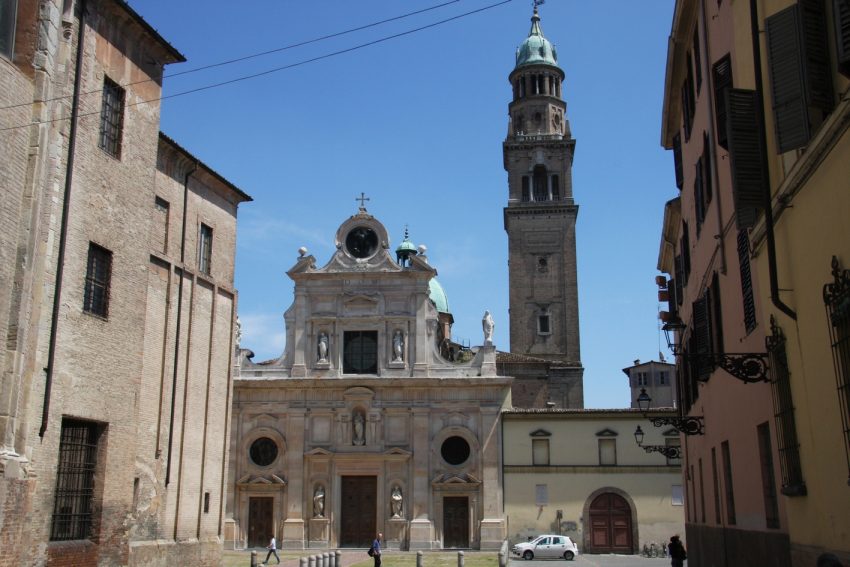
Just a short stroll from Parma's main historic sights, the monastic complex of San Giovanni Evangelista feels like a self-contained world of stone, fresco and cloistered calm. Its roots go back to the 10th century, but today the church is instantly recognisable by its baroque façade and the tall bell tower added on the right side in 1613. Step inside and you find a Latin cross plan with three naves and six chapels, built on an original Romanesque layout and enriched over the centuries with sculpture, woodwork and painting that trace Parma's artistic evolution.
Running along the central nave is the remarkable frieze of the Jewish and Pagan Sacrifice, designed by Correggio and executed by FM Rondani, while elsewhere in the church Correggio's hand appears on decorated hemi-pillars, the arch of the fifth chapel, a vivid scene of St Paul falling from his horse, and the dome itself, where the Transit of St John unfolds among the Fathers of the Church and the Evangelists in the plumes. Add the wooden choir by M. Zucchi and the Testa brothers (1556), together with early works by Parmigianino in the left nave, and you have a church that is a great place to visit on a walking tour of Parma if you want to see how local Renaissance and early Baroque artists worked in dialogue with a much older sacred space.
Table of Contents
- History and Significance of the Monastic Complex of San Giovanni Evangelista
- Things to See and Do in the Monastic Complex of San Giovanni Evangelista
- How to Get to the Monastic Complex of San Giovanni Evangelista
- Practical Tips on Visiting the Monastic Complex of San Giovanni Evangelista
- Where to Stay close to the Monastic Complex of San Giovanni Evangelista
- Is the Monastic Complex of San Giovanni Evangelista Worth Visiting?
- FAQs for Visiting Monastic Complex of San Giovanni Evangelista
- Nearby Attractions to the Monastic Complex of San Giovanni Evangelista
History and Significance of the Monastic Complex of San Giovanni Evangelista
San Giovanni Evangelista began as a Benedictine foundation in the Middle Ages, its origins reaching back to the 10th century when Parma’s role as a religious centre was still taking shape. The original church followed a Romanesque Latin cross plan, with three naves and six chapels, designed to accommodate monastic liturgy and the growing urban congregation. Over time, the exterior was reworked, and it is now the baroque façade that defines its image from the street, layering a more theatrical, 17th century sensibility onto an essentially medieval core.
The early 16th century was a turning point for the complex, as Parma entered a period of artistic flourishing and the Benedictine community sought to renew its spaces in line with new ideas about image, devotion and learning. Correggio's involvement brought cutting-edge pictorial language into the church: his frieze of the Jewish and Pagan Sacrifice along the central nave and his contributions to the dome and chapels introduced dynamic compositions, subtle light effects and a more human, emotional approach to sacred narratives. At the same time, early works by Parmigianino in the left nave show a younger painter feeling his way towards the elegant, elongated figures that would make him a key figure of the Parmese school.
Beyond the church itself, the monastery buildings express the intellectual and spiritual ambitions of the Benedictine order. The three cloisters, each with its own character, reflect different phases of construction and decoration: a first cloister with light Ionic columns, a second accessed via the chapter house and embellished with two frescoes by Correggio, and the San Benedetto cloister with frescoes from around 1510. Together with the library and other monastic spaces, they tell the story of a community that combined prayer, scholarship and artistic patronage, making San Giovanni Evangelista one of the top attractions in Parma for visitors who want to go deeper than the main piazzas.
Things to See and Do in the Monastic Complex of San Giovanni Evangelista
Begin your visit in the church, standing back in the nave to appreciate the overall Latin cross plan: three aisles, six chapels and a sense of depth that leads the eye towards the crossing and dome. As you walk along the central nave, follow the frieze of the Jewish and Pagan Sacrifice designed by Correggio and executed by FM Rondani. This continuous band of imagery weaves together episodes that prefigure Christian sacrifice, inviting you to read it almost like a visual scroll as you move towards the sanctuary.
Look up to the dome, where Correggio painted the Transit of St John, the moment when the evangelist is taken up from earthly life, surrounded by the Fathers of the Church and the Evangelists in the plumes. The composition draws the gaze upward and creates a sense of motion and light that anticipates his later, more famous dome in the cathedral. Elsewhere, search out his decorations on the hemi-pillars and the arch of the fifth chapel, and do not miss the dramatic depiction of St Paul falling from his horse, a subject that allowed him to explore sudden conversion through dynamic movement and light.
Along the left nave, pause at the early paintings by Parmigianino, where you can see hints of the elegance and refined line that would define his mature work. Then spend time with the wooden choir by M. Zucchi and the contributions of Gianfranco and Pasquale Testa from 1556, whose intricate carving and craftsmanship give the monastic liturgy a richly decorated setting. When you move into the monastery itself, explore the three cloisters in turn: the first with its airy Ionic columns, the second reached from the chapter house with two more frescoes by Correggio, and the San Benedetto cloister, whose c.1510 frescoes evoke an earlier phase of Renaissance devotion. Taken together, these spaces make the complex one of the things to do in Parma that offers both visual beauty and a tangible sense of monastic life.
How to Get to the Monastic Complex of San Giovanni Evangelista
The monastic complex of San Giovanni Evangelista is located in central Parma, only a short walk from key landmarks such as the cathedral and baptistery, making it straightforward to reach once you are in the city. Parma itself has a small local airport and is easily accessed from larger airports like Bologna or Milan, from which you can continue by regional train, coach or rental car into Parma. For the best deals and a seamless booking experience, check out these flights to Parma on Booking.com. From your arrival point, local buses or taxis will bring you close to the historic centre, and from there it is a matter of following signs or a map to San Giovanni Evangelista.
If you are travelling by train within Italy, Parma sits on major rail lines connecting cities such as Milan, Bologna and Florence.Use Omnio to easily compare schedules, book train tickets, and find the best prices all in one place for a hassle-free journey across Italy. From the railway station, you can walk into the historic centre in about 15-20 minutes, or take a local bus to get closer to the old town and then walk the remaining distance to the monastery.
Arriving by car, follow the main routes towards Parma and then signs for the centro storico, parking in one of the public garages or lots around the edge of the historic zone.If you are looking to rent a car in Italy I recommend having a look at Discover Cars, first, as they compare prices and review multiple car rental agencies for you. Once parked, it is an easy stroll through the old streets to reach San Giovanni Evangelista, which you can conveniently combine with visits to the cathedral, baptistery and other nearby monuments.
Practical Tips on Visiting the Monastic Complex of San Giovanni Evangelista
- Suggested tips: Combine your visit with the nearby cathedral and baptistery to get a fuller sense of Parma’s religious and artistic landscape, and allow time to sit quietly in at least one of the cloisters.
- Best time to visit: Late morning or mid-afternoon is ideal for good interior light and quieter cloisters; early evening can also be atmospheric outside of service times.
- Entrance fee: Entry to the church is free.
- Opening hours: Daily Tours: 11:00 and 15.30. Closed Thursday and Sunday. Saturday: 16:00
- Official website: https://www.monasterosangiovanni.com/
- How long to spend: Plan 60-90 minutes to see the church, appreciate Correggio’s and Parmigianino’s works, and explore the three cloisters at a relaxed pace.
- Accessibility: The complex includes historic interiors, cloisters and possible level changes; visitors with reduced mobility should enquire in advance about accessible entrances and routes.
- Facilities: Facilities are limited within the complex itself, but cafés, restaurants and shops are located within a short walk in the surrounding streets of central Parma.
- Photography tip: In the church, use a steady hand to capture the dome and frieze without flash, and in the cloisters focus on framing arches, columns and fresco fragments to convey their calm rhythm.
- Guided tours: Opt for a guided tour if available; a knowledgeable guide can explain the iconographic programme of the frieze, dome and cloister frescoes and point out details you might otherwise miss.
- Nearby food options: After your visit, head to nearby trattorias and cafés to sample Parma’s renowned cured meats, cheeses and fresh pasta while you digest everything you have seen.
Where to Stay close to the Monastic Complex of San Giovanni Evangelista
Choosing accommodation in Parma’s historic centre makes it easy to reach San Giovanni Evangelista on foot and to combine it with other major sights. For a historic setting close to the cathedral and baptistery, Palazzo Dalla Rosa Prati places you right on Piazza Duomo, from where it is only a pleasant walk to the monastery. If you prefer a comfortable, modern base with straightforward access to the old town, Grand Hotel de la Ville Parma offers contemporary amenities and an easy stroll into the historic streets. For a smaller, characterful option, Hotel Button puts you within walking distance of San Giovanni Evangelista, Pilotta Palace and many of Parma's best dining spots.
Is the Monastic Complex of San Giovanni Evangelista Worth Visiting?
The monastic complex of San Giovanni Evangelista is definitely worth visiting, especially if you are interested in how art, architecture and monastic life intersect in a historic Italian city. The combination of a Romanesque-based church with a baroque façade, major frescoes by Correggio, early works by Parmigianino and beautifully varied cloisters makes it a rich, layered experience rather than just a quick stop. Because it sits so close to other major sights yet feels slightly more hidden, visiting offers a quieter, more reflective counterpoint to Parma's busier squares and museums.
What Other Travellers Say...

San Giovanni Evangelista, tucked just behind Parma Cathedral at Piazzale S. Giovanni 1, is a Baroque Benedictine church and monastery known for Correggio's striking frescoed dome; inside visitors praise the breathtaking, ever-changing ceiling frescoes and a peaceful, almost meditative cloister courtyard, while the adjoining library draws attention for its ornate decoration and limited opening times, and entry is free with voluntary donations.


FAQs for Visiting Monastic Complex of San Giovanni Evangelista
Nearby Attractions to the Monastic Complex of San Giovanni Evangelista
- Cattedrale di Parma: Major Romanesque cathedral with Correggio's Assumption of the Virgin in the dome, located a short walk away.
- Baptistery of Parma: Pink Verona marble baptistery beside the cathedral, celebrated for its medieval sculpture and symbolic decoration.
- Pilotta Palace: Monumental complex housing the National Gallery, Farnese Theatre, Archaeological Museum and Bodoni Museum.
- Basilica Santa Maria della Steccata: Renaissance church with a Greek cross plan and important works by Parmigianino and other Parma masters.
- Parco Ducale: Elegant historic park across the river, ideal for a relaxing stroll after exploring churches and cloisters.
The Monastic Complex of San Giovanni Evangelista appears in our Complete Guide to Visiting Parma!

Moira & Andy
Hey! We're Moira & Andy. From hiking the Camino to trips around Europe in Bert our campervan — we've been traveling together since retirement in 2020!
This website uses affiliate links which may earn a commission at no additional cost to you!
Planning Your Visit
Daily Tours: 11:00 and 15.30. Closed Thursday and Sunday. Saturday: 16:00
Entry to the church is free.
Nearby Attractions
- Cattedrale di Parma (0.1) km
Cathedral - Baptistery of Parma (0.1) km
Baptistery - Diocesan Museum (0.2) km
Museum - Chamber of St. Paul and Cell of St. Catherine (0.3) km
Monastery - Piazza Garibaldi (0.4) km
Square - Basilica Santa Maria della Steccata (0.4) km
Basilica - Regio Theatre (0.4) km
Historic Building and Theatre - Pilotta Palace (0.5) km
Museum and Palace - Teatro Farnese (0.5) km
Historic Building and Theatre - Parco Ducale (1.0) km
Park