Mies van der Rohe Pavilion, Barcelona
Historic Building in Barcelona
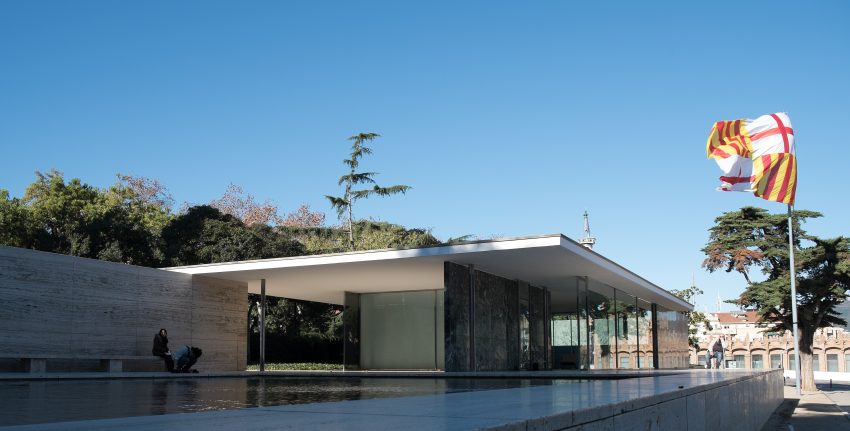
The Mies van der Rohe Pavilion (often called the Barcelona Pavilion) is a small building with an outsized reputation: a perfectly composed sequence of marble, glass, steel, water, and light that changed how architects think about space. It sits on Montjuïc near Plaça d'Espanya, close to major museums and the old exhibition grounds, yet it feels deliberately removed from the city's noise once you step inside.
It's one of the best places in Barcelona to slow down on a walking tour day. You don't come here for “rooms” or “exhibits” in the usual sense-you come to experience proportion, reflection, material, and movement, and to see why a seemingly simple pavilion became a reference point for modern design around the world.
Table of Contents
- History and Significance of the Mies van der Rohe Pavilion
- Things to See and Do in the Mies van der Rohe Pavilion
- How to Get to the Mies van der Rohe Pavilion
- Practical Tips on Visiting the Mies van der Rohe Pavilion
- Where to Stay Close to the Mies van der Rohe Pavilion
- Is the Mies van der Rohe Pavilion Worth Visiting?
- For Different Travelers
- FAQs for Visiting the Mies van der Rohe Pavilion
- Nearby Attractions to the Mies van der Rohe Pavilion
History and Significance of the Mies van der Rohe Pavilion
The pavilion was originally created as Germany's national pavilion for the 1929 Barcelona International Exhibition, designed by Ludwig Mies van der Rohe in collaboration with Lilly Reich. It wasn't meant as a permanent building; it was a bold, temporary statement about modernity, craftsmanship, and a new architectural language that rejected heavy ornament in favour of clarity, flow, and precision.
After the exhibition, the original structure was dismantled, but its influence only grew through photographs, drawings, and the way architects kept returning to its ideas: open plans, floating roof planes, and the power of materials used with restraint. The pavilion became a canonical “thought experiment” you could walk through-if it still existed.
That’s why its reconstruction on Montjuïc in the 1980s matters so much. Today’s pavilion lets visitors experience the spatial sequence in real time: not a museum of objects, but a place where the architecture itself is the subject, and where Barcelona’s broader exhibition-era landscape helps frame why it was built here in the first place.
Things to See and Do in the Mies van der Rohe Pavilion
The first thing to do is simply walk slowly and let the layout reveal itself. The pavilion is designed as a controlled drift-walls that don’t fully enclose, sightlines that open and close, and surfaces that catch light differently as you move. If you rush, it can look “simple”; if you slow down, it becomes surprisingly rich.
Pay attention to the materials and how they’re staged: polished stone with strong veining, crisp steel columns, and large glass planes that turn reflections into part of the composition. Water is a key element too, creating a calm acoustic and doubling the architecture in mirror-like surfaces.
Finally, look for the sculptural moment in the pool courtyard and how the pavilion frames it. This is a building that rewards repeat loops: each pass changes what you notice, from the way a wall edges a view to the way the city and trees outside become part of the interior experience.
How to Get to the Mies van der Rohe Pavilion
Barcelona-El Prat Airport (BCN) is the nearest major airport, and the simplest plan is to get into the city and then transfer toward Plaça d'Espanya for the Montjuïc exhibition area. For the best deals and a seamless booking experience, check out these flights to Barcelona on Booking.com.
If you're arriving by train, Barcelona Sants is the main station, and from there it's quick to reach Plaça d'Espanya by metro or local connections before walking up to the pavilion. Train schedules and bookings can be found on Omio.
Buses also serve the Montjuïc routes, and the final approach is straightforward on foot from the Plaça d’Espanya / Avinguda Francesc Ferrer i Guàrdia side. If you’re traveling by car, use paid parking around the Montjuïc museum zone and walk the last few minutes rather than trying to stop right outside. If you are looking to rent a car in Spain I recommend having a look at Discover Cars, first, as they compare prices and review multiple car rental agencies for you.
Practical Tips on Visiting the Mies van der Rohe Pavilion
- Entrance fee: General: €9. Reduced: €5. Under 16: Free. First Sunday of each month: Free.
- Opening hours: (Summer) 1 March – 31 October: Daily: 10:00–20:00. (Winter) 1 November – 28 February: Daily: 10:00–18:00. Closed on 25 December.
- Official website: https://www.miesbcn.com/
- Best time to visit: Go early for the quietest experience and the cleanest reflections; late afternoon can be beautiful too, but it’s more popular with photographers and architecture tours.
- How long to spend: Most visitors are happy with 45-75 minutes, but architecture lovers often stay longer and do multiple slow loops to catch changing light and viewpoints.
- Accessibility: The pavilion is generally manageable and designed as a continuous visitor route, but take care around reflective surfaces and wet edges near water features.
- Facilities: Expect a focused, minimalist visit rather than a full visitor-centre setup; plan cafés and longer breaks around Plaça d’Espanya, MNAC, or nearby Montjuïc venues.
Where to Stay Close to the Mies van der Rohe Pavilion
For a culture-heavy itinerary focused on Montjuïc museums and easy access to the pavilion, base yourself around Plaça d’Espanya; if your trip prioritises nightlife and classic central sightseeing, stay in Eixample and treat Montjuïc as an easy half-day by metro.
A very practical base with direct Plaça d’Espanya convenience is Catalonia Barcelona Plaza. For a polished, comfortable stay near Montjuïc’s museum axis, InterContinental Barcelona. If you want strong transport links via Sants while staying close to Montjuïc, Nobu Hotel Barcelona.
Is the Mies van der Rohe Pavilion Worth Visiting?
Yes-especially if you care about design, photography, or the “why” behind modern architecture. It's a calm, high-impact experience that feels unlike almost anything else in Barcelona, and it fits neatly into a Montjuïc day without demanding a huge time commitment.
Honest pivot: if you’re not interested in architecture and you prefer attractions with lots of narrative signage or interactive exhibits, the pavilion may feel abstract. In that case, you might enjoy Montjuïc’s bigger, more programmatic stops (major museums, viewpoints, or historic sites) more than this intentionally minimalist space.
What Other Travellers Say...

The Mies van der Rohe Pavilion (Av. de Francesc Ferrer i Guàrdia, 7, Montjuïc) is a reconstructed icon of modern architecture, originally created for the 1929 International Exhibition and later rebuilt so visitors could experience it again. With a 4.5/5 rating from roughly 3,500 reviews, it's widely treated less as a “museum visit” and more as a piece of architectural history you walk through: clean lines, luxurious materials, and a calm, almost meditative atmosphere built around water, reflections, and precise geometry. What people respond to most is the pavilion's influence and restraint. Reviewers who care about design describe it as a small building with outsized impact—one of those places where the ideas (open plan, minimal structure, the interplay of glass/stone/steel) matter as much as what you physically see. Visitors often point out the pools, the way the surfaces mirror each other, and the contrast between the pavilion's crisp forms and the more ornate 1929-era buildings nearby. A few also mention details that feel like “greatest hits” of the place: the sculptural figure by the water and the presence of the famous Barcelona chairs. The practical reality is that it's quick. Multiple reviews suggest you may only spend 5–15 minutes inside unless you're the sort of person who likes to slow down and study proportions and materials. There are also two recurring caveats: first, if you're not into architecture, it can feel like “not much to see” beyond its significance; second, temporary exhibitions can dramatically change the experience, sometimes to the point of obscuring the pavilion itself, which frustrates visitors who came specifically for the pure, uncluttered building. If it's a once-in-a-lifetime visit for you, it's worth checking what's installed there at the time so you know whether you're getting the pavilion “as itself” or the pavilion as a backdrop to an exhibition.


For Different Travelers
Families with Kids
This can work for families if you frame it as a short, calm “space and reflections” visit rather than a long cultural lesson. Kids often respond to the water, the mirror-like surfaces, and the feeling of moving through open rooms without doors.
Keep the visit brief and pair it with something more kinetic nearby-Montjuïc’s open spaces or a museum with clearer storytelling. It’s best with older kids who can handle “look, walk, notice” rather than expecting hands-on interaction.
Couples & Romantic Getaways
For couples, the pavilion is an unusually serene date-style stop-quiet, elegant, and ideal for slowing down together. It’s particularly good if you like photography, design, or simply places that feel intentional and unhurried.
Combine it with a Montjuïc stroll and finish with a drink or meal back near Plaça d’Espanya or Poble-sec. The pavilion itself is subtle, so it shines most when it’s part of a relaxed, well-paced afternoon.
Budget Travelers
Budget travelers should decide whether the ticket cost fits their priorities, because the pavilion is about quality of experience rather than quantity of things to “do.” If modern architecture is on your must-see list, it’s excellent value for the influence it represents.
If you’re watching spending, pair it with free nearby highlights (viewpoints, fountains, public spaces on Montjuïc) so the day feels full without stacking multiple paid entries. It’s also a good stop because it doesn’t require extra transport once you’re already at Plaça d’Espanya.
History Buffs
History buffs will get the most out of the pavilion by treating it as cultural history: a snapshot of 1929-era international exhibitions and a turning point in design thinking. It's not “old Barcelona,” but it is a major chapter in how the 20th century reshaped public style, national presentation, and architectural ideas.
To deepen the context, combine it with nearby Montjuïc exhibition-era sites and museums so you can connect the pavilion to the landscape it was built to serve. It’s a different kind of history-about modernity and influence rather than medieval streets.
FAQs for Visiting the Mies van der Rohe Pavilion
Getting There
Tickets & Entry
Visiting Experience
Photography
Accessibility & Facilities
Nearby Attractions to the Mies van der Rohe Pavilion
- Museu Nacional d'Art de Catalunya (MNAC): a major art museum with one of the best city views from its terrace.
- Magic Fountain of Montjuïc: a classic evening stop in the exhibition avenue area when operating.
- CaixaForum Barcelona: a strong, design-forward cultural centre that pairs well with the pavilion's modernist focus.
- Poble Espanyol: an open-air architecture-and-craft complex that works well as a contrasting, more lively stop.
- Montjuïc Olympic Ring: a broad area of stadiums and viewpoints that’s easy to weave into a longer Montjuïc walk.
The Mies van der Rohe Pavilion appears in our Complete Guide to Visiting Barcelona!

Moira & Andy
Hey! We're Moira & Andy. From hiking the Camino to trips around Europe in Bert our campervan — we've been traveling together since retirement in 2020!
This website uses affiliate links which may earn a commission at no additional cost to you!
Planning Your Visit
(Summer) 1 March - 31 October: Daily: 10:00-20:00.
(Winter) 1 November - 28 February: Daily: 10:00-18:00.
Closed on 25 December.
General: €9. Reduced: €5. Under 16: Free. First Sunday of each month: Free.
Nearby Attractions
- Palau de Congressos de Barcelona (0.2) km
Attraction, Historic Building and Notable Building - Poble Espanyol (0.3) km
Attraction - Museu Nacional d'Art de Catalunya (0.3) km
Historic Building, Museum and Viewing Point - Fira de Barcelona (0.4) km
Arts Venue, Attraction and Fair - Palauet Albéniz (0.5) km
Palace - Museu Etnològic de Barcelona (0.5) km
Attraction and Museum - Arenas de Barcelona (0.6) km
Bullring, Shopping Centre and Viewing Point - Consorci Mercat de les Flors - Centre de les Arts en Moviment (0.6) km
Arts Venue and Theatre - Catalan Museum of Archaeology (0.6) km
Museum - Lluís Companys Olympic Stadium (0.7) km
Attraction, Historic Site and Notable Building