Mausoleum of Theodoric, Ravenna
Mausoleum in Ravenna
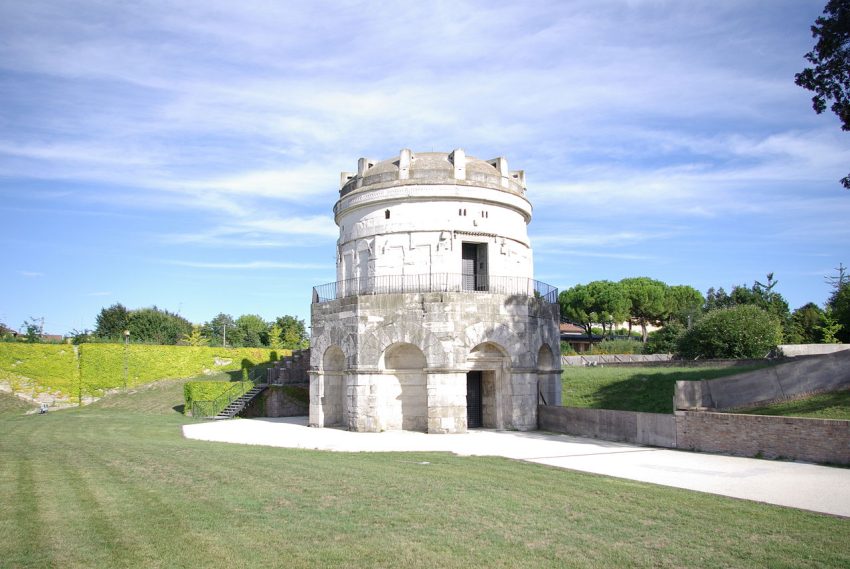
Set slightly outside Ravenna's main mosaic-filled core, the Mausoleum of Theodoric rises from a broad public park like a piece of sculpture placed on open lawn. Built in 520 AD as the intended resting place of Theodoric the Great, it's a UNESCO-listed monument and one of the top sights in Ravenna for travellers who like architecture that feels both austere and astonishingly bold.
What makes the visit memorable is how different it feels from Ravenna's basilicas: less glittering, more elemental. The structure is all clean geometry and pale stone, and the walk there is part of the experience, making it a great place to visit on a walking tour of Ravenna when you want to see a quieter, more contemplative side of the city.
Table of Contents
- History and Significance of the Mausoleum of Theodoric
- Things to See and Do in the Mausoleum of Theodoric
- How to Get to the Mausoleum of Theodoric
- Practical Tips on Visiting the Mausoleum of Theodoric
- Where to Stay close to the Mausoleum of Theodoric
- Is the Mausoleum of Theodoric Worth Visiting?
- FAQs for Visiting Mausoleum of Theodoric
- For Different Travelers
- Nearby Attractions to the Mausoleum of Theodoric
History and Significance of the Mausoleum of Theodoric
The Mausoleum of Theodoric was commissioned as a royal tomb at a time when Ravenna sat at the crossroads of cultures, politics, and belief. The building is often described as a meeting point between Roman construction traditions and influences associated with the Gothic court, and that blending is part of its wider significance: it signals a period when new rulers were shaping identity through monumental architecture rather than trying to erase what came before.
Architecturally, the mausoleum is a study in deliberate form. It was assembled from carefully cut blocks of Aurisina stone using a dry-laying technique, and it’s arranged as two stacked, decagonal levels around a central plan. The lower level reads like a solid base, with niches set into the walls and a more enclosed, chapel-like atmosphere, while the upper level is lighter and more ceremonial in feel.
The feature everyone remembers is the roof: a gigantic monolithic dome carved from a single piece of stone. Its scale is extraordinary, and the presence of the carved “handles” around the rim has long fuelled debate about how the dome was transported and lifted into place. A prominent crack in the dome has also inspired a local legend that lightning struck the monument in divine judgement on Theodoric-one of those stories that adds drama to the visit even if you come for the engineering.
Things to See and Do in the Mausoleum of Theodoric
Begin outside by walking a full loop around the building. From different angles, the mausoleum shifts from fortress-like to surprisingly elegant, and the decagonal geometry becomes clearer the more you move. Look closely at the stonework: the simplicity is intentional, and the precision of the blocks is part of what gives the monument its calm authority.
Inside, the lower level feels like a transition space, with niches and a plan that hints at devotional use as well as burial. It’s worth pausing here to let your eyes adjust and to notice how the monument’s mass shapes the acoustics and light-quiet details that can be easy to miss if you rush.
Upstairs, the upper chamber is the focal point for the story of Theodoric’s burial, traditionally linked to a porphyry basin associated with his remains. The absence of an internal staircase is itself a small mystery that encourages you to think about how the building was used, and how its purpose changed over time as political and religious tides shifted.
Before you leave, step back into the park and look at the dome from a distance. The scale reads differently when you’re not standing directly under it, and this is the moment to appreciate why the mausoleum is considered such a singular piece of early medieval architecture.
How to Get to the Mausoleum of Theodoric
If you're arriving from outside the region, the most convenient airports are Bologna Guglielmo Marconi (often the best-connected), Rimini Federico Fellini (seasonal depending on routes), and Forlì International for limited services, then onward travel to Ravenna by ground transport. For the best deals and a seamless booking experience, check out these flights to Ravenna on Booking.com.
Ravenna is well connected by rail, typically via Bologna, and from Ravenna station you can reach the mausoleum with a straightforward local walk or short taxi ride depending on your pace and luggage. Use Omnio to easily compare schedules, book train tickets, and find the best prices all in one place for a hassle-free journey across Italy.
Local buses and taxis cover the route easily, and walking is a pleasant option if you want to see how the city changes beyond the historic core. If you’re driving, plan for simple access roads and look for parking near the surrounding streets and park edges, then finish on foot. If you are looking to rent a car in Italy I recommend having a look at Discover Cars, first, as they compare prices and review multiple car rental agencies for you.
Practical Tips on Visiting the Mausoleum of Theodoric
- Suggested tips: Go early or late in the day for a calmer feel, and walk a full circuit outside before going in so the geometry makes sense.
- Best time to visit: Morning for soft light and fewer visitors, or late afternoon when the park feels most atmospheric.
- Entrance fee: €5.00
- Opening hours: From Monday to Thursday 8.30am - 1.30pm (last entry at 1pm). From Friday to Sunday 8.30am - 7pm (last entry 6.30pm)
- Official website: https://www.musei.emiliaromagna.beniculturali.it/musei/mausoleo-di-teodorico
- How long to spend: 30-60 minutes on site, longer if you enjoy slow-looking and reading interpretive material.
- Accessibility: The surrounding park is generally easy to navigate, but historic interiors can involve steps and uneven surfaces; check current access arrangements if you need step-free entry.
- Facilities: Limited on-site services; for cafés, toilets, and a wider choice of amenities, use the area around Ravenna’s centre before or after your visit.
- Photography tip: Photograph the dome from a slight distance in the park to capture the full silhouette, then take a closer shot that frames the carved handles.
- Guided tours: If you want the strongest context, join a Ravenna UNESCO-focused guide who can connect this monument to the city's late antique and early medieval story.
- Nearby food options: Head back toward the centre for classic trattorias and casual lunch spots; it’s easiest to combine this visit with a meal in Ravenna’s historic core.
Where to Stay close to the Mausoleum of Theodoric
For most travellers, the best strategy is staying near Ravenna’s centre, where you can easily reach the train station, the UNESCO monuments, and dining streets, then walk or take a quick ride out to the mausoleum. NH Ravenna is a reliable, well-located base that makes logistics simple. If you want something with more character and a boutique feel, Palazzo Bezzi Hotel puts you close to major sights and evening strolls. For a stay with historic ambience and a convenient location near the station, Hotel Palazzo Galletti Abbiosi is a popular choice with a distinctive atmosphere.
Is the Mausoleum of Theodoric Worth Visiting?
Yes, especially if you want to see a side of Ravenna that isn't all shimmering mosaics and basilica interiors. The mausoleum feels unusually “architectural” in the purest sense: a bold idea executed in stone, where the engineering and geometry are the main event.
It’s also a smart addition to your itinerary because it complements the city centre rather than competing with it. Pair it with Ravenna’s churches and monuments, and you’ll come away with a fuller sense of how varied the city’s heritage really is.
FAQs for Visiting Mausoleum of Theodoric
What Other Travellers Say...

Mausoleo di Teodorico sits in a quiet park off Via delle Industrie in Ravenna and impresses on arrival with its stone, circular Gothic form topped by a single massive limestone dome; the ten-sided lower level and tightly fitted Istrian stonework give it a stark, austere presence that contrasts with Ravenna's colorful mosaics. Visitors note the park creates a fitting atmosphere for the tomb and that the exterior is easily admired from outside the fence, while access to both levels is possible (ticket office located by the park entrance) though the interior is very plain, with bare walls and a damaged porphyry sarcophagus.


For Different Travelers
Families with Kids
This is a strong stop for families who like landmarks that feel dramatic and easy to understand at a glance: a massive stone building, a huge dome, and a story about a king. Keep the visit short and focused-walk around outside first, then go in-so it feels like an adventure rather than a long historical lecture.
Pair it with a more colourful, mosaic-heavy site in the centre afterward to balance the day. The open park setting also helps, giving kids space to reset before you move on.
Couples & Romantic Getaways
For couples, the mausoleum works best as a slower, quieter interlude in a Ravenna itinerary. Go in the late afternoon, enjoy the calm of the park, then head back into the centre for an aperitivo and dinner among the city's evening-lit streets.
It’s also a good shared “wow” moment if you both enjoy design and engineering: standing under that monolithic dome tends to spark exactly the kind of conversation that makes travel feel memorable.
Budget Travelers
This is a budget-friendly addition to Ravenna because it doesn't require an expensive or complicated plan-just a bit of time and a simple ticket. Walk there if you can, enjoy the park atmosphere, and use it to break up a day of city-centre sightseeing without extra transport costs.
If you’re prioritising value, combine it with free wandering in Ravenna’s streets and select one or two paid monuments in the centre. You’ll still get a rich sense of the city’s heritage without overloading your budget.
Nearby Attractions to the Mausoleum of Theodoric
- Basilica of San Vitale: Ravenna's most celebrated church interior, famed for its luminous mosaics and imperial-era atmosphere.
- Mausoleum of Galla Placidia: A small building with a starry mosaic ceiling that feels intimate and unforgettable.
- Basilica of Sant'Apollinare Nuovo: A central Ravenna highlight with long mosaic processions that read like a visual history.
- Dante's Tomb: A compact, moving site that anchors Ravenna's literary identity and is easy to pair with nearby churches.
- Basilica of Sant'Apollinare in Classe: A slightly out-of-town basilica surrounded by open space, rewarding for its mosaics and calm setting.
The Mausoleum of Theodoric appears in our Complete Guide to Visiting Ravenna!

Moira & Andy
Hey! We're Moira & Andy. From hiking the Camino to trips around Europe in Bert our campervan — we've been traveling together since retirement in 2020!
This website uses affiliate links which may earn a commission at no additional cost to you!
Planning Your Visit
From Monday to Thursday 8.30am – 1.30pm (last entry at 1pm).
From Friday to Sunday 8.30am – 7pm (last entry 6.30pm)
€5.00
Nearby Attractions
- Basilica di San Giovanni Evangelista (0.8) km
Basilica - Arian Baptistery (0.9) km
Baptistery - Basilica of Sant’Apollinare Nuovo (0.9) km
Basilica - Mausoleum of Galla Placidia (1.1) km
Mausoleum - Piazza del Popolo (1.1) km
Square - Museo Dante (1.1) km
Historic Building and Museum - Basilica of San Vitale (1.2) km
Basilica - Dante’s Tomb (1.2) km
Tomb - Basilica of San Francesco (1.2) km
Basilica - National Museum of Ravenna (1.2) km
Historic Building and Museum