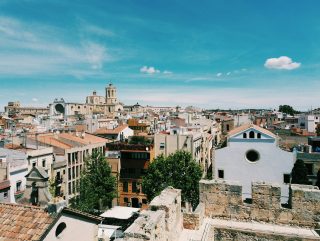
Maqueta de la ciutat romana de Tarraco, Tarragona
Attraction and Roman Site in Tarragona

Tucked into Tarragona's historic center, the Maqueta de la ciutat romana de Tarraco is a large-scale model that helps you picture the Roman city of Tarraco at its height. It's one of those small, high-impact stops that makes the rest of your sightseeing click, especially if you're about to walk to the amphitheatre, circus, forums, and city walls.
Many visitors pair the model with a self-guided or guided walking tour through the UNESCO-listed Roman remains, using the miniature city as a “before” image and the streets outside as the “after.” If you're short on time, it's also a smart first stop to decide which monuments you most want to prioritize.
Table of Contents
- History and Significance of the Maqueta de la ciutat romana de Tarraco
- Things to See and Do in the Maqueta de la ciutat romana de Tarraco
- How to Get to the Maqueta de la ciutat romana de Tarraco
- Practical Tips on Visiting the Maqueta de la ciutat romana de Tarraco
- Where to Stay Close to the Maqueta de la ciutat romana de Tarraco
- Is the Maqueta de la ciutat romana de Tarraco Worth Visiting?
- For Different Travelers
- FAQs for Visiting Maqueta de la ciutat romana de Tarraco
- Nearby Attractions to the Maqueta de la ciutat romana de Tarraco
History and Significance of the Maqueta de la ciutat romana de Tarraco
Tarraco was one of Roman Hispania's most important cities, and modern Tarragona still preserves an exceptional concentration of Roman monuments. The model exists to bridge the gap between scattered ruins and the full ancient urban layout, showing how major public buildings, streets, and the city's relationship to the sea once fit together.
What makes the Maqueta de la ciutat romana de Tarraco especially valuable is how quickly it gives context. Instead of reading long panels or trying to mentally reconstruct foundations, you can orient yourself in minutes: where entertainment venues sat, how administrative areas were arranged, and how the city expanded and evolved.
In recent years, the experience has often been paired with scheduled audiovisual mapping sessions that highlight points of interest on the model. Even if you don’t catch a show, the model remains a practical, visual “map” that improves everything you see afterward.
Things to See and Do in the Maqueta de la ciutat romana de Tarraco
The centerpiece is the detailed model itself, designed to be read like a three-dimensional city plan. Spend a few minutes identifying the big-ticket sites you’ll recognize outdoors later, then zoom in on smaller details that you might otherwise miss while walking (street grids, clusters of civic buildings, and how neighborhoods relate to the main monuments).
If a timed mapping or short explanatory presentation is running during your visit, it’s worth planning around it. The narration and highlights can turn the model from a static display into a quick “story of the city,” and it’s particularly helpful if you’re visiting early in your trip and want a clear itinerary.
Afterward, step straight into the old town for a satisfying one-two punch: model first, real stones second. A great follow-up is to walk toward the Roman walls and then down toward the amphitheatre area, using what you just saw in miniature to keep your bearings.
How to Get to the Maqueta de la ciutat romana de Tarraco
The nearest major airports are Barcelona El Prat (BCN) and Reus Airport (REU), both convenient for reaching Tarragona. For the best deals and a seamless booking experience, check out these flights to Tarragona on Booking.com.
Tarragona is well connected by rail, and arriving by train is one of the easiest ways to start a city break without needing a car. Train schedules and bookings can be found on Omio.
If you’re driving, aim for public parking on the edge of the old town and continue on foot, since the historic center’s streets can be narrow and traffic-restricted. If you are looking to rent a car in Spain I recommend having a look at Discover Cars, first, as they compare prices and review multiple car rental agencies for you.
Practical Tips on Visiting the Maqueta de la ciutat romana de Tarraco
- Official website: https://www.tarragona.cat/patrimoni/museu-historia
- Entrance fee: Free.
- Opening hours: Check official website.
- Best time to visit: Go early in your day to use the model as a mental map for the Roman sites you’ll see afterward. If you want the added context of a presentation, plan around the scheduled mapping/show times.
- How long to spend: 15–30 minutes is enough for most travelers, longer if you’re a detail-lover or waiting for a timed session.
- Accessibility: Expect an indoor visit, but access can depend on the specific venue setup and crowd flow during timed sessions; if you have mobility needs, confirm the current access route before you go.
- Facilities: Facilities are limited because this is a focused exhibit-style stop; plan café breaks and restrooms around the surrounding old-town streets.
Where to Stay Close to the Maqueta de la ciutat romana de Tarraco
Base yourself in Tarragona’s old town (Part Alta) for the easiest walkable access to Roman sights, viewpoints, and evening tapas.
For a classic, comfortable stay near the historic core, this is a reliable pick with a central location that makes early starts easy. Hotel Lauria
If you want a more boutique feel close to the old town’s atmosphere, this option is well placed for strolling between monuments and restaurants. Hotel Astari
For travelers who value modern comfort and a polished business-class setup while still being close to the action, this is a strong all-rounder. AC Hotel Tarragona by Marriott
If you’re looking for a resort-style property with extra amenities and don’t mind being a bit outside the center, this is a relaxing base after long walking days. H10 Imperial Tarraco
For a practical, budget-friendly stay with straightforward access to the city, this is a good choice when you plan to spend most of your time out exploring. B&B Hotel Tarragona Centro Urbis
Is the Maqueta de la ciutat romana de Tarraco Worth Visiting?
Yes, especially if you’re planning to see even a couple of Tarragona’s Roman monuments. It’s quick, often free to access, and it gives you the kind of big-picture understanding that makes the amphitheatre, walls, and forum areas feel connected rather than scattered.
Honest Pivot: if you dislike models, don’t care for historical context, or you’re on an ultra-tight schedule and only want to see one headline ruin, you can skip it and head straight to the amphitheatre or the Roman circus area. But for most visitors, the time-to-value ratio is excellent.
What Other Travellers Say...

Travelers rate the model very highly and often describe it as a surprisingly engaging way to understand Roman-era Tarragona before exploring the ruins. Common highlights include the level of detail, the usefulness for planning a walking route, and the added value of short scheduled audiovisual explanations (with limited English time slots). The main drawback mentioned is that access can be tied to specific timed sessions, so you may need to plan around show schedules rather than dropping in anytime.


For Different Travelers
The Maqueta de la ciutat romana de Tarraco is a flexible stop: you can treat it as a quick primer, a photo-friendly curiosity, or a mini lesson before a deeper dive into the city's Roman layers. It works particularly well as the first stop of a walking day in Part Alta.
Families with Kids
Kids often engage with the “giant city in miniature” aspect right away, especially if you turn it into a game of spotting arenas, walls, and major buildings. Keeping the visit short and pairing it with an outdoor follow-up (like the walls or amphitheatre) helps maintain momentum.
If you can catch a timed mapping/presentation, it can add structure and make the model feel interactive. Just be mindful of show times and potential waiting, which can be tricky with very young children.
Couples & Romantic Getaways
For couples, this is a low-effort, high-reward stop that sets up a more atmospheric walk through the old town afterward. It’s a nice way to slow down for a moment, then continue to viewpoints, cathedral-area streets, and sunset spots near the sea.
Use it as a “choose our route” moment: pick two or three Roman sites you want to see next, then wander there without rushing. It’s a simple way to make the day feel curated rather than checklist-driven.
Budget Travelers
Because it's commonly described as free and quick, the model is a smart addition to a low-cost Tarragona itinerary. It also helps you prioritize which paid sites (if any) you want to spend on afterward.
Pair it with free or low-cost walking: explore Part Alta, look for exterior viewpoints, and then decide if you want to add a ticketed monument or museum. The model can prevent “wrong turns” and wasted time.
History Buffs
History lovers will appreciate how the model clarifies the urban logic of Tarraco and the relationship between civic, entertainment, and defensive structures. It’s also a great refresher if you’ve visited other Roman cities and want to compare layouts.
To get the most from it, visit before you see the ruins, then revisit your mental map as you walk. If there’s an explanatory session available in a language you understand, it’s worth timing your visit to catch it.
FAQs for Visiting Maqueta de la ciutat romana de Tarraco
Getting There
Tickets & Entry
Visiting Experience
Tours, Context & Itineraries
Photography
Accessibility & Facilities
Food & Breaks Nearby
Safety & Timing
Nearby Attractions to the Maqueta de la ciutat romana de Tarraco
- Tarragona Cathedral (Catedral de Santa Tecla): A landmark in Part Alta with impressive architecture and a rewarding old-town atmosphere.
- Roman Amphitheatre of Tarragona: The iconic seaside ruin that's one of the city's most memorable Roman sights.
- Roman Circus (Circ Romà): A fascinating complex where you can trace the footprint of ancient entertainment within the modern city.
- Passeig Arqueològic and the Roman Walls: A scenic walk along preserved fortifications that helps you understand the city's defensive history.
- Plaça del Fòrum and the Forum area: A lively square that sits amid layers of Roman and medieval Tarragona, great for a pause during your walk.
The Maqueta de la ciutat romana de Tarraco appears in our Complete Guide to Visiting Tarragona!

Moira & Andy
Hey! We're Moira & Andy. From hiking the Camino to trips around Europe in Bert our campervan — we've been traveling together since retirement in 2020!
This website uses affiliate links which may earn a commission at no additional cost to you!
Planning Your Visit
Check official website.
Free.
Nearby Attractions
- Muralla Romana de Tarragona (0.0) km
City Walls, Historic Site and Roman Site - Casa Museu Castellarnau (0.0) km
Historic Building, Historic Room and Museum - Plaça dels Sedassos (0.1) km
Attraction, Sculpture and Square - Tarragona City Hall (0.1) km
Town Hall - Plaça de la Font (0.1) km
Area, Attraction and Square - Catedral de Tarragona (0.2) km
Cathedral, Historic Site and Religious Building - Circ Roma (0.3) km
Historic Site, Roman Site and Ruins - Torre del Pretori o Castell del Rei (0.3) km
Castle, Roman Site and Tower - Forum Square (0.3) km
Roman Site, Ruins and Square - Ca la Garsa (0.3) km
Historic Building, Historic Site and Ruins