Ljubljana Cathedral
Cathedral in Ljubljana
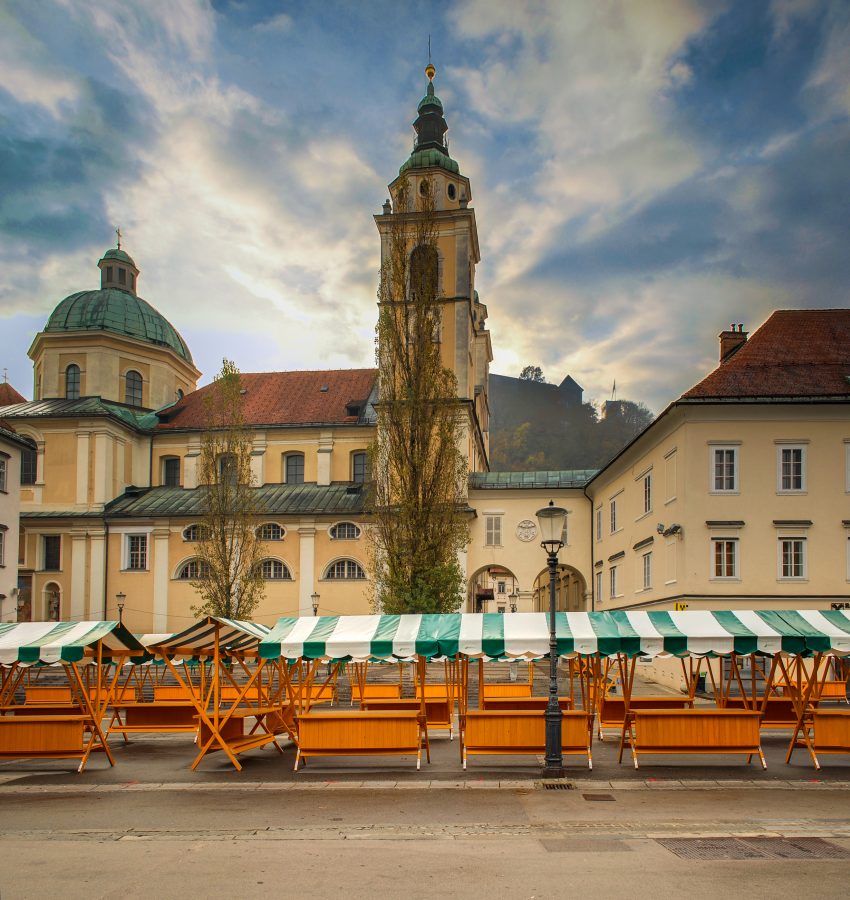
Ljubljana Cathedral, or Stolnica svetega Nikolaja, is one of those buildings you keep coming back to, whether you're following cobbled streets from the river or glancing up at the skyline to spot its octagonal dome and twin towers. Its roots reach back to a 13th-century Romanesque church, but what you see today is the result of an ambitious Baroque transformation in the early 18th century. Led by Jesuit architect Andrea Pozzo and brought to life by masters such as Giulio Quaglio, Angelo Putti, Francesco Robba, and the Groppelli brothers, the cathedral helped set the tone for Ljubljana's Baroque identity and still feels like the city's spiritual anchor.
Step closer and you notice how many stories are layered into the stone: bishops and saints in façade niches, ancient Roman tombstones reused as decoration, a Gothic pietà watching over a side entrance, and a sundial reminding you that “You don't know the day or the hour.” Inside, the frescoed dome, gilded details, and richly worked altars create a sense of theatre and devotion that is hard to forget. Add in the modern bronze doors that tell Slovenia's Christian story in relief, and it quickly becomes clear why this is one of the must-see places in Ljubljana and a highlight of any walking tour of Ljubljana.
Table of Contents
- History and Significance of Ljubljana Cathedral
- Things to See and Do in Ljubljana Cathedral
- How to Get to Ljubljana Cathedral
- Practical Tips on Visiting Ljubljana Cathedral
- Where to Stay close to Ljubljana Cathedral
- Is Ljubljana Cathedral Worth Visiting?
- FAQs for Visiting Ljubljana Cathedral
- Nearby Attractions to Ljubljana Cathedral
History and Significance of Ljubljana Cathedral
The story of Ljubljana Cathedral begins with a 13th-century Romanesque church dedicated to Saint Nicholas, patron of sailors and merchants-a fitting choice for a town built along the Ljubljanica River. Over the centuries, fires, rebuilding, and changing artistic tastes reshaped the site, but the real turning point came in the early 18th century, when the decision was made to create a new Baroque cathedral worthy of a growing, self-confident city. Andrea Pozzo, a Jesuit artist and architect famed for his illusionistic perspectives, provided the design concept, which was then executed by local and Italian craftsmen.
This Baroque rebuilding brought together a remarkable team. Giulio Quaglio covered the ceilings and dome with dramatic frescoes; Angelo Putti added sculptural decoration; Paolo and Giuseppe Groppelli crafted richly worked altars; and Francesco Robba-Slovenia’s best-known Baroque sculptor-designed an angel-adorned altar in the left transept. Their combined efforts turned the cathedral into a showcase of Baroque art and architecture, influencing churches and buildings across the city.
In modern times, the cathedral has continued to evolve while remaining at the heart of Ljubljana's religious and civic life. The addition of the monumental bronze doors in 1996, commemorating 1250 years of Christianity in Slovenia and Pope John Paul II's visit, shows how new layers of meaning are still being added. Through wars, political shifts, and everyday life, the bells and dome of Ljubljana Cathedral have remained constant, making it both a spiritual home and one of the top sights in Ljubljana.
Things to See and Do in Ljubljana Cathedral
Begin outside, taking in the building from the square. The octagonal dome and twin western towers dominate the view, their towers topped with gilded apples that hold relics and inscriptions. Knowing that one of the bells dates back to 1326-the second oldest in Slovenia-adds a nice touch of depth as you listen for their sound. Walk around the exterior to spot the statues of bishops and saints in façade niches, ancient Roman tombstones set into the walls, and the Gothic pietà beside a side entrance. Don’t miss the sundial on the south wall, with its Latin reminder that none of us knows the day or the hour.
Next, spend some time with the modern bronze doors. The Slovene Door, created for the main entrance, tells the story of Christianity in Slovenia through a series of reliefs, while the Ljubljana Door features portraits of 20th-century bishops. These doors do more than just welcome you inside-they act as visual prologues to the cathedral's role in national and local history, blending seamlessly with the older Baroque stonework around them.
Inside, let your eyes adjust to the softer light, then look up. Quaglio’s frescoes unfold across the central dome and cupola: the Holy Spirit surrounded by angels, scenes of the coronation of the Virgin, and the glorification of Saint Nicholas. Rich stucco work and gilded details frame the paintings, while altars in the nave and transept-including Francesco Robba’s angel-covered masterpiece-add layers of sculptural drama. Wander along the side chapels to find quieter corners for contemplation, admire paintings and statues up close, and take in how the whole interior works together as one coherent Baroque “stage” for worship and ceremony.
How to Get to Ljubljana Cathedral
Ljubljana Cathedral sits in the heart of the old town, close to the river and just a short walk from the Central Market, Dragon Bridge, and Prešeren Square. If you are staying in the centre, you will likely stumble across it simply by following the narrow streets and church towers; the pedestrian layout makes it easy to include a visit as you explore the riverbanks and main squares.
If you are arriving by air, you will land at Ljubljana Jože Pučnik Airport, around 25 kilometres north of the city, with shuttle buses, public buses, and taxis connecting to the centre in roughly 30-45 minutes depending on traffic. For the best deals and a seamless booking experience, check out these flights to Ljubljana on Booking.com. From the main drop-off points, it is a straightforward walk into the pedestrian zone and along the river toward the cathedral.
Travellers arriving by train or intercity bus will reach Ljubljana’s main railway and bus stations, which sit side by side just northeast of the old town. From there, it is about a 10-15 minute walk: head toward the city centre, cross the river near the market or bridges, and follow signs for the cathedral and old town, or take a short local bus ride if you prefer.You can easily check schedules and book tickets through the Slovenian Railways. However, for a smoother experience, we recommend using Omio, which simplifies the booking process and lets you compare prices and schedules all in one place.
If you are driving, bear in mind that the old town around Ljubljana Cathedral is part of a pedestrian and low-traffic zone where private cars are restricted. Plan to park in one of the public garages or car parks on the edge of the centre and then walk into the historic core; this not only simplifies logistics but also lets you enjoy more of Ljubljana's cobbled streets and river views on your way to the cathedral.
Practical Tips on Visiting Ljubljana Cathedral
- Suggested tips: Step inside even if you only have a few minutes-the interior is compact enough to see quickly, but rich enough to reward a longer, more contemplative visit.
- Best time to visit: Mornings and late afternoons tend to be quieter and offer softer light through the windows; avoid walking around during Mass if you are not attending the service.
- Entrance fee: Free entry for general visits; donations for the upkeep of the cathedral are appreciated.
- Opening hours: Typically open daily during daytime hours, with access restricted during services or special ceremonies; check local notices for current times.
- Official website: https://www.stolnica.com/
- How long to spend: Allow 20-40 minutes to explore the interior, admire the bronze doors, and take some photos of the exterior and square.
- Accessibility: The main entrance usually involves a small step or two; visitors with reduced mobility may wish to check for side entrances or ask on-site staff for assistance.
- Facilities: Facilities inside are limited; for cafés, shops, and restrooms, use the many options in the surrounding old town and market area.
- Photography tip: Outside, frame the dome and twin towers with nearby rooftops or market stalls; inside, be discreet, avoid flash, and focus on the dome frescoes, Robba’s altar, and details of the bronze doors.
- Guided tours: Many city and church-focused walking tours include the cathedral, offering extra insight into its art, architecture, and role in Ljubljana’s Baroque transformation.
- Nearby food options: After your visit, head toward the Central Market, riverside cafés, or nearby side streets for everything from quick snacks to long, leisurely lunches.
Where to Stay close to Ljubljana Cathedral
Staying near Ljubljana Cathedral puts you right in the historic heart of the city, with the river, market, and main squares just a short stroll away. For a boutique stay in the old town's narrow lanes, Lesar Hotel Angel offers characterful rooms and a peaceful garden while keeping you within easy walking distance of the cathedral. If you prefer a stylish riverside base with contemporary design, Vander Urbani Resort sits just along the Ljubljanica, making it easy to wander to the cathedral and nearby bridges. Another appealing option is Adora Hotel, a friendly, small hotel in the old town that works well as a cosy base for exploring on foot.
Is Ljubljana Cathedral Worth Visiting?
Ljubljana Cathedral is absolutely worth visiting, whether you are an architecture buff, an art lover, or simply curious about the city's history. Its Baroque interior, frescoed dome, and beautifully detailed altars make it far more than just another parish church, while the bronze doors, reused Roman stones, and centuries-old bells add extra layers of meaning. Combined with its central location between the river, market, and castle hill, it is easy to visit and hard to forget, comfortably earning its place among the city's most important landmarks.
What Other Travellers Say...

Saint Nicholas' Cathedral at Dolničarjeva ulica 1 in Ljubljana showcases a Baroque interior with gilded columns and ceiling frescoes; visitors praise its ornate, balanced decoration, soaring ceilings, large organ, calm atmosphere and impressive paintings, and note a striking bronze portal on the front depicting scenes from Slovenia's Christian past; some mention a small entrance fee and that it's easy to visit from the city center.


FAQs for Visiting Ljubljana Cathedral
Nearby Attractions to Ljubljana Cathedral
- Central Market - Lively outdoor and covered market just steps away, ideal for sampling local produce and feeling the city’s daily rhythm.
- Dragon Bridge (Zmajski most) - Iconic Secession-style bridge guarded by dragon statues, a short walk along the river.
- Triple Bridge (Tromostovje) - Jože Plečnik's famous three-part bridge linking the old town with Prešeren Square.
- Prešeren Square - Ljubljana's main square and social hub, framed by the Franciscan Church and elegant façades.
- Ljubljana Castle - Hilltop fortress overlooking the old town, reachable on foot or by funicular, with panoramic views and exhibitions.
The Ljubljana Cathedral appears in our Complete Guide to Visiting Ljubljana!

Moira & Andy
Hey! We're Moira & Andy. From hiking the Camino to trips around Europe in Bert our campervan — we've been traveling together since retirement in 2020!
This website uses affiliate links which may earn a commission at no additional cost to you!
Planning Your Visit
Typically open daily during daytime hours, with access restricted during services or special ceremonies; check local notices for current times.
Free entry for general visits; donations for the upkeep of the cathedral are appreciated.
Nearby Attractions
- Ljubljana Town Hall (0.1) km
Town Hall - Kresija Palace (0.1) km
Palace - Vodnik Square (0.1) km
Square - Cankarjevo Riverside (0.2) km
Walk - Triple Bridge (Tromostovje) (0.2) km
Bridge - Preseren Square (0.2) km
Square - Franciscan Church of the Annunciation (0.2) km
Church - Ljubljana Castle (0.2) km
Castle - Dragon Bridge (0.2) km
Bridge - Cobblers' Bridge (0.3) km
Bridge