La Pedrera - Casa Milà, Barcelona
Attraction, Historic Building and Notable Building in Barcelona
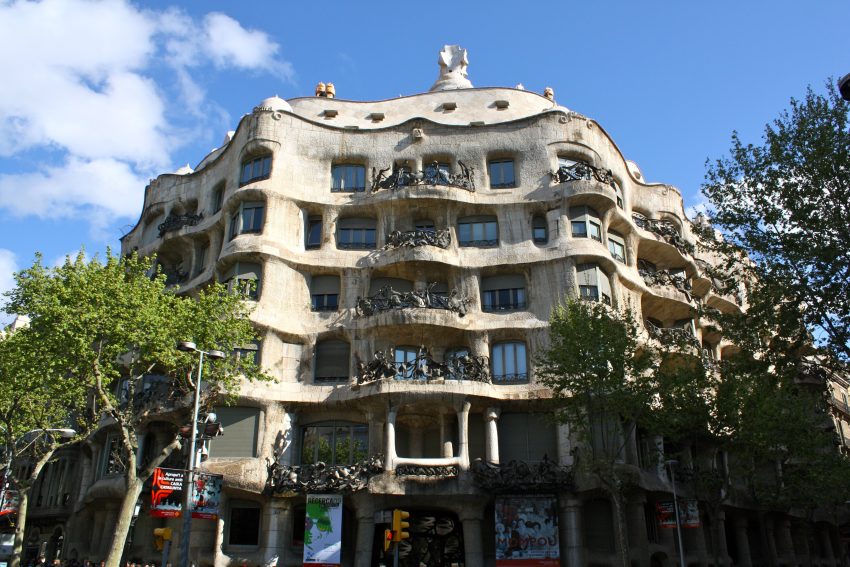
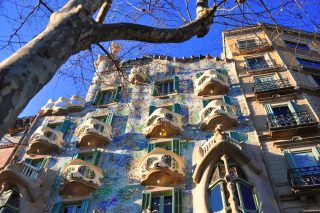
La Pedrera – Casa Milà is Antoni Gaudí's most famously unconventional apartment building, a stone-and-iron landmark that seems to ripple like a cliff face in the middle of Barcelona's elegant Eixample district. You'll find it on Passeig de Gràcia, one of the city's grandest boulevards, where Modernisme façades line up like an open-air architecture museum.
Even if you're only passing through on a walking tour, it's worth pausing outside to take in the sculpted balconies and the flowing façade from different angles along the sidewalk. For the full experience, go inside to explore the courtyards, attic exhibition, and the rooftop chimneys that make La Pedrera one of the best places in Barcelona to feel Gaudí's imagination at full volume.
Table of Contents
- History and Significance of the La Pedrera – Casa Milà
- Things to See and Do in the La Pedrera – Casa Milà
- How to Get to the La Pedrera – Casa Milà
- Practical Tips on Visiting the La Pedrera – Casa Milà
- Where to Stay Close to the La Pedrera – Casa Milà
- Is the La Pedrera – Casa Milà Worth Visiting?
- For Different Travelers
- FAQs for Visiting La Pedrera – Casa Milà
- Nearby Attractions to the La Pedrera – Casa Milà
History and Significance of the La Pedrera – Casa Milà
Commissioned by Pere Milà and Roser Segimon and completed in the early 20th century, Casa Milà was designed as a high-end residential building with rental apartments, shops, and a grand owner’s residence. Gaudí pushed engineering and aesthetics at the same time: a self-supporting stone façade, an internal structure that allowed flexible floor plans, and light-filled courtyards that ventilate the building naturally.
The nickname La Pedrera, meaning “the stone quarry,” hints at how radical it looked to contemporaries. Today, it’s celebrated as a pinnacle of Catalan Modernisme and a key stop on any Gaudí-focused itinerary, especially for travelers who want to understand how his ideas evolved from decorative flourishes into fully immersive, inhabitable sculpture.
Beyond its beauty, the building is significant because it shows Gaudí designing from the inside out: circulation, light, and airflow are part of the artistry. Visiting helps you see Barcelona’s architectural story not as isolated monuments, but as lived-in spaces that shaped the city’s identity.
Things to See and Do in the La Pedrera – Casa Milà
Start with the interior courtyards, where painted walls, curved lines, and shifting light make even the “in-between” spaces feel theatrical. The courtyards also help you understand how the building breathes, pulling daylight and air into the apartments.
Don’t miss the attic (often presented as a Gaudí-focused exhibition space), where a sequence of catenary arches creates a dramatic, almost skeletal tunnel effect. It’s one of the best places to appreciate Gaudí’s structural thinking, and it adds context before you head up to the roof.
The rooftop is the headline act: chimneys and ventilation towers become surreal, helmet-like sculptures with panoramic views over Eixample. If you’re choosing between multiple Gaudí sites, this rooftop is a major reason La Pedrera earns its place on the shortlist.
How to Get to the La Pedrera – Casa Milà
The nearest major airport is Barcelona–El Prat Airport (BCN), with Girona–Costa Brava Airport (GRO) and Reus Airport (REU) sometimes used for certain low-cost routes. For the best deals and a seamless booking experience, check out these flights to Barcelona on Booking.com.
If you're arriving by rail, Barcelona Sants is the main long-distance station, and from there you can connect by Metro or local trains toward Passeig de Gràcia for an easy onward trip into the Eixample area. Train schedules and bookings can be found on Omio.
Within the city, La Pedrera is on Passeig de Gràcia, and the simplest public-transport approach is the Metro to Diagonal station, followed by a short walk. If you're driving, plan to use a nearby paid parking garage rather than trying to find street parking in central Eixample. If you are looking to rent a car in Spain I recommend having a look at Discover Cars, first, as they compare prices and review multiple car rental agencies for you.
Practical Tips on Visiting the La Pedrera – Casa Milà
- Official website: https://www.lapedrera.com/en/
- Entrance fee: From €25 (standard daytime visit; other experiences cost more).
- Opening hours: (Winter) November 10, 2025 – March 5, 2026; Monday – Sunday: 09:00–18:30. (Summer) March 6, 2026 – November 1, 2026; Monday – Sunday: 09:00–20:30.
- Best time to visit: Aim for early morning or later afternoon for a calmer flow through the rooms and better light on the rooftop. In peak season, booking a timed entry in advance makes the day feel far less rushed.
- How long to spend: Plan for 1–1.5 hours for the core visit, and longer if you like reading exhibits or taking rooftop photos. If you’re pairing it with other Gaudí stops, it fits well as a half-day anchor.
- Accessibility: Most public areas are designed to be accessible, but the rooftop’s uneven surfaces can be challenging for wheelchairs and strollers. If accessibility is a priority, confirm the exact route and available assistance before you go.
- Facilities: Expect ticketing services, restrooms, and a shop on-site, with plenty of cafés nearby on Passeig de Gràcia. Bring water in warmer months because rooftop time can feel hotter than street level.
Where to Stay Close to the La Pedrera – Casa Milà
Base yourself in Eixample (especially around Passeig de Gràcia and Diagonal) for the easiest walkable access to Gaudí landmarks, great dining, and excellent transport links.
Majestic Hotel & Spa Barcelona A classic splurge choice on Passeig de Gràcia, ideal if you want a polished, central base with a strong sense of Barcelona's upscale boulevard culture.
Hotel Casa Fuster A Modernisme icon in its own right, perfect for travelers who want to sleep inside the same architectural era they’re sightseeing.
The One Barcelona A stylish, design-forward option with a convenient location for walking to La Pedrera and continuing on to Sagrada Família.
Olivia Balmes Hotel A reliable mid-to-upscale pick slightly off the main boulevard, often quieter at night while still being an easy stroll to the action.
Praktik Bakery A smart-value stay with a memorable concept, great if you want comfort and location without paying Passeig de Gràcia premium rates.
Is the La Pedrera – Casa Milà Worth Visiting?
Yes, it’s worth visiting if you want more than a façade photo and you’re curious how Gaudí’s ideas work as real architecture. The rooftop alone feels like stepping into a sculptural landscape, and the interior spaces add context that makes the rest of Barcelona’s Modernisme scene click into place.
Honest Pivot: if you're short on time, traveling with someone who dislikes crowds or timed-entry logistics, or you've already prioritized multiple paid Gaudí interiors, you might choose to admire La Pedrera from outside and put your budget toward Park Güell or Sagrada Família instead.
What Other Travellers Say...

Gaudi's Catalan art nouveau period building with quarrylike facade, hosting exhibitions & concerts.


For Different Travelers
La Pedrera can be tailored to different travel styles: architecture deep-dives, quick highlights, or a photogenic rooftop stop. The key is matching your ticket type and time slot to your pace and tolerance for busy corridors.
Families with Kids
Kids often enjoy the rooftop shapes because they feel like a fantasy set, and the building’s curves make the visit visually engaging even without reading every panel. Plan a simple “spot the strangest chimney” game to keep momentum.
For families, the main challenge is managing energy and patience in tighter interior areas. Choose an earlier time slot, keep snacks and water handy for after the visit, and save a nearby park stop as a reset.
Couples & Romantic Getaways
La Pedrera is a strong couples' pick because it's both iconic and atmospheric, especially when the light softens on the rooftop. It pairs naturally with a Passeig de Gràcia stroll and a lingering café stop.
If you want a more memorable date-style experience, consider timing your visit so you exit around golden hour and continue on foot toward other Modernisme façades. The neighborhood is made for slow wandering.
Budget Travelers
Budget travelers can still get a lot out of La Pedrera by treating the exterior as a free architecture stop and focusing paid entries on one or two “must-do” interiors across the city. Passeig de Gràcia is also excellent for self-guided Modernisme spotting.
If you do go inside, make it count by planning a tight itinerary: arrive on time, move efficiently through the exhibits, and spend your unhurried minutes on the rooftop where the experience feels most unique.
History Buffs
History-minded visitors will appreciate how Casa Milà reflects early-20th-century Barcelona: wealth, urban expansion, and a cultural movement that wanted modern Catalan identity expressed through design. It's a building that tells a city story, not just an artist story.
To deepen the visit, pay attention to how the apartments were conceived as real homes within a cutting-edge structure. Seeing the courtyards, circulation, and materials up close makes the era’s ambitions feel tangible.
FAQs for Visiting La Pedrera – Casa Milà
Getting There
Tickets & Entry
Visiting Experience
Tours, Context & Itineraries
Photography
Accessibility & Facilities
Food & Breaks Nearby
Safety & Timing
Nearby Attractions to the La Pedrera – Casa Milà
- Casa Batlló: Another Gaudí masterpiece nearby, famous for its colorful façade and imaginative interiors.
- Passeig de Gràcia: Barcelona's grand boulevard for Modernisme architecture, shopping, and people-watching.
- Plaça de Catalunya: A central hub that connects the old city with Eixample and is great for starting walks.
- Sagrada Família: Gaudí's most iconic basilica, easily reached by Metro for a same-day pairing.
- Palau de la Música Catalana: A stunning Modernisme concert hall that's ideal for a guided visit or evening performance.
The La Pedrera - Casa Milà appears in our Complete Guide to Visiting Barcelona!

Moira & Andy
Hey! We're Moira & Andy. From hiking the Camino to trips around Europe in Bert our campervan — we've been traveling together since retirement in 2020!
This website uses affiliate links which may earn a commission at no additional cost to you!
Planning Your Visit
(Winter) November 10, 2025 - March 5, 2026; Monday - Sunday: 09:00-18:30.
(Summer) March 6, 2026 - November 1, 2026; Monday - Sunday: 09:00-20:30.
From €25 (standard daytime visit; other experiences cost more).
Nearby Attractions
- Palau del Baró de Quadras (0.2) km
Attraction, Historic Building and Palace - Casa Comalat (0.3) km
Attraction, Historic Building and Notable Building - Casa de les Punxes (0.3) km
Attraction, Historic Building and Notable Building - Colmado Múrria (0.4) km
Shop - Casa Batlló (0.5) km
Attraction, Historic Building and Notable Building - Casa Amatller (0.5) km
Attraction, Historic Building and Museum - Casa Lleó Morera (0.5) km
Attraction, Historic Building and Notable Building - Casa Calvet (1.0) km
Attraction, Historic Building and Notable Building - Passeig de Gràcia (1.0) km
Area, Promenade and Street - Parròquia de Sant Pere Nolasc Mercedaris (1.2) km
Church and Religious Building