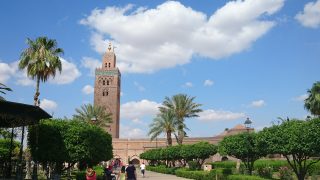
Koutoubia Mosque, Marrakesh
Mosque in Marrakesh

The Koutoubia Mosque is the spiritual and visual anchor of Marrakech, its elegant sandstone minaret rising above the palm trees and terracotta roofs of the medina. Just a few steps from Jemaa el-Fnaa, this 12th-century mosque is one of the top sights in Marrakech, blending Almohad architecture, religious devotion, and everyday street life in a way that feels uniquely Moroccan.
Even if you only see it from the outside, the Koutoubia quickly becomes a compass point as you wander through the maze of souks and alleyways. The call to prayer echoing from its 77-metre minaret sets the rhythm of the day, and the gardens and open spaces around the mosque offer a rare sense of calm amid the city's constant motion, making it a highlight of any walking tour of Marrakech.
Table of Contents
- History and Significance of the Koutoubia Mosque
- Things to See and Do in the Koutoubia Mosque
- How to Get to the Koutoubia Mosque
- Practical Tips on Visiting the Koutoubia Mosque
- Where to Stay close to the Koutoubia Mosque
- Is the Koutoubia Mosque Worth Visiting?
- FAQs for Visiting Koutoubia Mosque
- Nearby Attractions to the Koutoubia Mosque
History and Significance of the Koutoubia Mosque
The Koutoubia Mosque was begun in the mid-12th century during the reign of the Almohad caliph Yaqub al-Mansur, at a time when Marrakech was emerging as a major centre of power in the western Islamic world. Its name comes from the Arabic word for booksellers, reflecting the many book and manuscript vendors who once lined the streets around the mosque, turning this area into an intellectual as well as spiritual hub. Over the centuries, the Koutoubia has stood through dynastic changes, colonial rule, and modern independence, remaining a constant presence in the life of the city.
Architecturally, the mosque is a textbook example of Almohad style, with clean lines, harmonious proportions, and a focus on geometric and vegetal decoration rather than figural imagery. The minaret, with its layered bands of carved stone, blind arches, and decorative tilework near the top, later inspired other famous towers in the region and beyond, including the Giralda in Seville and the Hassan Tower in Rabat. Its solid, square profile and crown of metal orbs have become one of the enduring visual symbols of Marrakech.
For locals, the Koutoubia is not just a postcard image; it is a living place of worship. The vast interior prayer hall can accommodate up to 25,000 worshippers, and the call to prayer still structures the day for many people who live and work in the surrounding streets. Even though non-Muslim visitors cannot enter the prayer hall, simply standing outside during prayer times, observing the flow of worshippers and the quiet dignity of the building, gives a powerful sense of its ongoing religious and cultural significance.
Things to See and Do in the Koutoubia Mosque
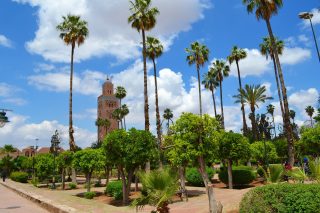
The main experience at the Koutoubia Mosque is taking in its exterior from different angles. Start in the gardens on the south and west sides, where lines of orange trees, palms, and rose bushes frame the minaret from a distance. From here you can really appreciate its height and the way the stone shifts colour with the changing light, from pale gold at midday to deep ochre at sunset.
Walk closer and look at the detailing on the minaret: the carved stone latticework, horseshoe arches, and decorative bands that climb towards the top. Each façade is slightly different, so it is worth circling the base to see how the patterns vary. You will also spot the remains of an earlier mosque alignment and some of the foundations of older structures in the surrounding area, hinting at the complex building history of the site.
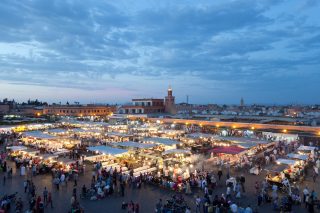
On the eastern side, facing Jemaa el-Fnaa, you can watch the constant choreography of daily life as locals and visitors move between the square, the mosque, and the nearby streets. This is an excellent place for people-watching and photography, especially in the late afternoon when the light softens and long shadows stretch across the paving. Even without stepping inside, simply pausing here and absorbing the atmosphere is one of the things to do in Marrakech that gives you a deeper sense of the city's character.
How to Get to the Koutoubia Mosque
Most visitors reach the Koutoubia Mosque by first travelling to Marrakech itself, and the simplest way to do that is to fly into Marrakech Menara Airport, which lies only a short distance southwest of the city centre and is well connected to major European cities as well as other Moroccan hubs. For the best deals and a seamless booking experience, check out these flights to Marrakesh on Booking.com. From the airport you can take a taxi, airport bus, or pre-booked transfer to the medina; the ride to the Koutoubia area is usually quick outside of rush hours.
If you are already in Morocco, trains are an efficient way to get to Marrakech, with frequent services from Casablanca, Rabat, and other major cities arriving at Marrakech railway station on the western edge of town.Train schedules and bookings can be found on Omio. From the station you can hop in a petit taxi, take a bus, or even walk if you do not mind a 30-40 minute stroll towards the medina and Jemaa el-Fnaa. Long-distance buses also serve Marrakech from cities and smaller towns that are not directly connected by rail.
Once in Marrakech, the Koutoubia Mosque is an easy landmark to find: it sits just southwest of Jemaa el-Fnaa and is visible from many parts of the medina. If you are driving, you will not be able to park right next to the mosque, but you can access the area via main boulevards such as Avenue Mohammed V and use one of the guarded car parks near the old city walls, then walk the final stretch into the medina to reach the mosque.
Practical Tips on Visiting the Koutoubia Mosque
- Suggested tips: Dress modestly, covering shoulders and knees, and move quietly around the mosque, especially during prayer times, to respect its role as an active place of worship.
- Best time to visit: Early morning and late afternoon are ideal, with softer light for photos and more comfortable temperatures, especially in the hotter months.
- Entrance fee: Free to visit the exterior, gardens, and surrounding area.
- Opening hours: Non-Muslims can't go inside the Koutoubia Mosque or minaret but are most likely to get a glimpse inside on a Friday when the doors are open for prayers.
- How long to spend: Plan around 30-60 minutes to walk around the mosque, enjoy the gardens, and take photos, longer if you combine it with nearby sights.
- Accessibility: Paths around the mosque and through the main gardens are mostly level, but expect some uneven paving stones and occasional steps in the surrounding medina streets.
- Facilities: Benches and shaded areas can be found in the gardens, but toilets and cafés are located in the wider neighbourhood rather than at the mosque itself.
- Photography tip: For classic skyline shots, photograph the minaret from the gardens or from Jemaa el-Fnaa at sunset, when the tower glows against the darkening sky.
- Guided tours: Many city walking tours include an exterior visit to the Koutoubia; a guide can help explain the Almohad architecture and the mosque’s role in Marrakech’s history.
- Nearby food options: Head towards Jemaa el-Fnaa and the surrounding streets for everything from rooftop restaurants with minaret views to simple snack stalls and traditional Moroccan eateries.
Where to Stay close to the Koutoubia Mosque
Staying near the Koutoubia Mosque puts you right at the edge of the medina, within easy reach of Jemaa el-Fnaa and the main souks while still having relatively straightforward access to taxis and the wider city. For a classic stay with a resort feel, Les Jardins de La Koutoubia offers rooms and suites clustered around courtyards and pools, with rooftop terraces that frame the minaret beautifully. If you prefer a more intimate riad experience, Riad El Fenn combines traditional design with contemporary art and is just a short walk from the mosque and main square. Another good option is La Mamounia, a legendary luxury hotel set in vast gardens; it is slightly removed from the busiest streets yet still close enough to stroll over to the Koutoubia and the medina whenever you feel like diving back into the action.
Is the Koutoubia Mosque Worth Visiting?
The Koutoubia Mosque is absolutely worth visiting, even if you can only experience it from the outside. As the most iconic landmark in the city, it helps you orient yourself in the medina and gives a powerful sense of the spiritual life that underpins Marrakech's bustle. Between the soaring minaret, the peaceful gardens, and the views towards Jemaa el-Fnaa, a stop here offers a calm yet memorable window into the city, and it is undeniably one of the best places to visit in Marrakech for first-time and returning travellers alike.
What Other Travellers Say...

Koutoubia is a large Almohad‑style 12th‑century mosque in Marrakesh set around a square with gardens, a fountain and a pleasant park behind it; its impressive tower and architecture can be admired from outside (the mosque is an active place of worship, so non‑Muslims cannot enter) and the surrounding gardens make for a peaceful stroll and good photo opportunities, though visitors note ongoing renovation work at times and occasional persistent vendors and beggars near the site; there are public toilets at the rear that open at certain times for a small fee.


FAQs for Visiting Koutoubia Mosque
Nearby Attractions to the Koutoubia Mosque
- Jemaa el-Fnaa: Marrakech's legendary main square, full of food stalls, performers, and market life, just a short walk from the mosque.
- Bahia Palace: A 19th-century palace with intricate tilework, carved cedarwood ceilings, and lush courtyards that showcase Moroccan craftsmanship.
- Saadian Tombs: Ornate royal burial chambers from the Saadian dynasty, rediscovered in the early 20th century and now open to visitors.
- El Badi Palace: Atmospheric ruins of a once-grand palace, offering wide open spaces and interesting viewpoints over the medina.
- Marrakech Souks: The sprawling network of market streets north of Jemaa el-Fnaa, where you can shop for spices, textiles, leather, and handicrafts after your mosque visit.
The Koutoubia Mosque appears in our Complete Guide to Visiting Marrakesh!

Moira & Andy
Hey! We're Moira & Andy. From hiking the Camino to trips around Europe in Bert our campervan — we've been traveling together since retirement in 2020!
This website uses affiliate links which may earn a commission at no additional cost to you!
Planning Your Visit
Non-Muslims can’t go inside the Koutoubia Mosque or minaret but are most likely to get a glimpse inside on a Friday when the doors are open for prayers.
Free to visit the exterior, gardens, and surrounding area.
Nearby Attractions
- Kasbah Mosque (0) km
Mosque - Koutoubia Gardens (Lalla Hassna Park) (0.1) km
Gardens - Jemaa el-Fnaa (0.5) km
Market and Square - Souks of Marrakesh (0.7) km
Market - Walls of Marrakesh (0.8) km
City Gate and City Walls - Dar el Bacha (0.9) km
Historic Building and Museum - Le Jardin Secret (0.9) km
Gardens and Historic Building - Saadian Tombs (0.9) km
Palace - Dar Si Said (1.0) km
Historic Building and Museum - Tiskiwin Museum (1.0) km
Museum