Karnak Temple Complex, Luxor
Historic Site in Luxor
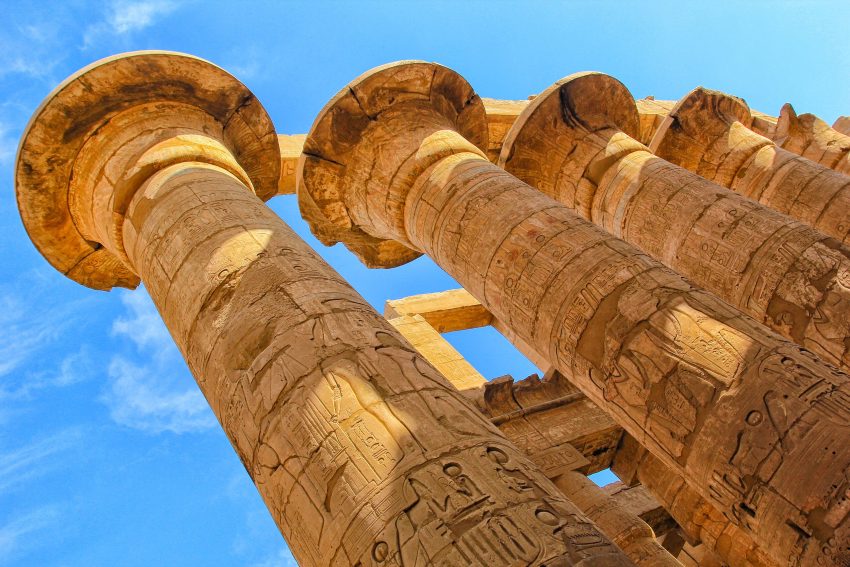
Spread out along the East Bank of the Nile just north of Luxor, the Karnak Temple Complex feels less like a single monument and more like a stone city of gods. Known in ancient times as Ipet-isut, “The Most Selected of Places,” it grew over nearly 2,000 years as pharaoh after pharaoh added pylons, hypostyle halls, obelisks, sacred lakes, and processional avenues. Most of what you see today dates from the New Kingdom, when Karnak became the main cult centre of the Theban Triad, with Amun at its heart, but fragments of the Middle Kingdom and Ptolemaic periods still peek through. It is one of the must-see places in Luxor if you want to grasp just how central temple ritual was to Egyptian power and belief.
Walking through Karnak, you move from bright courtyards into shadowy column forests and out again towards the Sacred Lake, with carved scenes and hieroglyphs crowding every surface. The famous Great Hypostyle Hall alone feels like a stone papyrus swamp, with 134 gigantic columns rising above you. Beyond the main Amun precinct lie smaller, quieter temple complexes for Mut and Khonsu and the start of the Avenue of Sphinxes running all the way to Luxor Temple. With its scale, layers of history, and riverside setting, the complex is a great place to visit on a tour of Luxor, especially if you combine it with an evening stroll among the floodlit columns.
Table of Contents
- History and Significance of the Karnak Temple Complex
- Things to See and Do in the Karnak Temple Complex
- How to Get to the Karnak Temple Complex
- Practical Tips on Visiting the Karnak Temple Complex
- Where to Stay close to the Karnak Temple Complex
- Is the Karnak Temple Complex Worth Visiting?
- FAQs for Visiting Karnak Temple Complex
- Nearby Attractions to the Karnak Temple Complex
History and Significance of the Karnak Temple Complex
Karnak’s story begins in the Middle Kingdom, when Senusret I ordered construction at a site already considered sacred, around 2000-1700 BCE. What started as a relatively modest sanctuary grew steadily as Thebes rose to prominence, then exploded in scale during the New Kingdom (c. 1550-1070 BCE), when pharaohs such as Thutmose III, Hatshepsut, and Ramesses II poured resources into expanding Amun’s domain. By the height of the 18th and 19th dynasties, Karnak had become the ritual and ideological heart of the Egyptian state, where festivals, oracles, and processions reinforced the king’s divine status.
The name Ipet-isut, “The Most Selected of Places,” reflects how sacred the site was considered. Here, the Theban Triad-Amun, his consort Mut, and their son Khonsu-received offerings, while hidden shrines and bark chapels housed the portable barques of the gods used in major festivals. One of the most important of these was the Opet Festival, when Amun's image travelled along the Avenue of Sphinxes to Luxor Temple, symbolically renewing kingship and cosmic order. Later rulers, including Libyan, Kushite, Saite, and Ptolemaic dynasties, continued to build and restore here, adding chapels, kiosks, and reliefs that stitched their own stories into the temple walls.
In modern times, Karnak's importance has been recognised not only by Egyptologists but by UNESCO: in 1979, it was inscribed as part of the World Heritage Site of ancient Thebes, together with Luxor Temple, the West Bank necropolises, and other major monuments. Ongoing conservation, excavation, and epigraphic recording projects continue to reveal new details about how the complex was built, rebuilt, and used over nearly two millennia. The nearby village of El-Karnak, about 2.5 kilometres north of Luxor, even takes its name from the site, underlining how closely the modern landscape is tied to this ancient temple city.
Things to See and Do in the Karnak Temple Complex
The Great Hypostyle Hall in the Precinct of Amun is the showstopper for most visitors. Step inside and you’re surrounded by 134 massive papyrus-bundle columns, some over 20 metres tall, their capitals once supporting a stone roof. Even with many blocks gone, the effect is overwhelming: shafts of light fall between the columns, carving shadows across carved scenes of pharaohs making offerings to the gods. Look up to see traces of original paint clinging to the undersides of the architraves and capitals, giving a hint of how vividly coloured the hall once was.
As you move through the main axis from the first pylon inward, pay attention to how the spaces change. Open courts with colossal statues give way to progressively more restricted halls, culminating in the remains of the sanctuary where Amun’s bark shrine once stood. On the way you’ll pass obelisks-most famously those of Hatshepsut-massive walls covered in battle scenes and inscriptions, and side chapels added by later rulers. The Open-Air Museum (for which a separate ticket may be required) contains reassembled shrines and architectural elements that were once reused as building filler, including Hatshepsut’s red granite chapels and other finely carved blocks.
Don't skip the quieter corners. The Precinct of Mut, with its own sacred lake and ram-headed sphinxes, offers a more tranquil atmosphere and fewer crowds, and the Precinct of Khonsu has a compact but very photogenic temple with well-preserved reliefs. Outside the main Amun enclosure, look for the start of the Avenue of Sphinxes, which once linked Karnak and Luxor Temple with a continuous processional way lined by human- and ram-headed sphinx statues. If you have time in the evening, consider returning for the sound-and-light show to see the columns and pylons dramatically illuminated against the night sky.
How to Get to the Karnak Temple Complex
Most international visitors reach Karnak via Luxor, which has its own airport. Luxor International Airport (LXR) lies just east of the city and is served by domestic flights from Cairo and other Egyptian cities, along with seasonal and charter services from abroad; flying from Cairo takes about an hour, making it an efficient way to connect with the Nile valley temples. For the best deals and a seamless booking experience, check out these flights to Luxor on Booking.com.
If you prefer rail, trains run between Cairo and Luxor along the Nile valley, including both daytime services and overnight sleeper trains, with journey times typically around 9-10 hours depending on the service.Train schedules and bookings can be found on Omio. From Luxor’s railway station, it’s a straightforward taxi ride or organised transfer to Karnak, roughly 10-15 minutes up the East Bank. Many visitors also arrive as part of a Nile cruise, with Karnak included on standard excursion itineraries. Train schedules and bookings can be found on Omio.
Travelling by car, the road distance from Cairo to Luxor is around 630-650 kilometres, usually taking 8-10 hours depending on route and conditions; most travellers find it easier to fly or take the train to Luxor and then hire a local taxi or join a tour for the short hop to Karnak. Once in the city, you can combine Karnak with Luxor Temple and the Sphinx Avenue on the same day, either independently or with a guide, especially if you start early or stay into the cooler evening hours.
Practical Tips on Visiting the Karnak Temple Complex
- Suggested tips: Start at opening time if you can; the combination of softer light, fewer crowds, and cooler temperatures makes the first hours of the day the most rewarding.
- Best time to visit: The cooler months from roughly November to March are more comfortable than high summer, when temperatures soar and the open courtyards can feel extremely hot by late morning.
- Entrance fee: Adults: around €18.00 (EGP 600) for foreign visitors; students around €9.00 equivalent—always check current rates locally as prices can change.
- Opening hours: Generally open daily from 06:00 to 17:00, with last ticket admission around 16:00; hours may vary slightly by season or for night events.
- Official website: https://egymonuments.gov.eg
- How long to spend: Allow at least 2-3 hours to explore the main Amun precinct; if you also visit the Mut and Khonsu temples or the Open-Air Museum, you could easily spend half a day.
- Accessibility: Main paths are generally level but can be uneven, sandy, or stony, and some areas require steps; visitors with reduced mobility should focus on the central axis and ask onsite staff about the most accessible routes.
- Facilities: Toilets, small cafés or kiosks, and souvenir shops are available near the entrance; inside the complex itself, shade and services are limited, so arrive prepared with water and sun protection.
- Photography tip: A wide-angle lens is helpful for capturing the scale of the Hypostyle Hall, while early morning or late afternoon side-lighting brings out the reliefs on walls and columns; avoid the harshest midday light if you can.
- Guided tours: Having an Egyptologist guide, whether private or as part of a small group, can greatly enhance your visit by explaining the scenes, inscriptions, and historical layers that might otherwise blur together.
- Nearby food options: You'll find cafés and restaurants along the Corniche and in central Luxor, a short taxi ride away, so most visitors plan to eat before or after exploring Karnak rather than during their time at the site.
Where to Stay close to the Karnak Temple Complex
If you want to stay close to Karnak while still enjoying a resort-style setting on the Nile, Hilton Luxor Resort & Spa is an excellent choice. Located a short drive from the temple complex, it offers pools, spa facilities, and river views, making it easy to combine early-morning or late-afternoon visits to Karnak with relaxed downtime by the water.
For a comfortable city base on the East Bank, Steigenberger Nile Palace sits right on the Corniche with views across the river. From here, it's straightforward to arrange taxis or tours to Karnak and the West Bank while also being within walking distance of Luxor Temple, local restaurants, and evening promenade strolls.
Travellers who prefer a more atmospheric West Bank stay but still want convenient access to Karnak might consider Al Moudira Hotel. This boutique property, set among gardens and courtyards, offers a quieter, more rural feel; a taxi or organised transfer will take you across the river and up to Karnak, letting you experience both sides of Luxor’s landscape.
Is the Karnak Temple Complex Worth Visiting?
Karnak is absolutely worth visiting-many travellers find it the most impressive temple complex in all of Egypt. Its scale, the density of carved and painted detail, and the sheer span of history represented in its walls make it far more than a quick photo stop. Walking through its pylons and hypostyle halls gives you a tangible sense of how pharaohs projected power, honoured the gods, and renewed cosmic order, and seeing it alongside Luxor Temple, the Valley of the Kings, and other local sites rounds out a deep, coherent picture of ancient Thebes. Even if you've seen photographs for years, standing under those towering columns in person is something else entirely.
What Other Travellers Say...

Karnak in Luxor is a vast temple complex of over 200 structures featuring giant temples such as the Amen‑Ra sanctuary and the Great Hypostyle Hall with more than 130 massive columns; visitors praise its monumental scale and well‑preserved reliefs, recommend spending several hours (ideally with a guide) to explore quieter outer areas as well as the center, and many suggest visiting early or returning at night for the temple's laser show to fully appreciate the architecture and photo opportunities.


FAQs for Visiting Karnak Temple Complex
Nearby Attractions to the Karnak Temple Complex
- Luxor Temple - A beautifully preserved riverside temple connected to Karnak by the Avenue of Sphinxes, especially atmospheric when lit at night.
- Avenue of Sphinxes - The restored processional route lined with sphinx statues that once linked Karnak and Luxor Temple, now walkable in sections.
- Luxor Museum - A compact but excellent museum displaying statues, reliefs, and artefacts that give context to the temples and tombs of Thebes.
- Valley of the Kings - The royal necropolis on the West Bank, where New Kingdom pharaohs were buried in richly decorated rock-cut tombs.
- Temple of Hatshepsut (Deir el-Bahri) - A dramatic terraced mortuary temple built into the cliffs, dedicated to Egypt’s famous female pharaoh and offering superb views over the Theban landscape.
The Karnak Temple Complex appears in our Complete Guide to Visiting Luxor!

Moira & Andy
Hey! We're Moira & Andy. From hiking the Camino to trips around Europe in Bert our campervan — we've been traveling together since retirement in 2020!
This website uses affiliate links which may earn a commission at no additional cost to you!
Planning Your Visit
Generally open daily from 06:00 to 17:00, with last ticket admission around 16:00; hours may vary slightly by season or for night events.
Adults: around €18.00 (EGP 600) for foreign visitors; students around €9.00 equivalent-always check current rates locally as prices can change.
Nearby Attractions
- Luxor Temple (2.8) km
Historic Site - Valley of the Kings (6.1) km
Historic Site - Philae - Temple of Isis (189.7) km
Historic Site - Abu Simbel Temples (390.3) km
Historic Site - Dahshūr (474.6) km
Historic Site - Memphis (479.5) km
Historic Site - Saqqara (482.6) km
Historic Site - Pyramids of Giza (496.8) km
Historic Site - The Egyptian Museum (501.3) km
Museum - Cairo Tower (501.3) km
Tower